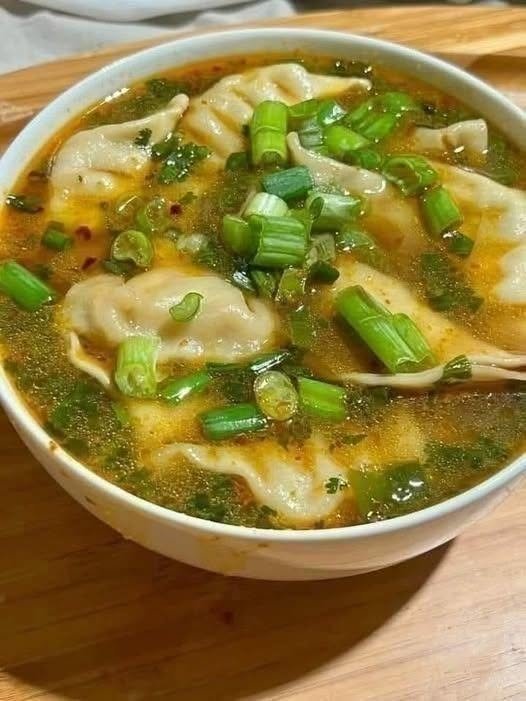
Spicy Dumpling Soup
Introduction
Spicy Dumpling Soup is a comforting, flavorful dish featuring tender dumplings simmered in a rich, spicy broth filled with garlic, ginger, soy sauce, and aromatic seasonings. Every spoonful combines warmth, savory depth, and a gentle heat that makes this soup especially satisfying on chilly evenings or whenever you crave a delicious homemade meal.
This recipe brings together juicy dumplings, a fragrant broth, fresh vegetables, and a finishing drizzle of chili oil. You can use store-bought frozen dumplings to save time or prepare homemade dumplings if you prefer a more hands-on cooking experience. Both options work beautifully, making this recipe flexible enough for busy weeknights and relaxed weekend dinners.
The broth is the heart of the dish. Garlic and ginger provide a fragrant foundation, soy sauce adds savory umami, and chili oil brings a bold, warming kick. A little rice vinegar brightens the flavors, while sesame oil contributes a nutty aroma. Green onions, bok choy, spinach, or mushrooms add freshness and texture without overpowering the dumplings.
One of the best things about Spicy Dumpling Soup is how easily you can customize it. Make it extra spicy, add more vegetables, choose chicken or vegetable dumplings, or finish it with fresh cilantro and sesame seeds. The result is a colorful, satisfying bowl that feels restaurant-inspired but is simple to make at home.
Recipe Information
-
Preparation Time: 10–15 minutes
-
Cooking Time: 20 minutes
-
Total Time: Approximately 35 minutes
-
Servings: 4
-
Course: Soup or Main Course
-
Cuisine: Asian-Inspired
-
Difficulty: Easy
-
Cooking Method: Stovetop
Ingredients
For the Soup
-
20–24 frozen or fresh dumplings, chicken, pork, shrimp, or vegetable
-
6 cups chicken broth or vegetable broth
-
1 tablespoon neutral cooking oil
-
4 cloves garlic, finely minced
-
1 tablespoon fresh ginger, grated
-
2 tablespoons soy sauce
-
1 tablespoon chili oil, plus extra for serving
-
1–2 teaspoons chili crisp or chili paste, optional
-
1 tablespoon rice vinegar
-
1 teaspoon sesame oil
-
1 teaspoon brown sugar, optional
-
1/2 teaspoon ground black pepper
-
Salt to taste, if needed
For the Vegetables
-
2 cups chopped bok choy or baby spinach
-
1 cup sliced mushrooms
-
1 medium carrot, thinly sliced
-
3 green onions, sliced
-
1/2 cup shredded cabbage, optional
For Garnishing
-
2 green onions, finely sliced
-
1 tablespoon toasted sesame seeds
-
Fresh cilantro, optional
-
Extra chili oil
-
A few drops of sesame oil
-
Thinly sliced fresh red chili, optional
-
Lime wedges, optional
Instructions
Step 1: Prepare the Ingredients
Before starting, prepare all the vegetables and seasonings so they are ready to add to the pot.
Mince the garlic, grate the ginger, slice the mushrooms, and cut the carrot into thin pieces. Wash the bok choy or spinach thoroughly and drain it well. Slice the green onions, keeping some of the green tops aside for garnishing.
Measure the broth, soy sauce, chili oil, rice vinegar, and sesame oil. Having everything ready makes the cooking process quick and helps prevent the garlic from burning while you search for other ingredients.
If you are using frozen dumplings, keep them frozen until you are ready to add them to the soup. In most cases, they can be cooked directly from frozen according to the package directions.
Step 2: Build the Aromatic Base
Place a large pot or Dutch oven over medium heat. Add the neutral cooking oil and allow it to warm for a few seconds.
Add the minced garlic and grated ginger. Cook for approximately 30–60 seconds, stirring continuously until fragrant.
Be careful not to brown the garlic too much because burnt garlic can make the broth taste bitter. The goal is to release the fragrance of the garlic and ginger into the oil.
Add the sliced mushrooms and carrots. Cook for another 2–3 minutes, stirring occasionally. The mushrooms will begin to soften and release some moisture, while the carrots absorb the aromatic flavors.
This initial step creates a flavorful foundation for the broth and makes the finished soup taste richer without requiring complicated ingredients.
Step 3: Add the Broth and Seasonings
Pour the chicken or vegetable broth into the pot. Stir well, scraping the bottom gently to release any flavorful bits.
Add the soy sauce, chili oil, optional chili crisp, rice vinegar, sesame oil, black pepper, and brown sugar if using.
Bring the broth to a gentle boil, then reduce the heat and allow it to simmer for approximately 5 minutes.
Taste the broth carefully. If you prefer more heat, add another teaspoon of chili oil or chili paste. For a saltier, more savory flavor, add a little more soy sauce. If the broth tastes too intense, add a splash of water or additional broth.
Remember that different brands of broth and soy sauce contain different amounts of sodium. It is best to taste before adding extra salt.
Step 4: Add the Dumplings
Carefully place the dumplings into the simmering broth. Stir gently to prevent them from sticking to the bottom of the pot or clumping together.
If using frozen dumplings, allow the soup to return to a gentle simmer. Cook according to the package instructions, usually around 5–10 minutes depending on the size, filling, and type of dumpling.
Fresh dumplings may cook more quickly. Avoid boiling the soup too vigorously because delicate dumpling wrappers can split, releasing their filling into the broth.
Stir gently once or twice during cooking, taking care not to break the dumplings.
If the dumplings contain raw meat or seafood, make sure the filling is fully cooked according to the product instructions. For homemade meat dumplings, check that the filling reaches a safe internal temperature; ground poultry should reach 165°F (74°C).
The dumplings are generally ready when their wrappers are tender and the filling is cooked through.
Step 5: Add the Vegetables
Once the dumplings are nearly cooked, add the bok choy, spinach, and shredded cabbage if using.
Stir gently and simmer for another 2–3 minutes, just until the vegetables soften while retaining some freshness.
Bok choy adds a pleasant crunch to the thicker stems and a tender texture to the leafy portions. Spinach cooks quickly and blends beautifully into the spicy broth.
Avoid cooking delicate greens for too long, as they can become dull in color and overly soft.
If you enjoy a soup with more vegetables, you can also add thinly sliced bell peppers, snow peas, or additional mushrooms. Cut the vegetables into small, even pieces so they cook at a similar rate.
Step 6: Adjust the Flavor
Turn the heat to low and taste the broth one more time.
Add extra rice vinegar if the soup needs brightness, more chili oil for additional heat, or a small splash of soy sauce for deeper savory flavor.
If the broth is too spicy, add a little more broth or water. You can also serve the soup with a small spoonful of plain yogurt on the side, although this creates a less traditional flavor profile.
For a slightly richer broth, stir in a little additional sesame oil just before serving. Use it sparingly because its flavor is concentrated.
Remove the pot from the heat once the dumplings are cooked and the vegetables are tender.
Step 7: Serve the Soup
Ladle the hot broth, dumplings, and vegetables into individual serving bowls. Try to distribute the dumplings evenly so every serving feels generous.
Drizzle a little extra chili oil over the top for a glossy finish. Sprinkle with sliced green onions, toasted sesame seeds, and fresh cilantro if desired.
For extra color and a brighter flavor, add a few thin slices of fresh red chili or serve lime wedges on the side.
Serve immediately while the dumplings are tender and the broth is steaming hot.
For a more substantial meal, pair the soup with steamed rice, a small cucumber salad, or crispy vegetable spring rolls.
Tips for the Best Spicy Dumpling Soup
1. Use a good-quality broth. A flavorful chicken or vegetable broth makes a noticeable difference because it forms the base of the entire soup.
2. Control the spice level. Start with a modest amount of chili oil and increase it gradually. Different chili oils and pastes vary significantly in heat.
3. Avoid overcooking the dumplings. Follow the package directions and keep the broth at a gentle simmer to help the wrappers stay intact.
4. Add greens near the end. Bok choy and spinach need only a few minutes, so adding them late helps preserve their texture and color.
5. Balance spicy, salty, and sour flavors. Soy sauce brings saltiness, chili oil provides heat, and rice vinegar adds brightness. A good balance makes the broth more complex.
6. Use sesame oil sparingly. A little provides a wonderful nutty aroma, but too much can overwhelm the other flavors.
7. Garnish just before serving. Fresh green onions, sesame seeds, and chili oil add color, texture, and aroma to the finished soup.
Delicious Variations
Creamy Spicy Dumpling Soup
For a creamy variation, stir 1/4 cup of coconut milk into the broth near the end of cooking. Coconut milk softens the chili heat and creates a smooth, rich texture. Adjust the rice vinegar to keep the flavors balanced.
Spicy Chicken Dumpling Soup
Use chicken dumplings and chicken broth for a savory combination. Add shredded cooked chicken if you want extra protein and a heartier bowl.
Vegetable Dumpling Soup
Choose vegetable-filled dumplings and vegetable broth. Increase the mushrooms, bok choy, cabbage, and carrots for a satisfying meat-free version. Check the dumpling ingredients if you need the dish to be fully vegetarian.
Extra-Spicy Chili Dumpling Soup
Add chili crisp, fresh sliced red chili, or a small amount of chili paste. Introduce extra heat gradually and taste as you go.
Mushroom and Dumpling Soup
Use a mixture of shiitake, cremini, or button mushrooms. Their savory flavor adds depth to the broth and pairs particularly well with soy sauce, ginger, and sesame oil.
Noodle Dumpling Soup
Add cooked ramen noodles, rice noodles, or thin wheat noodles to make the soup more filling. Cook noodles according to their package directions, preferably separately if you want to avoid excess starch in the broth.
Serving Suggestions
Spicy Dumpling Soup can be served as a complete meal or as part of a larger Asian-inspired dinner.
For a light meal, serve it with a cucumber salad dressed with rice vinegar, sesame oil, and a little soy sauce. The refreshing cucumber helps balance the warm chili flavors.
For a more filling dinner, pair the soup with steamed jasmine rice or a small bowl of fried rice. Crispy spring rolls and steamed vegetables also make excellent accompaniments.
If serving guests, arrange garnishes in small bowls so everyone can customize the soup. Offer extra chili oil, green onions, sesame seeds, cilantro, and lime wedges.
Storage and Reheating
Allow leftover soup to cool slightly, then refrigerate it promptly in an airtight container. For food safety, refrigerate within two hours of cooking.
The soup is best enjoyed within 3–4 days. Keep in mind that dumplings may soften as they sit in the broth, and their wrappers can absorb liquid.
For the best texture, store leftover dumplings and broth separately if you know you will have leftovers. Reheat the broth until steaming hot, then add the dumplings and warm them gently until heated through.
You can reheat a combined portion on the stovetop over medium-low heat, stirring carefully. Add a splash of broth or water if the soup has thickened.
Avoid repeatedly reheating the entire batch. Reheat only the portion you intend to eat.
Freezing the finished soup is possible, but dumpling wrappers may become softer or split after thawing. If you plan to freeze portions, freezing the broth separately and adding freshly cooked dumplings later usually produces a better texture.
Nutritional Information
Estimated nutrition per serving, assuming four servings and using chicken or vegetable dumplings with the listed broth and seasonings:
-
Calories: 300–450
-
Protein: 12–22 grams
-
Carbohydrates: 30–45 grams
-
Fat: 10–20 grams
-
Fiber: 3–6 grams
-
Sodium: Varies significantly by broth, dumplings, soy sauce, and chili oil
These values are estimates only. The actual nutrition will depend on the size and filling of the dumplings, the amount of chili oil used, and the specific ingredients and brands selected.
Frequently Asked Questions
1. Can I use frozen dumplings?
Yes. Frozen dumplings are convenient and usually can be added directly to the simmering broth. Follow the package cooking instructions and ensure the filling is thoroughly cooked.
2. How can I make the soup less spicy?
Reduce the chili oil and omit the optional chili crisp. You can also add more broth and vegetables to soften the heat.
3. Can I make the broth vegetarian?
Absolutely. Use vegetable broth, vegetable dumplings, and vegetarian-friendly soy sauce and chili oil. Check the labels to ensure that all ingredients meet your dietary requirements.
4. Why did my dumplings fall apart?
The broth may have been boiling too vigorously, the dumplings may have been overcooked, or the wrappers may have been delicate. Keep the soup at a gentle simmer and stir carefully.
5. Can I prepare the soup ahead of time?
Yes. Prepare the broth and vegetables in advance, refrigerate them, and cook the dumplings shortly before serving. This helps prevent the wrappers from becoming too soft.
6. What can I use instead of chili oil?
Chili crisp or a small amount of chili paste can work. Adjust the quantity to your preferred heat level and add a little sesame oil separately if needed.
7. Can I add noodles?
Yes. Cook noodles separately and add them to each bowl before ladling in the hot soup. This helps prevent them from becoming overly soft in stored leftovers.