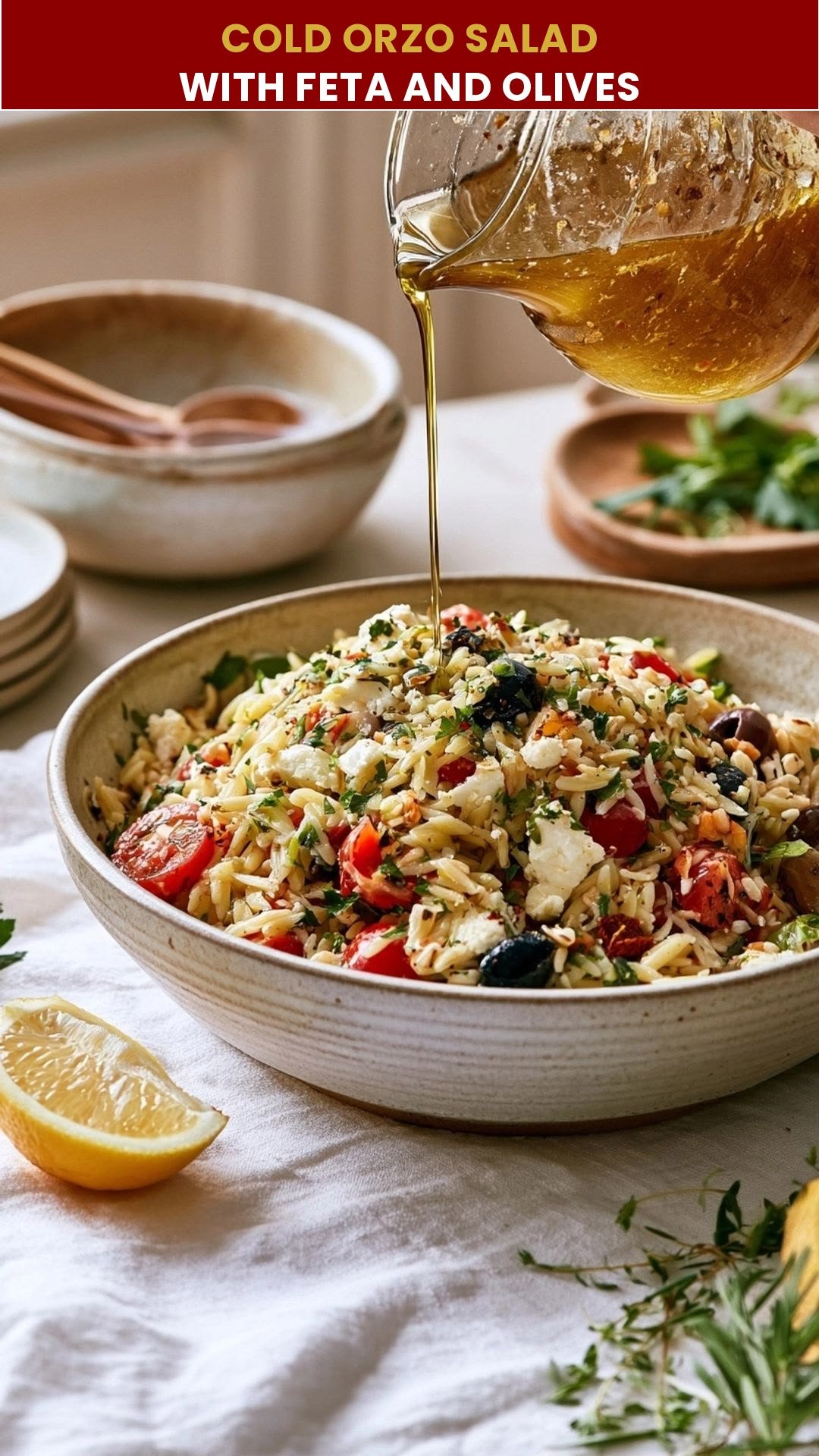
Cold Orzo Salad with Feta and Olives
Introduction
Cold Orzo Salad with Feta and Olives is a refreshing Mediterranean-inspired dish filled with tender orzo pasta, juicy tomatoes, crisp cucumbers, briny olives, creamy feta cheese, and a bright lemon-herb dressing. Every bite combines fresh vegetables, savory cheese, and tangy dressing to create a colorful salad that is satisfying without feeling heavy.
Orzo resembles rice because of its small shape, but it is actually a type of pasta. Its tiny pieces absorb the flavor of the dressing beautifully, making it an excellent base for cold pasta salads. The salty feta and olives add a delicious Mediterranean touch, while fresh parsley and oregano bring a fragrant herbal flavor.
This salad is ideal for summer lunches, family gatherings, picnics, potlucks, meal preparation, and easy weeknight dinners. It can be served as a light vegetarian main course or alongside grilled chicken, fish, shrimp, or roasted vegetables.
Another advantage is that you can prepare it ahead of time. After chilling, the ingredients have time to mingle, creating a salad that tastes even better once the flavors have developed. Whether you serve it immediately or enjoy it the next day, Cold Orzo Salad with Feta and Olives is a simple, versatile recipe worth keeping in your regular meal rotation.
Ingredients
For the salad
-
1½ cups dry orzo pasta
-
1 cup cherry tomatoes, halved
-
1 medium cucumber, diced
-
½ cup Kalamata olives, pitted and halved
-
¾ cup crumbled feta cheese
-
¼ small red onion, finely diced
-
½ cup red or yellow bell pepper, diced
-
¼ cup fresh parsley, chopped
-
2 tablespoons fresh dill, chopped (optional)
-
2 tablespoons capers, drained (optional)
For the lemon-herb dressing
-
¼ cup extra-virgin olive oil
-
3 tablespoons fresh lemon juice
-
1 teaspoon lemon zest
-
1 teaspoon Dijon mustard
-
1 small garlic clove, finely minced
-
1 teaspoon dried oregano
-
½ teaspoon honey (optional)
-
¼ teaspoon salt, or to taste
-
¼ teaspoon freshly ground black pepper
Equipment Needed
-
Large pot for cooking pasta
-
Colander
-
Large mixing bowl
-
Small bowl or jar for dressing
-
Sharp knife and cutting board
-
Spoon or salad tongs
Instructions
Step 1: Cook the orzo pasta
Bring a large pot of water to a boil. Add a generous pinch of salt, then stir in the orzo pasta. Cook according to the package instructions, usually around 8–10 minutes, until the pasta is tender but still slightly firm.
Avoid overcooking the orzo. Pasta that becomes too soft can break apart when mixed with the vegetables and dressing.
Taste a small piece before draining to make sure it has the texture you prefer.
Step 2: Drain and cool the pasta
Pour the cooked orzo into a colander and drain thoroughly. Rinse briefly under cool running water to stop the cooking process and remove excess surface starch.
Let the pasta drain well. Too much water can dilute the lemon dressing and make the salad watery.
Transfer the orzo to a large bowl. Add about a teaspoon of olive oil and toss gently to help prevent the pasta from sticking together. Allow it to cool completely before adding the remaining ingredients.
Step 3: Prepare the vegetables
While the orzo cools, prepare the vegetables.
Cut the cherry tomatoes in half. Dice the cucumber into small, even pieces so that it distributes easily throughout the salad. Remove the seeds from the bell pepper and dice it into bite-sized pieces.
Finely chop the red onion. If you prefer a milder onion flavor, soak the diced onion in cold water for five minutes, then drain and pat dry.
Halve the pitted Kalamata olives and chop the parsley and dill. Keeping the ingredients in similarly sized pieces makes the salad easier to eat and ensures that every serving contains a balanced mixture.
Step 4: Make the lemon-herb dressing
In a small bowl, whisk together the extra-virgin olive oil, fresh lemon juice, lemon zest, Dijon mustard, minced garlic, dried oregano, optional honey, salt, and black pepper.
Continue whisking until the ingredients are well combined and the dressing looks slightly emulsified.
Taste the dressing. Add more lemon juice if you enjoy a sharper flavor, a little olive oil if it tastes too acidic, or a small amount of honey if you prefer a softer balance.
Remember that feta and olives are naturally salty, so begin with a modest amount of salt and adjust after mixing the salad.
Step 5: Combine the pasta and vegetables
Add the cooled orzo to a large mixing bowl. Add the cherry tomatoes, cucumber, bell pepper, red onion, Kalamata olives, parsley, and optional dill.
Pour about three-quarters of the dressing over the ingredients. Toss gently with a large spoon or salad tongs until the pasta and vegetables are evenly coated.
Take care not to crush the tomatoes or cucumber. Gentle mixing helps maintain their texture and keeps the salad looking fresh.
Step 6: Add the feta cheese
Sprinkle the crumbled feta over the salad. Fold it in gently, leaving some larger pieces visible for a beautiful presentation.
If you prefer a creamier, saltier taste, you can add a little extra feta. For a lighter flavor, use slightly less.
Add the optional capers at this stage if you enjoy their tangy, briny taste.
Step 7: Chill the salad
Cover the bowl and refrigerate the salad for at least 20–30 minutes before serving. This gives the lemon, olive oil, garlic, and herbs time to flavor the orzo.
For the best texture, keep the salad refrigerated while it rests. If preparing it several hours ahead, reserve a small amount of dressing to add just before serving.
Step 8: Toss and serve
Remove the salad from the refrigerator and toss gently. Taste and adjust the seasoning as needed.
If the pasta has absorbed much of the dressing, add the reserved dressing or a small drizzle of olive oil and a squeeze of lemon juice.
Transfer to a serving bowl and finish with a little extra parsley, freshly ground black pepper, and a sprinkle of feta.
Serve cold or slightly chilled for a fresh, colorful Mediterranean side dish.
Preparation Tips for the Best Results
1. Do not overcook the orzo. Slightly firm pasta holds its shape better after chilling and mixing.
2. Cool the pasta before mixing. Warm orzo can soften the vegetables and cause the feta to become overly soft.
3. Drain the pasta thoroughly. Excess water weakens the dressing and reduces the salad’s flavor.
4. Use good-quality olive oil. Extra-virgin olive oil provides a fruity, rich taste that complements the lemon and feta.
5. Choose flavorful olives. Kalamata olives offer a distinctive briny flavor, but green olives can also be used.
6. Add feta near the end. Folding it in gently helps preserve some larger pieces instead of turning the entire salad creamy.
7. Taste before adding more salt. Feta, olives, and capers already contribute plenty of saltiness.
8. Refresh before serving. Chilled pasta tends to absorb dressing, so a little extra lemon juice and olive oil can restore its fresh flavor.
Delicious Variations
1. Mediterranean Chickpea Orzo Salad
Add one cup of drained and rinsed chickpeas. They provide extra texture, plant-based protein, and fiber, making the salad more substantial.
2. Greek Chicken Orzo Salad
Add approximately two cups of cooked, diced or shredded chicken. Grilled lemon-herb chicken works particularly well with the feta and olives.
3. Spinach and Orzo Salad
Fold in one or two handfuls of baby spinach. Chop larger leaves into smaller pieces for easier mixing.
4. Roasted Red Pepper Version
Replace the fresh bell pepper with chopped roasted red peppers. Their slightly sweet, smoky flavor creates a richer Mediterranean taste.
5. Lemon-Dill Orzo Salad
Increase the fresh dill and add a little more lemon zest. This variation tastes especially refreshing alongside grilled fish or shrimp.
6. Extra-Vegetable Orzo Salad
Add diced zucchini, shredded carrots, artichoke hearts, or thinly sliced radishes. Choose vegetables that remain pleasant when chilled.
7. Spicy Mediterranean Salad
Add a pinch of red pepper flakes to the dressing. The mild heat contrasts nicely with the tangy feta and bright lemon.
8. Dairy-Free Version
Omit the feta or replace it with a suitable dairy-free alternative. Add extra chickpeas, artichoke hearts, or toasted seeds to maintain a satisfying texture.
What to Serve with Cold Orzo Salad
This salad pairs well with many Mediterranean-inspired meals.
-
Grilled chicken: Lemon-herb chicken provides a hearty protein that complements the fresh vegetables.
-
Baked fish: Cod, haddock, or another mild white fish works beautifully with the lemon dressing.
-
Grilled shrimp: Seafood adds a light, flavorful protein option.
-
Roasted vegetables: Eggplant, zucchini, asparagus, and bell peppers make an excellent vegetarian pairing.
-
Pita bread and hummus: Serve with warm pita and hummus for a simple Mediterranean lunch.
-
Falafel: Crispy chickpea patties add texture and make a satisfying vegetarian meal.
-
Lamb kebabs: The bright, tangy salad balances the richer flavor of grilled lamb.
It can also be served as part of a picnic spread, buffet, barbecue, or potluck meal.
Serving Suggestions
Serve the salad in a wide bowl so the tomatoes, olives, herbs, and feta remain visible. A final drizzle of olive oil gives it a glossy finish, while fresh parsley adds color.
For individual portions, spoon the salad into small bowls and top each serving with a little extra feta and freshly ground black pepper.
If serving guests, keep the salad chilled until shortly before mealtime. You can prepare the ingredients in advance and combine them closer to serving for a fresher appearance.
For meal prep, divide the salad into individual airtight containers. If possible, keep a little extra dressing separate and mix it in just before eating.
Storage Instructions
Refrigerate leftover salad in an airtight container for approximately 3–4 days, provided it has been handled safely and kept consistently cold at 40°F (4°C) or below.
The vegetables may release moisture over time, and the orzo will continue absorbing the dressing. Stir before serving and add a little fresh lemon juice or olive oil if needed.
Do not leave the salad at room temperature for more than two hours, or more than one hour when temperatures are above 90°F (32°C).
Freezing is not recommended. The cucumber and tomatoes can become watery after thawing, while the feta and cooked pasta may lose their preferred texture.
Nutritional Information
Estimated nutrition per serving, assuming six servings:
| Nutrient | Approximate amount |
|---|---|
| Calories | 300–350 kcal |
| Protein | 8–10 g |
| Carbohydrates | 35–42 g |
| Fat | 13–17 g |
| Saturated fat | 3–5 g |
| Fiber | 2–4 g |
| Sugar | 3–5 g |
| Sodium | 450–700 mg |
Actual values depend on the pasta brand, amount of feta and olives, dressing quantity, and serving size. The sodium level can be reduced by using less feta, choosing lower-sodium olives, and limiting added salt.
Benefits of the Ingredients
Orzo pasta
Orzo provides carbohydrates that supply energy. Regular orzo is usually made from wheat, while whole-wheat versions offer more fiber. It forms the satisfying base of the salad and absorbs the dressing well.
Cucumbers
Cucumbers contain substantial water and provide a crisp, refreshing texture. They also contribute small amounts of vitamins and minerals.
Tomatoes
Cherry tomatoes provide vitamin C and lycopene, a naturally occurring antioxidant. Their sweetness and acidity balance the saltiness of the olives and feta.
Kalamata olives
Olives contribute distinctive flavor and monounsaturated fats. Because they can be high in sodium, people monitoring salt intake may prefer smaller portions or lower-sodium varieties.
Feta cheese
Feta contributes protein, calcium, and a creamy, tangy flavor. It can also be relatively high in sodium and saturated fat, so portion size matters.
Extra-virgin olive oil
Olive oil contains predominantly monounsaturated fat and adds richness to the dressing. It helps create a satisfying salad while carrying the flavors of lemon and herbs.
Fresh herbs and lemon
Parsley, dill, and lemon add freshness without requiring heavy sauces. Lemon juice also provides vitamin C, although the amount in each serving varies.
This salad can contribute to a balanced eating pattern, especially when paired with additional vegetables and a protein source. No single recipe guarantees specific health outcomes.
Frequently Asked Questions
1. Can I make Cold Orzo Salad with Feta and Olives ahead of time?
Yes. Prepare it several hours in advance and refrigerate it in an airtight container. For the freshest texture, reserve a little dressing and add it just before serving.
2. Can I use another type of pasta?
Absolutely. Small pasta shapes such as ditalini, small shells, pearl couscous, or rotini can work. Cooking times and textures will vary, so follow the package directions.
3. Do I have to rinse the orzo after cooking?
Rinsing briefly with cool water helps stop the cooking and cool the pasta quickly for a cold salad. Drain it thoroughly afterward to prevent a watery dressing.
4. Can I replace Kalamata olives?
Yes. Green olives, black olives, or a mixture of your favorite varieties can be used. Each type will provide a slightly different flavor.
5. What can I use instead of feta cheese?
Try a suitable dairy-free feta alternative, small mozzarella pieces, or crumbled goat cheese. Keep in mind that the flavor and nutritional content will change.
6. How can I make the salad more filling?
Add chickpeas, grilled chicken, tuna, or cooked shrimp. These ingredients increase protein and make the salad more suitable as a main course.
7. Why does my orzo salad become dry in the refrigerator?
The pasta absorbs liquid as it sits. Toss it with a little reserved dressing, olive oil, or lemon juice before serving to refresh its texture.
8. Is this salad vegetarian?
Yes, it can be vegetarian when prepared with suitable feta and Dijon mustard. If strict vegetarian requirements matter, check that the cheese is made with vegetarian-friendly enzymes.
9. Can I make it gluten-free?
Yes. Replace regular orzo with a gluten-free orzo-style pasta. Cook according to the manufacturer’s instructions because gluten-free pasta can have a different texture.
10. Can I serve this salad warm?
You can serve it slightly warm, but it is designed to be enjoyed cold or chilled. Cooling the pasta helps preserve the refreshing character of the vegetables and dressing.