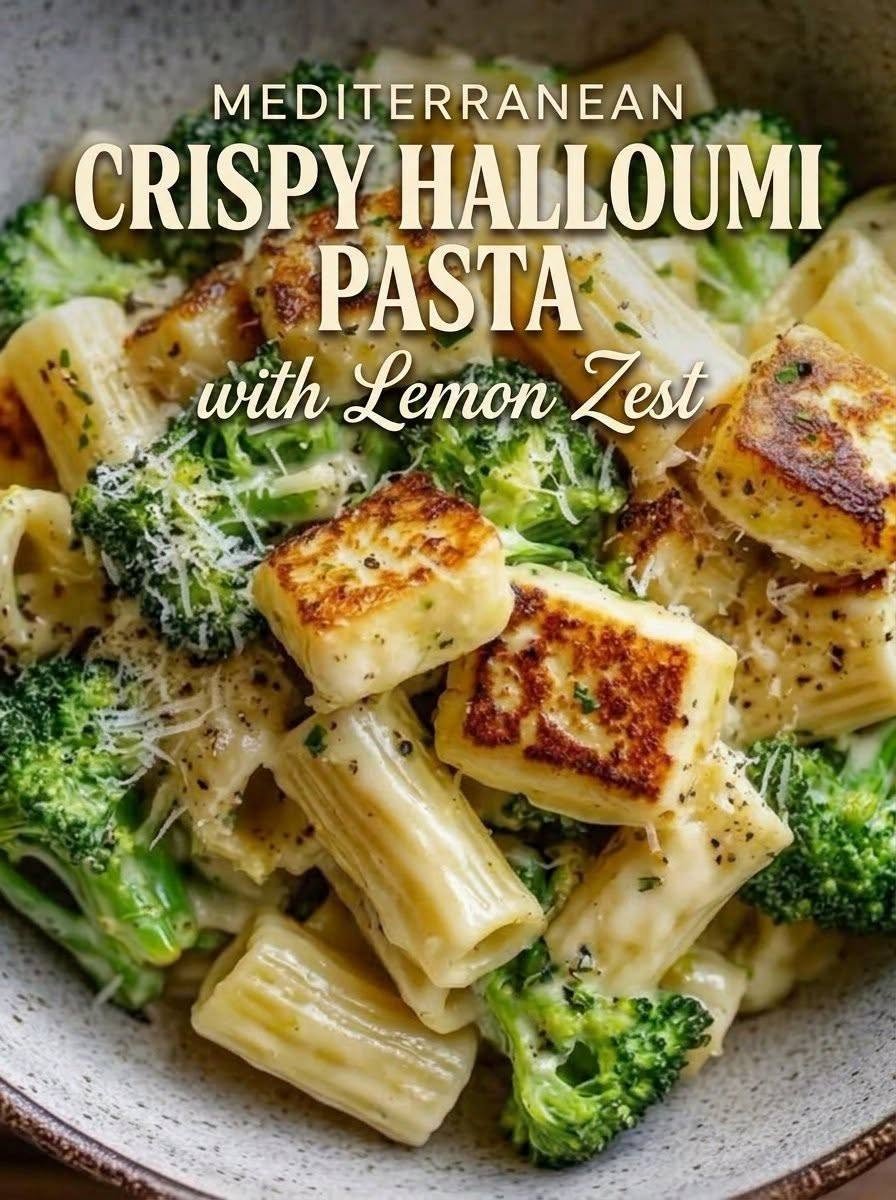
Mediterranean Crispy Halloumi Pasta with Lemon Zest
Introduction
Mediterranean Crispy Halloumi Pasta with Lemon Zest is a delicious combination of golden, pan-fried halloumi cheese, tender pasta, fresh vegetables, fragrant garlic, extra-virgin olive oil, and bright lemon flavor. This satisfying Mediterranean-inspired dish brings together contrasting textures and simple ingredients to create a meal that feels fresh, colorful, and restaurant-worthy.
Halloumi is a firm cheese that holds its shape when heated, making it perfect for pan-frying. Its exterior becomes beautifully golden and slightly crispy, while the inside remains soft and pleasantly chewy. When combined with warm pasta, juicy cherry tomatoes, baby spinach, and freshly grated lemon zest, it creates a flavorful dish with a balance of salty, savory, tangy, and fresh notes.
The lemon zest is especially important because it adds an aromatic citrus flavor without introducing too much extra liquid. Fresh lemon juice provides additional brightness, while garlic and olive oil create a simple Mediterranean-style sauce that coats the pasta beautifully.
This recipe is ideal for lunch, a quick weeknight dinner, or a relaxed weekend meal. It is easy to customize with olives, fresh basil, roasted peppers, or your favorite pasta shape.
Recipe details
-
Prep time: 15 minutes
-
Cook time: 20 minutes
-
Total time: 35 minutes
-
Servings: 4
-
Cuisine: Mediterranean-inspired
-
Difficulty: Easy
-
Course: Lunch or dinner
-
Cooking method: Boiling and pan-frying
Ingredients
For the Pasta
-
12 ounces (340 g) pasta, such as penne, fusilli, or rigatoni
-
8 ounces (225 g) halloumi cheese
-
2 tablespoons extra-virgin olive oil, divided
-
3 cloves garlic, finely minced
-
1 pint cherry tomatoes, halved
-
3 cups fresh baby spinach
-
1 small red onion, thinly sliced
-
Zest of 1 large unwaxed lemon
-
2 tablespoons freshly squeezed lemon juice
-
½ teaspoon dried oregano
-
¼ teaspoon red pepper flakes, optional
-
Salt, to taste
-
Freshly ground black pepper, to taste
For the Mediterranean Finish
-
¼ cup fresh basil leaves, roughly torn
-
2 tablespoons chopped fresh parsley
-
¼ cup sliced Kalamata olives, optional
-
¼ cup reserved pasta cooking water, as needed
-
Extra lemon zest, for serving
-
A small drizzle of extra-virgin olive oil, optional
Ingredient tip: Halloumi is naturally salty, so taste the dish before adding extra salt. Reserve some pasta water before draining because its starch helps the olive oil, lemon juice, and tomato juices cling to the pasta.
Instructions
Step 1: Prepare the Ingredients
Begin by washing the cherry tomatoes and spinach. Halve the tomatoes, thinly slice the red onion, and finely mince the garlic.
Wash the lemon thoroughly and dry it before zesting. Use a fine grater to remove only the yellow outer peel, avoiding the bitter white pith underneath.
Squeeze the lemon juice into a small bowl and set it aside.
Drain the halloumi and pat it dry with paper towels. Cut it into approximately ½-inch cubes or thick bite-sized rectangles. Drying the cheese helps it develop a golden crust instead of steaming in the pan.
Prepare the basil and parsley, and set all the ingredients within easy reach. Once the pasta and cheese are cooking, the remaining steps move quickly.
Step 2: Cook the Pasta
Bring a large pot of water to a boil. Add a modest amount of salt, remembering that halloumi will contribute plenty of saltiness to the finished dish.
Add the pasta and cook according to the package directions until al dente. The pasta should be tender but still have a slight bite in the center.
Before draining, carefully reserve approximately ½ cup of the starchy cooking water. You may not need all of it, but it is useful for adjusting the sauce.
Drain the pasta without rinsing it. Set it aside while you prepare the halloumi and vegetables.
If the pasta finishes before the other ingredients are ready, toss it with a small splash of olive oil to reduce sticking.
Step 3: Pan-Fry the Halloumi
Heat one tablespoon of olive oil in a large nonstick or well-seasoned skillet over medium heat.
Add the halloumi pieces in a single layer, leaving a little space between them. If necessary, cook in two batches rather than crowding the pan.
Let the cheese cook undisturbed for approximately two to three minutes, until the underside becomes golden brown. Turn the pieces and cook the other sides for another two to four minutes, depending on their size.
The goal is a deeply golden exterior with a warm, soft, chewy interior.
Transfer the cooked halloumi to a plate. Avoid covering it tightly, because trapped steam can soften the crispy surface.
Halloumi can brown quickly, so adjust the heat if the outside darkens before the cheese is warmed through.
Step 4: Sauté the Red Onion and Garlic
Using the same skillet, add the remaining tablespoon of olive oil.
Add the sliced red onion and cook for approximately three to four minutes, stirring occasionally. The onion should soften and become slightly translucent without burning.
Add the minced garlic and cook for about 30 seconds, stirring continuously until fragrant.
Do not allow the garlic to become dark brown, as burnt garlic can introduce a bitter taste.
If the skillet is too dry, add a small splash of water or a little more olive oil.
Step 5: Add the Cherry Tomatoes
Add the halved cherry tomatoes to the skillet along with the dried oregano, black pepper, and optional red pepper flakes.
Cook for approximately five to seven minutes, stirring occasionally.
As the tomatoes heat, their skins soften and their juices begin to release. Some tomatoes will collapse slightly, creating a light, naturally flavorful sauce.
Use the back of a wooden spoon to gently press a few tomatoes against the skillet. Leave others intact so the finished pasta has a mixture of juicy sauce and fresh tomato pieces.
If you are using Kalamata olives, add them now so their briny flavor can blend with the tomatoes.
Step 6: Add the Baby Spinach
Add the baby spinach to the tomato mixture in handfuls.
Stir gently for one to two minutes, allowing the leaves to wilt. The spinach will reduce considerably in volume while adding color and freshness to the dish.
Avoid cooking it for too long. Once the leaves have softened, they are ready for the pasta.
If the mixture looks dry, add one or two tablespoons of reserved pasta water. The liquid helps loosen the tomato juices and creates a light coating for the other ingredients.
Step 7: Build the Lemon-Zest Sauce
Reduce the heat to low.
Add the lemon zest and freshly squeezed lemon juice to the skillet. Stir well to distribute the citrus flavor throughout the tomato and spinach mixture.
Add two tablespoons of reserved pasta water and stir again.
The lemon zest provides an intense, fragrant citrus aroma, while the juice gives the sauce a fresh, tangy finish. Together, they balance the richness of the olive oil and the salty character of the halloumi.
Taste the mixture before adding any salt. Depending on your cheese and olives, you may not need any additional seasoning.
For a more pronounced lemon flavor, add a small amount of extra zest just before serving rather than adding too much juice at once.
Step 8: Toss the Pasta with the Sauce
Add the drained pasta directly to the skillet.
Use tongs or a large spoon to toss everything together until the pasta is evenly coated with the tomato, spinach, garlic, and lemon mixture.
Add a little more reserved pasta water if needed. Start with one tablespoon at a time until the sauce lightly clings to the pasta without pooling at the bottom of the pan.
Cook for another one to two minutes over low heat, stirring gently.
Taste and adjust the black pepper, lemon juice, or oregano as desired.
The finished pasta should look glossy and colorful, with the tomato juices coating the noodles and the spinach distributed throughout.
Step 9: Add the Crispy Halloumi
Turn off the heat and return the golden halloumi to the skillet.
Gently fold most of the cheese through the pasta, reserving a few pieces for the top of each serving.
Avoid vigorous stirring, which can break the halloumi into smaller pieces and soften its crust.
Add the torn basil and chopped parsley. Their fresh, herbal aromas complement the citrus and bring out the Mediterranean character of the dish.
If desired, finish with a small drizzle of extra-virgin olive oil and another light sprinkle of lemon zest.
Step 10: Serve Immediately
Divide the pasta among four warm bowls.
Arrange the reserved crispy halloumi pieces on top so their golden surfaces remain visible. Add a few fresh basil leaves, extra lemon zest, and freshly ground black pepper.
Serve immediately while the halloumi is warm and the pasta is glossy.
For a complete meal, pair it with a simple cucumber salad, roasted vegetables, or warm whole-grain bread.
Tips for Perfect Crispy Halloumi Pasta
1. Dry the cheese before cooking. Excess surface moisture prevents proper browning. Patting halloumi dry helps it form a golden crust.
2. Use medium heat. Very high heat can darken the exterior before the cheese warms through. Medium heat gives you better control.
3. Do not overcrowd the pan. Halloumi needs direct contact with the hot skillet to brown properly. Cook in batches if necessary.
4. Zest before juicing the lemon. It is much easier to zest a whole lemon than a squeezed one. Remove only the colored peel.
5. Keep some pasta water. A little starchy water helps the sauce coat the noodles and prevents the dish from becoming dry.
6. Add halloumi at the end. Mixing it in just before serving helps preserve its texture.
7. Balance the salt carefully. Halloumi and olives are both salty. Taste the completed sauce before adding more salt.
8. Use fresh herbs. Basil and parsley brighten the finished dish, especially alongside the lemon zest.
Delicious Variations
1. Mediterranean Halloumi Pasta with Olives
Add sliced Kalamata olives and a tablespoon of chopped sun-dried tomatoes. Their intense, savory flavors complement the fresh tomatoes and lemon.
2. Halloumi Pasta with Roasted Red Peppers
Replace half the cherry tomatoes with sliced roasted red peppers. They add sweetness, color, and a slightly smoky flavor.
3. Spicy Lemon Halloumi Pasta
Increase the red pepper flakes or add a small pinch of chili powder. The heat contrasts nicely with the fresh lemon and creamy texture of the cheese.
4. Halloumi Pasta with Zucchini
Slice one small zucchini into half-moons and sauté it with the red onion. Cook until lightly golden and tender before adding the garlic and tomatoes.
5. Creamy Mediterranean Version
Stir two tablespoons of plain Greek yogurt into a small amount of cooled pasta water, then mix it into the pasta off the heat. This creates a creamier finish. Avoid boiling the yogurt mixture, which can cause it to separate.
6. Gluten-Free Halloumi Pasta
Use your preferred gluten-free pasta and follow its package instructions. Reserve some cooking water, but note that its starchiness can differ from traditional wheat pasta, so add it gradually.
Serving Suggestions
This pasta is flavorful enough to serve as a standalone meal, but simple side dishes can make the table feel more complete.
-
Greek cucumber salad: Cucumber, tomato, red onion, and a lemon-olive oil dressing provide a refreshing contrast.
-
Roasted vegetables: Roasted zucchini, eggplant, or bell peppers complement the warm Mediterranean flavors.
-
Garlic bread: A small serving of crusty bread is useful for enjoying any remaining tomato and lemon sauce.
-
Lemon-dressed greens: Arugula or mixed greens with olive oil and lemon create a light side.
-
Fresh fruit: Watermelon or orange slices provide a refreshing finish.
Because halloumi is rich in salt and the pasta supplies carbohydrates, serving the dish with fresh vegetables is an easy way to add variety to the meal.
Nutritional Information
The following values are approximate estimates per serving, based on four servings and the main ingredients, including the halloumi, pasta, olive oil, tomatoes, spinach, and lemon. Exact values vary by brand and portion size.
| Nutrient | Approximate amount |
|---|---|
| Calories | 500–600 kcal |
| Protein | 20–25 g |
| Carbohydrates | 55–65 g |
| Total fat | 20–28 g |
| Dietary fiber | 4–7 g |
| Sugar | 5–9 g |
| Sodium | 800–1,300 mg |
Halloumi can contain substantial sodium, so the sodium level will depend on the brand and serving size. For a lighter version, use a little less cheese and olive oil, increase the spinach and tomatoes, and choose a lower-sodium halloumi if available.
Nutrition Benefits
Protein for Muscle Maintenance
Halloumi and pasta both contribute protein, which supports normal muscle maintenance and tissue repair. The amount varies according to the cheese and pasta used.
Vegetables and Micronutrients
Tomatoes provide vitamin C and the antioxidant lycopene. Spinach contributes folate, vitamin K, and other nutrients. Fresh herbs add flavor and small amounts of additional micronutrients.
Olive Oil and Unsaturated Fats
Extra-virgin olive oil is a source of predominantly monounsaturated fat. Using it in place of some saturated fats can be part of a heart-conscious eating pattern.
Citrus Flavor Without a Heavy Sauce
Lemon zest and juice add a strong flavor with relatively few calories. They help create a bright sauce without requiring heavy cream.
A Satisfying Meal
The combination of pasta, cheese, vegetables, and olive oil provides carbohydrates, protein, fat, and fiber. Portion sizes and the balance of the rest of your diet determine how the meal fits into your individual nutritional needs.
Storage and Reheating
Refrigeration: Transfer leftovers to a shallow, airtight container and refrigerate within two hours. For best quality, consume within three to four days.
Reheating on the stovetop: Place the pasta in a skillet over medium-low heat with one or two tablespoons of water. Stir gently until heated through. The halloumi will soften, so it will not be quite as crispy as when freshly cooked.
Microwave reheating: Place a serving in a microwave-safe bowl, cover loosely, and heat in short intervals, stirring as needed until hot throughout.
Meal-preparation tip: If you are preparing the dish ahead, store the fried halloumi separately from the pasta. Reheat the pasta and vegetables, then quickly pan-fry or reheat the cheese in a skillet before serving.
Freezing is not recommended for the best texture because cooked pasta can soften and halloumi can become firmer or rubbery after thawing.
Frequently Asked Questions
Q1: What is halloumi cheese?
Halloumi is a firm cheese traditionally associated with Cyprus. It has a salty flavor and a high melting point, allowing it to brown in a pan while retaining its shape.
Q2: Can I use another cheese instead of halloumi?
Yes, but the texture will change. Paneer can be pan-fried as a mild alternative, while feta is better crumbled over the finished pasta because it does not hold its shape in the same way.
Q3: Which pasta shape works best?
Penne, fusilli, rigatoni, and farfalle are excellent choices. Their shapes help capture the tomato juices, herbs, and small pieces of vegetables.
Q4: Can I make this recipe ahead of time?
Yes. You can prepare the vegetables and cook the pasta ahead of time. For the best texture, fry the halloumi shortly before serving and add the final lemon zest and herbs at the end.
Q5: How do I keep the halloumi crispy?
Pat it dry, fry it in a hot skillet without overcrowding, and transfer it to a plate without covering it tightly. Add it to the pasta just before serving.
Q6: Can I make this dish without spinach?
Absolutely. Substitute arugula, chopped kale, or thinly sliced zucchini. Add each vegetable at the appropriate cooking stage so it becomes tender without losing its texture.
Q7: Is this pasta vegetarian?
It can be suitable for a vegetarian diet, but check the halloumi label. Some cheeses are made with animal-derived rennet, while others use vegetarian-friendly alternatives.
Q8: Can I make the recipe more lemony?
Yes. Add a little extra zest at the end and gradually increase the lemon juice to taste. Adding zest provides a fragrant citrus aroma without making the sauce too watery.
Q9: Is halloumi pasta healthy?
It can fit into a balanced diet, particularly when served with plenty of vegetables. Halloumi is high in sodium and can be relatively high in saturated fat, so portion size and the overall balance of your meals matter.
Q10: What can I use if I do not have fresh basil?
Fresh parsley is an excellent substitute. You can also use a small amount of dried oregano or dried basil, although fresh herbs provide a brighter finishing flavor.