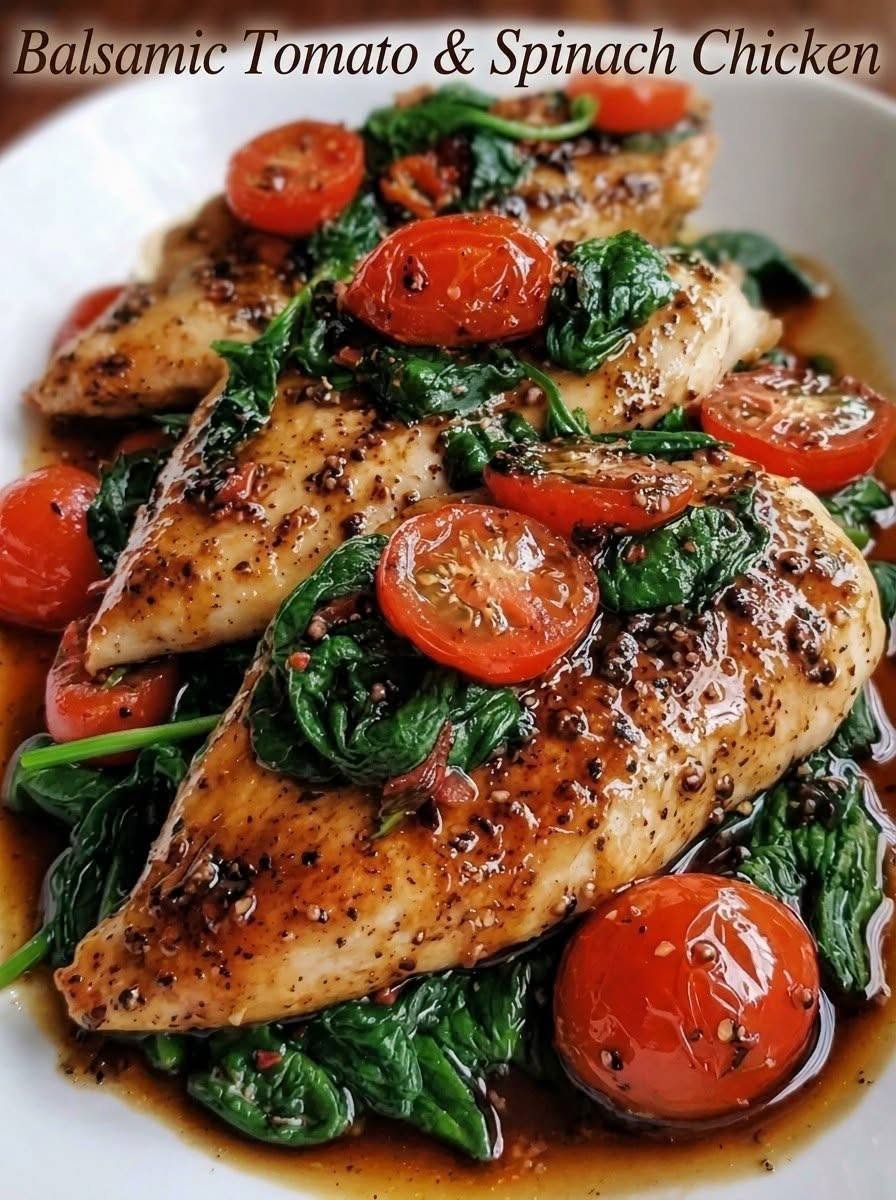
Balsamic Tomato & Spinach Chicken
1. Recipe Description
Balsamic Tomato & Spinach Chicken is a delicious, restaurant-style dinner that combines tender, golden-brown chicken breasts with juicy tomatoes, fresh spinach, garlic, Italian herbs, and a rich balsamic glaze. The balsamic vinegar adds a beautiful balance of sweet and tangy flavor, while the tomatoes release their natural juices to create a light, savory sauce that coats the chicken perfectly.
This recipe is ideal for anyone who wants a satisfying homemade meal without spending hours in the kitchen. It uses simple ingredients, cooks in one skillet, and delivers a wonderful combination of protein, vegetables, and Mediterranean-inspired flavors. The chicken develops a flavorful golden crust, the tomatoes become soft and juicy, and the spinach wilts gently into the sauce.
A small amount of honey helps balance the acidity of the balsamic vinegar, while garlic, oregano, and basil give the dish a fragrant Italian-inspired character. A finishing sprinkle of Parmesan cheese is optional but adds a creamy, savory touch.
Serve this chicken with roasted potatoes, steamed rice, whole-wheat pasta, or crusty bread to soak up the delicious sauce. It is equally suitable for a weeknight family dinner or a special meal when you want something simple but impressive.
2. Recipe Information
-
Preparation time: 15 minutes
-
Cooking time: 25 minutes
-
Total time: 40 minutes
-
Servings: 4
-
Cuisine: Mediterranean-inspired
-
Course: Main course
-
Cooking method: Pan-seared and simmered
-
Difficulty: Easy
-
Dietary style: High-protein; naturally gluten-free when suitable ingredients are used
-
Best served: Fresh and warm
3. Ingredients
For the chicken
-
4 boneless, skinless chicken breasts, approximately 1½–2 pounds total
-
1 tablespoon olive oil
-
1 teaspoon Italian seasoning
-
½ teaspoon garlic powder
-
½ teaspoon paprika
-
½ teaspoon salt, or to taste
-
¼ teaspoon freshly ground black pepper
For the balsamic tomato sauce
-
2 tablespoons olive oil
-
4 cloves garlic, minced
-
2 cups cherry tomatoes, halved
-
2 tablespoons balsamic vinegar
-
1 tablespoon honey
-
½ cup low-sodium chicken broth
-
1 teaspoon Dijon mustard, optional
-
½ teaspoon dried oregano
-
¼ teaspoon red pepper flakes, optional
-
Salt and black pepper, to taste
For the spinach
-
4 cups fresh baby spinach
-
¼ cup freshly grated Parmesan cheese, optional
-
1 tablespoon chopped fresh basil
-
1 teaspoon fresh lemon juice, optional
Optional garnish
-
Fresh basil leaves
-
Extra Parmesan cheese
-
A drizzle of extra-virgin olive oil
-
Freshly cracked black pepper
4. Instructions
Step 1: Prepare the chicken
Pat the chicken breasts dry with paper towels. Removing excess moisture helps the chicken develop a beautiful golden-brown crust during cooking.
If the chicken breasts are very thick, slice them horizontally into thinner cutlets or gently pound them to an even thickness. This helps the chicken cook more evenly and prevents the thinner edges from drying out before the centers are done.
In a small bowl, combine the Italian seasoning, garlic powder, paprika, salt, and black pepper. Sprinkle the seasoning mixture evenly over both sides of the chicken.
Press the seasonings gently onto the meat so they adhere well. Let the chicken rest for approximately five minutes while you prepare the remaining ingredients.
Step 2: Sear the chicken
Heat one tablespoon of olive oil in a large skillet over medium-high heat. A heavy skillet, such as stainless steel or cast iron, works especially well because it retains heat and encourages browning.
When the oil is hot, carefully place the chicken in the pan. Avoid overcrowding; cook in batches if necessary.
Sear the chicken for approximately 4–6 minutes on the first side, depending on thickness, until it develops a golden crust. Turn and cook the other side for another 3–5 minutes.
The chicken does not need to be completely cooked at this stage because it will finish cooking in the sauce. Transfer it to a clean plate and set aside.
Do not scrape away the browned bits stuck to the bottom of the skillet. These flavorful pieces will help create a rich, savory sauce.
Step 3: Prepare the garlic and tomatoes
Reduce the heat to medium and add two tablespoons of olive oil to the skillet if needed.
Add the minced garlic and cook for approximately 30 seconds, stirring frequently. The garlic should become fragrant without turning dark brown, as burnt garlic can make the sauce bitter.
Add the halved cherry tomatoes and stir gently. Cook for 3–4 minutes, allowing the tomatoes to soften and release some of their juices.
As the tomatoes warm, their natural sweetness becomes more pronounced. Some tomatoes may begin to burst, creating a fresh, flavorful base for the balsamic sauce.
If you prefer a smoother sauce, gently press a few tomatoes with the back of a spoon. Leave the rest intact for attractive color and texture.
Step 4: Make the balsamic glaze
Pour the balsamic vinegar into the skillet and stir, loosening the browned bits from the bottom of the pan.
Add the honey, chicken broth, Dijon mustard if using, dried oregano, and red pepper flakes if desired. Whisk or stir until the ingredients are combined.
Let the sauce simmer gently for 2–3 minutes. It should become fragrant and slightly reduced, with a balanced mixture of tangy vinegar, sweet honey, savory broth, and juicy tomato flavor.
Taste the sauce before adding extra salt. Balsamic vinegar varies in sweetness and acidity, so you can adjust the balance according to your preference.
-
If the sauce is too tangy, add a small amount of honey.
-
If it is too sweet, add a few drops of lemon juice or a little extra balsamic vinegar.
-
If it becomes too thick, add a splash of chicken broth.
-
If you want a stronger savory flavor, add a little more oregano or black pepper.
Avoid boiling the sauce too aggressively, as excessive reduction can make it overly concentrated.
Step 5: Return the chicken to the skillet
Carefully return the seared chicken breasts to the pan, nestling them among the tomatoes.
Spoon some of the balsamic tomato sauce over each piece so the chicken is coated evenly. Reduce the heat to medium-low and cover the skillet partially with a lid.
Simmer for approximately 5–10 minutes, depending on the thickness of the chicken, until it is fully cooked. Turn the chicken once during this stage if needed to help it absorb the sauce.
Use a food thermometer to check the thickest part of each breast. Chicken should reach an internal temperature of 165°F (74°C).
Once cooked, the chicken should be tender, juicy, and coated in the glossy balsamic sauce. Avoid prolonged simmering after it reaches a safe temperature, as this can dry out the meat.
Step 6: Add the fresh spinach
Reduce the heat to low and add the fresh baby spinach in handfuls. Stir gently as each handful begins to wilt.
The spinach will shrink considerably as it cooks, so four cups may initially look like a large amount but will blend easily into the sauce.
Cook for approximately 1–3 minutes, just until the leaves become tender and bright green. Avoid overcooking the spinach, which can become dull in color and lose its fresh texture.
Stir the spinach around the chicken so it absorbs the tomato juices and balsamic glaze.
If the sauce looks too thick after adding the spinach, add one or two tablespoons of chicken broth. If it seems too thin, let it simmer uncovered for another minute or two.
Step 7: Finish with Parmesan and basil
Turn off the heat and sprinkle the grated Parmesan cheese over the chicken, if desired.
Add the chopped fresh basil and a small squeeze of lemon juice. The basil brings a fragrant, fresh finish, while lemon juice brightens the richness of the balsamic sauce.
Taste once more and adjust the salt and pepper if necessary.
For an extra-special presentation, drizzle a little extra-virgin olive oil over the finished dish and garnish with fresh basil leaves and additional Parmesan.
Step 8: Rest and serve
Allow the chicken to rest in the skillet for approximately 3–5 minutes before serving. This brief resting period helps the meat retain its juices.
Transfer each chicken breast to a plate and spoon generous amounts of tomatoes, spinach, and balsamic sauce over the top.
Serve immediately while the sauce is warm and fragrant.
5. Tips for the Best Balsamic Tomato & Spinach Chicken
Choose evenly sized chicken breasts. Similar thickness helps the chicken cook consistently. If necessary, pound the breasts gently or cut them into thinner cutlets.
Dry the chicken before seasoning. Excess moisture prevents proper browning, so patting the chicken dry helps produce a more flavorful crust.
Use good-quality balsamic vinegar. A balanced balsamic vinegar creates a better glaze. Very sharp varieties may require a little more honey, while naturally sweet varieties may need less.
Do not burn the garlic. Garlic cooks quickly, especially in a hot skillet. Stir continuously and add the tomatoes as soon as the garlic becomes fragrant.
Avoid overcooking the chicken. Check the internal temperature with a food thermometer and remove the skillet from the heat once the chicken reaches 165°F (74°C).
Add spinach near the end. Spinach wilts quickly. Adding it during the final few minutes preserves its color and fresh flavor.
Adjust the sauce gradually. Add sweetener, vinegar, broth, or seasoning in small amounts, tasting as you go.
Use the right skillet. A large skillet provides room for the chicken and vegetables. If the pan is crowded, the chicken may steam instead of brown.
6. Delicious Variations
Creamy Balsamic Chicken
For a creamier version, stir in 2–3 tablespoons of heavy cream after the chicken is fully cooked. Simmer gently for one minute before adding the spinach. The cream softens the tanginess of the vinegar and gives the sauce a richer texture.
Balsamic Chicken with Mushrooms
Add one cup of sliced mushrooms after the garlic and cook until they soften and release their moisture. Continue with the tomatoes and sauce as directed. Mushrooms add an earthy flavor that pairs beautifully with balsamic vinegar.
Spicy Balsamic Chicken
Increase the red pepper flakes or add a small amount of chopped fresh chili to the sauce. The gentle heat balances the sweetness of the tomatoes and honey.
Mozzarella-Topped Chicken
Place slices of fresh mozzarella over the chicken during the final two minutes of cooking. Cover the skillet briefly until the cheese begins to soften. Finish with fresh basil for a caprese-inspired variation.
Chicken Thigh Version
Replace the chicken breasts with boneless, skinless chicken thighs. They have a richer flavor and are generally more forgiving if cooked a little longer. Adjust the cooking time according to their size and verify that they reach at least 165°F (74°C).
Low-Carb Version
Omit the honey or replace it with a suitable low-carbohydrate sweetener. Serve the chicken with cauliflower rice, roasted broccoli, or sautéed zucchini instead of regular rice or pasta.
7. Serving Suggestions
Balsamic Tomato & Spinach Chicken pairs well with a wide variety of side dishes.
-
Garlic mashed potatoes: Their creamy texture complements the tangy tomato sauce.
-
Steamed rice: White or brown rice absorbs the flavorful juices.
-
Whole-wheat pasta: Toss pasta with a little olive oil and serve alongside the chicken.
-
Roasted vegetables: Zucchini, bell peppers, asparagus, and carrots make excellent accompaniments.
-
Cauliflower rice: A lighter, lower-carbohydrate option that works well with the sauce.
-
Crusty bread: Use bread to soak up the tomato juices and balsamic glaze.
-
Fresh green salad: A simple salad with lemon dressing balances the warm, savory main course.
For a complete dinner, serve one chicken breast with a generous portion of spinach and tomatoes and your preferred side dish.
8. Nutritional Information
The following values are approximate per serving, assuming four servings and excluding optional Parmesan cheese.
| Nutrient | Approximate amount |
|---|---|
| Calories | 300–360 |
| Protein | 38–45 g |
| Carbohydrates | 12–16 g |
| Fat | 10–14 g |
| Saturated fat | 2–3 g |
| Fiber | 2–3 g |
| Sugar | 7–10 g |
| Sodium | 400–650 mg |
Actual values depend on the size of the chicken breasts, the amount of olive oil used, the chicken broth, and the balsamic vinegar. Adding Parmesan or serving the chicken with rice, potatoes, or pasta will increase the total calories and carbohydrates.
9. Potential Benefits of the Ingredients
Chicken breast: Chicken provides high-quality protein, which supports muscle maintenance and normal body functions. It is also a source of several B vitamins.
Tomatoes: Tomatoes contain vitamin C, potassium, and lycopene, a naturally occurring antioxidant. Cooking tomatoes with a little oil can improve the availability of lycopene for absorption.
Spinach: Spinach contributes folate, vitamin K, vitamin A precursors, and other micronutrients. It also adds color and fiber to the meal.
Olive oil: Olive oil provides predominantly monounsaturated fats and is a common component of Mediterranean-style eating patterns.
Garlic: Garlic contributes a strong savory flavor, helping create a satisfying dish without relying entirely on salt.
Balsamic vinegar: Balsamic vinegar provides acidity and flavor, allowing the sauce to taste rich and balanced without requiring a large amount of additional fat.
Together, these ingredients create a balanced main dish that combines protein, vegetables, and flavorful fats. Its overall nutritional value depends on portion sizes and the side dishes served with it.
10. Storage and Reheating
Refrigeration: Allow leftovers to cool slightly, then transfer them to an airtight container and refrigerate within two hours of cooking. Use within 3–4 days.
Reheating on the stove: Place the chicken, spinach, tomatoes, and sauce in a skillet over medium-low heat. Add a splash of broth or water if necessary, cover, and heat until thoroughly warmed.
Microwave reheating: Place one portion in a microwave-safe dish, cover loosely, and heat in short intervals, turning the chicken as needed. Reheat leftovers to 165°F (74°C).
Freezing: The cooked chicken and sauce can be frozen in a freezer-safe container for up to approximately 2–3 months for best quality. The spinach and tomatoes may soften after thawing, but the dish will still work well served with rice or pasta.
Make-ahead preparation: Season the chicken and prepare the sauce ingredients ahead of time. Store them separately in the refrigerator, then cook the dish fresh when needed.
11. Frequently Asked Questions
Can I use chicken thighs instead of chicken breasts?
Yes. Boneless, skinless thighs work very well and provide a richer flavor. Adjust cooking time according to thickness and check that the thickest part reaches 165°F (74°C).
Can I make this recipe without honey?
Yes. The honey is optional and mainly balances the acidity of the balsamic vinegar. You can omit it or add a small amount of another sweetener according to taste.
Can I use frozen spinach?
Yes. Thaw frozen spinach completely and squeeze out excess water before adding it to the skillet. Use approximately 1 cup of thawed, well-drained spinach in place of the fresh spinach.
Why is my balsamic sauce too sour?
Some balsamic vinegars are more acidic than others. Add a little honey, allow the sauce to simmer gently, or stir in a small amount of broth and olive oil to balance the flavor.
Can I prepare this recipe in advance?
Yes. You can cook it a day ahead and refrigerate it promptly. Reheat gently with a splash of broth. For the freshest spinach color and texture, add the spinach shortly before serving if preparing the components in advance.
Is this recipe gluten-free?
The basic recipe can be gluten-free, but check the labels on your chicken broth, Dijon mustard, and balsamic vinegar to ensure they meet your dietary requirements. Serve with gluten-free sides if needed.
What can I use instead of Parmesan cheese?
You can omit the cheese entirely or use a suitable dairy-free alternative. The chicken and balsamic tomato sauce are flavorful without it.
How can I make the sauce thicker?
Simmer the sauce uncovered for a few extra minutes before adding the spinach. Avoid reducing it too much, as the balsamic vinegar may become overly concentrated.