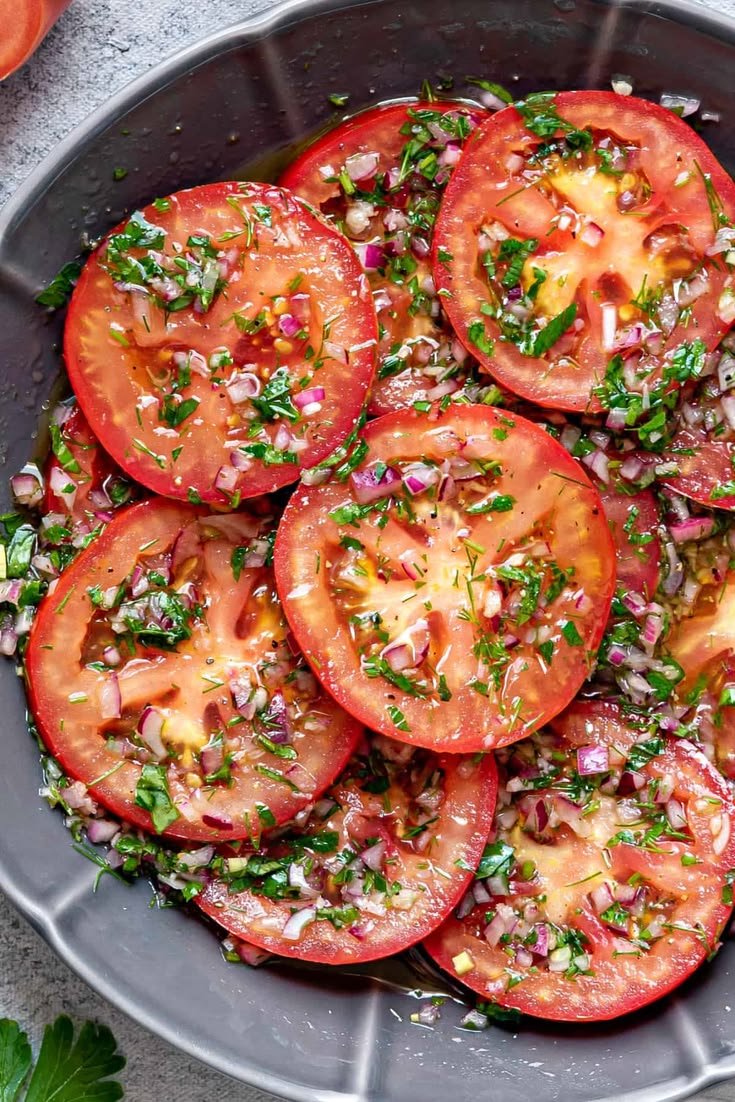
Marinated Herb & Tomato Salad
1. Recipe Description
Marinated Herb & Tomato Salad is a fresh, colorful, and delicious dish that brings together ripe tomatoes, fragrant herbs, crisp red onion, garlic, extra-virgin olive oil, and a bright splash of red wine vinegar or lemon juice. As the ingredients rest together, the tomatoes release their natural juices, creating a light, flavorful marinade that coats every bite.
This simple salad is inspired by Mediterranean home cooking, where fresh seasonal produce, aromatic herbs, and quality olive oil are used to create dishes full of natural flavor. It makes a wonderful side dish for grilled chicken, baked fish, roasted vegetables, sandwiches, and crusty bread. You can also enjoy it as a light lunch or serve it as part of a summer picnic or family dinner.
The secret to an exceptional Marinated Herb & Tomato Salad is allowing enough time for the ingredients to mingle. The tomatoes become more flavorful, the onion softens slightly, and the herbs infuse the dressing with their fresh aroma. Unlike a leafy salad, this recipe becomes even more delicious after a short resting period.
Best of all, it requires no cooking, uses everyday ingredients, and can be prepared in approximately 15 minutes. Whether you are planning a casual meal or preparing a beautiful Mediterranean-inspired spread, this refreshing salad is an easy recipe worth keeping.
2. Recipe Information
-
Preparation Time: 15 minutes
-
Marinating Time: 20–30 minutes
-
Total Time: Approximately 45 minutes
-
Cooking Time: None
-
Servings: 4–6
-
Cuisine: Mediterranean-inspired
-
Course: Side dish, appetizer, or light lunch
-
Difficulty: Easy
-
Dietary Style: Vegetarian, vegan, and naturally gluten-free
-
Best Season: Summer, although it can be enjoyed year-round
3. Ingredients
For the salad
-
2 pounds ripe tomatoes, approximately 900 grams
-
1/2 medium red onion, thinly sliced
-
1/4 cup fresh parsley, finely chopped
-
2 tablespoons fresh basil, chopped or torn
-
1 tablespoon fresh oregano, chopped, or 1 teaspoon dried oregano
-
1 small garlic clove, finely minced
-
2 tablespoons capers, rinsed and drained (optional)
-
1/4 cup crumbled feta cheese (optional)
-
Freshly ground black pepper, to taste
For the marinade
-
4 tablespoons extra-virgin olive oil
-
2 tablespoons red wine vinegar
-
1 tablespoon fresh lemon juice
-
1 teaspoon honey or maple syrup, optional
-
1/2 teaspoon sea salt, or to taste
-
1/4 teaspoon freshly ground black pepper
-
1/2 teaspoon Dijon mustard, optional
Ingredient note: Use ripe, flavorful tomatoes for the best results. A mixture of cherry tomatoes, Roma tomatoes, and heirloom tomatoes creates an attractive presentation and offers a variety of textures.
4. Instructions
Step 1: Choose and prepare the tomatoes
Wash the tomatoes thoroughly under cool running water and dry them with a clean kitchen towel. Remove any stems, tough cores, or damaged sections.
Cut medium and large tomatoes into bite-sized wedges or chunks. If you are using cherry tomatoes, cut them in half. Very small cherry tomatoes can be left whole, but cutting them helps release their juices into the marinade.
Place the prepared tomatoes in a large mixing bowl. Choose a bowl that leaves enough space for gently tossing the ingredients without crushing the tomatoes.
For the most attractive salad, combine tomatoes of different colors, such as red, yellow, orange, and deep purple. This creates a vibrant dish that looks beautiful on a serving table.
Step 2: Prepare the onion and herbs
Peel the red onion and slice it thinly. Thin slices blend into the salad more easily and provide a gentle sharpness without overpowering the tomatoes.
If you prefer a milder onion flavor, soak the sliced onion in cold water for 5–10 minutes. Drain it thoroughly and pat it dry before adding it to the salad.
Wash and dry the parsley, basil, and oregano. Chop the parsley finely, roughly chop the basil, and mince the fresh oregano if using it.
Add the onion and herbs to the bowl of tomatoes. Sprinkle in the minced garlic and optional capers.
Fresh herbs are important because they bring fragrance and brightness to the dish. Parsley adds a clean, grassy flavor, basil contributes a sweet aroma, and oregano gives the salad a distinctly Mediterranean character.
Step 3: Make the marinade
In a small bowl, combine the extra-virgin olive oil, red wine vinegar, lemon juice, sea salt, and black pepper.
If you enjoy a slightly balanced, rounded dressing, add the optional honey or maple syrup. For a dressing with a little more body, whisk in the Dijon mustard.
Whisk the ingredients until they are well combined. The dressing may separate slightly as it stands, which is normal for an oil-and-vinegar marinade.
Taste a small amount. It should be bright and tangy, with enough salt to bring out the tomatoes’ natural sweetness. Adjust the vinegar, lemon juice, or seasoning according to your preference.
Remember that the tomatoes will release their own juices during marination, so the dressing will become more flavorful as it rests.
Step 4: Combine the salad
Pour the marinade evenly over the tomatoes, onion, herbs, garlic, and capers.
Using a large spoon, gently toss everything together. Turn the tomatoes carefully so they are coated in the dressing without becoming crushed.
Scrape any dressing from the bottom of the bowl and distribute it throughout the salad. Every tomato piece should receive some of the flavorful mixture.
If you are adding feta cheese, consider reserving most of it for the final garnish. This helps maintain its texture and creates a more attractive presentation.
Step 5: Let the salad marinate
Cover the bowl and let the salad rest at room temperature for approximately 20–30 minutes if serving immediately.
During this time, the salt draws out some of the tomatoes’ natural juices. The olive oil, vinegar, garlic, and herbs blend with those juices, forming a delicious marinade.
Give the salad one gentle toss halfway through the resting period so the flavors distribute evenly.
For food safety, do not leave the salad at room temperature for more than two hours in total, or more than one hour when the temperature is above 90°F (32°C). If preparing it in advance, refrigerate it.
Step 6: Taste and adjust the seasoning
After marinating, taste a tomato along with a little dressing. The flavor should be fresh, slightly tangy, herbal, and balanced.
Add a pinch of salt if the tomatoes taste flat. If they are particularly sweet, another small splash of vinegar or lemon juice can provide balance. If the dressing tastes too sharp, add a little more olive oil.
Avoid adding too much salt at the beginning, especially if you plan to include feta or capers, because both ingredients contribute saltiness.
Step 7: Garnish and serve
Transfer the salad to a shallow serving bowl or platter. Spoon the tomato juices and dressing over the top.
Finish with the reserved feta, a few fresh basil leaves, and a light sprinkle of freshly ground black pepper. A small drizzle of extra-virgin olive oil adds shine and richness.
Serve with toasted sourdough, warm pita bread, grilled chicken, baked fish, or roasted vegetables. The flavorful juices at the bottom of the bowl are especially delicious when soaked up with bread.
For the best texture, serve the salad cool but not ice-cold. Very cold temperatures can make ripe tomatoes taste less aromatic, so allow a refrigerated salad to sit briefly before serving if food-safety conditions permit.
5. Tips for the Best Marinated Herb & Tomato Salad
Choose ripe tomatoes. Flavorful, ripe tomatoes are the foundation of this recipe. If possible, choose tomatoes that feel heavy for their size and have a pleasant aroma.
Use quality olive oil. Extra-virgin olive oil gives the marinade a fruity, peppery richness. Since the dressing is not cooked, its flavor is especially noticeable.
Do not skip the resting period. Even 20 minutes helps the ingredients blend. If time allows, let the salad rest for up to 30 minutes before serving.
Add delicate herbs at the right time. Basil is best added shortly before serving if you want it to retain its fresh color and fragrance. Parsley and oregano can be mixed in earlier.
Cut tomatoes evenly. Similar-sized pieces make the salad easier to eat and help the marinade distribute more consistently.
Avoid excessive mixing. Tomatoes can become mushy if stirred too vigorously. Fold the ingredients together gently.
Season gradually. Tomatoes vary in sweetness and acidity. Taste the salad after marinating before adding extra salt, vinegar, or lemon juice.
Use the juices. The dressing and tomato juices at the bottom of the bowl are part of the recipe. Spoon them over the salad rather than draining them away.
6. Delicious Variations
Greek-Style Tomato Salad
Add sliced cucumber, Kalamata olives, and crumbled feta. Replace the optional Dijon mustard with a little extra lemon juice for a simple Greek-inspired variation.
Tomato and Cucumber Herb Salad
Add one medium cucumber, cut into half-moons. This gives the salad extra crunch and makes it particularly refreshing during warm weather.
Tomato Salad with Mozzarella
Add small mozzarella balls or diced fresh mozzarella. Include a few extra basil leaves and use balsamic vinegar instead of red wine vinegar for a caprese-inspired flavor.
Spicy Marinated Tomato Salad
Add finely sliced fresh chili or a pinch of red pepper flakes to the marinade. The gentle heat contrasts nicely with the tomatoes’ sweetness.
Chickpea and Tomato Salad
Stir in one can of chickpeas, drained and rinsed. This makes the salad more filling and adds plant-based protein and fiber.
Avocado and Tomato Salad
Fold in one ripe avocado, diced just before serving. Because avocado softens easily, add it at the end and toss gently.
Balsamic Herb Tomato Salad
Replace the red wine vinegar with balsamic vinegar. This creates a deeper, slightly sweeter dressing that pairs especially well with basil and mozzarella.
Lemon-Dill Variation
Use fresh dill alongside the parsley and replace the oregano with a smaller amount of dill. This version pairs beautifully with grilled fish and roasted potatoes.
7. Serving Suggestions
Marinated Herb & Tomato Salad is versatile enough to accompany many meals.
-
With grilled chicken: Serve alongside lemon-herb chicken breast or grilled chicken skewers.
-
With seafood: Pair with baked cod, grilled salmon, or garlic shrimp.
-
With Mediterranean meals: Serve with hummus, warm pita, olives, and roasted vegetables.
-
With sandwiches: Add it beside chicken sandwiches, vegetable wraps, or toasted panini.
-
With pasta: Serve alongside pasta with olive oil, garlic, and fresh herbs.
-
As a light lunch: Combine it with chickpeas, white beans, or a slice of whole-grain bread.
-
For gatherings: Arrange it on a large platter and garnish with fresh herbs just before serving.
You can also spoon the marinated tomatoes over toasted bread to make a simple bruschetta-style appetizer. If doing so, toast the bread first to help it stay crisp.
8. Nutritional Information
The following values are estimates for one serving when the recipe makes six servings, using the listed olive oil and marinade but excluding optional feta cheese, capers, and sweetener.
| Nutrient | Approximate amount per serving |
|---|---|
| Calories | 135–155 |
| Protein | 2 g |
| Carbohydrates | 8 g |
| Dietary fiber | 2–3 g |
| Total fat | 12–14 g |
| Saturated fat | 1.5–2 g |
| Sugar | 5–6 g |
| Sodium | 200–300 mg |
Actual nutrition will vary according to tomato size, the quantity of dressing consumed, and the amount of salt used. Adding feta, chickpeas, or mozzarella will change the nutritional values.
9. Potential Benefits of the Ingredients
Tomatoes: Tomatoes provide vitamin C, potassium, and lycopene, a naturally occurring antioxidant. Their water content also contributes to the salad’s refreshing quality.
Extra-virgin olive oil: Olive oil supplies predominantly monounsaturated fat. It is a staple of Mediterranean-style eating patterns and helps carry the flavors of the herbs and dressing.
Fresh parsley: Parsley contributes freshness along with vitamin K and other micronutrients.
Fresh basil and oregano: These aromatic herbs add flavor without requiring a large amount of salt or a heavy dressing.
Red onion: Red onion contributes flavor, fiber, and plant compounds that complement the tomatoes.
Garlic: Garlic adds a distinctive savory taste and allows the marinade to develop a deeper flavor.
Lemon juice and vinegar: These ingredients brighten the dressing and balance the natural sweetness of ripe tomatoes.
Overall, this salad is a simple way to include vegetables and herbs in a meal. Its potential nutritional benefits depend on the full diet and portion size; no single recipe guarantees a particular health outcome.
10. Storage and Make-Ahead Instructions
For the best flavor and texture, Marinated Herb & Tomato Salad is best enjoyed on the day it is prepared.
-
Refrigeration: Store leftovers in an airtight container in the refrigerator and use within 2–3 days for best quality.
-
Before serving: Gently stir the salad to redistribute the marinade and tomato juices.
-
Make ahead: Prepare the dressing and chop the onion and herbs in advance. Cut and dress the tomatoes closer to serving time for a firmer texture.
-
Feta and avocado: Add these ingredients shortly before serving for the best appearance and texture.
-
Freezing: Freezing is not recommended because tomatoes become soft and watery after thawing.
Always refrigerate leftovers promptly. Discard the salad if it has been left out beyond recommended food-safety limits or shows signs of spoilage.
11. Frequently Asked Questions
Can I make Marinated Herb & Tomato Salad the night before?
You can prepare the dressing and wash the herbs in advance, but cutting and marinating the tomatoes shortly before serving usually gives the best texture. If you make the complete salad ahead, refrigerate it and expect the tomatoes to become softer and release more liquid.
Which tomatoes are best for this recipe?
Ripe heirloom, Roma, vine-ripened, and cherry tomatoes all work well. Choose tomatoes with good flavor rather than focusing only on appearance. Combining several varieties creates a colorful presentation.
Can I use dried herbs instead of fresh herbs?
Yes. Use approximately one-third the quantity of dried herbs because dried herbs have a more concentrated flavor. Fresh basil is particularly nice in this salad, but dried oregano works well in the marinade.
Is this salad vegan?
Yes, the base recipe is vegan when you use olive oil and omit the optional feta cheese. If you add a sweetener, maple syrup is a vegan alternative to honey.
How can I make the salad less acidic?
Reduce the vinegar slightly, use ripe sweet tomatoes, or add a little more olive oil. A small amount of honey or maple syrup can also soften the sharpness if desired.
Why does my tomato salad become watery?
Tomatoes naturally release liquid when cut and salted. This is normal and contributes to the marinade. If you want a thicker dressing, use slightly less vinegar and oil, or serve the salad with a slotted spoon while reserving the juices for bread.
Can I add protein to make it a complete meal?
Yes. Chickpeas, white beans, grilled chicken, cooked shrimp, or mozzarella can make the salad more substantial. Add cooked proteins after they have been cooled and stored safely.
Can I use lemon juice instead of vinegar?
Absolutely. Replace the red wine vinegar with additional lemon juice, adjusting the quantity to taste. The flavor will be brighter and more citrus-forward.
Is this recipe suitable for a summer gathering?
Yes. It is easy to prepare, colorful, and suitable for serving alongside grilled dishes. Keep it refrigerated when not being served, particularly in warm weather.
What should I do with leftover marinade?
The remaining tomato juices and dressing can be spooned over toasted bread or served with cooked vegetables. Because the mixture has been in contact with raw produce, refrigerate it promptly and use it with the leftovers rather than storing it indefinitely.