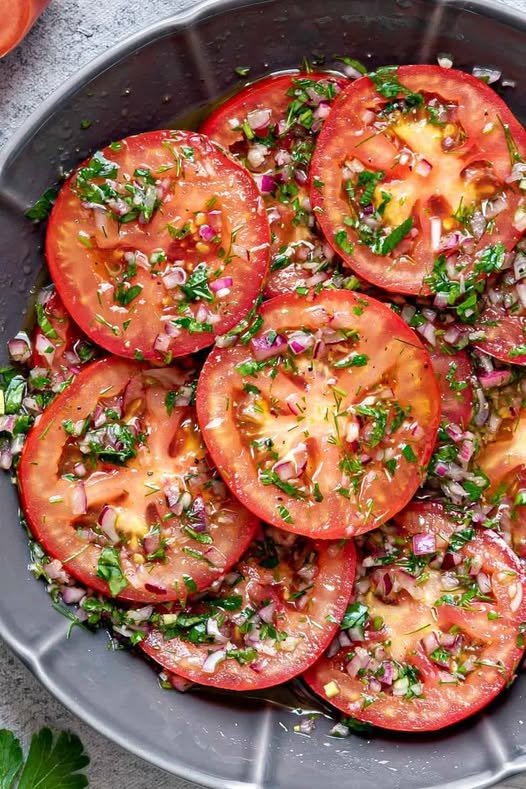
Marinated Tomato Salad with Fresh Herbs – A Fresh, Flavorful Mediterranean Recipe
Recipe Description
Marinated Tomato Salad with Fresh Herbs is a simple, colorful dish that celebrates the natural sweetness and juiciness of ripe tomatoes. Fresh tomatoes are tossed with extra-virgin olive oil, red wine vinegar, garlic, and a generous handful of fragrant herbs to create a refreshing salad bursting with Mediterranean flavor.
The secret to this recipe is allowing the tomatoes to marinate before serving. As they rest, their juices combine with the olive oil, vinegar, garlic, and herbs to create a light, flavorful dressing. The tomatoes become even more delicious as they absorb the seasoning, while the fresh herbs add brightness and aroma to every bite.
This salad is perfect for summer lunches, family dinners, picnics, barbecues, and Mediterranean-inspired meals. It requires no cooking, uses simple ingredients, and takes only a few minutes to prepare. You can serve it as a side dish, spoon it over toasted bread, or pair it with grilled chicken, fish, or roasted vegetables.
Whether you use juicy cherry tomatoes, colorful heirloom tomatoes, or classic garden tomatoes, this recipe is an easy way to make fresh produce the star of your table.
Recipe Information
- Preparation Time: 15 minutes
- Marinating Time: 30–60 minutes
- Total Time: Approximately 45–75 minutes
- Servings: 4–6
- Course: Salad or side dish
- Cuisine: Mediterranean-inspired
- Cooking Method: No-cook
- Difficulty: Easy
- Flavor Profile: Fresh, tangy, herbaceous, and slightly sweet
Ingredients
For the Tomato Salad
- 2 pounds ripe tomatoes, cut into wedges or bite-sized pieces
- 1 cup cherry tomatoes, halved (optional, for extra color)
- ¼ small red onion, thinly sliced
- 2 tablespoons fresh parsley, finely chopped
- 2 tablespoons fresh basil, torn or chopped
- 1 tablespoon fresh oregano, chopped, or 1 teaspoon dried oregano
- 1 tablespoon fresh chives, finely sliced (optional)
- 1 small garlic clove, finely minced
- ½ teaspoon sea salt, or to taste
- ¼ teaspoon freshly ground black pepper
For the Marinade
- ¼ cup extra-virgin olive oil
- 2 tablespoons red wine vinegar
- 1 tablespoon fresh lemon juice
- 1 teaspoon Dijon mustard (optional)
- ½ teaspoon honey, optional
- ¼ teaspoon dried oregano
- A small pinch of red pepper flakes, optional
Optional Additions
- ½ cup crumbled feta cheese
- ½ cup sliced Kalamata olives
- 1 small cucumber, diced
- ¼ cup thinly sliced green onions
- 1 tablespoon capers, rinsed
- Toasted sourdough or crusty bread, for serving
Choosing the Best Tomatoes
The quality of your tomatoes makes the biggest difference in this salad. Choose ripe tomatoes that feel slightly soft when gently pressed and have a fresh, pleasant aroma.
Heirloom tomatoes: These are excellent when you want a colorful salad. Their shapes, colors, and sweetness vary, creating an attractive presentation.
Roma tomatoes: Roma tomatoes have a firmer texture and fewer watery seed cavities than many other varieties. They are useful when you prefer a salad that holds its shape.
Cherry tomatoes: Small tomatoes provide concentrated sweetness and a juicy texture. Halve them before marinating so the dressing can reach their interiors.
Vine-ripened tomatoes: These are a convenient choice for everyday cooking and often have a good balance of sweetness and acidity when fully ripe.
You can use one variety or combine several types. A mixture of red, yellow, and orange tomatoes creates a beautiful dish with contrasting colors and flavors.
Step-by-Step Instructions
Step 1: Wash and Prepare the Tomatoes
Rinse the tomatoes thoroughly under cool running water and dry them with a clean kitchen towel.
Cut large tomatoes into bite-sized wedges or chunks. Slice smaller tomatoes in half lengthwise. Try to keep the pieces reasonably similar in size so the dressing coats them evenly.
If the tomatoes have very tough cores, remove those parts before cutting. There is usually no need to remove the seeds or peel the tomatoes because they contribute moisture, texture, and flavor.
Place the prepared tomatoes in a large mixing bowl. Choose a bowl that gives you enough room to toss the ingredients without crushing the delicate tomato pieces.
Step 2: Prepare the Red Onion
Peel the red onion and slice it very thinly. Thin slices blend more easily with the tomatoes and provide a gentle savory flavor without overwhelming the salad.
If you prefer a milder onion taste, soak the slices in cold water for about 5–10 minutes. Drain them thoroughly and pat them dry before adding them to the bowl.
Add the onion to the tomatoes and gently toss.
Step 3: Chop the Fresh Herbs
Wash the parsley, basil, oregano, and chives if using them. Dry the herbs well before chopping.
Finely chop the parsley and oregano. Tear the basil leaves by hand or slice them gently with a sharp knife. Thinly slice the chives.
Fresh herbs contribute much of the salad’s distinctive Mediterranean character. Parsley adds a clean, green flavor, basil brings a sweet aroma, and oregano provides a savory herbal note.
Add most of the herbs to the tomatoes, reserving a small amount for garnish just before serving.
Step 4: Make the Marinade
In a small bowl, whisk together the extra-virgin olive oil, red wine vinegar, and fresh lemon juice.
Add the minced garlic, Dijon mustard if desired, dried oregano, black pepper, and optional honey. Whisk until the ingredients are well combined.
The olive oil provides a smooth, fruity richness, while the vinegar and lemon juice supply acidity. Garlic adds savory depth, and Dijon mustard helps the dressing come together.
Taste the marinade before adding it to the tomatoes. If it seems too sharp, whisk in a little more olive oil or the optional honey. If it tastes too mild, add a small splash of vinegar or lemon juice.
Remember that the tomatoes will release their own juices during marinating, which will dilute and enrich the dressing naturally.
Step 5: Season the Tomatoes
Sprinkle the sea salt over the prepared tomatoes and onions. Add the marinade and toss gently using a large spoon.
Make sure the tomato pieces are coated without crushing them. The goal is to distribute the dressing evenly while keeping the tomatoes attractive and intact.
Add the chopped herbs and toss once more.
Salt draws moisture from the tomatoes, helping create a flavorful dressing at the bottom of the bowl. This is one reason the salad becomes especially delicious after resting.
Step 6: Allow the Salad to Marinate
Cover the bowl and let the salad rest for 30–60 minutes.
If your kitchen is warm or you plan to marinate the salad for longer, refrigerate it. For the best texture, avoid leaving cut tomatoes at room temperature for extended periods.
During the resting time, the tomatoes release their juices, the garlic infuses the oil, and the herbs mingle with the acidity of the vinegar and lemon.
If possible, gently toss the salad once halfway through the marinating time. This helps redistribute the dressing and ensures that the upper tomato pieces also absorb the flavors.
For a quick version, the salad can be served after 15 minutes, although a longer rest usually creates a more developed flavor.
Step 7: Taste and Adjust
After marinating, stir the salad gently and taste a tomato along with a little dressing.
Add more salt if needed, a small amount of black pepper for warmth, or extra lemon juice for brightness.
If the dressing seems too acidic, add a drizzle of olive oil. If the flavor seems flat, a small pinch of salt may bring the sweetness of the tomatoes forward.
Add the reserved fresh basil and parsley just before serving to preserve their color and aroma.
Step 8: Garnish and Serve
Transfer the salad to a shallow serving bowl or platter. Spoon the tomato juices and dressing over the top.
Finish with fresh herbs and, if desired, crumbled feta cheese or sliced Kalamata olives.
Serve at cool room temperature for the best flavor, but refrigerate the salad if it will not be eaten promptly. If chilled, let it sit briefly before serving so the olive oil and tomato flavors become more expressive.
Serve the salad with crusty bread to soak up the delicious juices.
Tips for the Best Marinated Tomato Salad
1. Use Ripe, Flavorful Tomatoes
Tomatoes that are ripe and fragrant create the best salad. If your tomatoes are bland, fresh herbs, garlic, and a balanced dressing can improve the overall flavor, but ripe seasonal tomatoes will always provide the best starting point.
2. Do Not Skip the Resting Time
Marinating allows the dressing to blend with the tomato juices. Even 30 minutes can make the salad noticeably more flavorful.
3. Add Fresh Basil Near Serving Time
Basil can darken when cut and exposed to air for a long period. Reserve some fresh basil for the final garnish to keep the salad looking vibrant.
4. Balance the Acidity
Tomatoes naturally contain acid, and vinegar and lemon add more. Taste the dressing before serving and adjust with olive oil, salt, or a small amount of honey as needed.
5. Avoid Overmixing
Tomatoes become soft when handled roughly. Toss gently and use a large bowl so the pieces have enough space to move.
6. Slice the Onion Thinly
Thin onion slices distribute their flavor throughout the salad. Large pieces can overpower the delicate sweetness of ripe tomatoes.
7. Save the Tomato Juices
The liquid at the bottom of the bowl is full of flavor. Spoon it over the salad when serving, or use it as a dressing for toasted bread.
8. Choose Good Olive Oil
Extra-virgin olive oil contributes a fruity, peppery flavor. Since the marinade is not cooked, use an olive oil you enjoy tasting on its own.
Delicious Variations
Mediterranean Tomato and Feta Salad
Add ½ cup of crumbled feta cheese and ½ cup of sliced Kalamata olives. The salty feta and briny olives complement the sweet tomatoes and fresh herbs.
This version pairs particularly well with grilled chicken, fish, roasted potatoes, or warm pita bread.
Tomato Cucumber Herb Salad
Add one diced cucumber. Remove excess seeds if the cucumber is especially watery. The cucumber provides a refreshing crunch and makes the salad even more suitable for warm weather.
Balsamic Marinated Tomato Salad
Replace the red wine vinegar with 1–2 tablespoons of balsamic vinegar. Balsamic vinegar adds a deeper, slightly sweet flavor. Because its taste can be more concentrated, begin with a smaller amount and adjust gradually.
Spicy Tomato Salad
Add a small pinch of red pepper flakes or finely chopped fresh chili to the marinade. The gentle heat contrasts nicely with the sweetness of ripe tomatoes.
Garlic Parmesan Tomato Salad
Sprinkle freshly grated Parmesan over the salad just before serving. The cheese adds a savory flavor that works beautifully with basil and olive oil.
Tomato and Avocado Salad
Add one ripe avocado, cut into chunks, just before serving. Toss carefully to prevent the avocado from becoming mushy. Because avocado softens quickly, this variation is best eaten soon after assembly.
Tomato and Chickpea Salad
Add one drained and rinsed can of chickpeas. The chickpeas contribute texture and protein, turning the salad into a more substantial lunch or light meal.
Italian-Inspired Tomato Salad
Add thinly sliced fresh mozzarella and extra basil. The combination of tomato, mozzarella, basil, and olive oil creates a fresh, Caprese-inspired variation.
What to Serve with Marinated Tomato Salad
Grilled chicken: Serve the salad beside grilled lemon-herb chicken for a fresh, balanced dinner.
Grilled fish: Its acidity complements white fish, salmon, and other simply seasoned seafood.
Roasted vegetables: Pair it with roasted zucchini, eggplant, bell peppers, or asparagus for a Mediterranean-style spread.
Pasta: Serve it alongside baked pasta, garlic spaghetti, or a simple olive-oil pasta dish.
Crusty bread: Spoon the tomatoes and their juices over toasted sourdough or rustic bread for a simple appetizer.
Grilled halloumi: The salty, firm cheese contrasts beautifully with juicy tomatoes.
Rice and grain bowls: Add the salad to bowls containing rice, couscous, quinoa, chickpeas, or grilled vegetables.
Picnic and barbecue meals: This salad makes a colorful side dish for grilled vegetables, burgers, kebabs, and other summer favorites. Keep it chilled when necessary for food safety.
Storage and Make-Ahead Instructions
Refrigeration
Store leftover salad in an airtight container in the refrigerator and use it within about 1–2 days for the best texture. Tomatoes soften as they sit in the dressing, so the salad may become juicier over time.
Make-Ahead Preparation
You can prepare the dressing, wash the tomatoes, and chop the onion several hours ahead. Store the dressing separately and refrigerate the prepared ingredients.
For the freshest texture, cut the tomatoes and combine everything closer to serving time. If you prefer a stronger marinated flavor, combine the ingredients in advance and refrigerate them until needed.
Freezing
Freezing is not recommended. Tomatoes become very soft after thawing, and the fresh herbs lose their texture. This recipe is best enjoyed fresh.
Food Safety
Refrigerate cut tomato salad promptly and do not leave it at room temperature for more than two hours, or more than one hour when the temperature is above 90°F (32°C).
If you have kept the salad chilled, remove only the portion you plan to serve and return the rest to the refrigerator.
Nutritional Information
The following estimates are for one serving when the recipe is divided into six portions, using the listed tomatoes, olive oil, vinegar, and herbs without optional cheese or other additions.
- Calories: Approximately 140–180
- Protein: Approximately 2–3 g
- Carbohydrates: Approximately 8–12 g
- Fat: Approximately 12–15 g
- Saturated Fat: Approximately 2 g
- Fiber: Approximately 2–3 g
- Sodium: Varies according to the amount of salt added
These figures are estimates. Tomato size, olive oil quantity, and optional ingredients can change the nutritional values. Adding feta, mozzarella, chickpeas, or avocado will also affect the calories and nutrient content.
Benefits of the Main Ingredients
Tomatoes
Tomatoes provide vitamin C, potassium, and lycopene, a naturally occurring plant compound. They also contribute moisture and a sweet-tart flavor to the salad.
Fresh Herbs
Parsley, basil, oregano, and chives add aroma and flavor. Using fresh herbs helps create a satisfying dish without relying on heavy dressings.
Extra-Virgin Olive Oil
Olive oil supplies predominantly monounsaturated fat. It helps carry the flavors of the garlic and herbs and is a common ingredient in Mediterranean-style eating patterns.
Garlic
Garlic adds strong savory flavor and makes the marinade more complex. Its aroma allows the salad to taste flavorful with a relatively short ingredient list.
Red Onion
Red onion contributes crunch and a mild sharpness that contrasts with the sweetness of ripe tomatoes.
The salad can be part of a varied, balanced diet. Its overall nutritional value depends on portion size and what you serve alongside it.
Frequently Asked Questions
Can I make this salad the night before?
You can, but the tomatoes will become softer and release more liquid overnight. For the best texture, prepare the dressing and herbs in advance, then cut and marinate the tomatoes closer to serving time.
Which herbs work best?
Basil, parsley, and oregano are excellent choices. Chives add a mild onion flavor, while a small amount of fresh thyme can provide extra herbal depth.
Can I use dried herbs instead of fresh?
Yes. Use smaller quantities because dried herbs are more concentrated. A general starting point is about one teaspoon of dried herbs for every tablespoon of fresh herbs, although the best amount depends on the herb.
Why is my salad watery?
Salt draws liquid from tomatoes, and the dressing adds moisture as well. This is normal. If you want less liquid, remove some of the watery seed portions from very juicy tomatoes or serve the salad in a shallow bowl.
Can I use balsamic vinegar?
Absolutely. Balsamic vinegar adds a slightly sweet, rich flavor. Start with a small amount and adjust it to your preference.
Is this salad suitable for a Mediterranean diet?
Its tomatoes, herbs, and olive-oil dressing fit naturally into many Mediterranean-inspired meals. Serve it with beans, whole grains, fish, or lean protein for a more complete meal.
Can I add cheese?
Yes. Feta, fresh mozzarella, or Parmesan all work well. Add cheese just before serving for the best texture and presentation.
How can I make the salad more filling?
Add chickpeas, white beans, quinoa, or grilled chicken. These additions provide more protein and make the salad suitable as a light main course.
Should I refrigerate the salad while it marinates?
If marinating for more than a short period, especially in a warm kitchen, refrigerate it. Chilling also helps keep the ingredients fresh. Let the salad sit briefly before serving if you prefer a less-cold flavor.
Can I use only cherry tomatoes?
Yes. Use approximately 2–3 pounds of cherry or grape tomatoes, halved. Their small size makes them easy to serve, and cutting them helps the marinade coat the interiors.