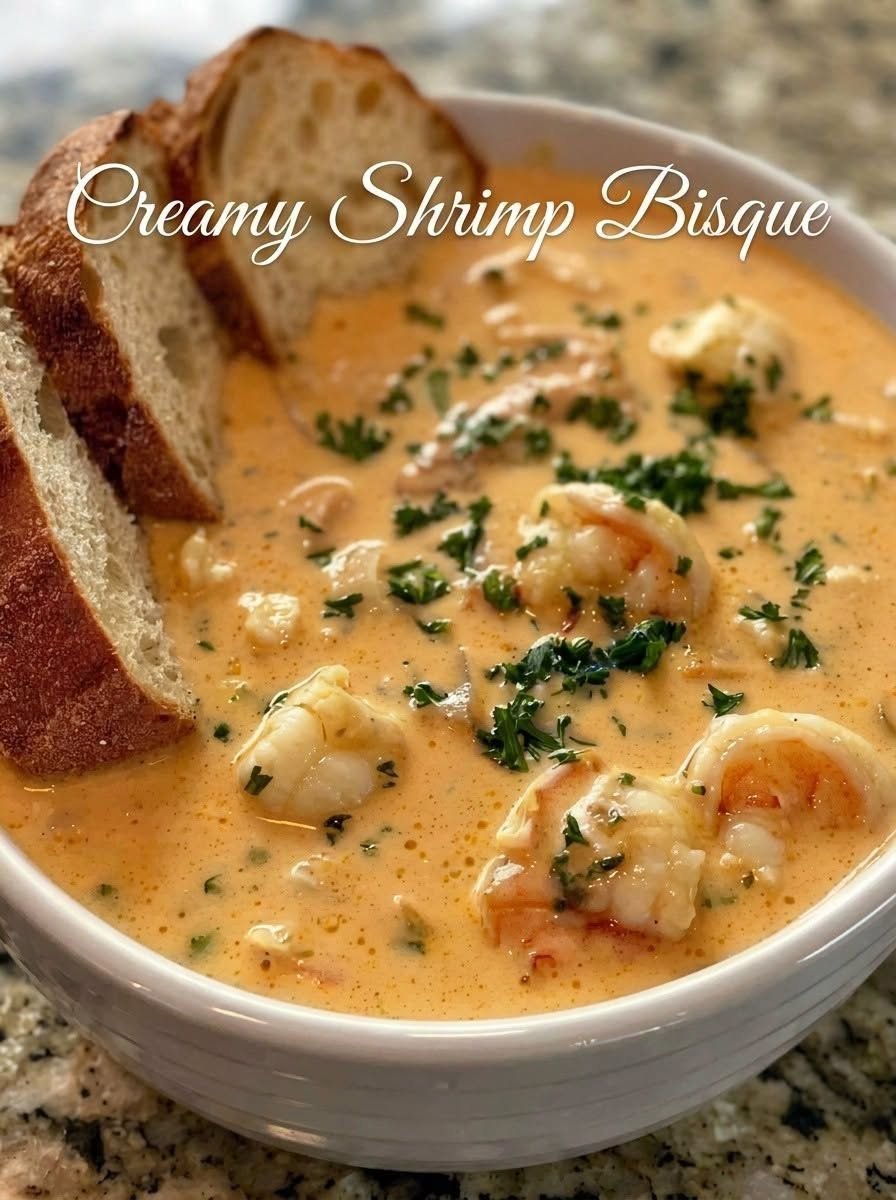
Creamy Shrimp Bisque – Rich, Velvety, and Restaurant-Style Seafood Soup
Recipe Description
Creamy Shrimp Bisque is a luxurious seafood soup made with tender shrimp, aromatic vegetables, garlic, butter, seafood stock, and a smooth, creamy finish. This comforting dish combines the delicate sweetness of shrimp with the rich flavors of sautéed onions, celery, tomatoes, and herbs. Every spoonful delivers a velvety texture and a deep seafood flavor that feels elegant enough for a special dinner yet simple enough to prepare at home.
Traditional bisque is known for its smooth consistency and concentrated seafood flavor. This homemade version uses shrimp shells to build a flavorful stock, while a small amount of tomato paste adds depth and a beautiful warm color. Heavy cream gives the soup its signature richness, and a touch of lemon juice brightens the flavor without overpowering the seafood.
The best part about this recipe is that it uses everyday ingredients and straightforward cooking techniques. You can prepare the shrimp stock while chopping the vegetables, then blend the soup until smooth and finish it with cream and tender shrimp. The result is a restaurant-style soup that pairs beautifully with crusty bread, garlic toast, or a fresh green salad.
Whether you are planning a cozy family dinner, a holiday starter, or a seafood-inspired weekend meal, Creamy Shrimp Bisque is a delicious choice. Its silky texture, buttery aroma, and delicate seafood flavor make it a recipe worth saving and preparing again.
Recipe Information
- Preparation Time: 20 minutes
- Cooking Time: 40 minutes
- Total Time: 60 minutes
- Servings: 4–6
- Cuisine: French-inspired
- Course: Soup or appetizer
- Cooking Method: Stovetop
- Difficulty: Moderate
- Main Ingredient: Shrimp
- Texture: Smooth, creamy, and velvety
Ingredients
For the Shrimp and Stock
- 1½ pounds large raw shrimp, peeled and deveined
- Shrimp shells, reserved for stock
- 5 cups seafood stock or low-sodium chicken stock
- 1 tablespoon olive oil
- 1 small onion, roughly chopped
- 1 celery stalk, chopped
- 1 small carrot, chopped
- 2 garlic cloves, lightly crushed
- 1 bay leaf
- ½ teaspoon dried thyme
- ½ teaspoon paprika
- ¼ teaspoon black peppercorns
- 1 tablespoon tomato paste
For the Bisque
- 3 tablespoons unsalted butter
- 1 tablespoon olive oil
- 1 medium yellow onion, finely chopped
- 1 celery stalk, finely chopped
- 1 small carrot, finely diced
- 3 garlic cloves, minced
- 2 tablespoons tomato paste
- 2 tablespoons all-purpose flour
- ½ cup dry white wine, optional
- 4 cups prepared shrimp stock
- 1 cup crushed tomatoes
- 1 teaspoon paprika
- ½ teaspoon dried thyme
- ¼ teaspoon cayenne pepper, optional
- ¾ cup heavy cream
- 1 tablespoon fresh lemon juice
- Salt, to taste
- Freshly ground black pepper, to taste
For Garnishing
- 2 tablespoons chopped fresh parsley or chives
- A drizzle of cream
- A pinch of paprika
- A few small cooked shrimp, reserved for topping
- Freshly cracked black pepper
- Lemon wedges, optional
Ingredient Notes and Substitutions
Shrimp: Large raw shrimp provide a sweet, delicate flavor and a satisfying texture. If possible, purchase shell-on shrimp because the shells are useful for preparing a flavorful stock. Frozen shrimp can also be used; thaw them safely in the refrigerator before cooking.
Seafood stock: Seafood stock gives the bisque its characteristic flavor. Homemade shrimp stock is excellent, but store-bought seafood stock is a convenient alternative. Low-sodium chicken stock can be used if seafood stock is unavailable, although the flavor will be milder.
Heavy cream: Heavy cream creates a rich, silky finish. For a lighter soup, use half-and-half, understanding that the bisque will be less rich and may require more careful heating.
Tomato paste: Tomato paste adds depth, a gentle sweetness, and a warm color. Cooking it briefly before adding liquid helps develop its flavor.
White wine: Dry white wine adds acidity and complexity. It is optional, so you can omit it and use extra stock instead.
Flour: A small amount of flour helps thicken the soup. If you need a gluten-free option, use a suitable gluten-free all-purpose flour blend or thicken the bisque by reducing it gently.
Lemon juice: A little fresh lemon juice balances the richness of the cream and butter. Add it gradually at the end and adjust according to taste.
Step-by-Step Instructions
Step 1: Prepare the Shrimp
If using frozen shrimp, thaw them in the refrigerator overnight or place them in a sealed bag under cold running water until thawed. Pat the shrimp dry with paper towels.
Peel and devein the shrimp if necessary, reserving the shells for the stock. Keep the raw shrimp refrigerated while preparing the other ingredients.
Set aside four to six small shrimp if you would like an attractive garnish. These will be cooked separately or briefly poached in the hot bisque near the end.
Cut the remaining shrimp into smaller pieces if you prefer them distributed throughout the soup. Alternatively, keep them whole for a more substantial seafood bisque.
Step 2: Build the Shrimp Stock
Heat one tablespoon of olive oil in a large saucepan over medium heat. Add the reserved shrimp shells and cook for 3–4 minutes, stirring occasionally, until they turn pink and become fragrant.
Add the roughly chopped onion, celery, carrot, and crushed garlic. Cook for another 3 minutes, stirring to prevent the vegetables from sticking.
Add the seafood stock, bay leaf, dried thyme, peppercorns, paprika, and tomato paste. Stir to distribute the tomato paste throughout the liquid.
Bring the mixture to a gentle simmer. Reduce the heat and cook uncovered for 20–25 minutes. Avoid boiling vigorously, because a gentle simmer helps develop flavor without making the stock cloudy or excessively concentrated.
Strain the stock through a fine-mesh sieve into a heatproof bowl, discarding the shells and vegetables. Press the solids gently with the back of a spoon to release some liquid, but do not force the solids through the sieve.
You should have approximately four cups of flavorful stock. If necessary, add a little additional stock or water to reach that amount.
For a quicker version, skip this step and use prepared seafood stock. The soup will still be delicious, although the flavor may be less concentrated.
Step 3: Sauté the Vegetables
Melt the butter with one tablespoon of olive oil in a large heavy-bottomed saucepan over medium heat.
Add the finely chopped onion, celery, and carrot. Cook for 6–8 minutes, stirring regularly, until the vegetables soften. They should become fragrant and tender without developing a dark brown color.
Add the minced garlic and cook for another 30–45 seconds. Stir constantly so the garlic does not burn.
Add the tomato paste and paprika. Cook for 1–2 minutes, stirring well. This short cooking step removes some of the raw taste of the tomato paste and allows its flavor to blend with the butter, vegetables, and spices.
If using cayenne pepper, add it now. Start with a small amount because the goal is to complement the sweetness of the shrimp rather than make the soup excessively spicy.
Step 4: Add the Flour
Sprinkle the flour evenly over the softened vegetables. Stir continuously for approximately 1–2 minutes until the flour is incorporated and no dry patches remain.
Cooking the flour briefly helps prevent a raw flour taste in the finished soup. The mixture may look thick at this stage, which is normal.
If you are making a gluten-free version, use an appropriate gluten-free flour blend or omit the flour and allow the soup to reduce slightly before blending.
Step 5: Deglaze with White Wine
If using white wine, pour it into the saucepan gradually. Stir while scraping the bottom of the pan to loosen any flavorful browned bits.
Allow the wine to simmer for 2–3 minutes so that some of the alcohol evaporates and the liquid reduces slightly.
If you prefer not to use wine, simply add a little stock and scrape the bottom of the pan. The recipe will still develop a rich flavor from the vegetables, tomato paste, and shrimp stock.
Step 6: Add the Stock and Tomatoes
Pour the prepared shrimp stock into the saucepan in stages, stirring after each addition to help prevent lumps from forming.
Add the crushed tomatoes and dried thyme. Stir until the vegetables, stock, and tomatoes are evenly combined.
Bring the mixture to a gentle simmer, then reduce the heat to medium-low. Cook uncovered for 15–20 minutes, stirring occasionally.
During this time, the vegetables will become very tender, and the flavors will blend together. If the soup begins to reduce too much, add a little extra stock.
Taste the liquid before adding much salt. Seafood stock, canned tomatoes, and prepared broth can contain different amounts of sodium, so it is best to season gradually.
Step 7: Blend Until Smooth
Remove the saucepan from the heat and remove the bay leaf if one was used in the bisque base.
Use an immersion blender to blend the soup until smooth and velvety. Move the blender slowly through the liquid, keeping the blade submerged to minimize splashing.
If using a countertop blender, work in small batches and follow the manufacturer’s instructions for blending hot liquids. Never fill the blender to the top with hot soup, and allow steam to escape according to the appliance’s instructions.
For an especially refined texture, pass the blended soup through a fine-mesh sieve. This step is optional but can remove tiny vegetable pieces and make the bisque feel more restaurant-like.
Return the smooth soup to the saucepan.
Step 8: Add the Cream
Reduce the heat to low and stir in the heavy cream. Warm the soup gently for 2–3 minutes, stirring occasionally.
Do not allow the bisque to boil vigorously after adding the cream. Gentle heating helps maintain a smooth texture and reduces the chance of separation.
The soup should now have a creamy, warm orange-pink color. If it is thicker than you prefer, add a little warm stock. If it is too thin, allow it to simmer gently for a few additional minutes before adding the shrimp.
Step 9: Cook the Shrimp
Add the raw shrimp to the warm bisque. Cook gently for approximately 3–5 minutes, depending on their size, until they are opaque and cooked through.
Avoid prolonged simmering, because shrimp can become rubbery if overcooked. For food safety, shrimp should reach an internal temperature of 145°F (63°C).
If you reserved shrimp for garnish, cook them separately in a small skillet with a little butter or poach them in the bisque until fully cooked.
If you prefer a completely smooth bisque, you can blend the vegetable and stock base before adding the cream and shrimp, as described above. Keep the shrimp whole or in pieces afterward so they retain their texture.
Step 10: Finish with Lemon and Seasoning
Turn off the heat. Stir in the fresh lemon juice and taste the soup.
Add salt and freshly ground black pepper as needed. If you want more warmth, add a tiny pinch of cayenne. If you prefer a brighter flavor, add a few extra drops of lemon juice.
Avoid adding too much lemon at once. Its purpose is to balance the creaminess and highlight the seafood, not overpower the shrimp.
Let the bisque rest for 2 minutes before serving. This short rest allows the flavors to settle while keeping the soup warm.
Step 11: Garnish and Serve
Ladle the hot bisque into warmed bowls. Place a few cooked shrimp in the center of each bowl, then sprinkle with chopped parsley or chives.
Add a light drizzle of cream, a pinch of paprika, and freshly cracked black pepper. A small lemon wedge on the side allows everyone to adjust the acidity to their preference.
Serve immediately with crusty bread, garlic toast, or a fresh green salad. The bread is particularly good for soaking up the rich, creamy soup.
Tips for the Best Creamy Shrimp Bisque
1. Use the Shrimp Shells
Shrimp shells contain a great deal of seafood flavor. Simmering them with vegetables and stock creates a more flavorful base than plain broth alone.
2. Keep the Stock at a Gentle Simmer
A rolling boil is unnecessary. Gentle simmering extracts flavor while helping the stock remain clean-tasting.
3. Cook the Tomato Paste
Allowing the tomato paste to cook for a minute or two gives the bisque a deeper, more rounded flavor.
4. Blend Carefully
Hot soup can cause serious splashes. An immersion blender is convenient, but keep its blade submerged. If using a countertop blender, work in small batches and follow the manufacturer’s safety instructions.
5. Add the Cream Near the End
Cream is best added after blending. Heat it gently to create a smooth finish without unnecessary boiling.
6. Do Not Overcook the Shrimp
Add shrimp near the end of cooking. They need only a few minutes, depending on size, to become opaque and tender.
7. Adjust the Thickness
For a thicker bisque, simmer the blended base before adding the shrimp and cream. For a thinner consistency, stir in warm seafood stock a little at a time.
8. Taste Before Serving
Stock and canned tomatoes vary in saltiness and acidity. Adjust the salt, pepper, and lemon juice gradually for the best balance.
Serving Suggestions
Crusty French bread: A warm baguette or rustic loaf complements the creamy texture and makes it easy to enjoy every drop of soup.
Garlic bread: Toasted bread with garlic and herbs adds a savory contrast to the delicate seafood flavor.
Fresh green salad: A salad with lettuce, cucumber, tomatoes, and a light vinaigrette balances the richness of the bisque.
Roasted asparagus: Tender asparagus with olive oil, black pepper, and lemon makes a simple side dish.
Roasted vegetables: Carrots, zucchini, or broccoli add color and texture to the meal.
Seafood dinner menu: Serve smaller bowls of bisque before grilled fish or baked salmon for an elegant seafood-inspired dinner.
Recipe Variations
Spicy Creamy Shrimp Bisque
Add extra cayenne pepper or a small pinch of chili flakes when sautéing the vegetables. Taste gradually so the heat complements rather than masks the shrimp.
Garlic Shrimp Bisque
Add one or two additional minced garlic cloves to the vegetable base. Cook the garlic gently until fragrant before adding the flour.
Coconut Shrimp Bisque
For a dairy-free variation, replace the butter with olive oil and use unsweetened coconut milk instead of heavy cream. The flavor will be different, with a subtle coconut note that pairs nicely with shrimp.
Lobster and Shrimp Bisque
Replace some of the shrimp with cooked lobster meat. Add the lobster near the end so it warms through without becoming tough.
Smoky Paprika Bisque
Use smoked paprika instead of regular paprika for a deeper, slightly smoky flavor. A small amount is enough to add character without overwhelming the seafood.
Vegetable-Rich Bisque
Add a small amount of finely chopped fennel with the onion and celery. Fennel has a gentle anise-like flavor that pairs well with seafood.
Storage and Reheating
Refrigeration: Allow leftovers to cool promptly and place them in an airtight container in the refrigerator within two hours of cooking. Consume within 3–4 days.
Freezing: Cream-based soups can change texture when frozen, and cooked shrimp may become softer after thawing. For best quality, freeze the soup base before adding the cream and shrimp. Store it in a freezer-safe container for up to 2–3 months for best flavor.
Reheating: Warm the bisque slowly in a saucepan over low heat, stirring frequently. Avoid vigorous boiling. If the soup has thickened, add a splash of stock or water to restore the desired consistency.
Leftover safety: Reheat leftovers to 165°F (74°C). If you froze the base separately, thaw it in the refrigerator, heat it thoroughly, then add cream and shrimp and cook the shrimp until fully done.
Do not leave seafood soup at room temperature for more than two hours, or more than one hour when the temperature is above 90°F (32°C).
Nutritional Information
The following values are estimates per serving when the recipe is divided into six portions. Actual nutrition depends on the shrimp size, stock, cream, butter, and amount of soup served.
- Calories: Approximately 300–380
- Protein: Approximately 22–30 g
- Carbohydrates: Approximately 12–18 g
- Fat: Approximately 17–25 g
- Saturated Fat: Approximately 8–13 g
- Fiber: Approximately 2–3 g
- Sodium: Varies with the stock and added salt
These estimates do not include bread or other side dishes. Using half-and-half instead of heavy cream may reduce the fat and calorie content, while changing the flour or tomato quantity will also affect the nutrition.
Benefits of the Main Ingredients
Shrimp
Shrimp provides protein and nutrients such as vitamin B12, selenium, and iodine in varying amounts. Protein supports normal muscle maintenance and tissue repair as part of a balanced diet.
Carrots and Celery
Carrots provide beta-carotene, which the body can convert into vitamin A. Celery contributes flavor and small amounts of vitamins and minerals. Together, these vegetables build a flavorful soup base.
Tomatoes
Tomatoes contribute color, acidity, and compounds such as lycopene. Cooking tomatoes helps develop their flavor and blends their acidity into the soup.
Garlic and Herbs
Garlic, thyme, parsley, and paprika add flavor and aroma. These ingredients make the soup more interesting without relying entirely on salt.
Cream and Butter
Cream and butter provide richness and a silky texture. They also contribute saturated fat, so serving size and overall dietary pattern are worth considering.
This bisque can be part of a varied eating pattern, but its nutritional profile depends on the ingredients and portion size. People with shellfish allergies should avoid shrimp and any stock or ingredients containing shellfish.
Frequently Asked Questions
Can I use frozen shrimp?
Yes. Thaw frozen shrimp safely in the refrigerator or under cold running water in a sealed bag. Drain and pat dry before using. If the shrimp are already peeled, use seafood stock to build flavor instead of relying on the shells.
Can I make shrimp bisque without shrimp shells?
Absolutely. Use good-quality seafood stock or low-sodium chicken stock. The soup will still be flavorful, though homemade shrimp stock can provide a deeper seafood taste.
Why is my bisque too thin?
It may need more time to reduce. Simmer the blended base gently before adding the cream and shrimp. You can also use a little more flour when preparing the roux, but add it carefully to avoid a floury taste.
Why did my bisque become grainy?
The vegetables may not have been blended completely, or the cream may have been heated too aggressively. Blend the base thoroughly, strain if desired, and heat gently after adding cream.
Can I make this soup ahead of time?
Yes. Prepare the stock and blended soup base a day ahead, refrigerate promptly, and reheat gently. For the best shrimp texture, add the cream and shrimp shortly before serving.
Can I make it without wine?
Yes. Replace the wine with additional seafood stock. A small amount of lemon juice at the end can provide brightness without the wine.
Can I use milk instead of heavy cream?
You can, but the soup will be thinner and less rich. Whole milk is preferable to skim milk. Heat gently and avoid vigorous boiling.
Is shrimp bisque spicy?
This recipe is mildly seasoned rather than spicy. Cayenne pepper is optional, so you can leave it out for a milder soup or increase it slightly for more heat.
What is the difference between bisque and chowder?
Bisque is traditionally smooth and velvety, with a concentrated seafood flavor. Chowder is generally chunkier and often includes potatoes or other substantial ingredients. This recipe blends the vegetable base before adding the shrimp.
How can I make the bisque look restaurant-quality?
Use a smooth, evenly blended base, avoid overcooking the shrimp, and garnish each bowl with parsley, a light cream drizzle, and one or two cooked shrimp. Warm bowls also help the soup stay hot longer.