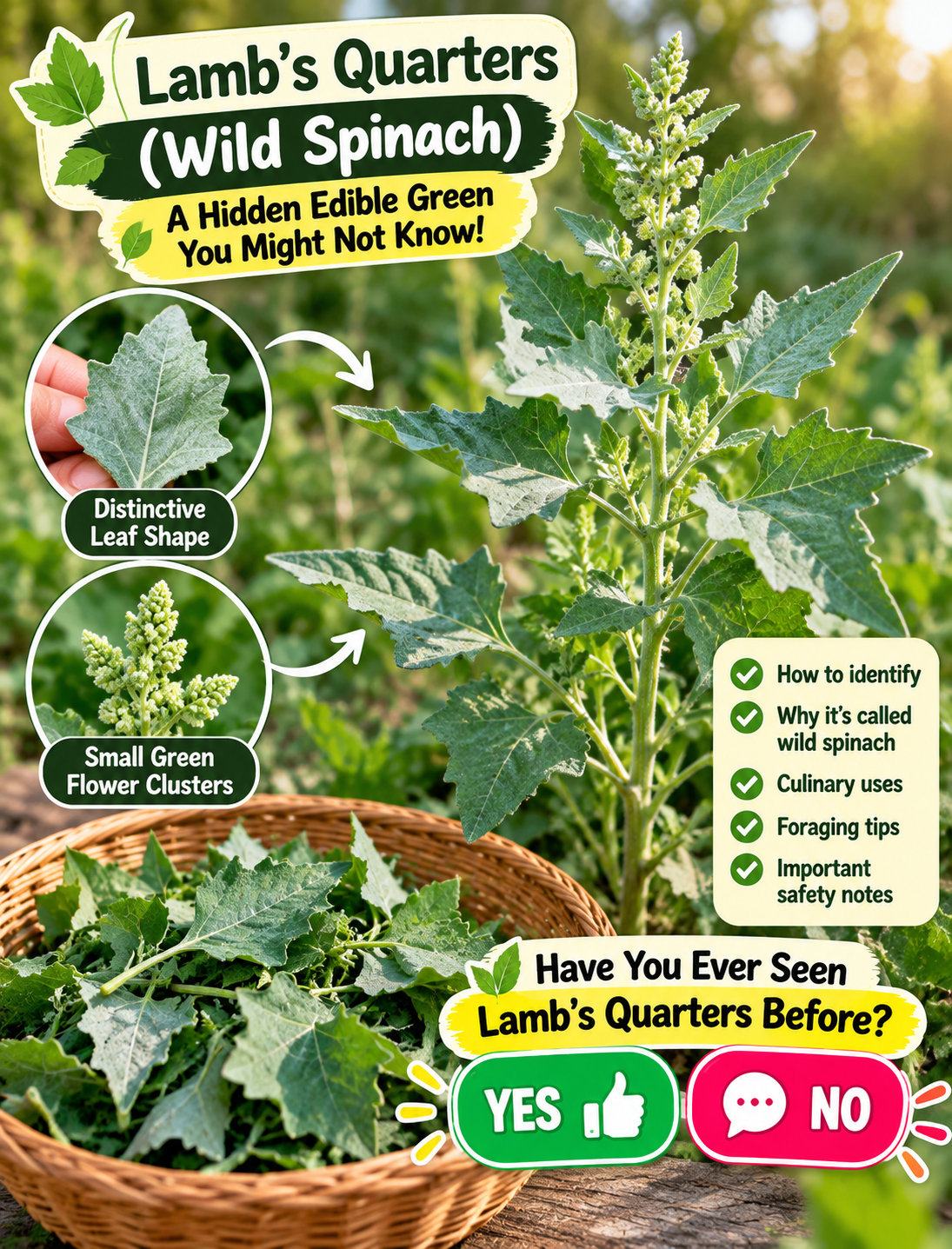
Lamb’s Quarters / Wild Spinach: What Is This Wild Green?
Have you ever seen this plant growing and didn’t know it could be used as a leafy green?
If you have ever pulled a leafy weed from a garden and wondered whether it was useful, you may have come across lamb’s quarters.
Common lambsquarters (Chenopodium album) is a widespread annual plant that is sometimes called wild spinach, goosefoot, or pigweed.
Young leaves and tender stems have traditionally been used as cooked greens, and some foragers use the plant in ways similar to spinach. However, identifying a wild plant correctly is essential before eating it.
A plant that looks similar is not automatically the same plant, and growing conditions also matter. Lambsquarters can accumulate nitrates, and wild plants may be exposed to pesticides, fertilizers, animal waste, or other contaminants.
What Are Lamb’s Quarters?
Lamb’s quarters is a leafy annual weed found across much of the United States. It can grow in gardens, cropland, disturbed ground, lawns, and other open areas.
The scientific name most commonly associated with common lambsquarters is Chenopodium album.
You may also hear several different names for this plant, including:
- Wild spinach
- Goosefoot
- Lamb’s quarter
- Lambsquarters
- Pigweed
The name “wild spinach” describes how the young leaves can be prepared, rather than meaning the plant is actually a type of cultivated spinach.
Utah State University Extension notes that young lambsquarters can be used similarly to spinach or other green vegetables.
Why Is It Called Wild Spinach?
The comparison comes mainly from the way the young leaves are eaten.
Tender lambsquarters can be used as a leafy green in salads or cooked dishes, although older plants become tougher. University extension resources describe young plants as suitable for salad greens or as a cooked pot herb.
The flavor is generally mild enough to work with familiar ingredients.
You can use properly identified young leaves in:
- Cooked vegetable dishes
- Soups
- Egg dishes
- Grain bowls
- Savory pies
- Mixed greens
- Simple sautéed greens
Think of it as a wild leafy green, not a miracle plant or medicinal cure.
How Can You Identify Lamb’s Quarters?
Correct identification is the most important part of wild-plant foraging.
Common lambsquarters usually has an upright, branching growth pattern. Its leaves vary in shape, but younger leaves often have a noticeable white or mealy-looking coating, while mature leaves can become more toothed and variable in shape.
The plant also produces small greenish flower clusters that are not showy.
Look for these identifying features:
- Upright growth — The plant commonly grows vertically with several branches.
- Green leaves — Leaf shape changes as the plant matures.
- White mealy appearance — Young leaves often have a distinctive pale or powdery-looking surface.
- Toothed leaves — Lower leaves may have noticeable shallow teeth.
- Small green flowers — Flowers appear in compact clusters.
- Annual growth — Common lambsquarters completes its life cycle in one growing season.
These features can help, but a written description alone is not enough to confirm a wild plant for eating.
Why Proper Identification Matters
Many wild plants can look similar when you first see them.
That makes casual identification risky.
Even experienced gardeners should avoid eating a plant when they are uncertain about its identity.
Follow this basic rule:
If you cannot confidently identify the plant using a reliable field guide or knowledgeable local expert, do not eat it.
Do not identify a plant based only on:
- A social media photograph
- A short video
- A comment from a stranger
- A general resemblance
- The fact that animals appear to eat it
Plant appearance can vary with age, growing conditions, and location.
Where Should You NOT Harvest Lamb’s Quarters?
Finding the correct plant is only half of the safety question.
You also need to consider where it grew.
Lambsquarters commonly grows in disturbed areas, agricultural settings, gardens, and other places where the soil may have been exposed to chemicals or contamination.
Avoid harvesting from:
- Roadsides
- Areas treated with herbicides or pesticides
- Recently fertilized areas
- Industrial or contaminated land
- Places near chemical runoff
- Manure piles
- Areas contaminated by animal feces
- Locations where you cannot determine the soil history
Oregon State University Extension advises avoiding produce contaminated with animal feces because wildlife and animals can introduce human pathogens.
Wild does not automatically mean clean.
Step-by-Step: How to Handle Lamb’s Quarters Safely
If you have positively identified the plant and know that it grew in a suitable, uncontaminated location, use a careful preparation routine.
Step 1: Confirm the Plant
Compare several features rather than relying on one leaf.
Check the growth pattern, leaf shape, pale mealy coating, stem structure, and flower clusters.
Step 2: Choose Young, Tender Growth
Young leaves and tender tops are generally more suitable for eating because older growth becomes tougher.
Step 3: Inspect the Leaves
Discard leaves that are:
- Damaged
- Moldy
- Diseased-looking
- Heavily insect-damaged
- Covered with dirt or animal contamination
Step 4: Wash Thoroughly
Rinse the greens carefully under clean running water.
Remove visible soil, insects, and debris.
Washing cannot make a plant safe if it was harvested from contaminated soil, so location matters before washing.
Step 5: Consider Cooking
Lambsquarters can be prepared similarly to spinach, including steaming or cooking as a pot herb.
Cooking can also reduce some of the oxalic acid present in leafy greens, although it does not make contaminated plants safe.
Step 6: Start With a Modest Portion
Lambsquarters contains oxalic acid, so it is sensible to treat it like a leafy green rather than eating large quantities. Research reviewing wild edible plants identified oxalic acid as an important precaution for common lambsquarters.
People who have been advised to limit dietary oxalates should discuss wild greens with their healthcare professional before adding them regularly.
Simple Ways to Eat Lamb’s Quarters
Once properly identified, cleaned, and prepared, young leaves can fit into familiar meals.
1. Sautéed Greens
- Wash the young leaves.
- Remove tougher stems.
- Heat a small amount of olive oil in a skillet.
- Add the greens.
- Cook until tender.
- Season with garlic, lemon, or black pepper.
2. Egg and Greens Skillet
- Lightly cook the greens.
- Add chopped tomatoes or onions.
- Make small spaces in the mixture.
- Add eggs.
- Cover and cook until the eggs reach your preferred doneness.
3. Add to Soup
Chop tender leaves and add them toward the end of cooking so they retain some texture.
4. Mix With Other Greens
Combine a small amount with familiar greens such as spinach, kale, or chard.
This can make the flavor more familiar while introducing a different leafy green.
What About the Nutrition?
Lambsquarters contains nutrients and plant compounds, and extension resources describe the foliage as containing vitamin C, carotenoids, and minerals.
However, nutrition can vary with:
- Plant age
- Growing conditions
- Soil
- Weather
- Plant part
- Preparation method
For that reason, it is better to think of lambsquarters as one possible leafy green rather than relying on it as a special source of a particular nutrient.
A varied diet containing many different vegetables and other whole foods remains a more practical approach to nutrition.
Traditional Food Use
Wild greens have been used as food in different cultures for generations.
Lambsquarters has been prepared as a cooked green and used in dishes similar to those made with spinach or other leafy vegetables. University and agricultural sources document its use as a salad green or pot herb.
Traditional food use is different from a medical claim.
You may enjoy lambsquarters as a food, but it should not be promoted as a treatment for disease or as a substitute for medical care.
Important Safety Points Before You Try It
Keep these points in mind before adding any wild green to your meal.
- Never eat an unidentified wild plant.
- Use several reliable identification features.
- Harvest only from areas known to be free from chemical and animal contamination.
- Wash greens thoroughly.
- Prefer young, tender leaves.
- Consider cooking rather than eating large quantities raw.
- Avoid making large amounts of wild greens a daily habit.
- Consider oxalate content if you have been told to limit oxalates.
- Do not assume cooking removes pesticides, heavy metals, or other environmental contaminants.
- When in doubt, leave the plant where it is.
Lambsquarters can also accumulate nitrates under certain growing conditions, particularly with drought stress or high nitrogen availability.
That is another reason to avoid plants growing in questionable locations or under unknown conditions.
Lamb’s Quarters vs. Regular Spinach
Although lambsquarters is sometimes called wild spinach, the two plants are not the same.
Regular spinach is a cultivated vegetable grown specifically as a food crop.
Lambsquarters is a wild or weedy plant that can be harvested as a leafy green when correctly identified and grown in a suitable location.
The cooking idea is similar, but the safety considerations are different because wild plants have unknown growing histories.
That distinction is especially important for beginners.
A Simple Beginner’s Approach
If you are interested in learning about wild edible plants, start slowly.
Try this approach:
- Learn one plant at a time.
- Use a reputable regional field guide.
- Compare multiple identification characteristics.
- Learn the plant’s common look-alikes.
- Start with a small culinary use after proper identification.
- Keep notes about where and when you found it.
- Never eat a plant simply because someone online called it edible.
This approach makes foraging more thoughtful and reduces avoidable mistakes.
Frequently Asked Questions
1. Is lamb’s quarters really edible?
properly identified common lambsquarters has a history of use as a leafy green, particularly when the leaves are young and tender.
2. Why is lamb’s quarters called wild spinach?
Because young leaves can be prepared and cooked in ways similar to spinach.
3. Can you eat lamb’s quarters raw?
Young leaves may be eaten raw, but cooking is another common preparation method and may reduce some oxalic acid.
4. How do you identify lamb’s quarters?
Look for its upright branching form, variable toothed leaves, white mealy appearance on young leaves, and small green flower clusters.
5. Can lamb’s quarters grow near roads?
Grow in disturbed areas and roadsides, but roadside plants should not be harvested because contamination may be difficult to assess.
6. Does lamb’s quarters contain oxalic acid?
Common lambsquarters can contain oxalic acid, which is one reason moderation and appropriate preparation are recommended.
7. Can I eat any plant that looks like lamb’s quarters?
No. Similar-looking plants can be difficult to distinguish, so never eat a wild plant unless its identity is confirmed.
8. Should lamb’s quarters be washed before eating?
Properly identified edible leaves should be washed thoroughly with clean running water before preparation.
Final Takeaway
Lamb’s quarters is more than just a garden weed. 🌿
Common lambsquarters (Chenopodium album) is a widespread wild plant that has been used as a leafy green and is sometimes called wild spinach.
Young leaves can be prepared much like spinach, making this an interesting discovery for people who enjoy learning about traditional foods and wild edibles.
But the most important part of the story is identification and safety.
Never eat an unknown wild plant. Avoid questionable harvesting locations, wash properly identified greens, and remember that cooking does not remove environmental contaminants.
If you are new to foraging, learning one plant carefully is much safer than trying several unfamiliar plants at once.