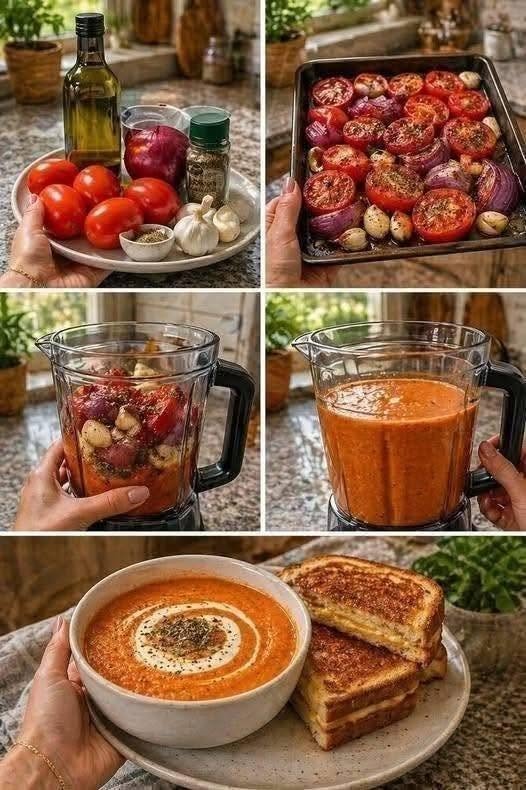
Roasted Tomato Soup
Description
Roasted Tomato Soup is a rich, comforting, and flavorful homemade soup made with ripe tomatoes, garlic, onion, olive oil, and fresh herbs. Roasting the vegetables before blending brings out their natural sweetness and creates a deeper, more concentrated flavor than traditional stovetop tomato soup.
The tomatoes become slightly caramelized around the edges while the garlic and onion soften and develop a delicious roasted aroma. Everything is then blended into a smooth, velvety soup that is perfect for lunch, dinner, or a cozy weekend meal.
This recipe is naturally simple and can be adjusted to suit your taste. You can make it completely smooth or leave a little texture, add cream for extra richness, or keep it dairy-free. A sprinkle of fresh basil and a drizzle of olive oil make the perfect finishing touch.
Serve it with crusty bread, grilled cheese, garlic toast, or a fresh salad for a satisfying meal.
Servings and Timing
Servings: 6
Prep Time: 15 minutes
Roasting Time: 35–40 minutes
Blending & Finishing: 10 minutes
Total Time: Approximately 1 hour
Difficulty: Easy
Ingredients
For the Roasted Vegetables
- 2½ pounds ripe tomatoes, halved
- 1 large yellow onion, quartered
- 6 garlic cloves, peeled
- 3 tablespoons extra-virgin olive oil
- 1 teaspoon dried oregano
- ½ teaspoon dried thyme
- 1 teaspoon salt
- ½ teaspoon black pepper
- ½ teaspoon paprika
- 1 tablespoon balsamic vinegar, optional
For the Soup
- 3 cups vegetable broth or chicken broth
- 2 tablespoons tomato paste
- ½ teaspoon sugar, optional
- ¼ teaspoon red pepper flakes, optional
- ¼ cup fresh basil leaves
- ½ cup heavy cream, optional
For Garnishing
- Fresh basil leaves
- Extra-virgin olive oil
- Freshly cracked black pepper
- Croutons
- Grated Parmesan cheese, optional
- Heavy cream, optional
Instructions
1. Preheat the Oven
Preheat your oven to 425°F (220°C).
Line a large rimmed baking sheet with parchment paper or lightly grease it with olive oil.
Using a large baking sheet gives the tomatoes enough room to roast properly. Avoid piling the vegetables too closely together because overcrowding can cause them to steam instead of caramelize.
2. Prepare the Tomatoes
Wash the tomatoes thoroughly and pat them dry.
Cut each tomato in half. If you’re using very large tomatoes, cut them into quarters.
Arrange the tomatoes cut-side up on the baking sheet.
Add the quartered onion and peeled garlic cloves around the tomatoes.
Drizzle everything with olive oil.
Sprinkle with oregano, thyme, salt, black pepper, and paprika.
For an extra layer of flavor, drizzle the vegetables with balsamic vinegar.
3. Roast the Vegetables
Place the baking sheet in the preheated oven.
Roast for approximately 35–40 minutes, or until the tomatoes are very soft and beginning to caramelize around the edges.
The onion should be tender and lightly browned, while the garlic should become soft and fragrant.
Keep an eye on the garlic toward the end of cooking. If it begins browning too quickly, move it closer to the center of the pan or cover it loosely with foil.
The roasted vegetables should smell sweet, savory, and intensely tomato-rich.
4. Prepare the Soup Base
While the vegetables are roasting, heat a large pot over medium heat.
Add the vegetable broth and tomato paste.
Whisk until the tomato paste is fully incorporated.
Bring the mixture to a gentle simmer.
If you like a slightly sweeter tomato soup, add ½ teaspoon sugar. This is optional and usually unnecessary when using very ripe tomatoes.
Add red pepper flakes if you want a subtle spicy kick.
5. Add the Roasted Vegetables
When the vegetables are finished roasting, carefully transfer the tomatoes, onion, and garlic to the pot with the broth.
Make sure to scrape any flavorful juices and browned bits from the baking sheet and add them to the pot.
These roasted juices contain concentrated flavor and can make a noticeable difference in the finished soup.
Bring everything to a gentle simmer and cook for approximately 5–10 minutes.
This allows the roasted flavors to combine with the broth.
6. Blend the Soup
Remove the pot from the heat.
Add the fresh basil leaves.
Using an immersion blender, carefully blend the soup directly in the pot until smooth and creamy.
If you don’t have an immersion blender, transfer the soup to a regular blender in small batches.
Be extremely careful when blending hot liquids. Do not overfill the blender, and allow steam to escape according to the blender manufacturer’s instructions.
Blend until the soup reaches your preferred consistency.
For an ultra-smooth soup, blend for an additional minute or pass it through a fine-mesh strainer.
7. Add Cream
Return the blended soup to low heat if necessary.
For a richer, creamier soup, stir in ½ cup heavy cream.
Do not boil the soup after adding the cream. Warm it gently until heated through.
If you prefer a lighter or dairy-free soup, simply leave the cream out. The roasted tomatoes and blended vegetables create a naturally thick and silky texture.
Taste the soup and adjust the seasoning with additional salt, pepper, or herbs as needed.
8. Serve
Ladle the hot soup into bowls.
Garnish with fresh basil leaves, a drizzle of olive oil, and freshly cracked black pepper.
For extra richness, add a small swirl of cream.
You can also sprinkle Parmesan cheese over the top or add crispy croutons for texture.
Serve immediately with warm crusty bread.
Recipe Notes
Choose Flavorful Tomatoes
The quality of the tomatoes makes a major difference.
Use ripe, flavorful tomatoes whenever possible. Roma tomatoes, vine-ripened tomatoes, beefsteak tomatoes, or a mixture of varieties can all work.
If fresh tomatoes are not at their best, roasting helps concentrate their flavor, but high-quality tomatoes will always produce the best soup.
Don’t Skip the Roasting
Roasting is the key step that gives this soup its distinctive flavor.
The heat caramelizes the natural sugars in the tomatoes and onions, producing deeper flavor and reducing some of their moisture.
Use Good Olive Oil
Since olive oil is an important part of the recipe, a flavorful extra-virgin olive oil can make the finished soup taste even better.
Adjust the Consistency
For thicker soup, use slightly less broth.
For a thinner soup, add additional broth until you reach your preferred consistency.
Helpful Tips
Tip 1: Roast Until Caramelized
Don’t remove the vegetables as soon as they become soft. A little browning around the edges adds tremendous flavor.
Tip 2: Add Fresh Basil
Fresh basil provides a bright contrast to the sweet roasted tomatoes.
If fresh basil isn’t available, use a smaller amount of dried basil.
Tip 3: Balance the Acidity
Tomatoes can sometimes taste acidic. A tiny amount of sugar can balance the flavor, but don’t add too much.
Balsamic vinegar also provides a pleasant sweet-tart balance.
Tip 4: Blend Carefully
Hot soup expands when blended. If using a countertop blender, work in small batches and allow steam to escape safely.
Tip 5: Taste at the End
Always taste after blending and adjust the salt, pepper, acidity, and sweetness.
Roasting can intensify flavors, so the final seasoning should be adjusted only after all ingredients have been combined.
Variations
Creamy Roasted Tomato Soup
Add ½–1 cup heavy cream at the end for an extra smooth and luxurious texture.
For an even richer version, add a tablespoon of butter.
Vegan Roasted Tomato Soup
Use vegetable broth and leave out the heavy cream and Parmesan.
For creaminess, add a splash of unsweetened coconut milk or blend in a small amount of soaked cashews.
Spicy Roasted Tomato Soup
Add red pepper flakes before roasting or blend in a small amount of chili pepper.
You can also add smoked paprika for a deeper, smoky flavor.
Roasted Tomato and Red Pepper Soup
Add one large red bell pepper to the roasting pan.
Roast it alongside the tomatoes and blend everything together for a sweeter, more complex soup.
Tomato Basil Soup
Increase the amount of fresh basil and finish the soup with additional basil leaves.
A drizzle of basil pesto makes a delicious garnish.
Roasted Garlic Tomato Soup
Increase the roasted garlic to 8–10 cloves for a stronger garlic flavor.
The roasting process makes garlic sweet and mellow rather than harsh.
Mediterranean Tomato Soup
Add roasted red peppers, oregano, basil, and a few Kalamata olives before blending.
Finish with feta cheese and fresh parsley.
Serving Suggestions
Roasted Tomato Soup pairs beautifully with many simple sides.
Grilled Cheese
A crispy grilled cheese sandwich is a classic pairing. The creamy soup and crunchy, cheesy sandwich complement each other perfectly.
Crusty Bread
Serve with sourdough, French bread, ciabatta, or whole-grain bread for dipping.
Garlic Toast
Brush bread with olive oil, garlic, and herbs before toasting until crisp.
Fresh Salad
A simple green salad with cucumber, lettuce, and a lemon vinaigrette provides a fresh contrast.
Croutons
Homemade croutons add a satisfying crunchy texture to the silky soup.
Make-Ahead Instructions
Roasted Tomato Soup is an excellent make-ahead meal.
Prepare the soup completely, allow it to cool slightly, and transfer it to an airtight container.
Refrigerate for up to 4 days.
When ready to serve, reheat gently over medium-low heat, stirring occasionally.
If the soup becomes too thick in the refrigerator, add a splash of broth or water while reheating.
If you plan to add cream, you can add it during the original preparation or stir it into individual portions when serving.
Freezing Instructions
This soup can be frozen, especially when prepared without cream.
Allow the soup to cool completely before transferring it to freezer-safe containers.
Leave a little space at the top because liquids expand when frozen.
Freeze for up to approximately 3 months for best quality.
Thaw overnight in the refrigerator and reheat gently on the stovetop.
If using cream, consider adding it after thawing and reheating rather than before freezing. This can help maintain a smoother texture.
Nutritional Information
Approximate nutrition per serving, without optional toppings:
- Calories: 220
- Protein: 5g
- Carbohydrates: 20g
- Fat: 14g
- Fiber: 4g
- Sugar: 11g
- Sodium: 520mg
Values will vary depending on the type of tomatoes, broth, olive oil, and whether cream is included.
Adding Parmesan, croutons, or extra cream will increase the nutritional values.
Benefits of Roasted Tomato Soup
1. Provides Vegetables
Tomatoes, onions, garlic, and fresh herbs contribute a variety of nutrients and plant compounds.
2. Contains Lycopene
Tomatoes are a notable source of lycopene, a naturally occurring carotenoid. Cooking tomatoes with a source of fat such as olive oil can make lycopene more bioavailable.
3. Provides Vitamin C
Tomatoes contribute vitamin C along with other nutrients.
4. Includes Healthy Fats
Extra-virgin olive oil contributes monounsaturated fat and helps carry the flavors of the herbs and roasted vegetables.
5. Comforting and Satisfying
The warm, smooth texture makes this soup a satisfying option for lunch or dinner, especially during cooler weather.
6. Easy to Customize
You can easily adjust the recipe to suit different dietary needs by leaving out cream, using vegetable broth, or adding extra vegetables.
Frequently Asked Questions
Can I use canned tomatoes?
Yes. High-quality canned tomatoes can be used, especially when fresh tomatoes are out of season.
For a roasted flavor, you can still roast canned tomatoes briefly with garlic and onion, although the texture will be softer.
Do I have to peel the tomatoes?
No. The tomato skins soften during roasting and can be blended directly into the soup.
Can I use cherry tomatoes?
Absolutely. Cherry or grape tomatoes become wonderfully sweet when roasted and can create an especially flavorful soup.
Can I make this soup dairy-free?
Yes. Simply leave out the cream and Parmesan.
Use vegetable broth if you want the entire soup to be vegetarian or vegan.
Why does my tomato soup taste sour?
Some tomatoes naturally have more acidity. A small amount of sugar can help balance the flavor. You can also add a little more olive oil or cream.
Can I make the soup thicker?
Yes. Use less broth or simmer the blended soup uncovered for several minutes to reduce excess liquid.
Can I make it thinner?
Add more vegetable broth or water until the desired consistency is reached.
Can I add carrots?
Yes. Roasted carrots add natural sweetness and body to the soup.
Can I add cheese?
Parmesan, mozzarella, feta, or goat cheese can all work well as toppings.
Can I use an ordinary blender?
Yes, but always use caution with hot liquids. Blend in small batches and allow steam to escape safely.
Can I prepare it ahead?
Yes. The flavor often becomes even better after resting. Refrigerate it in an airtight container and reheat gently before serving.
How long does it last in the refrigerator?
Properly stored, it can generally be enjoyed within 3–4 days.