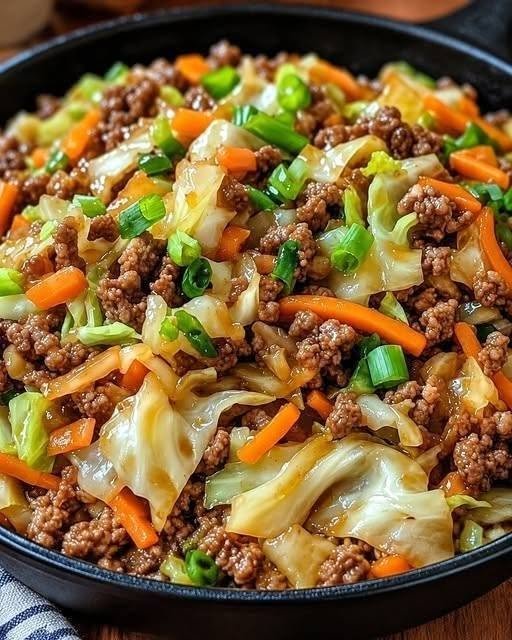
Healthy Chinese Ground Beef & Cabbage Stir Fry
Description
Healthy Chinese Ground Beef & Cabbage Stir Fry is a quick, flavorful, and satisfying one-pan meal made with lean ground beef, crisp cabbage, carrots, garlic, ginger, and a savory homemade stir-fry sauce. It delivers the delicious sweet, salty, garlicky flavor you expect from a Chinese-inspired stir fry while keeping the ingredients simple and the preparation easy.
This recipe is perfect for busy weeknights because it comes together in about 30 minutes. The cabbage becomes tender while retaining a little bite, the ground beef develops delicious browned edges, and the garlic and ginger add incredible aroma. A simple sauce made with low-sodium soy sauce, sesame oil, rice vinegar, and a small amount of honey ties everything together.
Unlike heavier takeout-style dishes, this version focuses on vegetables and lean protein. You can enjoy it on its own for a lower-carbohydrate meal or serve it over brown rice, white rice, quinoa, cauliflower rice, or noodles.
It’s also an excellent meal-prep recipe because the flavors develop beautifully after resting in the refrigerator.
Recipe Details
Recipe Name: Healthy Chinese Ground Beef & Cabbage Stir Fry
Cuisine: Chinese-inspired
Category: Main Course
Prep Time: 15 minutes
Cook Time: 15 minutes
Total Time: 30 minutes
Servings: 4
Difficulty: Easy
Ingredients
For the Stir Fry
- 1 lb (450 g) lean ground beef, preferably 90–95% lean
- 1 tablespoon avocado oil or olive oil
- 5 cups finely shredded green cabbage
- 1 medium carrot, julienned or shredded
- 1 small yellow onion, thinly sliced
- 3 cloves garlic, minced
- 1 tablespoon fresh ginger, finely grated
- 3 green onions, sliced
- 1 tablespoon sesame seeds, optional
- 1/4 teaspoon freshly ground black pepper
For the Sauce
- 1/4 cup low-sodium soy sauce
- 1 tablespoon rice vinegar
- 1 tablespoon honey or maple syrup
- 1 teaspoon toasted sesame oil
- 1 teaspoon chili garlic sauce or sriracha, optional
- 2 tablespoons water
- 1 teaspoon cornstarch, optional, for a slightly thicker sauce
How to Make Healthy Chinese Ground Beef & Cabbage Stir Fry
Step 1: Prepare the Sauce
In a small bowl, combine the low-sodium soy sauce, rice vinegar, honey, sesame oil, water, and chili garlic sauce if using.
If you want a slightly thicker, glossy sauce, whisk in the cornstarch until completely smooth.
Set the sauce aside.
Preparing the sauce before cooking is important because stir frying moves quickly. Having everything ready prevents the vegetables from overcooking while you’re measuring ingredients.
Step 2: Prepare the Vegetables
Thinly slice the cabbage and onion.
Shred or julienne the carrot.
Mince the garlic and grate the fresh ginger.
Slice the green onions and keep the white and green portions separate if desired. The white portions can be cooked with the vegetables, while the green tops make an excellent garnish.
Try to cut the vegetables into relatively similar sizes so they cook evenly.
Step 3: Brown the Ground Beef
Heat a large wok or skillet over medium-high heat.
Add the oil.
Add the ground beef and break it apart with a wooden spoon or spatula.
Cook for approximately 5–7 minutes, stirring occasionally, until the beef is browned and fully cooked.
If there is excessive rendered fat, carefully drain some of it.
For the best flavor, allow the beef to sit undisturbed for short periods while cooking so it can develop browned edges.
Step 4: Add Garlic and Ginger
Add the minced garlic and fresh ginger to the cooked beef.
Stir continuously for approximately 30–60 seconds.
The mixture should become highly aromatic.
Be careful not to burn the garlic because burnt garlic can make the entire dish taste bitter.
Step 5: Add the Onion, Carrot, and Cabbage
Add the sliced onion and carrot.
Stir fry for 2–3 minutes.
Then add the shredded cabbage.
At first, the cabbage may appear to overwhelm the pan, but it will quickly shrink as it cooks.
Continue stir frying for approximately 4–6 minutes.
You want the cabbage to become tender while still retaining some texture.
For softer cabbage, cook another 2–3 minutes.
Step 6: Add the Sauce
Give the prepared sauce another quick stir and pour it over the beef and vegetables.
Toss everything together thoroughly.
Cook for another 1–2 minutes, allowing the sauce to coat the beef and vegetables.
If you added cornstarch, the sauce should become slightly glossy and thicker.
Taste and adjust the seasoning.
If you prefer more heat, add additional chili garlic sauce.
If you prefer more acidity, add a small splash of rice vinegar.
Step 7: Finish and Serve
Remove the skillet from the heat.
Sprinkle with sliced green onions and sesame seeds.
Serve immediately.
For a complete meal, serve the stir fry with steamed brown rice, jasmine rice, cauliflower rice, quinoa, or your favorite noodles.
What Makes This Stir Fry Healthy?
This recipe balances lean protein, vegetables, and a flavorful homemade sauce.
Lean Ground Beef
Lean ground beef provides protein, iron, zinc, and vitamin B12. Choosing a lean variety helps reduce the amount of saturated fat compared with fattier ground beef.
Cabbage
Cabbage provides fiber and vitamin C and adds substantial volume to the meal without requiring large amounts of calories.
Carrots
Carrots contribute beta-carotene, fiber, and natural sweetness.
Garlic
Garlic adds strong flavor without requiring large amounts of added fat or salt.
Ginger
Fresh ginger adds warmth and aromatic flavor while complementing the beef beautifully.
Homemade Sauce
Making your own sauce allows you to control the amount of sugar, sodium, and oil.
Notes
Use Lean Ground Beef
A 90–95% lean ground beef works especially well. It provides plenty of beef flavor without leaving the skillet overly greasy.
Don’t Overcook the Cabbage
Cabbage tastes best when it retains a little texture. Overcooking can make it watery and soft.
Low-Sodium Soy Sauce Is Recommended
Regular soy sauce can be quite salty. Low-sodium soy sauce makes it easier to control the final salt level.
Fresh Ginger Makes a Difference
Ground dried ginger can work in an emergency, but freshly grated ginger provides a much brighter flavor.
Adjust the Heat
The chili garlic sauce is optional. Add a little for gentle heat or more for a spicy stir fry.
Make It Gluten-Free
Use certified gluten-free tamari or another gluten-free soy sauce alternative.
Make It Lower Carb
Serve the stir fry over cauliflower rice or enjoy it on its own.
Helpful Tips
Tip 1: Prepare Everything First
Stir frying is fast, so chop all vegetables and prepare the sauce before turning on the stove.
Tip 2: Use a Large Pan
Overcrowding can cause the ingredients to steam instead of stir fry.
A large wok or wide skillet gives the ingredients more room to brown.
Tip 3: Cook the Beef Properly
Break the beef into small pieces and cook until completely done.
Tip 4: Don’t Add Too Much Sauce
The goal is to coat the ingredients rather than drown them.
Tip 5: Taste Before Adding Salt
Soy sauce already provides significant sodium, so taste the finished dish before adding additional salt.
Tip 6: Add More Vegetables
Broccoli, mushrooms, bell peppers, snap peas, or zucchini can easily be added.
Tip 7: Make It Spicy
Add red pepper flakes, chili crisp, chili garlic sauce, or sliced fresh chili peppers.
Tip 8: Add Crunch
Water chestnuts, roasted peanuts, cashews, or sesame seeds can provide extra texture.
Tip 9: Make It Meal Prep Friendly
Divide the cooled stir fry into individual containers and refrigerate for convenient lunches.
Tip 10: Reheat Carefully
Reheat gently in a skillet or microwave until hot. Avoid overheating because it can make the cabbage excessively soft.
Serving Suggestions
This stir fry is delicious by itself, but there are several ways to turn it into a complete meal.
With Rice
Serve over steamed jasmine rice, basmati rice, or brown rice.
With Cauliflower Rice
For a lower-carbohydrate option, spoon the beef and cabbage over cauliflower rice.
With Quinoa
Quinoa provides a nutritious alternative to traditional rice.
With Noodles
Toss the finished stir fry with cooked rice noodles, soba noodles, or whole-wheat noodles.
With Lettuce Cups
Spoon the mixture into crisp lettuce leaves for a light and crunchy presentation.
With Extra Vegetables
Serve alongside steamed broccoli or roasted vegetables for an even more vegetable-rich meal.
Variations
Chicken Cabbage Stir Fry
Replace ground beef with ground chicken or turkey.
Spicy Beef Stir Fry
Add extra chili garlic sauce, red pepper flakes, or fresh chili peppers.
Mushroom Beef Stir Fry
Add sliced mushrooms along with the cabbage.
Teriyaki-Style Version
Replace some of the sauce ingredients with a lighter homemade teriyaki-style sauce.
Sesame Beef & Cabbage
Add an extra teaspoon of toasted sesame oil at the end for a stronger sesame flavor.
Vegetarian Version
Replace the beef with crumbled tofu, tempeh, or a plant-based ground alternative.
Meal Prep and Storage
Allow leftovers to cool before transferring them into airtight containers.
Refrigerate for up to approximately 3–4 days.
For meal prep, divide the stir fry into four containers and add your preferred rice or cauliflower rice separately.
When ready to eat, reheat until thoroughly hot.
You can also freeze the cooked beef and cabbage mixture in freezer-safe containers. The texture of the cabbage may become softer after thawing, but the flavor remains enjoyable.
For best results, freeze without rice and prepare fresh rice when serving.
Servings
This recipe makes 4 generous servings.
Each serving contains a satisfying combination of protein and vegetables.
For a lighter meal, serve approximately one portion of stir fry with cauliflower rice or a large side salad.
For a higher-energy meal, serve it with a moderate portion of rice or noodles.
Approximate Nutritional Information
Nutrition will vary depending on the exact ground beef, soy sauce, oil, sweetener, and serving size used.
Estimated per serving without rice:
- Calories: approximately 350–400
- Protein: approximately 28–32 g
- Carbohydrates: approximately 15–20 g
- Fat: approximately 20–23 g
- Fiber: approximately 4–5 g
- Sugar: approximately 7–9 g
- Sodium: approximately 600–800 mg
These figures are estimates and should not be considered laboratory nutritional analysis.
Adding rice, noodles, nuts, or additional sauce will increase the calories and carbohydrates.
Benefits of This Recipe
Protein-Rich
Lean ground beef provides a substantial amount of protein, helping make this meal filling and satisfying.
Vegetable-Packed
A large amount of cabbage and carrots increases the vegetable content of the meal while adding fiber and micronutrients.
Convenient
The entire recipe can be prepared in approximately 30 minutes, making it ideal for busy evenings.
Customizable
You can easily adjust the vegetables, spice level, protein, and serving base.
Homemade
Preparing the sauce at home gives you better control over ingredients such as sugar, oil, and sodium.
Meal-Prep Friendly
The dish stores well and can be portioned into containers for quick lunches or dinners.
Balanced
When served with an appropriate portion of rice or another whole-food carbohydrate, the recipe can form part of a balanced meal containing protein, vegetables, and carbohydrates.
Frequently Asked Questions
Q1: Can I use ground turkey instead of beef?
Yes. Ground turkey is an excellent substitute and creates a lighter version of the recipe.
Q2: What kind of cabbage should I use?
Green cabbage works particularly well, but Napa cabbage or purple cabbage can also be used.
Q3: Can I make this recipe without soy sauce?
Yes. Use coconut aminos or a suitable soy-free alternative. Keep in mind that the flavor will change slightly.
Q4: Is this recipe spicy?
Not necessarily. The chili garlic sauce is optional. Without it, the dish has a savory, slightly sweet flavor with fresh ginger and garlic.
Q5: Can I add broccoli?
Absolutely. Add small broccoli florets with the carrots and onion so they have enough time to become tender.
Q6: Why is my stir fry watery?
Cabbage naturally releases water as it cooks. Overcrowding the pan can also cause steaming. Use a large skillet and cook over medium-high heat.
Q7: Can I use pre-shredded cabbage?
Yes. Bagged shredded cabbage is a convenient shortcut and works very well.
Q8: Can I make this ahead of time?
Yes. It is an excellent meal-prep recipe. Store it in an airtight container in the refrigerator and reheat when needed.
Q9: Can I make it gluten-free?
Yes. Use gluten-free tamari or another certified gluten-free soy sauce alternative and check all packaged ingredients for gluten.
Q10: Can I use frozen vegetables?
Yes. Frozen vegetables can be used, although they may release more moisture. Cook them over relatively high heat and avoid overcrowding the pan.
Q11: What can I use instead of honey?
Maple syrup works well. You can also reduce the sweetener for a less sweet version.
Q12: Can I make this recipe without cornstarch?
Definitely. Cornstarch is optional and is only used to create a slightly thicker, glossy sauce.
Q13: What is the best way to reheat leftovers?
A skillet over medium heat is ideal because it helps restore some of the stir-fried texture. A microwave also works for convenience.
Q14: Can I add an egg?
Yes. For an egg-fried-rice-inspired variation, scramble an egg separately and fold it into the finished beef and cabbage mixture.
Q15: Can I use another protein?
Absolutely. Ground chicken, turkey, pork, shrimp, tofu, or a plant-based ground alternative can work.
Q16: What should I serve with this recipe?
Brown rice, jasmine rice, cauliflower rice, quinoa, noodles, or lettuce cups are all excellent options.
1 thought on “Healthy Chinese Ground Beef & Cabbage Stir Fry”