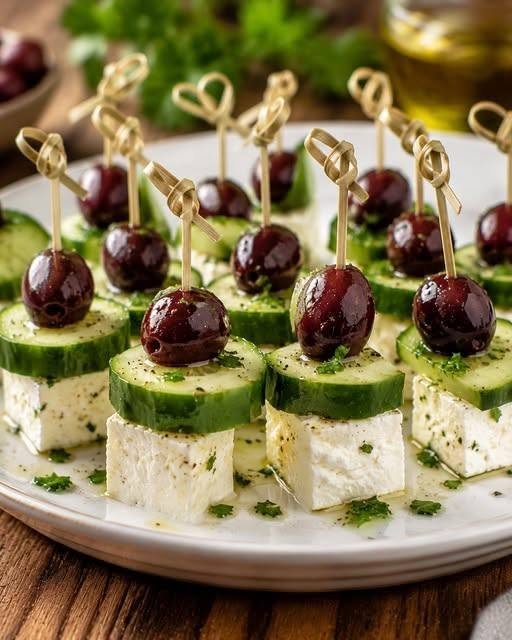
Greek Salad Skewers (Mediterranean Feta & Cucumber Bites)
Description
Greek Salad Skewers, also known as Mediterranean Feta & Cucumber Bites, are a fresh, colorful, and incredibly easy appetizer inspired by the classic Greek salad. Juicy cherry tomatoes, crisp cucumber, creamy feta cheese, and briny Kalamata olives are threaded onto small skewers and finished with a bright homemade Greek-style dressing.
These bite-sized appetizers deliver the familiar flavors of the Mediterranean in a fun, party-friendly presentation. They require no cooking, can be prepared ahead, and are perfect for summer gatherings, brunches, picnics, potlucks, lunch boxes, or as a light snack.
The combination of crisp cucumber, sweet tomatoes, salty feta, and olives is balanced by lemon juice, oregano, garlic, and extra-virgin olive oil. Fresh parsley adds color and a refreshing herbal note.
Whether you’re serving them as an appetizer or arranging them on a platter for a party, these little skewers are easy to assemble and always look impressive.
Recipe Information
Recipe Name: Greek Salad Skewers
Alternative Name: Mediterranean Feta & Cucumber Bites
Prep Time: 20 minutes
Cook Time: None
Total Time: 20 minutes
Servings: 6–8
Course: Appetizer / Snack / Side Dish
Cuisine: Greek-Inspired / Mediterranean
Difficulty: Easy
Cooking Required: No
Ingredients
For the Skewers
1 pint cherry tomatoes
1 large English cucumber
6–8 ounces feta cheese
½ cup Kalamata olives, pitted
¼ small red onion, optional
Fresh parsley leaves
Fresh oregano, optional
24–30 small appetizer skewers or cocktail picks
For the Greek-Style Dressing
3 tablespoons extra-virgin olive oil
1½ tablespoons fresh lemon juice
1 tablespoon red wine vinegar
1 small garlic clove, finely minced
½ teaspoon dried oregano
¼ teaspoon salt
¼ teaspoon black pepper
Optional Garnishes
Fresh parsley
Fresh dill
Lemon zest
Crumbled feta
Sesame seeds
Extra oregano
Lemon wedges
Instructions
1. Prepare the Vegetables
Wash the cherry tomatoes and cucumber thoroughly.
Pat them completely dry with paper towels.
Keeping the vegetables dry is important because excess moisture can make the skewers slippery and dilute the dressing.
If your cucumber has very large seeds, you can remove some of the watery center before cutting.
2. Cut the Cucumber
Cut the cucumber into thick rounds or bite-sized chunks.
Aim for pieces that are approximately the same size as the cherry tomatoes.
If you’re making these for a party, slightly thicker cucumber pieces work better because they are easier to thread onto skewers.
3. Prepare the Feta
Cut the feta into approximately ¾-inch cubes.
Try to use a firm block of feta rather than very soft crumbled feta.
Block feta holds together better when threaded onto skewers.
If the feta is particularly soft, refrigerate it for a short time before cutting.
4. Prepare the Onion
If using red onion, cut it into small pieces or thin wedges.
Because raw red onion can have a strong flavor, you can soak it in cold water for approximately 5–10 minutes.
Drain and pat dry.
This creates a milder, more pleasant flavor.
5. Make the Dressing
In a small bowl or jar, combine:
Extra-virgin olive oil
Fresh lemon juice
Red wine vinegar
Garlic
Dried oregano
Salt
Black pepper
Whisk or shake until well combined.
Taste the dressing.
For a sharper flavor, add a little more lemon juice.
For a milder dressing, add another teaspoon of olive oil.
6. Assemble the Skewers
Thread the ingredients onto small skewers.
A beautiful combination is:
Cherry tomato → cucumber → feta → Kalamata olive → parsley
Repeat with the remaining ingredients.
You can arrange the ingredients in any order you prefer.
Try alternating colors and textures for a more attractive presentation.
7. Add the Dressing
Place the finished skewers on a large serving platter.
Drizzle lightly with the Greek-style dressing.
Don’t add too much dressing at once.
You want the vegetables and feta to remain visually distinct.
Alternatively, serve the dressing in a small bowl on the side for dipping.
8. Garnish
Finish with fresh parsley and a little dried oregano.
Add lemon zest if desired.
A few extra crumbles of feta around the platter can make the presentation even more attractive.
Serve chilled or at cool room temperature.
Notes
Use Firm Feta
Block feta is easier to cube and thread onto skewers than soft crumbled feta.
Choose Small Tomatoes
Cherry or grape tomatoes are ideal because they’re naturally bite-sized.
Use an English Cucumber
English cucumbers have thin skin and fewer seeds, making them excellent for this appetizer.
Keep Ingredients Similar in Size
Similar-sized ingredients create balanced bites and make the skewers easier to eat.
Don’t Overdress
A light drizzle is enough.
Too much dressing can make the cucumber and tomato watery.
Assemble Close to Serving
For the freshest texture, assemble the skewers a few hours before serving and keep them refrigerated.
Tips for Perfect Greek Salad Skewers
1. Dry Everything Well
Moisture is the enemy of attractive appetizer skewers.
After washing the vegetables, dry them thoroughly.
2. Chill the Feta
Cold feta is easier to cut and thread.
3. Use Cocktail Picks
Small wooden picks are perfect for individual appetizer portions.
For children or parties, blunt-ended appetizer picks can be more practical.
4. Don’t Make Them Too Large
Each skewer should be easy to eat in one or two bites.
5. Balance Every Bite
Try to include tomato, cucumber, feta, and olive on most skewers.
That gives you the ideal sweet, crisp, creamy, and salty combination.
How to Make Them Extra Flavorful
For a stronger Mediterranean flavor, marinate the feta before assembling.
Place feta cubes in a bowl with:
1 tablespoon olive oil
A pinch of oregano
Lemon zest
Black pepper
Let them sit for approximately 15–20 minutes.
Then thread them onto the skewers.
You can also marinate the olives briefly in olive oil, garlic, and oregano.
Variations
Greek Salad Skewers With Peppers
Add red, yellow, or green bell pepper pieces.
Their crisp texture adds another layer of freshness.
Greek Salad Skewers With Pepperoncini
Add small pieces of pepperoncini for tangy heat.
Mediterranean Caprese-Style Skewers
Replace feta with small mozzarella balls.
Add basil and drizzle with balsamic glaze.
Chicken Greek Salad Skewers
Add small pieces of cooked grilled chicken.
This turns the appetizer into a more substantial protein-rich snack.
Shrimp Mediterranean Skewers
Add cooked chilled shrimp with cucumber, tomato, and feta.
Watermelon Feta Skewers
For a summer variation, combine watermelon, feta, cucumber, and mint.
Add a Creamy Dip
These skewers are delicious with a creamy Mediterranean dip.
Simple Tzatziki
Combine:
½ cup Greek yogurt
¼ cucumber, grated and squeezed dry
1 tablespoon lemon juice
1 tablespoon fresh dill
1 small garlic clove
Pinch of salt
Mix well and refrigerate until serving.
Arrange the skewers around a bowl of tzatziki for an attractive appetizer platter.
Hummus Serving Idea
Place hummus in the center of a large platter.
Arrange the Greek salad skewers around it.
Drizzle the hummus with olive oil.
Sprinkle with paprika or oregano.
Add fresh parsley and lemon wedges around the platter.
This makes a beautiful Mediterranean appetizer board.
Serving Suggestions
Greek Salad Skewers are versatile and can be served in many ways.
As an Appetizer
Serve them before grilled chicken, fish, or pasta.
At a Party
Arrange them on a large platter for guests to grab easily.
At a Picnic
Pack them in a chilled container and keep them refrigerated until serving.
For Brunch
They pair beautifully with eggs, breakfast potatoes, fresh fruit, and crusty bread.
As a Light Lunch
Serve several skewers with hummus, pita, and a small salad.
With Grilled Foods
They make an excellent side for:
Grilled chicken
Steak
Salmon
Shrimp
Lamb
Chicken souvlaki
Make-Ahead Instructions
These skewers are excellent for entertaining because much of the preparation can be done in advance.
You can wash and cut the vegetables several hours ahead.
Cut the feta and prepare the dressing separately.
Store everything covered in the refrigerator.
Assemble the skewers several hours before serving.
For the best appearance and texture, add the dressing shortly before serving.
Storage
Store assembled skewers in an airtight container or tightly covered serving tray.
Refrigerate promptly.
For best texture, enjoy within 1–2 days.
The cucumber may release water over time, so these skewers are best when relatively fresh.
Store the dressing separately whenever possible.
Nutritional Information
Approximate nutrition per serving, assuming 8 servings and a moderate amount of dressing:
Calories: 170–200 kcal
Protein: 6–7 g
Carbohydrates: 7–9 g
Fat: 13–15 g
Saturated Fat: 4–5 g
Fiber: 1–2 g
Sugar: 4–5 g
Sodium: 450–600 mg
Calcium: 130–170 mg
Potassium: 200–300 mg
Actual nutrition will vary according to the amount of feta, olives, dressing, and vegetables used.
Because feta and olives contain significant sodium, using smaller portions or reduced-sodium varieties can lower the overall sodium content.
Benefits
Provides Fresh Vegetables
Tomatoes and cucumber contribute vitamins, minerals, water, and dietary fiber.
Source of Protein
Feta provides protein, although the amount is modest per serving.
Contains Unsaturated Fats
Extra-virgin olive oil contributes predominantly unsaturated fats.
Calcium
Feta is a source of calcium.
Refreshing and Hydrating
Cucumber and tomatoes contain substantial amounts of water, making these bites particularly refreshing.
Naturally Low in Added Sugar
The basic recipe doesn’t require added sugar.
These are general nutritional benefits and aren’t intended as medical advice.
Frequently Asked Questions
1. Can I make Greek salad skewers the night before?
Yes, but for the freshest texture, prepare them the same day whenever possible.
2. What kind of feta should I use?
Block feta is ideal because it can be cut into cubes and holds its shape well.
3. Can I use crumbled feta?
You can, but it won’t stay on the skewer as easily.
4. Can I use grape tomatoes?
Absolutely. Grape tomatoes are an excellent alternative to cherry tomatoes.
5. Can I use regular cucumber?
Yes. If the cucumber has large seeds, remove some of the center first.
6. Can I skip the olives?
Yes. The skewers will still be delicious.
7. What olives are best?
Kalamata olives provide the most recognizable Greek-style flavor.
8. Can I make them without onion?
Yes. Onion is optional.
9. Can I use red wine vinegar instead of lemon?
Yes. The recipe already includes both, but you can adjust their amounts to taste.
10. Can I add avocado?
Yes. Add avocado shortly before serving because it can brown over time.
11. Can I add lettuce?
It’s better to serve lettuce separately because it doesn’t thread easily onto small skewers.
12. Can I add chicken?
Yes. Use fully cooked, chilled grilled chicken cut into small pieces.
13. Can I add shrimp?
Yes. Cooked chilled shrimp works beautifully with these Mediterranean flavors.
14. Can I serve these warm?
They’re best chilled or at cool room temperature.
15. Are these vegetarian?
Yes, the basic recipe is vegetarian.
16. Are they gluten-free?
The basic ingredients are naturally gluten-free, but always check packaged products and seasonings if gluten avoidance is important.
17. Can I make them vegan?
Yes. Replace feta with a plant-based feta alternative or omit it.
18. What dressing works best?
A simple lemon, olive oil, oregano, and red wine vinegar dressing is ideal.
19. Can I use Italian dressing?
Yes, although the flavor will be slightly different.
20. Can I serve them with tzatziki?
Absolutely. Tzatziki is one of the best dips for these skewers.
21. How many skewers should I make per person?
For an appetizer, approximately 3–4 small skewers per person is a good starting point.
22. Are they good for parties?
Yes. Their individual portions make them easy for guests to pick up and eat.
23. How can I make them look more attractive?
Alternate colors and textures, use uniform pieces, and finish with fresh herbs and lemon zest.
24. Can I use wooden skewers?
Yes. Small wooden cocktail skewers or appetizer picks work perfectly.
25. Do I need to soak small wooden skewers?
For no-cook appetizer skewers, soaking generally isn’t necessary. If using them for grilling, soaking can help reduce burning.