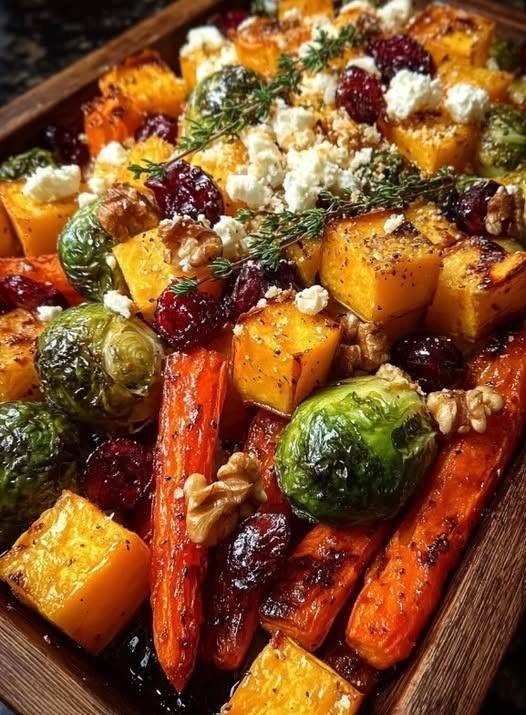
Caramelized Butternut Squash, Carrots, Brussels Sprouts & Sweet Potato with Feta, Walnuts & Cranberry-Honey Glaze
Description
This Caramelized Butternut Squash, Carrots, Brussels Sprouts & Sweet Potato with Feta, Walnuts & Cranberry-Honey Glaze is a beautiful roasted vegetable dish that combines sweet caramelized vegetables with creamy feta, crunchy walnuts, tart dried cranberries, and a glossy cranberry-honey glaze.
The vegetables are roasted at high heat until tender inside and golden brown around the edges. Butternut squash and sweet potato provide natural sweetness, while carrots add another layer of earthy sweetness and Brussels sprouts contribute a slightly nutty, savory flavor. The salty creaminess of feta creates the perfect contrast, while walnuts provide a satisfying crunch.
The cranberry-honey glaze brings everything together. Cranberries provide tartness, honey adds gentle sweetness, and balsamic vinegar adds acidity and depth. The result is a side dish that looks impressive enough for Thanksgiving, Christmas, Friendsgiving, or a dinner party but is simple enough for an ordinary family meal.
It can be served warm as a side dish or transformed into a complete vegetarian meal by adding chickpeas, quinoa, farro, or another grain.
Prep Time: 20 minutes
Cook Time: 35–45 minutes
Total Time: About 1 hour
Servings: 6–8
Course: Side Dish / Vegetarian Main
Cuisine: Mediterranean-inspired / American
Difficulty: Easy
Ingredients
For the Roasted Vegetables
- 3 cups butternut squash, peeled and cut into 1-inch cubes
- 2 medium sweet potatoes, peeled and cut into 1-inch cubes
- 3 large carrots, peeled and sliced diagonally
- 3 cups Brussels sprouts, trimmed and halved
- 3 tablespoons extra-virgin olive oil
- 1 teaspoon dried thyme
- 1 teaspoon dried rosemary
- ½ teaspoon garlic powder
- ½ teaspoon ground cinnamon
- ½ teaspoon smoked paprika
- ¾ teaspoon salt
- ½ teaspoon freshly ground black pepper
For the Cranberry-Honey Glaze
- ½ cup cranberry sauce
- 2 tablespoons honey
- 1 tablespoon balsamic vinegar
- 1 tablespoon extra-virgin olive oil
- 1 tablespoon fresh lemon juice
- 1 teaspoon Dijon mustard
- Pinch of salt
- Pinch of black pepper
For the Toppings
- ½ cup crumbled feta cheese
- ½ cup walnuts, roughly chopped
- ⅓ cup dried cranberries
- 1 tablespoon fresh parsley, chopped
- 1 teaspoon fresh thyme leaves
- Lemon zest, optional
Instructions
1. Preheat the Oven
Preheat your oven to 425°F (220°C).
Line one or two large baking sheets with parchment paper.
A high oven temperature is important for caramelization. The vegetables need enough heat to develop golden-brown edges while becoming tender inside.
If you overcrowd the pan, the vegetables will release steam and become soft rather than beautifully roasted.
2. Prepare the Vegetables
Peel and cube the butternut squash and sweet potatoes into approximately 1-inch pieces.
Try to keep the pieces similar in size so they cook evenly.
Peel the carrots and slice them diagonally into pieces about ½-inch thick.
Trim the Brussels sprouts and cut them in half. If they are particularly large, quarter them.
Place all the prepared vegetables into a very large mixing bowl.
3. Season the Vegetables
Drizzle the vegetables with olive oil.
Add dried thyme, rosemary, garlic powder, cinnamon, smoked paprika, salt, and black pepper.
Toss thoroughly until every vegetable is lightly coated with oil and seasoning.
The small amount of cinnamon may seem unusual in a savory vegetable recipe, but it works beautifully with the natural sweetness of butternut squash and sweet potato.
If you prefer a more savory profile, reduce the cinnamon or omit it.
4. Arrange the Vegetables
Spread the vegetables over the prepared baking sheets.
Keep them in a single layer and leave some space between pieces.
If the vegetables are touching too closely, divide them between two trays.
Place the Brussels sprouts cut-side down whenever possible. This allows their cut surfaces to become deeply browned and caramelized.
5. Roast
Place the vegetables in the oven and roast for approximately 20 minutes.
Remove the baking sheets and carefully turn the vegetables with a spatula.
Return them to the oven and roast for another 15–20 minutes.
The vegetables are ready when the potatoes and squash can be pierced easily with a fork and the edges are golden brown.
The Brussels sprouts should have browned edges and tender centers.
Making the Cranberry-Honey Glaze
6. Combine the Ingredients
While the vegetables roast, prepare the glaze.
Add cranberry sauce, honey, balsamic vinegar, olive oil, lemon juice, Dijon mustard, salt, and pepper to a small saucepan.
Place the saucepan over low heat.
7. Warm the Glaze
Whisk gently until the cranberry sauce becomes smooth and all the ingredients are combined.
Warm for approximately 3–5 minutes.
Do not boil aggressively.
The goal is to create a smooth, glossy glaze that is slightly thick but still easy to drizzle.
Taste it.
If it is too sweet, add another teaspoon of lemon juice or balsamic vinegar.
If it is too tart, add a little more honey.
Toasting the Walnuts
8. Toast the Walnuts
While the vegetables are roasting, place the chopped walnuts in a dry skillet over medium-low heat.
Toast for approximately 3–5 minutes, stirring frequently.
Remove them as soon as they become fragrant.
Watch carefully because walnuts can burn quickly.
Allow them to cool before adding them to the finished dish.
Toasting intensifies their nutty flavor and gives the dish a much better texture.
Assemble the Dish
9. Transfer the Vegetables
Once the vegetables are beautifully roasted, transfer them to a large serving platter or shallow bowl.
Arrange them so the different colors remain visible.
10. Add the Glaze
Drizzle the cranberry-honey glaze over the warm vegetables.
You don’t necessarily need to use all the glaze at once.
Start with about half and toss gently.
Add more according to your taste.
The glaze should complement the vegetables rather than completely cover their roasted flavor.
11. Add the Toppings
Sprinkle the roasted vegetables with crumbled feta, toasted walnuts, and dried cranberries.
Finish with fresh parsley and thyme.
For an extra-bright flavor, add a small amount of freshly grated lemon zest.
Serve warm.
Notes
Butternut Squash
Fresh butternut squash gives the best roasted texture, but pre-cut squash is an excellent time-saving option.
Frozen squash can also work, but it may release more moisture and won’t caramelize quite as well.
Sweet Potatoes
Orange-fleshed sweet potatoes are especially attractive in this recipe, but white or purple sweet potatoes can also be used.
Brussels Sprouts
Try to select Brussels sprouts that are similar in size so they roast evenly.
Very large sprouts can be quartered.
Carrots
Regular carrots work perfectly. Rainbow carrots can make the dish especially colorful.
Feta
Feta adds a salty, creamy contrast to the sweet vegetables.
For a milder flavor, use a creamy sheep’s-milk feta.
Walnuts
Pecans are an excellent substitute if you prefer their slightly sweeter flavor.
Cranberries
Dried cranberries provide chewy texture and tart sweetness. Unsweetened dried cranberries can be used if you want to reduce the sweetness.
Tips for Perfect Caramelization
1. Don’t Overcrowd the Pan
This is the most important tip.
Give the vegetables room.
Two large baking sheets are much better than one overcrowded tray.
2. Dry the Vegetables
Pat washed vegetables dry before seasoning.
Extra moisture creates steam and reduces browning.
3. Cut Evenly
Similar-sized pieces cook at the same rate.
4. Use Enough Heat
Roasting at 425°F (220°C) creates better caramelization than low-temperature roasting.
5. Don’t Flip Too Often
Let the vegetables sit against the hot pan long enough to develop browned edges.
Turn them once around the halfway point.
6. Roast Brussels Sprouts Cut-Side Down
This creates especially delicious caramelized edges.
7. Add Feta After Roasting
Feta should remain creamy and crumbly rather than becoming completely melted.
Flavor Variations
Maple-Cranberry Version
Replace honey with pure maple syrup for a deeper, slightly caramel-like sweetness.
Orange-Cranberry Version
Replace some of the lemon juice with fresh orange juice and add a little orange zest.
Balsamic Version
Increase the balsamic vinegar slightly for a stronger sweet-and-tangy flavor.
Spicy Version
Add ¼–½ teaspoon crushed red pepper flakes to the roasted vegetables.
Herb Version
Add fresh sage, rosemary, thyme, and parsley.
Fresh sage is particularly delicious with roasted squash and sweet potatoes.
Mediterranean Version
Add Kalamata olives, feta, fresh parsley, and a drizzle of extra-virgin olive oil.
Vegan Version
Replace honey with maple syrup and use a plant-based feta or omit the feta entirely.
How to Make It a Complete Meal
This roasted vegetable dish is hearty enough to become a full vegetarian meal with a few additions.
Add Chickpeas
Toss 1–2 cups of drained chickpeas with the vegetables before roasting.
Add Quinoa
Serve the roasted vegetables over cooked quinoa.
Add Farro
Farro provides a pleasantly chewy texture and pairs beautifully with roasted vegetables.
Add Lentils
Cooked green or brown lentils make an excellent protein-rich addition.
Add Grilled Chicken
For a higher-protein nonvegetarian meal, serve with grilled chicken.
Add Salmon
Roasted salmon pairs wonderfully with the sweet-tart cranberry glaze.
Make-Ahead Instructions
You can prepare most components in advance.
Cut the vegetables up to one day ahead and store them in an airtight container in the refrigerator.
The glaze can also be prepared in advance and refrigerated.
Toast the walnuts and store them separately.
When ready to serve, roast the vegetables fresh.
Warm the glaze gently before serving.
Add feta, walnuts, cranberries, and herbs immediately before serving.
This approach gives you the convenience of meal preparation while preserving the best roasted texture.
Storage
Store leftovers in an airtight container in the refrigerator for approximately 3–4 days.
For best texture, keep walnuts separate if possible.
Reheat the vegetables in a 375°F oven or air fryer until warmed through. This helps restore some of the roasted texture.
Microwaving is convenient but can make the vegetables softer.
Add fresh feta, walnuts, herbs, and a little extra glaze after reheating.
Freezing
The roasted vegetables can technically be frozen, but the texture will soften after thawing.
For the best results, enjoy this dish fresh or refrigerated.
If you do freeze it, freeze the roasted vegetables separately from the feta, walnuts, and glaze.
Thaw in the refrigerator and reheat in a hot oven.
Add fresh toppings after reheating.
Serving Suggestions
This dish works beautifully alongside:
- Roast chicken
- Turkey
- Baked salmon
- Grilled pork
- Roast beef
- Lentils
- Quinoa
- Couscous
- Green salad
- Crusty bread
It is particularly suitable for holiday tables because the orange, green, red, white, and golden colors create an attractive presentation.
Servings
This recipe makes approximately 6–8 servings as a side dish.
Serving size: Approximately 1 to 1¼ cups.
As a vegetarian main dish served over grains or with chickpeas, it provides approximately 4 generous servings.
Approximate Nutritional Information
Estimated per serving based on 8 servings, including feta, walnuts, cranberries, and glaze:
- Calories: 350–390 kcal
- Protein: 7–9 g
- Carbohydrates: 48–55 g
- Dietary Fiber: 8–10 g
- Total Fat: 17–20 g
- Saturated Fat: 3–4 g
- Sugar: 18–23 g
- Sodium: 450–600 mg
- Potassium: 800–1,000 mg
These numbers are estimates and can vary according to vegetable sizes, amount of olive oil, type of feta, cranberry sauce, walnuts, and serving size.
Using less glaze or honey will reduce the sugar and calorie content.
Benefits of This Recipe
1. Rich in Vegetables
The recipe combines four different vegetables, making it an easy way to increase vegetable variety in a meal.
2. Good Source of Fiber
Butternut squash, sweet potatoes, Brussels sprouts, carrots, cranberries, and walnuts contribute dietary fiber.
Fiber helps support normal digestive function and can contribute to feelings of fullness.
3. Provides Healthy Fats
Olive oil and walnuts contribute predominantly unsaturated fats.
4. Contains Plant Compounds
The colorful vegetables provide a variety of naturally occurring plant compounds.
Different colors often represent different naturally occurring compounds, which is one reason eating a variety of vegetables is encouraged.
5. Provides Potassium
Sweet potatoes, squash, carrots, and Brussels sprouts contribute potassium, an essential mineral involved in normal muscle and nerve function.
6. Contains Vitamin C
Brussels sprouts and other vegetables provide vitamin C.
7. Provides Plant-Based Nutrients
Even without meat, the combination of vegetables, walnuts, and feta provides a variety of nutrients.
Adding chickpeas or lentils increases the protein and fiber content further.
8. Satisfying Flavor Combination
The mixture of sweet roasted vegetables, salty feta, tart cranberries, crunchy walnuts, and tangy glaze creates multiple flavor and texture contrasts.
Frequently Asked Questions
Q1: Can I make this recipe without feta?
Absolutely. The roasted vegetables are delicious on their own. For a vegan version, simply omit the feta or use plant-based feta.
Q2: Can I use maple syrup instead of honey?
Yes. Maple syrup is an excellent substitute and makes the recipe vegan when paired with plant-based feta or no feta.
Q3: Can I use frozen butternut squash?
Yes, although fresh squash generally caramelizes better. If using frozen squash, roast it directly from frozen and avoid overcrowding the pan.
Q4: Can I use pecans instead of walnuts?
Definitely. Pecans are delicious and provide a slightly sweeter, buttery flavor.
Q5: Can I use fresh cranberries?
Fresh cranberries are much more tart than dried cranberries. They can be cooked into the glaze, but dried cranberries are easier for the topping.
Q6: Can I make the glaze without cranberry sauce?
Yes. You can make a simple honey-balsamic glaze using honey, balsamic vinegar, lemon juice, and olive oil.
Q7: Can I add apples?
Yes. Firm apples such as Honeycrisp or Granny Smith can be added during the final 15–20 minutes of roasting.
Q8: Can I add Brussels sprouts later?
If your Brussels sprouts are very small, add them at the same time. If they are unusually large, quarter them so they cook at the same rate as the other vegetables.
Q9: Why aren’t my vegetables caramelizing?
The most common causes are overcrowding, excessive moisture, insufficient oven temperature, or too much stirring.
Use a large baking sheet and roast at 425°F.
Q10: Can I prepare the vegetables the night before?
Yes. Cut them ahead and refrigerate them in an airtight container. Pat them dry before seasoning and roasting.
Q11: Can I make this recipe vegan?
Yes. Replace honey with maple syrup and omit feta or use vegan feta.
Q12: Is this recipe gluten-free?
The vegetable ingredients are naturally gluten-free. Check packaged cranberry sauce, seasonings, and other processed ingredients if strict gluten-free preparation is required.
Q13: Can I add chickpeas?
Yes. Chickpeas are an excellent addition and make the dish more filling.
For crispier chickpeas, dry them thoroughly before roasting.
Q14: What herbs taste best with this recipe?
Thyme, rosemary, sage, and parsley are excellent choices. Fresh sage is especially good with squash and sweet potatoes.
Q15: Can I make it spicy?
Yes. Add red pepper flakes, cayenne, or a little chili powder to the vegetables before roasting.
Q16: Can I use goat cheese instead of feta?
Yes. Goat cheese provides a creamy, tangy alternative to feta.
Q17: Can I serve this cold?
Yes. It can be served at room temperature or chilled, especially when combined with quinoa, farro, or greens.
Q18: How can I reduce the sweetness?
Use less honey, choose unsweetened dried cranberries, and increase the lemon juice or balsamic vinegar slightly.
Q19: Can I use baby carrots?
Yes. Baby carrots can be used whole or halved lengthwise depending on their size.
Q20: Is this suitable for a holiday dinner?
Absolutely. The combination of roasted seasonal vegetables, cranberries, feta, walnuts, and colorful presentation makes it an excellent Thanksgiving, Christmas, Friendsgiving, or dinner-party side dish.
2 thoughts on “Caramelized Butternut Squash, Carrots, Brussels Sprouts & Sweet Potato with Feta, Walnuts & Cranberry-Honey Glaze”