Best Foods to Eat on an Empty Stomach: Healthy Breakfast Ideas for Better Digestion and Energy
The first meal of your day can help you feel energized, satisfied, and ready to handle your morning. Choosing foods that provide protein, fiber, vitamins, and healthy fats is a simple way to build a nutritious breakfast without spending hours in the kitchen.
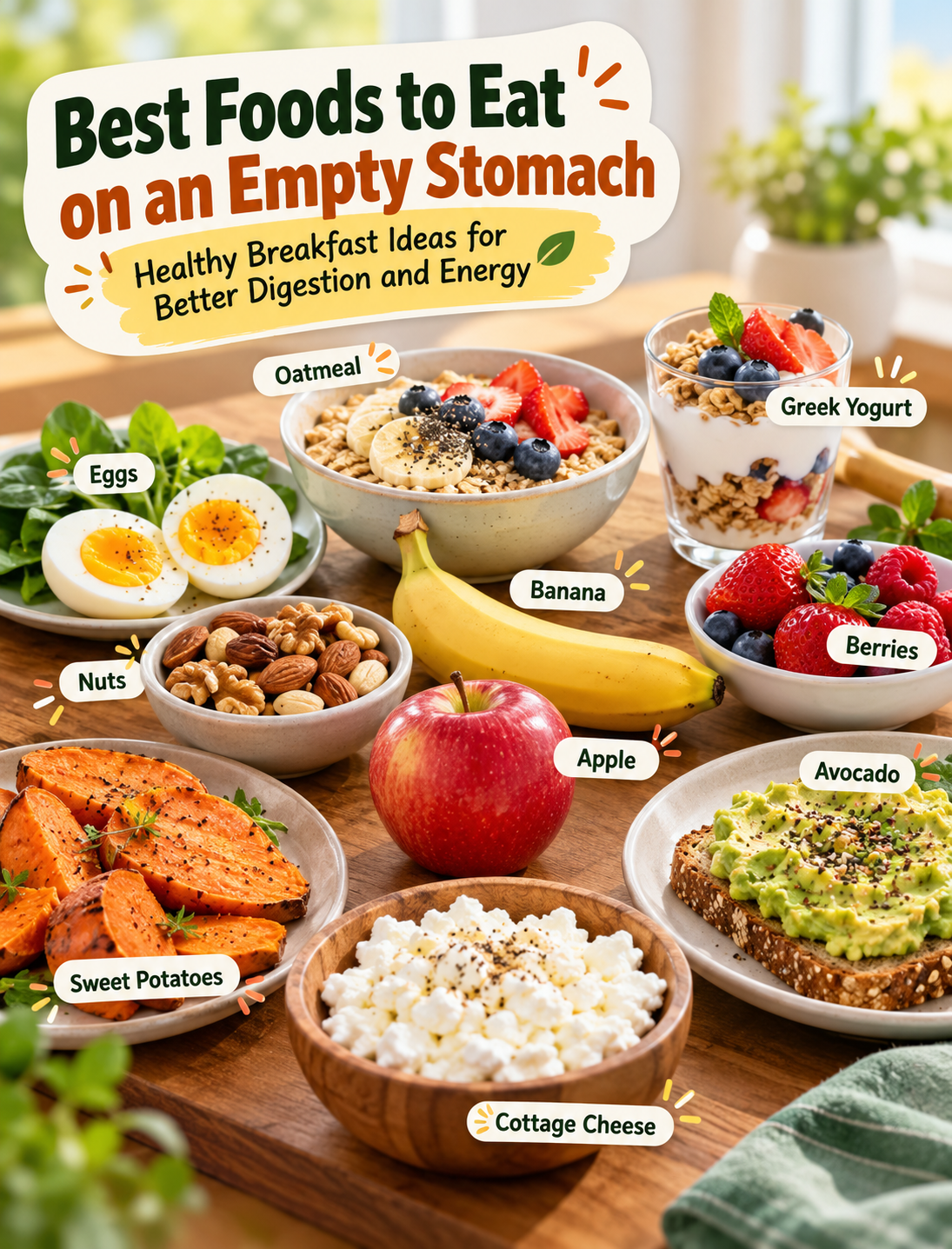
The best foods to eat on an empty stomach include oatmeal, eggs, Greek yogurt, bananas, berries, nuts, apples, cottage cheese, sweet potatoes, and avocados. These everyday foods provide important nutrients and can be combined to make balanced breakfast meals.
However, there is no single food that everyone must eat before breakfast. Your appetite, digestive comfort, food preferences, and nutritional needs all matter. The goal is to choose a meal that supports your overall diet and helps you feel comfortable throughout the morning.
Why Your First Meal of the Day Matters
After several hours without food overnight, breakfast gives you an opportunity to replenish energy and provide your body with essential nutrients.
A balanced breakfast can help you:
- Support digestion: Fiber from oats, fruit, and whole grains helps maintain regular bowel movements.
- Stay satisfied longer: Protein and healthy fats can help reduce hunger between meals.
- Maintain energy: Whole grains and fruit provide carbohydrates that your body uses for fuel.
- Improve dietary variety: Breakfast is an easy opportunity to include fruit, dairy, whole grains, and protein.
- Support daily nutrition: Foods such as eggs, yogurt, nuts, and berries supply important vitamins and minerals.
You do not have to eat immediately after waking if you are not hungry. The quality of your overall diet matters more than following a strict breakfast schedule.
1. Oatmeal: A Fiber-Rich Breakfast Choice
Oatmeal is an easy, affordable breakfast that provides complex carbohydrates and soluble fiber. One important type of oat fiber, beta-glucan, can help lower LDL cholesterol when eaten regularly as part of a healthy diet.
Oats also support digestive regularity and can help you feel full. Choose plain rolled or steel-cut oats more often than heavily sweetened instant varieties.
How to prepare it:
- Add ½ cup of dry oats to a saucepan.
- Pour in water or milk according to the package directions.
- Cook until the oats reach your preferred texture.
- Add blueberries, cinnamon, and a tablespoon of chopped walnuts.
- Include plain Greek yogurt for additional protein.
This breakfast combines fiber, carbohydrates, protein, and healthy fats in one bowl.
2. Eggs: A Protein-Rich Morning Meal
Eggs provide high-quality protein, vitamin B12, selenium, and choline. Protein helps maintain muscle and can make breakfast more satisfying.
Boiled, poached, and scrambled eggs are practical options for busy mornings. You can also prepare a vegetable omelet to include more produce.
How to prepare a balanced egg breakfast:
- Cook two eggs using your preferred method.
- Add spinach, mushrooms, or chopped bell peppers.
- Serve with one slice of whole-grain toast.
- Add a small serving of avocado if desired.
This meal supplies protein, carbohydrates, and several important nutrients without requiring complicated ingredients.
3. Greek Yogurt: Protein and Calcium
Plain Greek yogurt is a convenient breakfast food that generally provides more protein than regular yogurt. It also supplies calcium, which supports healthy bones and normal muscle function.
Some yogurts contain live cultures that may support digestive health, although the effects depend on the cultures and the individual.
Quick yogurt breakfast:
- Place ¾ cup of plain Greek yogurt in a bowl.
- Add ½ cup of strawberries or blueberries.
- Sprinkle in two tablespoons of oats.
- Top with a few chopped almonds.
Choose unsweetened yogurt to limit added sugar. If dairy causes discomfort, try a lactose-free option or a suitable fortified alternative.
4. Bananas: A Convenient Source of Energy
Bananas provide carbohydrates, potassium, and dietary fiber. Their natural sweetness makes them an easy addition to breakfast, especially when you need something quick before work or school.
Most people can eat a banana on an empty stomach without a problem. You do not need to combine it with another food to receive its nutrients, but adding protein or healthy fats can make your meal more filling.
Easy breakfast idea:
- Slice one banana.
- Spread natural peanut butter on whole-grain toast.
- Add the banana slices on top.
- Drink water alongside your meal.
If you have a peanut allergy, use an appropriate alternative such as sunflower seed butter.
5. Berries: Fiber and Antioxidant Compounds
Blueberries, strawberries, raspberries, and blackberries add color, flavor, and nutrients to breakfast. They contain fiber, vitamins, and naturally occurring plant compounds.
Fresh and frozen berries are both useful choices. Frozen berries can be especially convenient when fresh fruit is expensive or out of season.
How to include berries:
- Wash fresh berries before eating.
- Add a handful to oatmeal or plain yogurt.
- Sprinkle chia seeds or chopped nuts over the top.
- Enjoy the mixture as a quick breakfast bowl.
Berries do not need to be eaten on an empty stomach to provide their nutritional benefits.
6. Nuts: Healthy Fats and Lasting Satisfaction
Almonds, walnuts, and pistachios contain unsaturated fats, fiber, and plant protein. Walnuts also provide alpha-linolenic acid, a plant-based omega-3 fatty acid.
Because nuts contain a lot of energy in a small serving, a small handful is usually enough to add flavor and texture to breakfast.
Simple ways to eat nuts:
- Pair a small handful of unsalted nuts with an apple.
- Add chopped walnuts to oatmeal.
- Sprinkle almonds over Greek yogurt.
- Mix pistachios with berries for a quick breakfast or snack.
Choose unsalted varieties when you want to limit sodium, and avoid any nuts that trigger an allergy.
7. Apples: A Simple Source of Fiber
Apples contain water, dietary fiber, and plant compounds. Eating the skin provides additional fiber, making a whole apple a practical choice for a morning meal.
However, some people with sensitive digestion may experience bloating after eating apples. If this happens, try a smaller portion or cooked apples and notice how your body responds.
Apple breakfast idea:
- Wash one medium apple.
- Slice it into bite-sized pieces.
- Serve it with plain yogurt or a tablespoon of peanut butter.
- Add cinnamon for extra flavor without needing much added sugar.
You can also stir chopped apples into warm oatmeal for a simple, comforting breakfast.
8. Cottage Cheese: A Filling Protein Option
Cottage cheese is a protein-rich dairy food that also provides calcium. Its mild flavor works with both sweet and savory ingredients, making it useful for different breakfast preferences.
Three easy combinations include:
- Cottage cheese with strawberries and cinnamon.
- Whole-grain toast topped with cottage cheese and sliced tomatoes.
- Cottage cheese served with peaches and a few walnuts.
Check nutrition labels if you need to limit sodium, because the amount varies between brands. Choose lactose-free cottage cheese if you have trouble digesting lactose and the product suits your needs.
9. Sweet Potatoes: Nutrient-Rich Carbohydrates
Sweet potatoes provide carbohydrates, fiber, and potassium. Orange-fleshed varieties are also rich in beta-carotene, which your body can convert into vitamin A.
They make a useful alternative to pastries or heavily processed breakfast foods when prepared with modest amounts of added fat.
How to prepare a balanced meal:
- Cut a cooked sweet potato into small cubes.
- Warm the cubes in a skillet or oven.
- Serve with scrambled eggs and spinach.
- Add black pepper and a small portion of avocado.
Cook sweet potatoes ahead of time and refrigerate them promptly to save time on busy mornings.
10. Avocado: Healthy Fats and Fiber
Avocados provide unsaturated fats, dietary fiber, and potassium. Their creamy texture makes them an easy addition to toast, eggs, and breakfast bowls.
Try this simple avocado toast:
- Toast one slice of whole-grain bread.
- Mash about half an avocado with a little black pepper.
- Spread the avocado over the toast.
- Add a boiled egg and sliced tomatoes.
This combination provides carbohydrates, protein, fiber, and healthy fats. Adjust the portions to match your appetite and nutritional needs.
Best Breakfast Food Combinations for Blood Sugar Balance
Combining different food groups can make breakfast more balanced. Protein, fat, and fiber can affect how quickly a meal is digested and how your blood glucose responds, although results vary from person to person.
Try these combinations:
- Oatmeal, Greek yogurt, and blueberries: Provides fiber, protein, and fruit.
- Apple slices and pistachios: Combines fruit with fiber, protein, and unsaturated fats.
- Eggs, sweet potatoes, and avocado: Supplies protein, carbohydrates, and healthy fats.
- Whole-grain toast and cottage cheese: Offers a convenient combination of carbohydrates and protein.
- Greek yogurt, chia seeds, and strawberries: Provides protein, fiber, and naturally sweet fruit.
These meals can fit into a balanced eating pattern, but they do not guarantee a specific blood sugar result. If you have diabetes, follow your healthcare professional’s advice about meal timing, portions, and carbohydrate intake.
Foods That May Cause Discomfort on an Empty Stomach
Not everyone reacts to food in the same way. Certain foods and drinks may trigger heartburn, nausea, or other digestive symptoms in people who are sensitive to them.
- Coffee: Caffeine or coffee may worsen reflux symptoms in some people. Try having coffee with food or reducing the amount if it causes discomfort.
- Citrus fruits and juice: Oranges, grapefruit, and their juices may aggravate acid reflux in some individuals.
- Spicy foods: Hot peppers and spicy meals can trigger symptoms in people who are sensitive to them.
- Heavy fried foods: High-fat meals may worsen reflux symptoms and feel uncomfortable for some people.
- Sugary breakfast foods: Pastries, sweetened cereals, and sugary drinks may provide substantial added sugar with limited fiber or protein.
You do not need to avoid these foods automatically. Pay attention to your symptoms and choose alternatives that work for you. The National Institute of Diabetes and Digestive and Kidney Diseases provides additional guidance on foods and drinks that may affect acid reflux.
How to Build a Healthy Breakfast Plate
Follow these three steps to create a nutritious breakfast with ingredients available at most American grocery stores.
Step 1: Choose a protein source. Select eggs, Greek yogurt, cottage cheese, tofu, or another protein-rich food.
Step 2: Add fiber-rich carbohydrates. Include oatmeal, whole-grain bread, berries, apples, or sweet potatoes.
Step 3: Include healthy fats. Add avocado, walnuts, almonds, chia seeds, or another suitable source of unsaturated fats.
You can also add vegetables such as spinach, mushrooms, and tomatoes. Vary your choices throughout the week to enjoy different nutrients, flavors, and textures.
Healthy Breakfast Preparation Tips for Busy Mornings
Use these simple steps to make healthy eating easier:
- Prepare overnight oats: Combine oats, milk, and yogurt in a covered container and refrigerate overnight.
- Cook eggs ahead: Refrigerate cooked eggs promptly and use them within recommended food-safety storage times.
- Wash fruit in advance: Prepare berries and other produce so they are ready to serve.
- Portion nuts and seeds: Keep small servings ready for quick breakfasts.
- Cook sweet potatoes in batches: Refrigerate cooked portions promptly and reheat them thoroughly.
- Prepare breakfast bowls: Store ingredients separately until you are ready to eat.
- Keep frozen berries available: Use them in oatmeal, yogurt bowls, and smoothies.
A few minutes of preparation can help you choose a nutritious breakfast instead of skipping your meal because you are short on time.
Frequently Asked Questions
1. What Is the Best Food to Eat First Thing in the Morning?
Oatmeal, eggs, Greek yogurt, and fruit are nutritious choices. Select foods that provide fiber or protein and suit your appetite.
2. Is Eating a Banana on an Empty Stomach Healthy?
Yes, most people can safely eat a banana before other foods. Pair it with yogurt or nuts if you want a more filling breakfast.
3. Can I Eat Eggs Every Morning?
Eggs can fit into a healthy diet, but individual needs vary. Consider your overall eating pattern and any personalized medical advice.
4. Is Greek Yogurt Good for Digestion?
Greek yogurt provides protein and calcium, and some varieties contain live cultures. Choose one that agrees with your digestive system.
5. Should I Avoid Coffee Before Breakfast?
Not necessarily. If coffee causes heartburn or nausea, try drinking it with food or choosing a less irritating alternative.
6. Which Breakfast Foods Help With Regular Bowel Movements?
Oatmeal, whole grains, apples, berries, and other fiber-rich foods can support bowel regularity. Drink enough fluids and increase fiber gradually.
7. Is Skipping Breakfast Unhealthy?
Not automatically. Your total diet, nutritional needs, and health conditions matter more than following one breakfast schedule.
8. What Is a Good Quick Breakfast for Busy Mornings?
Try Greek yogurt with berries and oats, peanut butter toast with banana, or boiled eggs with whole-grain toast.
Final Thoughts
Choosing nutritious foods in the morning does not have to be complicated. Oatmeal, eggs, yogurt, bananas, berries, nuts, apples, cottage cheese, sweet potatoes, and avocados offer different nutrients that can support a balanced diet.
Start by choosing a protein source, adding a fiber-rich food, and including healthy fats when appropriate. Prepare a few ingredients ahead of time to make breakfast easier during busy weekdays.
Most importantly, remember that no special food must be eaten on an empty stomach to provide health benefits. Your overall eating pattern, food variety, portion sizes, and individual digestive comfort matter more than a strict morning rule.
Medical disclaimer: This article is for general educational purposes and does not replace individual medical or nutritional advice. Consult a qualified healthcare professional if you have persistent digestive symptoms, diabetes, food allergies, or a medical condition that requires a specific diet.