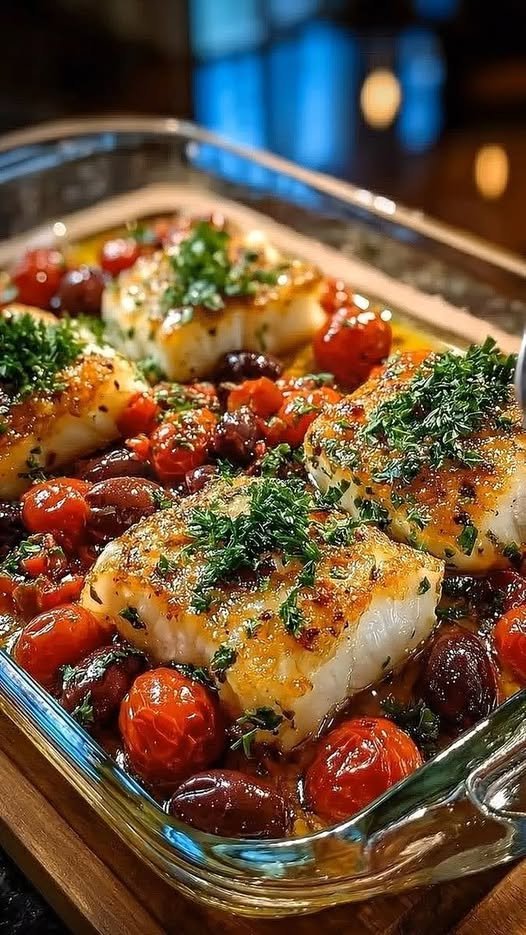
Baked Fish with Tomatoes and Olives
A Healthy Mediterranean Fish Recipe with Garlic, Lemon, and Fresh Herbs
Baked Fish with Tomatoes and Olives is a flavorful Mediterranean-inspired dish that combines tender, flaky fish with juicy tomatoes, briny olives, fresh garlic, lemon, and aromatic herbs. Everything bakes together in one dish, allowing the fish to absorb the delicious juices from the vegetables, olive oil, and seasonings.
This recipe is perfect for a healthy weeknight dinner, a relaxed family meal, or an elegant dinner for guests. It uses simple ingredients, requires minimal preparation, and creates a beautiful dish without complicated cooking techniques. Serve it with roasted potatoes, steamed vegetables, couscous, or crusty bread to soak up the delicious tomato and olive sauce.
Recipe Overview
- Preparation Time: 15 minutes
- Cooking Time: 20–25 minutes
- Total Time: Approximately 40 minutes
- Servings: 4
- Cuisine: Mediterranean
- Course: Lunch or dinner
- Cooking Method: Oven-baked
- Difficulty: Easy
Ingredients
For the Fish
- 4 white fish fillets, approximately 5–6 ounces each
- 2 tablespoons extra-virgin olive oil
- 3 garlic cloves, minced
- 1 tablespoon fresh lemon juice
- 1 teaspoon lemon zest
- 1 teaspoon dried oregano
- 1/2 teaspoon smoked paprika
- 1/2 teaspoon salt, or to taste
- 1/4 teaspoon freshly ground black pepper
- 1/2 teaspoon dried thyme, optional
Cod, haddock, halibut, or sea bass are excellent choices. Select fillets of similar thickness so they cook evenly.
For the Tomato and Olive Topping
- 2 cups cherry tomatoes, halved
- 1 cup mixed olives, pitted and halved
- 1 small red onion, thinly sliced
- 1 medium red bell pepper, thinly sliced
- 2 tablespoons extra-virgin olive oil
- 1 tablespoon fresh lemon juice
- 1 tablespoon capers, optional
- 1 teaspoon dried oregano
- 1/4 teaspoon red pepper flakes, optional
- 2 tablespoons chopped fresh parsley
- 1 tablespoon chopped fresh basil
- Lemon wedges, for serving
Optional Additions
- 1/4 cup crumbled feta cheese
- 1 tablespoon chopped fresh dill
- 1/2 teaspoon ground cumin
- 1/4 cup dry white wine or vegetable broth
- A handful of baby spinach
These additions are optional and can be adjusted to suit your taste.
Instructions
Step 1: Preheat the Oven
Preheat your oven to 400°F (200°C). Lightly grease a medium baking dish with olive oil or use a shallow oven-safe casserole dish.
A dish large enough to hold the fish in a single layer is ideal. Avoid stacking the fillets because this can cause uneven cooking and make the fish release excess moisture.
Step 2: Prepare the Fish
Pat the fish fillets dry using paper towels. Removing excess moisture helps the seasonings adhere and allows the fish to bake without becoming unnecessarily watery.
Check the fillets for any remaining bones and remove them carefully. Place the fish in the prepared baking dish, leaving a little space between each piece.
In a small bowl, combine two tablespoons of olive oil, minced garlic, lemon juice, lemon zest, dried oregano, smoked paprika, salt, black pepper, and thyme.
Brush this mixture evenly over both sides of the fish where practical. Let the seasoned fish rest for approximately five minutes while you prepare the vegetables.
Step 3: Prepare the Tomatoes and Olives
Wash the cherry tomatoes and cut them in half. Slice the red onion thinly, and cut the bell pepper into narrow strips.
Place the tomatoes, olives, red onion, and bell pepper in a large bowl. Add two tablespoons of olive oil, one tablespoon of lemon juice, oregano, and red pepper flakes if using.
Toss gently until the vegetables are evenly coated. Stir in the capers if you enjoy their tangy, salty flavor.
The combination of sweet tomatoes, savory olives, and aromatic onion creates a rich Mediterranean flavor without requiring a heavy sauce.
Step 4: Arrange the Vegetables Around the Fish
Spread the tomato and olive mixture around and over the fish fillets. Distribute the vegetables evenly so their juices can mingle with the lemon-garlic seasoning.
If desired, pour a little vegetable broth or dry white wine into the bottom of the baking dish. This adds moisture and creates extra flavorful juices for serving.
Avoid adding too much liquid, as the tomatoes will release their own juices during baking.
Step 5: Bake the Fish
Place the baking dish in the preheated oven and bake for approximately 15–25 minutes, depending on the thickness and type of fish.
Thin fillets may finish sooner, while thicker pieces can require additional time. Begin checking the fish after about 15 minutes.
The fish is ready when it becomes opaque and flakes easily with a fork. For food safety, the thickest part should reach 145°F (63°C), measured with a food thermometer.
Avoid overcooking, as fish can quickly become dry. If your fillets are particularly thin, check them early.
Step 6: Add Fresh Herbs
Remove the dish from the oven and allow it to rest for two to three minutes.
Sprinkle the chopped parsley and fresh basil over the fish and vegetables. Add crumbled feta cheese if desired, allowing the residual heat to soften it slightly.
Fresh herbs brighten the flavor and complement the richness of the olive oil and the saltiness of the olives.
Step 7: Serve and Enjoy
Transfer each fish fillet to a plate and spoon the roasted tomatoes, olives, onions, and pan juices over the top.
Serve with fresh lemon wedges so everyone can add extra citrus to taste. Pair the fish with roasted potatoes, brown rice, couscous, steamed green beans, or a crisp cucumber salad.
For a low-carbohydrate meal, serve it with cauliflower rice, roasted zucchini, or sautéed spinach.
Tips for the Best Baked Fish with Tomatoes and Olives
Choose the right fish: Firm white fish such as cod, haddock, and halibut work especially well. Salmon is another option if you prefer a richer flavor, although its cooking time may differ.
Use ripe tomatoes: Sweet, ripe cherry tomatoes create a naturally flavorful sauce. If using larger tomatoes, cut them into bite-sized pieces.
Adjust the salt carefully: Olives and capers already contain salt. Taste the vegetable mixture before adding extra seasoning, especially if your olives are particularly salty.
Do not overcrowd the dish: Arrange the fish in a single layer to promote even cooking. Use two baking dishes if necessary.
Watch the cooking time: Fish thickness matters more than the exact number of minutes. Start checking early and remove the dish once the fish reaches a safe internal temperature.
Make it spicy: Add extra red pepper flakes or a small amount of finely chopped fresh chili for a gentle kick.
Add cheese at the end: Feta adds a creamy, tangy contrast. Adding it near the end helps preserve its texture and flavor.
Use quality olive oil: Extra-virgin olive oil adds fruity, peppery notes that complement the tomatoes, herbs, and olives.
Delicious Variations
1. Greek-Style Baked Fish
Add crumbled feta cheese, sliced Kalamata olives, oregano, and extra lemon juice. Serve with a traditional Greek salad and warm pita bread.
2. Mediterranean Fish with Spinach
Add two handfuls of baby spinach during the final five minutes of baking. The spinach will wilt into the tomato juices and provide extra color and nutrients.
3. Spicy Tomato and Olive Fish
Include red pepper flakes, a pinch of cayenne pepper, and a little smoked paprika. This version is ideal for anyone who enjoys bold, spicy flavors.
4. Fish with Artichokes and Olives
Add drained artichoke hearts to the vegetable mixture before baking. Their mild, tangy flavor pairs beautifully with tomatoes, garlic, and lemon.
5. One-Pan Fish with Potatoes
Add thinly sliced potatoes to the baking dish, season them with olive oil and oregano, and roast until nearly tender before adding the fish. This prevents the potatoes from remaining undercooked while the fish finishes baking.
What to Serve with Baked Fish
This recipe pairs well with a variety of side dishes:
- Roasted baby potatoes: Crispy edges and fluffy centers complement the tender fish.
- Lemon couscous: A light, fluffy side that absorbs the tomato juices.
- Brown rice: A hearty whole-grain option for a satisfying dinner.
- Steamed asparagus: Adds freshness and a pleasant tender-crisp texture.
- Greek salad: Cucumber, tomatoes, red onion, and feta make a refreshing accompaniment.
- Crusty whole-grain bread: Perfect for soaking up the garlic, olive oil, and tomato sauce.
- Roasted zucchini: Keeps the meal light while adding another Mediterranean vegetable.
Storage and Reheating
Allow leftovers to cool and refrigerate them in an airtight container within two hours of cooking. Store at 40°F (4°C) or below and consume within three to four days.
To reheat, place the fish and vegetables in an oven-safe dish, cover loosely, and warm at 300°F (150°C) until heated through. Add a small splash of water or broth if the sauce appears dry.
You can also reheat individual portions in the microwave using short intervals at medium power. Take care not to overheat, as this can make the fish tough.
Freezing is possible, although the texture of the cooked fish and tomatoes may become softer after thawing. For the best quality, enjoy the dish freshly prepared or refrigerated.
Nutrition Information
The following values are estimates per serving, assuming four servings and excluding optional feta cheese and side dishes.
- Calories: 300–360
- Protein: 32–38 grams
- Carbohydrates: 10–14 grams
- Fat: 14–19 grams
- Fiber: 3–5 grams
- Sugar: 5–7 grams
- Sodium: Varies considerably depending on the olives, capers, and added salt
Actual nutrition values depend on the type of fish, portion size, and ingredients used.
Health Benefits
Provides high-quality protein: Fish supplies protein that supports muscle maintenance and normal body functions.
Contains beneficial fats: Olive oil provides predominantly monounsaturated fats, which can be part of a heart-conscious eating pattern.
Offers vitamins and antioxidants: Tomatoes provide vitamin C and lycopene, while fresh herbs and bell peppers contribute additional plant compounds and nutrients.
Includes healthy vegetables: Tomatoes, onions, and peppers contribute fiber and a variety of vitamins and minerals.
Supports balanced meals: Pairing fish with vegetables and a suitable whole grain creates a balanced meal with protein, carbohydrates, fats, and fiber.
The nutritional benefits depend on the ingredients and the overall eating pattern. This recipe can fit many balanced diets, but individual dietary needs vary.
Frequently Asked Questions
Can I use frozen fish?
Yes. Thaw frozen fish completely in the refrigerator before cooking, then pat it dry. This helps prevent excess water from diluting the sauce.
Can I use canned tomatoes?
Yes. Use approximately one 14-ounce can of drained diced tomatoes if fresh tomatoes are unavailable. The finished sauce may be softer and slightly more concentrated.
How do I keep the fish from drying out?
Use fillets of similar thickness, check them early, and remove them from the oven when they reach 145°F (63°C). Avoid baking longer than necessary.
Can I prepare this dish ahead of time?
You can chop the vegetables and mix the seasonings several hours ahead. Refrigerate the prepared components separately, then assemble and bake shortly before serving for the best texture.
Are green or black olives better?
Both work well. Kalamata olives provide a rich, fruity flavor, while green olives offer a firmer texture and sharper taste. A mixture creates a more complex flavor.
Is this recipe suitable for a low-carb diet?
Yes. Fish, tomatoes, olives, and olive oil can fit a lower-carbohydrate eating plan. Choose low-carb side dishes such as roasted vegetables or cauliflower rice.
How can I tell when the fish is cooked?
The fish should appear opaque and separate into flakes when gently tested with a fork. A food thermometer is the most reliable way to confirm that the thickest part has reached 145°F (63°C).