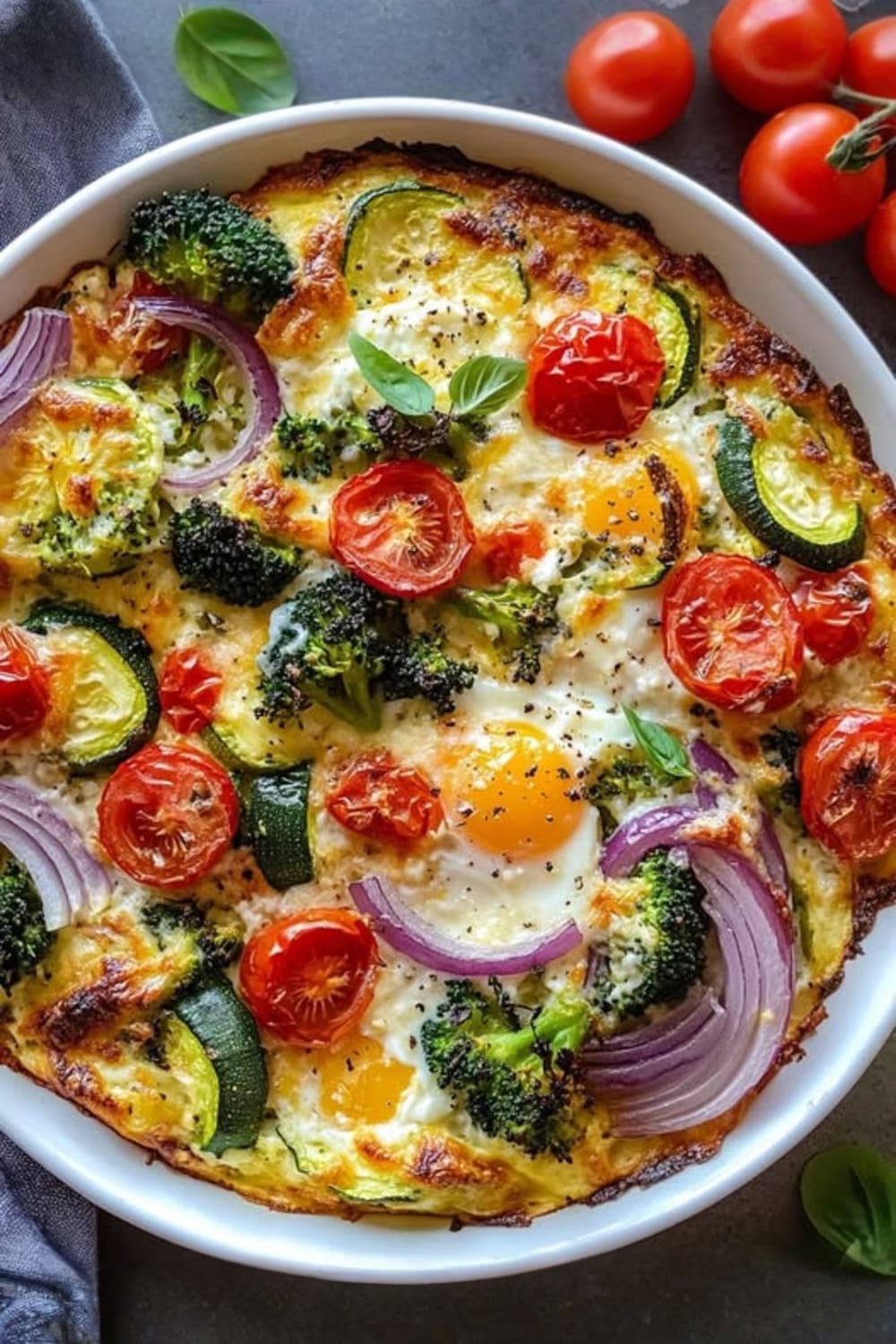
Baked Veggie & Whole Egg Frittata
Introduction
Baked Veggie & Whole Egg Frittata is a delicious, colorful, and satisfying dish made with fluffy whole eggs, fresh vegetables, aromatic herbs, and melted cheese. It is an excellent choice for breakfast, brunch, lunch, or a light dinner. Unlike an omelet that requires careful flipping, a frittata is baked in the oven, making it simple to prepare and perfect for feeding the whole family.
This recipe combines bell peppers, spinach, mushrooms, onions, and juicy tomatoes to create a flavorful vegetable filling. Whole eggs provide structure and richness, while milk and cheese help create a tender, creamy texture. A touch of garlic and Italian seasoning brings all the ingredients together.
One of the best things about this baked frittata is its versatility. You can use vegetables already available in your refrigerator, adjust the cheese to your preference, and add fresh herbs for extra flavor. It is also convenient for meal preparation because individual portions can be refrigerated and reheated when needed.
Whether you are hosting a weekend brunch or preparing a quick weekday breakfast, this veggie-packed frittata is an easy, wholesome, and delicious option.
Recipe Information
-
Prep Time: 15 minutes
-
Cook Time: 30–35 minutes
-
Total Time: Approximately 50 minutes
-
Servings: 6
-
Course: Breakfast, Brunch, or Light Dinner
-
Cuisine: Italian-inspired
-
Cooking Method: Baking
-
Difficulty: Easy
Ingredients
For the Egg Mixture
-
8 large whole eggs
-
¼ cup milk
-
½ cup shredded mozzarella cheese
-
¼ cup grated Parmesan cheese
-
½ teaspoon salt, or to taste
-
¼ teaspoon freshly ground black pepper
-
½ teaspoon Italian seasoning
-
¼ teaspoon paprika
-
1 tablespoon fresh parsley, chopped
For the Vegetables
-
1 tablespoon olive oil
-
1 medium red bell pepper, diced
-
1 small green bell pepper, diced
-
1 cup fresh baby spinach
-
1 cup mushrooms, sliced
-
1 small onion, finely chopped
-
1 medium tomato, seeded and diced
-
2 garlic cloves, minced
-
½ teaspoon dried oregano
Optional Toppings
-
2 tablespoons crumbled feta cheese
-
1 tablespoon chopped fresh chives
-
A few fresh basil leaves
-
A small pinch of red pepper flakes
-
Extra Parmesan cheese for serving
Instructions
Step 1: Preheat the Oven
Preheat your oven to 375°F (190°C). Lightly grease a 9-inch pie dish or an approximately 8-by-10-inch baking dish with olive oil or cooking spray.
You can also use a well-greased oven-safe skillet. Choose a dish that allows the egg mixture to spread evenly without becoming too thin.
Preparing the baking dish before mixing the eggs makes assembly easier and helps prevent the finished frittata from sticking.
Step 2: Prepare the Vegetables
Wash the vegetables thoroughly and pat them dry.
Dice the red and green bell peppers into small, even pieces. Finely chop the onion, slice the mushrooms, mince the garlic, and dice the tomato. If the tomato is particularly juicy, remove the seeds and excess liquid to prevent the frittata from becoming watery.
Roughly chop the spinach if the leaves are large.
Preparing everything before cooking helps the vegetables cook evenly and allows you to assemble the frittata quickly.
Step 3: Sauté the Onion and Peppers
Heat the olive oil in a large skillet over medium heat.
Add the chopped onion and cook for approximately 3 minutes, stirring occasionally, until it begins to soften.
Add the diced red and green bell peppers. Continue cooking for another 3–4 minutes until the peppers soften slightly but still retain some texture.
The onion adds natural sweetness, while the bell peppers contribute color and a mild, fresh flavor.
Avoid cooking the vegetables over excessively high heat because they may brown too quickly before becoming tender.
Step 4: Add the Mushrooms and Garlic
Add the sliced mushrooms to the skillet and cook for 5–7 minutes, stirring occasionally.
The mushrooms will release moisture as they cook. Allow most of this liquid to evaporate before continuing. This step is important because excess moisture can make the baked eggs watery.
Stir in the minced garlic and dried oregano. Cook for approximately 30–60 seconds until fragrant.
Add the diced tomato and cook for another 1–2 minutes. If the tomato releases a large amount of liquid, allow some of it to evaporate.
Step 5: Wilt the Spinach
Add the fresh spinach to the skillet. Stir gently for 1–2 minutes until the leaves wilt.
Season the vegetables lightly with a little salt and black pepper. Remember that the egg mixture and cheese will also provide seasoning.
Remove the skillet from the heat and allow the vegetables to cool slightly.
If there is visible liquid in the bottom of the skillet, drain it before assembling the frittata. A relatively dry vegetable filling helps the eggs set properly and creates a better texture.
Step 6: Whisk the Whole Eggs
Crack the eight whole eggs into a large mixing bowl.
Add the milk, salt, black pepper, Italian seasoning, paprika, and chopped parsley.
Whisk until the yolks and whites are fully combined and the mixture looks uniform. Avoid excessive whisking, which is unnecessary for this recipe.
Stir in the mozzarella and Parmesan cheese, reserving a small amount of cheese for the top if desired.
Whole eggs provide the structure and rich flavor of the frittata, while the milk helps produce a tender texture.
For a richer flavor, you can replace the milk with a little cream. For a lighter result, use low-fat milk.
Step 7: Combine the Eggs and Vegetables
Spread the sautéed vegetables evenly across the bottom of the prepared baking dish.
Pour the egg mixture over the vegetables slowly, allowing it to flow into the spaces between the peppers, mushrooms, and spinach.
Use a spoon to distribute the vegetables evenly if some areas have more filling than others.
Sprinkle the reserved mozzarella or Parmesan cheese over the top. If using feta, scatter it evenly across the surface.
The combination of mozzarella and Parmesan creates a creamy, savory topping, while feta provides a tangier Mediterranean-inspired flavor.
Step 8: Bake the Frittata
Place the baking dish on the middle rack of the preheated oven.
Bake for approximately 25–35 minutes, depending on the depth of the dish and the temperature of the ingredients.
The frittata is ready when the center is set, the edges are lightly golden, and a knife inserted near the center comes out without liquid egg mixture clinging to it.
For food safety, the center should reach 160°F (71°C).
If the top begins to brown too quickly while the center remains unset, loosely cover the dish with foil and continue baking until fully cooked.
Avoid overbaking because the eggs can become rubbery and lose their tender texture.
Step 9: Rest Before Slicing
Remove the frittata from the oven and allow it to rest for 5–10 minutes.
This resting period helps the eggs finish settling and makes it easier to cut neat slices.
Sprinkle the top with fresh chives, basil, or additional parsley. A light dusting of Parmesan adds extra flavor.
Cut into six portions and serve warm.
The finished frittata should be fluffy and tender, with colorful vegetables distributed throughout and melted cheese in every slice.
Tips for the Perfect Baked Frittata
Cook the vegetables first. Raw vegetables release moisture during baking. Sautéing them beforehand improves the texture and concentrates their flavor.
Avoid adding too much milk. Too much liquid can prevent the eggs from setting properly. The suggested amount provides tenderness without making the mixture excessively loose.
Use fresh eggs. Fresh, good-quality eggs contribute to the flavor and structure of the finished dish.
Do not overcrowd the filling. Vegetables add flavor, but excessive amounts can make the frittata difficult to set. Measure the ingredients reasonably and drain watery vegetables well.
Choose the right baking dish. A dish that is too deep may require a longer cooking time, while a very shallow dish can cause the eggs to cook too quickly.
Let it rest before slicing. Cutting immediately after baking may cause the portions to break apart.
Adjust the seasoning. Taste the cooked vegetables before combining them with the eggs, keeping in mind that Parmesan and feta contribute saltiness.
Variations and Substitutions
1. Mediterranean Frittata
Replace the green bell pepper with chopped zucchini and add a few sliced Kalamata olives. Use feta instead of some or all of the mozzarella and finish with fresh oregano.
This variation provides a tangy, savory flavor inspired by Mediterranean ingredients.
2. Broccoli and Cheddar Frittata
Replace the mushrooms with one cup of small broccoli florets. Steam or sauté the broccoli until just tender before adding it to the eggs.
Use shredded cheddar instead of mozzarella for a stronger cheese flavor.
3. Spinach and Feta Frittata
For a simpler combination, use extra spinach, omit the bell peppers, and increase the feta slightly.
Add a pinch of black pepper and a little lemon zest for freshness.
4. High-Protein Vegetable Frittata
Add diced, fully cooked chicken or turkey to the vegetable mixture before pouring in the eggs.
You can also serve the frittata with plain Greek yogurt on the side. The overall protein content will depend on the ingredients and portion size.
5. Dairy-Free Version
Replace the milk with an unsweetened, unflavored plant-based alternative and omit the cheese or use a suitable dairy-free cheese.
Check that the alternative milk is not sweetened, as sweetness can affect the savory flavor.
6. Add More Vegetables
Zucchini, asparagus, kale, roasted red peppers, and cooked broccoli all work well.
Cook vegetables with high water content before adding them to the egg mixture. This helps prevent excess moisture from collecting at the bottom of the dish.
Serving Suggestions
This baked veggie frittata can be served in several delicious ways.
-
With avocado toast: Pair a warm slice with whole-grain toast and sliced avocado for a satisfying breakfast.
-
With a fresh salad: Serve alongside cucumber, tomato, and leafy greens for a light lunch.
-
With roasted potatoes: Crispy potatoes make the meal heartier and are perfect for weekend brunch.
-
With fresh fruit: Berries, orange slices, or melon provide a refreshing contrast.
-
With yogurt: Plain Greek yogurt with herbs and lemon can serve as a simple savory accompaniment.
-
With whole-grain bread: Toasted bread makes it easy to enjoy the soft egg and vegetable mixture.
For brunch gatherings, cut the frittata into small squares and arrange them on a serving platter with fresh herbs.
Storage and Reheating
Allow the frittata to cool slightly before transferring it to an airtight container.
Refrigerate leftovers within two hours of cooking and consume them within 3–4 days.
For convenient meal preparation, divide the frittata into individual portions before refrigerating. This makes it easy to reheat only what you need.
To reheat in the microwave, place a portion on a microwave-safe plate and heat in short intervals until warmed through.
For oven reheating, place the slices in an oven-safe dish and warm at 325°F (165°C) until heated through. Cover loosely with foil if needed to prevent the top from drying out.
You can freeze individual portions in freezer-safe containers for approximately 2–3 months for best quality. Thaw overnight in the refrigerator before reheating. The texture of the vegetables and eggs may change slightly after freezing.
Nutritional Information
The following estimates are per serving, assuming the recipe serves six and includes the listed eggs, vegetables, milk, and cheese.
-
Calories: 220–280
-
Protein: 14–18 g
-
Carbohydrates: 6–10 g
-
Fat: 14–19 g
-
Fiber: 2–3 g
-
Sodium: 350–550 mg
Actual values will vary depending on the size of the eggs, type of milk, cheese quantities, and amount of salt used.
Whole eggs provide protein and nutrients such as vitamin B12 and choline. Spinach contributes folate and vitamin K, while bell peppers and tomatoes provide vitamin C and other beneficial plant compounds. Mushrooms add texture and additional nutrients.
This frittata can fit into a balanced eating pattern when served with suitable portions of vegetables, fruit, or whole grains.
Frequently Asked Questions
1. Can I make this frittata ahead of time?
Yes. Bake it the night before, allow it to cool, and refrigerate it in an airtight container. Reheat individual slices for breakfast or lunch.
2. Why is my frittata watery?
Excess moisture from mushrooms, tomatoes, spinach, or zucchini is a common cause. Sauté the vegetables first, drain excess liquid, and avoid adding too much milk.
3. Can I cook the frittata without cheese?
Absolutely. The eggs and vegetables will still make a flavorful dish. Add extra herbs, black pepper, or a little smoked paprika to enhance the flavor.
4. How do I know when it is fully cooked?
The center should be set rather than liquid, and the internal temperature should reach 160°F (71°C). Avoid overcooking to preserve a tender texture.
5. Can I use a cast-iron skillet?
Yes, provided the skillet is oven-safe and properly greased. Sauté the vegetables in the skillet, add the egg mixture, and transfer it directly to the oven.
6. Is this frittata suitable for meal prep?
Yes. It can be portioned and refrigerated for several days, making it convenient for quick breakfasts, lunches, or light dinners.