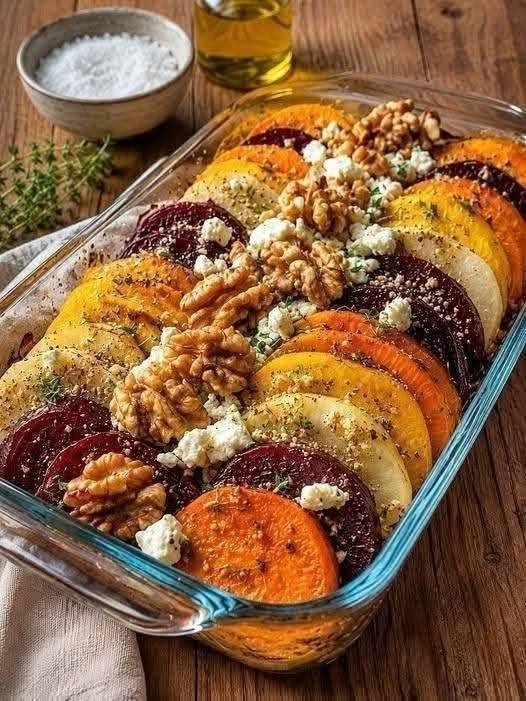
Roasted Root Vegetable Tian with Goat Cheese & Walnuts
Recipe Description
Roasted Root Vegetable Tian with Goat Cheese and Walnuts is a beautiful, rustic vegetable dish that combines thinly sliced root vegetables, creamy goat cheese, crunchy walnuts, and fragrant herbs. Baked slowly in the oven, the vegetables become tender inside, lightly caramelized around the edges, and full of natural sweetness. The goat cheese adds a tangy, creamy contrast, while toasted walnuts provide a satisfying crunch.
This elegant vegetable tian is inspired by Mediterranean and French countryside cooking, where seasonal vegetables, olive oil, garlic, and fresh herbs create flavorful meals from simple ingredients. The colorful layers of sweet potatoes, carrots, parsnips, and beets make this dish attractive enough for a holiday table but easy enough for a weeknight dinner.
The combination of sweet root vegetables, savory herbs, tangy cheese, and earthy walnuts creates a balanced flavor in every bite. It works beautifully as a vegetarian main course when served with a green salad or crusty bread. It is also an excellent side dish for roasted chicken, grilled fish, or other Mediterranean-inspired meals.
Whether you’re preparing a cozy family dinner or planning a special gathering, this roasted vegetable tian offers comforting flavors, attractive presentation, and plenty of texture.
Recipe Information
-
Preparation Time: 25 minutes
-
Cooking Time: 55–70 minutes
-
Total Time: Approximately 1 hour 30 minutes
-
Servings: 6
-
Course: Side Dish or Vegetarian Main Course
-
Cuisine: Mediterranean-Inspired
-
Cooking Method: Oven Roasting
-
Difficulty: Easy to Moderate
-
Dietary Style: Vegetarian
Ingredients
For the Vegetable Tian
-
2 medium sweet potatoes, peeled
-
3 medium carrots, peeled
-
2 medium parsnips, peeled
-
2 medium beets, peeled
-
1 medium red onion, thinly sliced
-
3 tablespoons extra-virgin olive oil
-
3 cloves garlic, finely minced
-
1 teaspoon dried thyme
-
1 teaspoon dried rosemary, crushed
-
½ teaspoon smoked paprika
-
½ teaspoon ground black pepper
-
¾ teaspoon salt, or to taste
-
½ cup vegetable broth
-
1 tablespoon fresh lemon juice
For the Goat Cheese and Walnut Topping
-
4 ounces soft goat cheese, crumbled
-
½ cup walnuts, roughly chopped
-
1 tablespoon olive oil
-
1 tablespoon fresh parsley, chopped
-
1 teaspoon fresh thyme leaves
-
1 teaspoon honey, optional
-
1 teaspoon lemon zest, optional
Optional Garnishes
-
Fresh rosemary sprigs
-
Additional crumbled goat cheese
-
A light drizzle of balsamic glaze
-
Extra chopped parsley
-
Freshly ground black pepper
Instructions
Step 1: Prepare the Oven and Baking Dish
Preheat your oven to 375°F (190°C). Choose a round or oval baking dish approximately 9–10 inches wide, or use a similar-sized rectangular dish.
Lightly grease the baking dish with olive oil. This helps prevent the vegetables from sticking and adds flavor to the bottom layer.
A shallow ceramic or glass dish works especially well because it allows the vegetables to roast evenly while displaying their colorful arrangement. If you are using beets, consider wearing kitchen gloves while peeling and slicing them because their juice can stain your hands and cutting board.
Step 2: Slice the Root Vegetables
Peel the sweet potatoes, carrots, parsnips, and beets. Slice each vegetable into rounds approximately ⅛ to ¼ inch thick.
Try to keep the slices as uniform as possible. Even slices cook at a similar rate, helping prevent some vegetables from becoming soft while others remain firm.
A mandoline slicer can make this task easier, but a sharp kitchen knife also works well. If using a mandoline, always use its safety guard.
Keep the beet slices separate from the other vegetables until you are ready to arrange them. This reduces the amount of beet juice that transfers to the lighter-colored vegetables.
Thinly slice the red onion and set it aside.
Step 3: Make the Herb and Garlic Oil
In a small bowl, combine the olive oil, minced garlic, dried thyme, crushed rosemary, smoked paprika, salt, and black pepper.
Add the fresh lemon juice and mix thoroughly.
This aromatic mixture seasons the vegetables and helps them develop a golden, flavorful surface as they roast. The garlic adds savory depth, thyme contributes an earthy fragrance, and rosemary gives the dish a warm, woodsy flavor.
Taste a tiny amount of the oil mixture and adjust the salt or pepper if necessary. Remember that the goat cheese will contribute additional saltiness later.
Step 4: Arrange the Vegetables
Spread the sliced red onion evenly across the bottom of the prepared baking dish.
Arrange the vegetable slices upright or at a slight angle in overlapping rows. Alternate the sweet potatoes, carrots, parsnips, and beets to create a colorful pattern.
You can arrange the vegetables in concentric circles for a round dish or in neat rows for a rectangular dish. The goal is to create an attractive arrangement while leaving enough space for heat to circulate.
Do not pack the slices too tightly. A little space allows steam to escape and encourages roasting rather than excessive steaming.
If the slices are different sizes, place the smaller pieces between larger slices to create an even arrangement.
Step 5: Add the Seasoning
Drizzle the garlic-herb oil evenly over the vegetables. Use a pastry brush or the back of a spoon to distribute the mixture across the exposed surfaces.
Make sure the edges receive some oil because they are especially likely to caramelize during baking.
Pour the vegetable broth carefully around the edges of the dish rather than directly over the tops of the vegetables. The broth helps soften the vegetables and prevents the bottom from drying out.
Cover the baking dish tightly with aluminum foil.
Step 6: Bake Until Tender
Place the covered dish in the preheated oven and bake for 35–40 minutes.
During this stage, the vegetables soften in the gentle heat while absorbing the garlic, herbs, and broth. The foil traps moisture and helps the thicker root vegetable slices cook through.
After approximately 35 minutes, carefully remove the dish from the oven and lift one corner of the foil away from your face to release the hot steam.
Test the vegetables with a small knife. The knife should slide into the thicker pieces with some resistance, but the vegetables should not be completely hard.
If they still feel very firm, cover the dish again and bake for another 5–10 minutes.
Step 7: Roast Until Golden
Remove the foil and return the dish to the oven for another 15–20 minutes.
The uncovered baking stage allows excess moisture to evaporate and gives the exposed vegetables a lightly roasted finish. Their edges should begin to brown, and the aroma of garlic and rosemary should become more pronounced.
Cooking time varies depending on the thickness of the slices and the type of baking dish. If the vegetables are tender but not sufficiently golden, you can increase the oven temperature to 400°F (200°C) for the final 5 minutes, watching carefully to prevent burning.
Step 8: Prepare the Walnuts
While the vegetables finish roasting, prepare the walnut topping.
Place the chopped walnuts in a dry skillet over medium-low heat. Toast them for approximately 3–5 minutes, stirring frequently.
The walnuts are ready when they smell fragrant and become slightly darker. Remove them from the pan immediately because they can burn quickly in the residual heat.
Allow the walnuts to cool slightly, then combine them with the chopped parsley and fresh thyme leaves.
Toasting the walnuts deepens their earthy flavor and makes their crunchy texture stand out against the soft vegetables and creamy cheese.
Step 9: Add the Goat Cheese
Remove the vegetable tian from the oven once the vegetables are tender and lightly caramelized.
Scatter the crumbled goat cheese evenly over the top. The residual heat will soften the cheese, allowing it to become creamy without completely disappearing into the vegetables.
If you prefer a more melted topping, return the dish to the oven for 3–5 minutes. For a fresher, more distinct goat cheese texture, add it after the dish has rested briefly.
Sprinkle the toasted walnuts over the cheese and vegetables.
Step 10: Finish and Serve
Drizzle the top with a little olive oil and, if desired, a small amount of honey. Add lemon zest, fresh parsley, and additional thyme.
Let the tian rest for approximately 5–10 minutes before serving. This allows the vegetables to settle and makes the dish easier to portion.
Serve warm, spooning the layered vegetables onto plates and making sure each portion includes goat cheese and walnuts.
For a more elegant presentation, finish each serving with a few fresh herb leaves and a small drizzle of balsamic glaze.
Tips for the Best Vegetable Tian
Slice evenly. Uniform slices are essential for consistent cooking. If some pieces are significantly thicker than others, the thinner pieces may become overly soft before the thicker ones are tender.
Choose firm vegetables. Sweet potatoes, carrots, parsnips, and beets work well because they hold their shape during roasting. You can also add turnips or small potatoes.
Keep the seasoning balanced. Root vegetables naturally taste sweet, so garlic, herbs, black pepper, and lemon juice help balance their flavor. The tanginess of goat cheese provides another useful contrast.
Avoid excess liquid. Use only the recommended amount of broth. Too much liquid can make the bottom of the dish watery instead of allowing the vegetables to roast.
Add the walnuts near the end. Toasting them separately preserves their crunch and prevents them from becoming soft during the longer baking process.
Use fresh herbs when possible. Fresh parsley and thyme provide brightness, while dried rosemary and thyme are convenient for seasoning the vegetables before roasting.
Make it visually appealing. Alternating orange sweet potatoes, pale parsnips, carrots, and deep-red beets creates a beautiful presentation. For less color transfer, keep beet slices toward one side of the dish or arrange them in a separate section.
Serving Suggestions
This vegetable tian is versatile enough to serve with many meals.
-
Mediterranean dinner: Serve with grilled chicken, baked fish, or lemon-herb salmon.
-
Vegetarian meal: Pair with lentil salad, warm quinoa, or chickpeas seasoned with garlic and cumin.
-
Holiday table: Present it alongside roasted poultry, green beans, and a fresh salad.
-
Light lunch: Serve a generous portion with arugula, cucumber, cherry tomatoes, and a lemon vinaigrette.
-
Comforting dinner: Pair it with crusty whole-grain bread to soak up the flavorful juices.
For a more substantial vegetarian main course, serve the tian with cooked farro, quinoa, or white beans. These additions contribute extra texture and make the meal more filling.
Storage and Reheating
Allow leftovers to cool, then transfer them to an airtight container. Refrigerate within two hours of cooking and use within 3–4 days.
To reheat, place individual portions in an oven-safe dish and warm at 350°F (175°C) for approximately 10–15 minutes, or until heated through. Cover loosely with foil if the vegetables are becoming too dark.
You can also reheat a portion in the microwave in short intervals. The vegetables will remain flavorful, although the walnuts may lose some crunch. Add a few freshly toasted walnuts after reheating to restore the texture.
For the best presentation, store any extra walnuts separately if possible. You can also reserve some goat cheese and herbs to add just before serving.
Freezing is possible, but the vegetables may become softer after thawing, and the goat cheese may change texture. For the best results, enjoy this dish freshly prepared or refrigerated.
Nutritional Information
The following values are estimates per serving, assuming six servings and using the listed ingredients, including goat cheese and walnuts. Actual nutrition will vary according to vegetable size, the brands used, and how much oil remains in the finished dish.
-
Calories: 300–340
-
Protein: 7–9 g
-
Carbohydrates: 30–36 g
-
Dietary Fiber: 6–8 g
-
Total Fat: 17–21 g
-
Saturated Fat: 4–6 g
-
Sugar: 9–13 g
-
Sodium: 350–500 mg
For a more accurate estimate, calculate nutrition using the actual weights of your ingredients and the specific goat cheese you use.
Potential Health Benefits
Provides dietary fiber: Root vegetables contribute fiber, which supports normal digestion and can help make meals more satisfying.
Contains a variety of nutrients: Sweet potatoes and carrots provide beta-carotene, which the body can convert into vitamin A. Beets contribute folate and other naturally occurring plant compounds.
Includes healthy unsaturated fats: Olive oil and walnuts provide predominantly unsaturated fats. Walnuts also contain alpha-linolenic acid, a plant-based omega-3 fatty acid.
Offers some protein and calcium: Goat cheese contributes protein and calcium, although the amount varies by product and serving size.
Supports a varied eating pattern: Combining several vegetables, nuts, herbs, and cheese adds different flavors, textures, and nutrients to the meal.
These ingredients can contribute to a balanced diet, but this dish should not be considered a treatment or prevention for any particular health condition.
Frequently Asked Questions
1. Can I prepare the vegetable tian ahead of time?
Yes. You can peel and slice the vegetables a day ahead and store them in separate airtight containers in the refrigerator. You can also assemble the dish, cover it, and refrigerate it for several hours before baking. If baking directly from the refrigerator, allow extra cooking time and check that the vegetables are tender.
2. Can I use different vegetables?
Absolutely. Turnips, small potatoes, golden beets, and thinly sliced butternut squash are good alternatives. Choose vegetables with similar cooking requirements and slice them evenly.
3. What can I use instead of goat cheese?
Feta provides a salty, tangy flavor that works beautifully with roasted root vegetables. Crumbled ricotta salata is another option. For a milder, creamier topping, use small spoonfuls of ricotta, adding it near the end of cooking.
4. How can I make this recipe vegan?
Replace the goat cheese with a plant-based cheese alternative or a few spoonfuls of seasoned white bean purée. Omit the optional honey or use maple syrup instead. Check that your vegetable broth is vegan.
5. How do I know when the vegetables are fully cooked?
Insert a small knife into one of the thickest slices. It should slide in easily, and the vegetables should be tender without falling apart completely. The edges should be lightly browned after the uncovered roasting stage.
6. Can I make the dish without walnuts?
Yes. Leave them out or replace them with toasted pumpkin seeds or sunflower seeds. If you are serving someone with a nut allergy, check every ingredient and avoid cross-contact with nuts during preparation.
7. Why are my vegetables watery?
The slices may have released moisture, or too much broth may have been added. Bake the dish uncovered for a little longer to allow the excess liquid to evaporate. Avoid adding extra broth unless the bottom is drying out before the vegetables become tender.
8. Can I serve this dish at room temperature?
Yes. It can be served warm or at room temperature, making it suitable for buffets and shared meals. For food safety, do not leave cooked vegetables at room temperature for more than two hours.