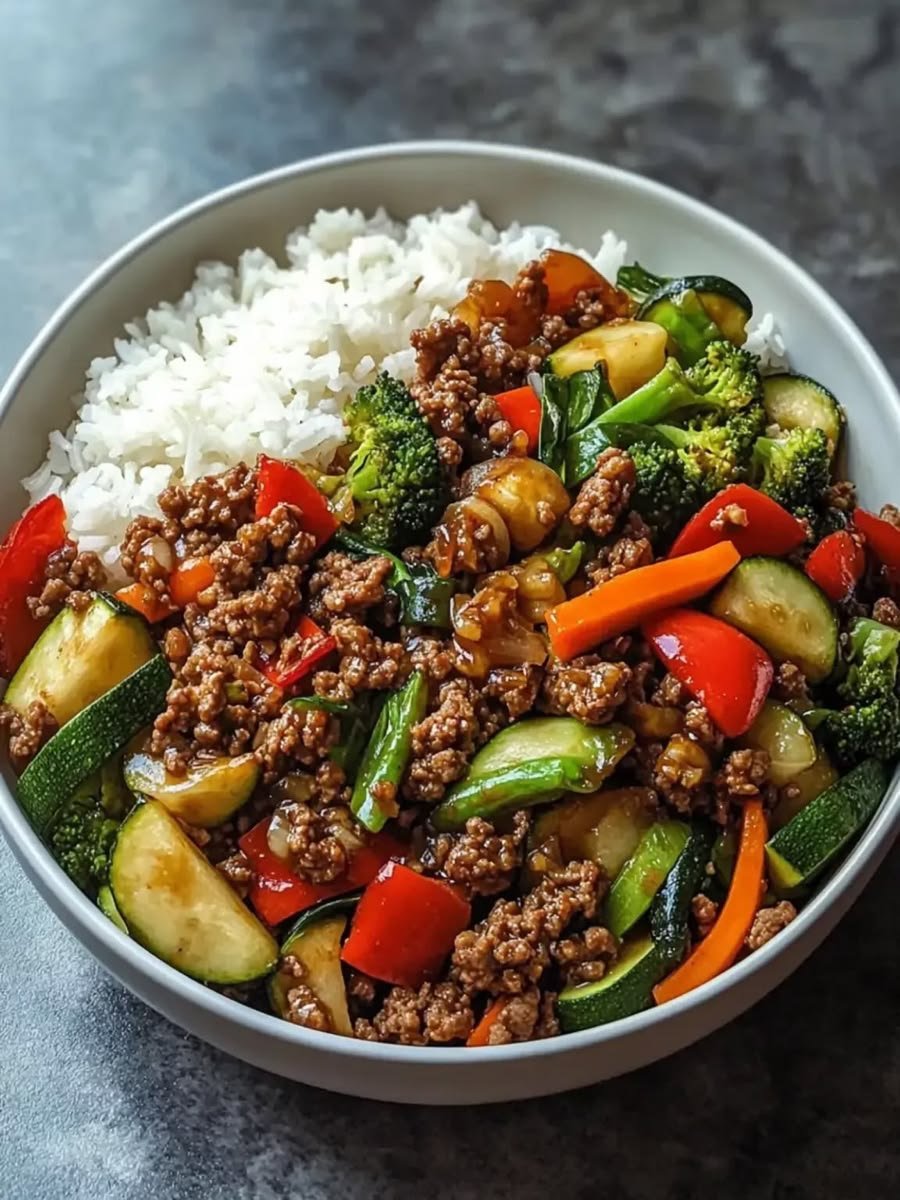
Ground Beef & Vegetable Stir-Fry Rice Bowl
Recipe Description
Ground Beef & Vegetable Stir-Fry Rice Bowl is a delicious, satisfying meal that combines juicy seasoned ground beef, colorful vegetables, fluffy rice, and a savory garlic-soy stir-fry sauce. Every bite delivers a wonderful balance of tender beef, crisp vegetables, and rich, slightly sweet and savory flavors.
This easy homemade recipe is perfect for busy weeknights when you want something comforting without spending hours in the kitchen. Ground beef cooks quickly, vegetables add freshness and color, and rice creates a hearty base that brings everything together.
The best part is how customizable this bowl can be. You can use broccoli, carrots, bell peppers, snap peas, or any vegetables you have available. A simple sauce made with soy sauce, garlic, ginger, honey, and sesame oil gives the ingredients a delicious Asian-inspired flavor.
Serve it as a warm family dinner, prepare it for weekday lunches, or customize each bowl with your favorite toppings. This recipe is easy to prepare, budget-friendly, and ideal for meal preparation.
Recipe details
-
Prep time: 15 minutes
-
Cook time: 20 minutes
-
Total time: 35 minutes
-
Servings: 4
-
Cuisine: Asian-inspired
-
Course: Lunch or dinner
-
Difficulty: Easy
Ingredients
For the Rice Bowl
-
1 pound (450 g) lean ground beef
-
3 cups cooked white or brown rice
-
1 tablespoon olive oil
-
1 medium red bell pepper, diced
-
1 medium carrot, thinly sliced
-
1 cup broccoli florets
-
1 cup shredded cabbage
-
1/2 cup snap peas, trimmed
-
1 small onion, thinly sliced
-
3 garlic cloves, minced
-
1 teaspoon freshly grated ginger
-
2 green onions, sliced
-
1 teaspoon sesame seeds, for garnish
For the Stir-Fry Sauce
-
1/4 cup low-sodium soy sauce
-
2 tablespoons water
-
1 tablespoon honey or brown sugar
-
1 tablespoon rice vinegar
-
1 teaspoon sesame oil
-
1 teaspoon cornstarch
-
1/4 teaspoon black pepper
-
1/4 teaspoon red pepper flakes, optional
Instructions
Step 1: Prepare the Rice
Cook the rice according to the package instructions. You can use white rice, jasmine rice, or brown rice, depending on your preference.
For fluffy rice, rinse it before cooking if appropriate for the variety you are using. Once cooked, fluff it gently with a fork and keep it covered until serving.
Leftover rice is also an excellent option. If using refrigerated rice, make sure it has been stored safely and reheat it thoroughly before serving.
Step 2: Prepare the Vegetables
Wash and prepare all the vegetables before beginning to cook. Cut the bell pepper into small pieces, slice the carrot thinly, and separate the broccoli into bite-sized florets.
Slice the onion, shred the cabbage, and trim the snap peas. Mince the garlic and grate the ginger.
Keeping everything ready makes stir-frying easier because the cooking process moves quickly once the pan becomes hot.
For evenly cooked vegetables, try to cut them into similar-sized pieces.
Step 3: Mix the Sauce
In a small bowl, whisk together the soy sauce, water, honey, rice vinegar, sesame oil, cornstarch, black pepper, and red pepper flakes if using.
Stir until the cornstarch dissolves completely.
The soy sauce provides a savory base, honey adds mild sweetness, rice vinegar creates a pleasant tang, and sesame oil contributes a nutty aroma.
The cornstarch helps the sauce thicken and coat the beef and vegetables evenly.
Set the sauce aside.
Step 4: Brown the Ground Beef
Heat the olive oil in a large skillet or wok over medium-high heat.
Add the ground beef and break it into small pieces using a wooden spoon or spatula. Cook for approximately 6–8 minutes, stirring occasionally, until browned and cooked through.
Ground beef should reach an internal temperature of 160°F (71°C).
If there is excessive fat in the skillet, carefully drain the excess, leaving a small amount to help flavor the vegetables.
Avoid overcrowding the pan. If necessary, brown the beef in batches to encourage better browning instead of steaming.
Step 5: Add Garlic, Ginger, and Onion
Add the sliced onion to the browned beef and cook for approximately 2 minutes until it begins to soften.
Stir in the minced garlic and grated ginger. Cook for another 30–60 seconds, stirring constantly so the garlic does not burn.
The mixture should become fragrant, with the ginger adding a gentle warmth and the garlic contributing a rich savory flavor.
Step 6: Stir-Fry the Vegetables
Add the carrots and broccoli to the skillet. Stir-fry for approximately 3 minutes.
Add the bell pepper and snap peas, cooking for another 2 minutes. Finally, stir in the shredded cabbage.
Cook until the vegetables are slightly tender but still retain some crispness.
If the pan looks dry, add a tablespoon of water to help steam the broccoli briefly. Avoid adding too much water, as it can dilute the sauce.
The combination of green broccoli, orange carrots, red bell pepper, and cabbage makes the dish colorful and appealing.
Step 7: Add the Stir-Fry Sauce
Whisk the prepared sauce once more to redistribute the cornstarch.
Pour it into the skillet over the beef and vegetables. Stir everything together so the sauce coats the ingredients evenly.
Allow the mixture to simmer for approximately 1–2 minutes, stirring frequently, until the sauce thickens and becomes glossy.
If the sauce becomes too thick, add a small splash of water. If it seems too thin, let it simmer briefly longer.
Taste and adjust the seasoning if needed. Remember that soy sauce already contains salt, so additional salt may not be necessary.
Step 8: Assemble the Rice Bowls
Divide the cooked rice among four serving bowls.
Spoon the ground beef and vegetable stir-fry over the rice, distributing the beef, vegetables, and sauce evenly.
Garnish with sliced green onions and sesame seeds.
For extra flavor, add a squeeze of lime juice or a little chili sauce. You can also serve the bowls with sliced cucumber or a simple side salad.
Serve immediately while the rice is warm and the beef mixture is glossy and flavorful.
Recipe Tips and Notes
-
Use lean ground beef: Lean beef reduces excess grease while still providing plenty of flavor.
-
Avoid overcooking vegetables: Slightly crisp vegetables add texture and make the bowl more enjoyable.
-
Prepare everything first: Stir-frying moves quickly, so chopping ingredients in advance helps prevent overcooking.
-
Adjust the sauce: Add extra honey for sweetness or rice vinegar for more tang.
-
Choose your rice: Jasmine rice works beautifully, while brown rice provides more fiber.
-
Make it spicy: Add red pepper flakes, chili garlic sauce, or sliced fresh chili.
-
Use a large skillet: A wide pan gives the ingredients enough space to brown and cook evenly.
Variations
Low-Carb Bowl: Replace the rice with cauliflower rice and use a small amount of honey or a suitable alternative in the sauce.
Extra-Protein Bowl: Add edamame or serve with an egg cooked to your liking.
Spicy Beef Bowl: Increase the chili flakes and finish with chili oil.
Vegetable-Packed Bowl: Add mushrooms, zucchini, baby corn, or bok choy.
Gluten-Free Bowl: Use certified gluten-free tamari instead of regular soy sauce and verify that the remaining ingredients are gluten-free.
Nutritional Information
Estimated values per serving, assuming four servings and approximately 3/4 cup cooked rice per bowl:
| Nutrient | Approximate Amount |
|---|---|
| Calories | 480–550 |
| Protein | 27–32 g |
| Carbohydrates | 45–55 g |
| Fat | 18–23 g |
| Fiber | 4–6 g |
| Sugar | 6–9 g |
| Sodium | 550–850 mg |
Actual nutritional values depend on the beef’s fat content, rice portion, sauce ingredients, and vegetable quantities.
Benefits of Ground Beef & Vegetable Stir-Fry Rice Bowl
Protein for everyday nutrition: Ground beef provides protein, which supports muscle maintenance and normal body functions.
Vegetable variety: Broccoli, carrots, cabbage, and bell peppers contribute vitamins, minerals, and beneficial plant compounds.
Energy from rice: Rice supplies carbohydrates that the body uses for energy.
Flexible portion sizes: You can adjust the amount of rice, beef, and vegetables to suit your appetite and nutritional goals.
Convenient meal preparation: The beef and vegetables can be cooked in advance and portioned for several meals.
This recipe can fit into a balanced eating pattern when portions and ingredients are chosen according to individual needs.
Storage and Reheating
Allow leftovers to cool promptly and refrigerate them in airtight containers within two hours of cooking.
Store the beef and rice together or separately for up to 3–4 days in the refrigerator.
For reheating, add a small splash of water and microwave until steaming hot throughout, stirring halfway through. Alternatively, reheat in a skillet over medium heat until thoroughly hot.
If preparing rice ahead, cool it quickly, refrigerate it promptly, and avoid leaving cooked rice at room temperature for extended periods.
You can also freeze the cooked beef and vegetable mixture for up to 2–3 months for best quality. Rice may be frozen separately. Thaw in the refrigerator and reheat thoroughly.
Frequently Asked Questions
1. Can I use frozen vegetables?
Yes. Frozen broccoli, carrots, and mixed vegetables work well. Add them directly to the skillet according to their package directions, allowing excess moisture to evaporate before adding the sauce.
2. Can I prepare this recipe ahead of time?
Absolutely. Cook the beef and vegetables, prepare the rice, and divide everything into meal-prep containers. Store promptly in the refrigerator and reheat thoroughly before eating.
3. What can I use instead of ground beef?
Ground turkey, ground chicken, or plant-based crumbles can replace the beef. Cooking times may vary depending on the ingredient.
4. How do I prevent watery stir-fry?
Use a large, hot skillet, avoid overcrowding, and allow vegetables to release excess moisture before adding the sauce. Mix the cornstarch thoroughly into the sauce before pouring it into the pan.
5. Can I make it without honey?
Yes. Leave out the honey for a less-sweet sauce, or use a suitable alternative according to your dietary preferences.
6. Which rice works best?
Jasmine rice provides a fragrant, soft base. Brown rice offers a chewier texture and generally more fiber. Both are delicious choices.
7. Is this recipe good for family dinners?
Yes. It is easy to customize, and you can serve the beef mixture and rice separately so everyone can assemble a bowl according to their preferences.