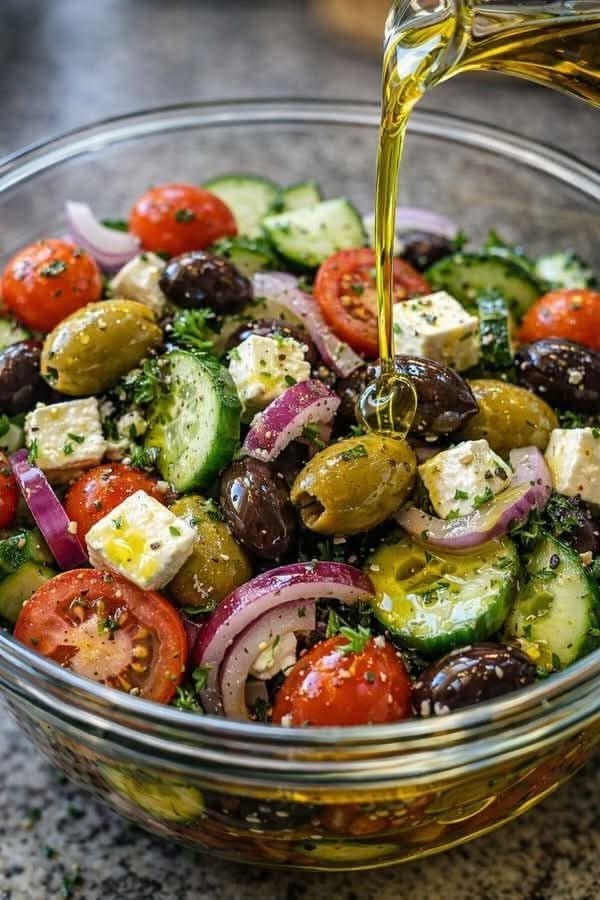
Classic Greek Salad with Feta, Olives, Cucumber & Tomatoes
Description
This Classic Greek Salad with Feta, Olives, Cucumber, Tomatoes, and Red Onion is a fresh, colorful, and incredibly flavorful Mediterranean dish that is perfect for lunch, dinner, meal prep, summer gatherings, or a light side dish. It combines crisp cucumbers, juicy tomatoes, briny olives, creamy feta cheese, fresh herbs, and thinly sliced red onion with a simple homemade olive oil and lemon dressing.
The beauty of Greek salad is its simplicity. There is no complicated cooking process, no heavy sauce, and no long list of ingredients. The vegetables provide freshness and crunch, while feta cheese adds a creamy, salty element. Kalamata olives bring a rich, savory flavor, and extra-virgin olive oil ties everything together.
The salad pictured features a beautiful combination of red and green vegetables with colorful olives and generous cubes of feta. A drizzle of golden olive oil over the top gives the salad an especially appetizing Mediterranean finish.
This recipe is incredibly versatile. It can be served alongside grilled chicken, fish, shrimp, steak, roasted vegetables, or warm pita bread. You can also add chickpeas or grilled chicken to turn it into a more filling main-course salad.
Whether you are looking for a quick weekday lunch or a beautiful dish for a family gathering, this Greek salad is an easy recipe that delivers fresh Mediterranean flavor in every bite.
Ingredients
For the Salad
- 2 large English cucumbers, sliced into half-moons
- 4 medium ripe tomatoes, cut into wedges
- 1 cup cherry tomatoes, halved
- ½ large red onion, thinly sliced
- ¾ cup Kalamata olives, pitted
- ¾ cup green olives, pitted
- 6 ounces feta cheese, cut into cubes or crumbled
- ¼ cup fresh parsley, finely chopped
- 2 tablespoons fresh dill, chopped
- 1 teaspoon dried oregano
- ¼ teaspoon freshly ground black pepper
For the Greek Dressing
- ⅓ cup extra-virgin olive oil
- 3 tablespoons fresh lemon juice
- 1 tablespoon red wine vinegar
- 1 teaspoon Dijon mustard
- 1 small garlic clove, finely minced
- 1 teaspoon dried oregano
- ½ teaspoon honey or maple syrup, optional
- ½ teaspoon salt
- ¼ teaspoon black pepper
Instructions
1. Prepare the Cucumbers
Wash the cucumbers thoroughly and pat them dry.
If using English cucumbers, there is no need to peel them because their thin skin adds color, texture, and nutrients.
Slice the cucumbers into approximately ¼-inch to ½-inch half-moons.
If the cucumbers are particularly large and contain many seeds, you can cut them lengthwise and gently remove some of the seeds before slicing.
Place the sliced cucumbers into a large mixing bowl.
2. Prepare the Tomatoes
Wash and dry the tomatoes.
Cut the larger tomatoes into wedges.
If using cherry tomatoes, slice them in half.
For the best Greek salad, use tomatoes that are ripe, juicy, and flavorful.
Fresh tomatoes are especially important because they provide much of the moisture and natural sweetness in the salad.
Add the tomatoes to the bowl with the cucumbers.
Try not to crush them while mixing.
3. Slice the Red Onion
Thinly slice half of a red onion.
If you prefer a milder onion flavor, place the slices in a bowl of cold water for approximately 5–10 minutes.
Drain and pat them dry before adding them to the salad.
This simple step removes some of the sharpness while allowing the onion to retain its crisp texture.
Add the onion to the cucumber and tomato mixture.
4. Add the Olives
Add the Kalamata olives and green olives.
Kalamata olives provide a deep, fruity, slightly salty flavor, while green olives add a lighter and more buttery taste.
You can use only Kalamata olives if you prefer a more traditional flavor, or combine different varieties for extra color and texture.
Make sure the olives are pitted before adding them.
5. Add the Feta Cheese
Cut the feta cheese into small cubes or gently crumble it into large pieces.
For the best texture, avoid crumbling the feta too finely.
Larger pieces of feta create little pockets of creamy, salty flavor throughout the salad.
Add the feta gently to the bowl.
Traditional Greek-style feta made from sheep’s milk provides an especially authentic flavor, although cow’s milk feta works perfectly well for everyday cooking.
6. Add the Fresh Herbs
Add chopped parsley and fresh dill.
Sprinkle the dried oregano over the vegetables.
Fresh herbs give the salad a bright aroma and complement the salty olives and feta.
You can also add a little fresh mint if desired.
Gently toss the ingredients together.
Be careful not to mix too aggressively because the tomatoes and feta can break apart.
7. Make the Dressing
In a small bowl or jar, combine the extra-virgin olive oil, fresh lemon juice, red wine vinegar, Dijon mustard, minced garlic, oregano, salt, and black pepper.
Add the honey or maple syrup if you prefer a slightly balanced dressing.
Whisk vigorously until the ingredients are combined.
Alternatively, place everything in a small jar, close the lid tightly, and shake for approximately 20 seconds.
Taste the dressing.
If it seems too acidic, add a little more olive oil.
If it tastes too rich, add another squeeze of lemon juice.
If you want more savory flavor, add another small pinch of oregano.
8. Dress the Salad
Pour approximately three-quarters of the dressing over the salad.
Use salad spoons or large serving utensils to gently toss everything together.
Make sure the cucumbers, tomatoes, olives, onion, and feta are lightly coated.
Avoid adding too much dressing at once.
You can always add more later, but it is difficult to remove excess dressing.
9. Let the Salad Rest
For the best flavor, allow the salad to rest for approximately 10–15 minutes before serving.
This gives the vegetables time to absorb some of the dressing.
Do not leave it at room temperature for an extended period, especially in hot weather.
If preparing the salad several hours ahead, keep the vegetables refrigerated and add the dressing shortly before serving.
10. Finish and Serve
Transfer the salad to a large serving bowl or platter.
Add a final drizzle of extra-virgin olive oil.
Sprinkle with fresh oregano or parsley.
Add a few extra feta cubes and olives on top for a beautiful presentation.
Serve immediately with warm pita bread, grilled protein, or your favorite Mediterranean dishes.
Why This Greek Salad Is So Delicious
The success of this salad comes from the balance of flavors.
The tomatoes provide sweetness and juiciness.
Cucumbers contribute coolness and crunch.
Red onion adds a sharp, slightly spicy flavor.
Kalamata olives bring saltiness and depth.
Green olives provide another layer of briny flavor.
Feta cheese adds creaminess and tang.
Fresh herbs make the salad bright and aromatic.
Finally, extra-virgin olive oil, lemon juice, vinegar, garlic, and oregano create a simple dressing that brings every ingredient together.
Each bite offers something different.
You get crisp cucumber, juicy tomato, creamy feta, chewy olives, crunchy onion, and fresh herbs all at once.
Tips for the Best Greek Salad
Use Fresh Ingredients
Because this recipe contains only a few ingredients, freshness makes a huge difference.
Choose ripe tomatoes, firm cucumbers, fresh herbs, and good-quality feta.
When the ingredients are fresh, the salad requires very little additional seasoning.
Use Good Olive Oil
Extra-virgin olive oil is one of the main flavors in Greek salad.
Choose a good-quality olive oil with a fresh, fruity flavor.
Avoid using an olive oil that tastes stale or bitter.
Don’t Overdress the Salad
A Greek salad should taste fresh rather than greasy.
Start with about three-quarters of the dressing and add more only if needed.
Don’t Overmix
Feta and tomatoes can break apart easily.
Gently toss the salad instead of vigorously stirring it.
Season Carefully
Feta and olives are already salty.
Taste the finished salad before adding additional salt.
You may find that only a small amount is necessary.
Choosing the Best Tomatoes
Tomatoes are one of the most important ingredients in Greek salad.
When tomatoes are in season, use the ripest tomatoes you can find.
Roma tomatoes, vine-ripened tomatoes, heirloom tomatoes, and cherry tomatoes can all work.
Cherry tomatoes are especially useful when making the salad outside of peak tomato season because they tend to remain flavorful and firm.
A combination of large tomatoes and cherry tomatoes also creates a beautiful presentation.
Choosing Feta Cheese
For an authentic Mediterranean flavor, choose a block of feta rather than pre-crumbled feta.
Block feta tends to be creamier and more flavorful.
It also holds its shape better when cut into cubes.
If the feta is very salty, you can briefly rinse it or soak it in cold water before using it.
Pat it completely dry afterward.
Variations
Greek Chicken Salad
Add sliced grilled chicken breast for a high-protein main-course salad.
Season the chicken with olive oil, lemon, garlic, oregano, salt, and pepper before grilling.
Slice the cooked chicken and arrange it over the salad.
Chickpea Greek Salad
Add one can of drained and rinsed chickpeas.
Chickpeas provide extra protein and fiber and turn the salad into a more substantial vegetarian meal.
Greek Pasta Salad
Add 2–3 cups of cooked rotini, penne, or bow-tie pasta.
Increase the dressing slightly and toss everything together.
This makes an excellent picnic or potluck dish.
Avocado Greek Salad
Add one diced avocado just before serving.
The creamy avocado pairs beautifully with salty feta and olives.
Because avocado can brown, add it immediately before eating.
Mediterranean Tuna Salad
Add drained tuna for a quick protein-rich lunch.
Tuna pairs particularly well with olives, tomatoes, cucumber, and lemon.
Add Peppers
For extra crunch and color, add sliced green or red bell peppers.
They provide a naturally sweet, crisp texture.
Make It a Complete Meal
This salad can easily become a complete meal with a few additions.
For protein, add:
- Grilled chicken
- Grilled shrimp
- Tuna
- Salmon
- Chickpeas
- White beans
- Hard-boiled eggs
For carbohydrates, serve it with:
- Warm pita
- Whole-grain bread
- Couscous
- Quinoa
- Brown rice
- Orzo
For additional healthy fats, add:
- Avocado
- Extra olives
- Pumpkin seeds
- Toasted almonds
This makes the salad filling enough to serve as lunch or dinner.
Serving Suggestions
This Greek salad is incredibly versatile.
Serve it as a side dish with grilled chicken or fish.
It pairs especially well with grilled lemon chicken, chicken souvlaki, salmon, shrimp skewers, or roasted lamb.
For a vegetarian Mediterranean dinner, serve it alongside hummus, warm pita, roasted vegetables, and tzatziki.
For a summer gathering, place the salad in a large chilled serving bowl and allow guests to serve themselves.
It is also an excellent addition to a picnic or potluck.
Meal Prep Instructions
Greek salad can be prepared ahead, but a few adjustments will help maintain the best texture.
Chop the cucumbers, tomatoes, onions, and herbs and store them separately or together in an airtight container.
Keep the feta and olives separate if possible.
Prepare the dressing in a small jar.
Store everything in the refrigerator.
When ready to eat, combine the ingredients and add the dressing.
This keeps the vegetables crisp and prevents them from becoming watery.
For the best texture, consume prepared Greek salad within 2–3 days.
Storage
Store leftover dressed salad in an airtight container in the refrigerator.
It is best consumed within 1–2 days after dressing.
The vegetables will release liquid over time, especially the tomatoes and cucumbers.
If you know you will have leftovers, keep the dressing separate and add it to individual portions.
Undressed vegetables can generally remain fresh for approximately 2–3 days when refrigerated properly.
Can You Freeze Greek Salad?
Freezing is not recommended.
Cucumbers and tomatoes contain a large amount of water, so freezing and thawing them significantly changes their texture.
The vegetables can become soft and watery.
Feta and olives freeze better, but the complete salad is best enjoyed fresh.
Nutrition Information
Approximate nutrition per serving, assuming six servings and without additional protein:
- Calories: 285
- Protein: 7g
- Carbohydrates: 12g
- Fat: 23g
- Fiber: 4g
- Sugar: 6g
- Sodium: 650–750mg
Actual nutrition will vary depending on the amount of feta, olives, and olive oil used.
If you want to reduce sodium, use fewer olives and choose a lower-sodium feta.
Benefits of This Mediterranean Salad
Rich in Fresh Vegetables
Tomatoes, cucumbers, and onions provide a variety of vitamins, minerals, water, and dietary fiber.
Healthy Fats
Extra-virgin olive oil and olives contribute unsaturated fats and help create a satisfying meal.
Protein from Feta
Feta cheese adds protein along with calcium.
For an even higher-protein meal, add chicken, tuna, shrimp, or chickpeas.
Fiber
Vegetables and optional chickpeas provide dietary fiber, which can contribute to fullness and digestive health.
Naturally Flavorful
Because the salad relies on herbs, lemon, garlic, olive oil, and vegetables, there is no need for a heavy creamy dressing.
Frequently Asked Questions
Is this an authentic Greek salad?
This recipe is inspired by traditional Greek salad, also known as Horiatiki. Traditional versions commonly feature tomatoes, cucumber, onion, olives, feta, olive oil, and oregano.
Some versions vary by region and personal preference.
Can I use regular black olives?
Yes. Kalamata olives provide the most characteristic Greek flavor, but regular black olives can be used if that is what you have.
Can I prepare this salad the night before?
Yes, but it is best to keep the dressing separate until shortly before serving.
Can I use bottled lemon juice?
Fresh lemon juice is strongly recommended because it has a brighter flavor.
However, bottled lemon juice can work in a pinch.
Can I use bottled dressing?
You can, but homemade dressing is quick and gives the salad a much fresher Mediterranean flavor.
Why is my salad watery?
Tomatoes and cucumbers naturally release water.
To reduce excess liquid, use firm vegetables and add the dressing shortly before serving.
Can I add lettuce?
Yes. Although traditional Greek salad does not require lettuce, you can add chopped romaine if you prefer a larger salad with extra crunch.
Can I make it dairy-free?
Yes. Simply omit the feta or replace it with a dairy-free feta alternative.
Is Greek salad good for meal prep?
Yes, especially when the dressing is stored separately.
Keep the vegetables refrigerated and add dressing shortly before eating.