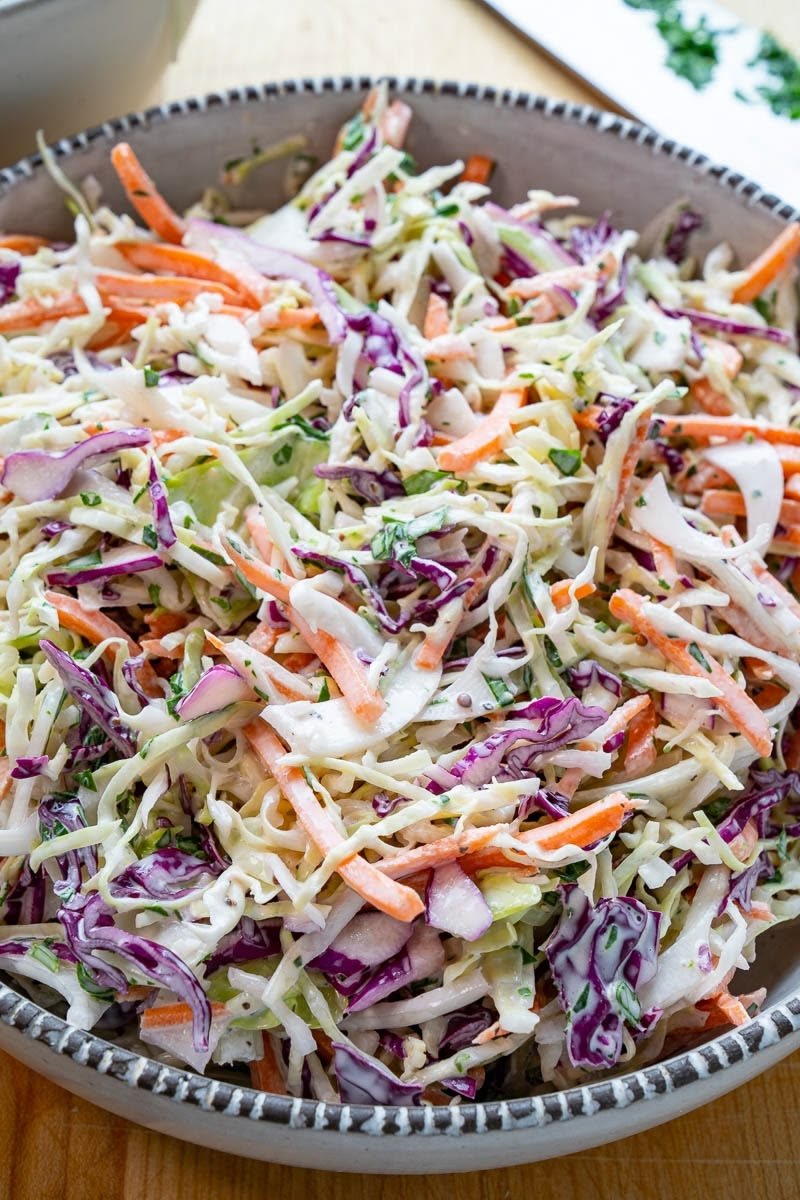
Traditional Coleslaw
Description
Traditional Coleslaw is a classic creamy cabbage salad made with crisp shredded cabbage, sweet carrots, and a smooth, tangy dressing. It is simple, refreshing, crunchy, and incredibly versatile. The combination of fresh vegetables with a creamy mayonnaise-based dressing creates the perfect balance of sweetness, acidity, and richness.
This traditional coleslaw is an excellent side dish for summer barbecues, family dinners, picnics, potlucks, and holiday gatherings. It pairs especially well with grilled chicken, burgers, pulled pork, fried chicken, barbecue ribs, sandwiches, and seafood.
One of the best things about homemade coleslaw is that it tastes fresher and brighter than many store-bought versions. You can control the sweetness, acidity, creaminess, and seasoning according to your preference.
For the best texture, prepare the dressing separately and combine it with the vegetables shortly before serving. Chilling the finished coleslaw allows the flavors to blend while keeping the vegetables pleasantly crisp.
Recipe Details
Prep Time: 20 minutes
Chilling Time: 30–60 minutes
Total Time: About 1 hour
Servings: 8
Course: Side Dish
Cuisine: American
Difficulty: Easy
Ingredients
For the Coleslaw
- 6 cups finely shredded green cabbage
- 2 cups finely shredded red cabbage
- 1 large carrot, peeled and grated
- ¼ cup finely sliced green onions, optional
- 2 tablespoons chopped fresh parsley, optional
For the Creamy Dressing
- 1 cup mayonnaise
- 2 tablespoons apple cider vinegar
- 1 tablespoon fresh lemon juice
- 1½ tablespoons granulated sugar
- 1 teaspoon Dijon mustard
- ½ teaspoon celery seed
- ½ teaspoon salt
- ¼ teaspoon freshly ground black pepper
- 2 tablespoons milk or buttermilk, as needed
Choosing the Right Cabbage
The cabbage is the foundation of traditional coleslaw, so choosing fresh, firm cabbage makes a noticeable difference.
Look for a green cabbage that feels heavy for its size and has tightly packed leaves. The leaves should look crisp and fresh rather than wilted.
Red cabbage adds beautiful color and a slightly stronger flavor. While traditional recipes can be made entirely with green cabbage, combining green and red cabbage creates an attractive presentation.
You can also use a bag of pre-shredded coleslaw mix if you need to save time. However, freshly shredded cabbage generally has a better texture and a more vibrant flavor.
Preparing the Vegetables
Begin by removing any damaged outer cabbage leaves.
Cut the cabbage into quarters and remove the tough central core.
Using a sharp knife, slice the cabbage into thin, even strips. You can also use a food processor with a shredding attachment.
Place the shredded cabbage in a large mixing bowl.
Peel the carrot and grate it using the large holes of a box grater. Add the carrot to the cabbage.
If using red cabbage, shred it into thin strips and add it to the bowl.
Add sliced green onions and fresh parsley if desired.
Toss the vegetables gently so the colors and ingredients are evenly distributed.
Preparing the Creamy Dressing
The dressing is what gives traditional coleslaw its signature creamy, tangy flavor.
In a medium bowl, combine the mayonnaise, apple cider vinegar, lemon juice, sugar, Dijon mustard, celery seed, salt, and black pepper.
Whisk until completely smooth.
Taste the dressing.
If you prefer sweeter coleslaw, add another teaspoon of sugar.
For a tangier flavor, add a little more vinegar or lemon juice.
If you want a thinner dressing, whisk in milk or buttermilk one tablespoon at a time.
The finished dressing should be creamy but pourable enough to coat the cabbage without becoming heavy.
Combining the Coleslaw
Pour approximately three-quarters of the dressing over the shredded vegetables.
Using large salad spoons or tongs, toss everything together until the cabbage and carrots are evenly coated.
Add more dressing as needed.
Avoid adding all of the dressing immediately because cabbage can vary in size, and you may not need the entire amount.
The goal is a creamy coating rather than a pool of dressing at the bottom of the bowl.
Once combined, cover the bowl and refrigerate for at least 30 minutes.
For even better flavor, allow the coleslaw to chill for approximately one hour.
Why Chilling Matters
Freshly mixed coleslaw tastes good, but allowing it to rest in the refrigerator makes it even better.
During chilling, the dressing has time to move throughout the cabbage and carrots. The sugar, vinegar, mustard, and seasonings become more balanced.
The cabbage also softens slightly while maintaining its pleasant crunch.
Avoid leaving the coleslaw at room temperature for long periods, especially during warm weather.
Keep it refrigerated until you’re ready to serve.
Perfect Texture
Traditional coleslaw should have a combination of creamy dressing and crunchy vegetables.
One common mistake is shredding the cabbage too finely. Extremely thin cabbage can become soft quickly after being mixed with dressing.
Aim for thin but distinct strips.
The carrot should also be grated rather than pureed.
If you prefer extra-crunchy coleslaw, you can lightly salt the cabbage before mixing it with the dressing. Let it sit for about 10–15 minutes, then drain and gently pat it dry.
This removes some excess moisture and helps prevent watery coleslaw.
How to Prevent Watery Coleslaw
Watery coleslaw is one of the most common problems when making this salad.
Cabbage naturally contains a lot of water. Once salt and dressing are added, the vegetables can release additional moisture.
To minimize this problem:
- Use fresh, firm cabbage.
- Avoid adding too much dressing.
- Don’t oversalt the vegetables.
- Drain and dry cabbage if necessary.
- Add dressing shortly before serving.
- Keep the coleslaw chilled.
If your coleslaw becomes slightly watery after chilling, simply stir it well and add a small amount of fresh mayonnaise to restore the creamy texture.
Flavor Balance
A great traditional coleslaw is all about balance.
The mayonnaise provides richness.
The vinegar and lemon juice add acidity.
Sugar provides a gentle sweetness.
Dijon mustard adds depth.
Celery seed contributes a distinctive classic coleslaw flavor.
Salt enhances all the ingredients, while black pepper provides mild warmth.
If your coleslaw tastes flat, it usually needs a little more acidity or salt rather than additional mayonnaise.
If it tastes too sharp, add a small amount of sugar or mayonnaise.
Taste the dressing before mixing it with the vegetables so you can adjust it easily.
Tips for the Best Traditional Coleslaw
Use fresh vegetables
Fresh cabbage and carrots provide the best crunch and flavor.
Slice evenly
Uniform cabbage strips create a better texture and ensure that every bite contains a balanced amount of dressing.
Don’t drown the vegetables
Start with less dressing and add more as needed.
Chill before serving
At least 30 minutes of refrigeration allows the flavors to develop.
Taste before serving
Cabbage can vary in size and sweetness, so adjust the dressing according to your taste.
Use celery seed
Celery seed gives traditional coleslaw its familiar deli-style character.
Add dressing gradually
You can always add more dressing, but removing excess dressing is difficult.
Make-Ahead Instructions
Traditional coleslaw is an excellent make-ahead side dish.
You can shred the cabbage and carrots up to one day in advance. Store them in an airtight container in the refrigerator.
The dressing can also be prepared one or two days ahead and stored separately.
For the freshest texture, combine the vegetables and dressing approximately 30–60 minutes before serving.
If you’re preparing the entire salad several hours ahead, keep it refrigerated and stir gently before serving.
For a party, it is better to make the coleslaw earlier in the day rather than the night before if you want maximum crunch.
Storage
Store leftover coleslaw in a covered airtight container in the refrigerator.
For best quality, consume it within 3–4 days.
The vegetables will gradually soften as they sit in the dressing, so the texture is best during the first two days.
Always refrigerate coleslaw promptly after serving.
If it has been sitting at room temperature for an extended period, especially in hot weather, it is safer to discard it.
Can You Freeze Coleslaw?
Traditional mayonnaise-based coleslaw is not recommended for freezing.
Freezing can cause the cabbage and carrots to lose their crisp texture. The mayonnaise-based dressing may also separate when thawed.
For the best results, make only as much coleslaw as you expect to eat within several days.
Variations
Although this is a traditional recipe, there are many easy ways to customize it.
Southern-Style Coleslaw
Use a slightly sweeter dressing with additional sugar and a little extra vinegar.
Buttermilk Coleslaw
Replace some of the milk with buttermilk for a tangier, richer dressing.
Apple Coleslaw
Add one crisp apple, thinly sliced or julienned. Apples provide natural sweetness and extra crunch.
Raisin Coleslaw
Add a small handful of raisins for a sweet contrast.
Spicy Coleslaw
Add finely chopped jalapeño or a pinch of cayenne pepper to the dressing.
Herb Coleslaw
Increase the amount of fresh parsley and add a little fresh dill.
Light Coleslaw
Replace part of the mayonnaise with plain Greek yogurt.
Honey Coleslaw
Replace some or all of the sugar with honey for a slightly different sweetness.
What to Serve With Traditional Coleslaw
Traditional coleslaw is one of the most versatile side dishes.
Serve it with:
- Pulled pork sandwiches
- Barbecue chicken
- Grilled burgers
- Fried chicken
- BBQ ribs
- Grilled steak
- Fish and chips
- Fried fish
- Grilled shrimp
- Chicken sandwiches
- Hot dogs
- Bratwurst
- Baked potatoes
- Cornbread
- Sandwiches and wraps
Its cool, creamy texture works especially well with smoky, spicy, crispy, or grilled foods.
Coleslaw for a Barbecue
Coleslaw is practically made for summer barbecues.
Its creamy, tangy flavor cuts through the richness of grilled meats and barbecue sauces.
For a barbecue buffet, serve it alongside pulled pork, grilled chicken, baked beans, corn on the cob, potato salad, and cornbread.
If you’re serving outdoors, keep the coleslaw chilled in a bowl placed over ice whenever possible.
Serving Suggestions
For an attractive presentation, transfer the chilled coleslaw to a large serving bowl.
Sprinkle a little fresh parsley or finely sliced green onion over the top.
You can also reserve a few strands of red cabbage and carrot to scatter across the surface.
Serve cold or slightly chilled.
A small squeeze of fresh lemon juice immediately before serving can brighten the flavors.
Nutrition Information
Estimated per serving and may vary depending on the mayonnaise and exact ingredients used.
- Calories: Approximately 220
- Protein: 1–2g
- Carbohydrates: 12–15g
- Fat: 18–20g
- Fiber: 3–4g
- Sugar: 8–10g
- Sodium: Approximately 350–500mg
- Vitamin C: High
- Vitamin K: High
For a lighter version, use reduced-fat mayonnaise or replace half of the mayonnaise with plain Greek yogurt.
Benefits of Traditional Coleslaw
Cabbage is a nutrient-rich vegetable that provides vitamin C, vitamin K, fiber, and various plant compounds.
Carrots contribute beta-carotene and additional fiber.
Red cabbage adds color as well as a variety of naturally occurring antioxidant compounds.
The recipe can also be adjusted to suit different dietary preferences. Using Greek yogurt instead of some mayonnaise increases the protein content while reducing the overall richness.
Because coleslaw is vegetable-based, it can be a simple way to add more vegetables to a meal.
Remember that the dressing contributes most of the calories and fat, so portion size and dressing quantity can be adjusted according to your dietary needs.
Frequently Asked Questions
Can I make coleslaw without red cabbage?
Absolutely. Traditional coleslaw is commonly made entirely with green cabbage. Red cabbage is included here mainly for color and additional texture.
Can I use bagged coleslaw mix?
Yes. A pre-shredded coleslaw mix is a convenient shortcut. Simply check the amount you have and prepare enough dressing to coat it lightly.
How long should coleslaw sit before serving?
At least 30 minutes is recommended. One hour usually provides an excellent balance between flavor development and crunch.
Can I make coleslaw the night before?
Yes, but the vegetables will be softer the next day. For maximum crunch, keep the dressing separate and combine it closer to serving time.
Why does my coleslaw taste too sweet?
Add a little apple cider vinegar or lemon juice to balance the sweetness. Add it gradually and taste after each addition.
Why is my coleslaw too acidic?
Add a little more mayonnaise or a small amount of sugar to balance the acidity.
Can I use Miracle Whip instead of mayonnaise?
Yes. Keep in mind that Miracle Whip has a sweeter and tangier flavor, so you may want to reduce the sugar and vinegar.
Can I use Greek yogurt?
Yes. Replace up to half of the mayonnaise with plain Greek yogurt for a lighter dressing with extra protein.
Can I make it dairy-free?
Yes. The basic mayonnaise dressing can be made dairy-free by using dairy-free mayonnaise and replacing the milk with a plant-based alternative or simply omitting it.
Is traditional coleslaw gluten-free?
The ingredients in this recipe are naturally gluten-free, but always check packaged mayonnaise, mustard, and other ingredients if you need to avoid gluten strictly.
Can I add onions?
Yes. Finely sliced green onions or a small amount of finely diced red onion works beautifully.
Can I add celery?
Definitely. Finely chopped celery provides extra crunch and complements the celery seed in the dressing.
Common Mistakes to Avoid
Adding too much dressing: Creamy does not mean swimming in dressing.
Skipping the chill: Freshly mixed coleslaw can taste less balanced than chilled coleslaw.
Using wet vegetables: Excess water can dilute the dressing.
Over-salting: Salt draws moisture from cabbage, so use it carefully.
Shredding too finely: Extremely thin cabbage can become limp.
Not tasting the dressing: The dressing should be balanced before it reaches the vegetables.
Leaving it unrefrigerated: Creamy coleslaw should remain properly chilled, especially during warm weather.