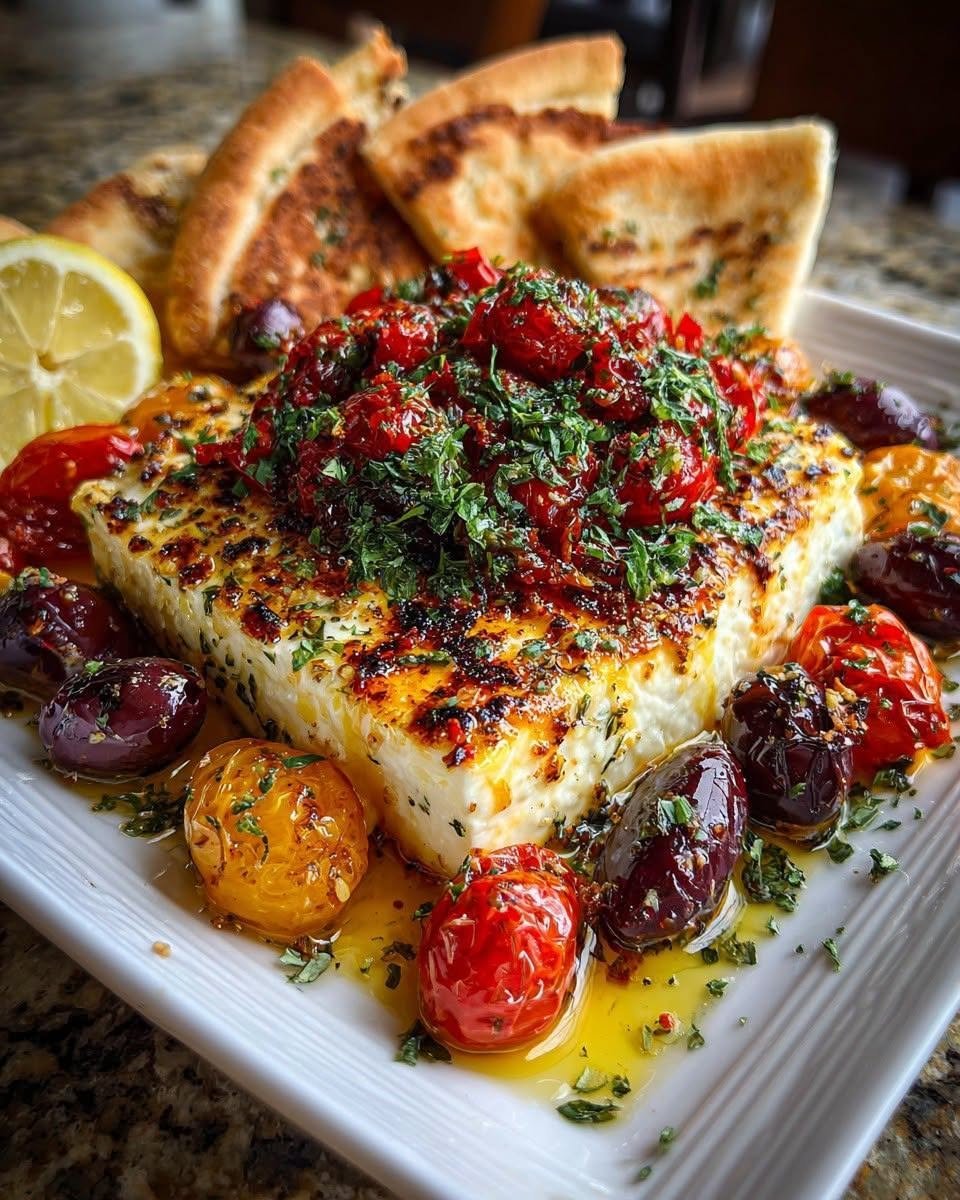
Mediterranean Baked Feta Appetizer with Pita
Description
Mediterranean Baked Feta Appetizer with Pita is a warm, colorful, and incredibly flavorful dish that transforms simple Mediterranean ingredients into an impressive appetizer. A block of creamy feta is baked with juicy cherry tomatoes, Kalamata olives, roasted red peppers, garlic, fresh herbs, and extra-virgin olive oil until the tomatoes become soft and bursting with flavor while the feta turns warm, creamy, and beautifully golden around the edges.
Served with warm pita bread for dipping, this appetizer is perfect for entertaining, holiday gatherings, casual family dinners, game nights, potlucks, or a Mediterranean-inspired snack. It requires minimal preparation but delivers a restaurant-style presentation.
The combination of salty feta, sweet roasted tomatoes, briny olives, aromatic garlic, fresh herbs, and fruity olive oil creates a delicious balance of flavors. When the warm feta is scooped onto toasted pita, every bite is creamy, savory, tangy, and satisfying.
This recipe is also highly customizable. You can add artichoke hearts, chickpeas, sun-dried tomatoes, spinach, red onion, pepperoncini, or a touch of chili flakes depending on your preferred flavor profile.
Recipe Details
Prep Time: 10–15 minutes
Cook Time: 25–30 minutes
Total Time: Approximately 40–45 minutes
Servings: 6–8 as an appetizer
Course: Appetizer
Cuisine: Mediterranean-inspired
Difficulty: Easy
Ingredients
For the Baked Feta
- 8 ounces block feta cheese
- 2 cups cherry tomatoes, halved
- ½ cup Kalamata olives, pitted
- ½ cup roasted red peppers, sliced
- ¼ cup red onion, thinly sliced
- 4 garlic cloves, lightly crushed
- 3 tablespoons extra-virgin olive oil
- 1 teaspoon dried oregano
- ½ teaspoon dried thyme
- ½ teaspoon smoked paprika
- ¼ teaspoon red pepper flakes, optional
- ½ teaspoon freshly ground black pepper
- 1 tablespoon fresh parsley, chopped
- 1 tablespoon fresh dill, chopped
- 1 tablespoon fresh basil, torn
- 1 teaspoon lemon zest
- 1 tablespoon fresh lemon juice
- 1 tablespoon honey, optional
For the Pita
- 6–8 pita breads
- 1 tablespoon olive oil
- ½ teaspoon dried oregano
- Pinch of garlic powder
- Pinch of salt
Optional Garnishes
- Fresh parsley
- Fresh dill
- Fresh basil
- Lemon wedges
- Extra Kalamata olives
- Crumbled feta
- Toasted pine nuts
- Extra-virgin olive oil
- Chili flakes
- A small drizzle of honey
Instructions
1. Preheat the Oven
Preheat your oven to 400°F (200°C).
Choose a medium-sized oven-safe baking dish. A shallow ceramic or glass baking dish works especially well because it allows the feta and vegetables to roast evenly while also making the finished appetizer attractive enough to serve directly at the table.
Lightly drizzle the bottom of the baking dish with approximately 1 tablespoon of olive oil.
2. Prepare the Vegetables
Place the halved cherry tomatoes into the baking dish.
Add the Kalamata olives, roasted red peppers, sliced red onion, and crushed garlic.
Spread everything around the dish, leaving enough room in the center for the feta.
The tomatoes are especially important because they release their juices while baking, creating a naturally flavorful sauce around the feta.
If your tomatoes are particularly large, cut them into quarters so they roast more evenly.
3. Add the Feta
Place the block of feta directly in the center of the vegetables.
For the best texture, use a block of feta rather than pre-crumbled feta. A block stays creamy inside while developing slightly golden edges during baking.
Drizzle the feta and surrounding vegetables with the remaining olive oil.
Sprinkle the oregano, thyme, smoked paprika, black pepper, and optional red pepper flakes over everything.
Add the lemon zest.
If you enjoy a slightly sweet and savory combination, drizzle approximately 1 tablespoon of honey over the feta. The honey pairs beautifully with salty feta and roasted tomatoes.
4. Bake
Place the dish in the preheated oven.
Bake for approximately 20–25 minutes.
The tomatoes should soften and begin to burst, the garlic should become tender, and the feta should become warm and creamy with lightly golden edges.
For additional browning, switch the oven to broil for the final 1–2 minutes.
Watch carefully during broiling because feta and vegetables can brown quickly.
Do not overcook the feta. The goal is a warm, soft center rather than a completely melted cheese.
5. Add Fresh Herbs and Lemon
Remove the baking dish from the oven and allow it to rest for approximately 3–5 minutes.
Add fresh parsley, dill, and basil.
Drizzle with fresh lemon juice.
The lemon juice is important because it cuts through the richness of the feta and olive oil while brightening the roasted vegetables.
If desired, add another small drizzle of extra-virgin olive oil.
For a slightly sweeter finish, add a very light drizzle of honey.
How to Prepare the Pita
While the feta is baking, prepare the pita bread.
Preheat a skillet, grill pan, or oven to medium-high heat.
Brush the pita lightly with olive oil.
Sprinkle with oregano, garlic powder, and a tiny pinch of salt.
Warm each pita for approximately 1–2 minutes per side, until heated through and lightly toasted.
For crisp pita wedges, cut the pita into triangles and arrange them on a baking sheet.
Brush lightly with olive oil and bake at 400°F (200°C) for approximately 6–8 minutes, turning once halfway through.
The pita should be lightly golden around the edges while remaining slightly soft in the center.
How to Serve
Bring the warm baking dish directly to the table.
Arrange warm pita wedges around the feta and vegetables.
Use a spoon to gently break into the feta so that the creamy center mixes with the roasted tomato juices, garlic, herbs, and olive oil.
Encourage guests to scoop the mixture directly onto warm pita.
For an extra beautiful presentation, garnish the dish with fresh parsley, dill, basil, lemon wedges, and a few additional Kalamata olives.
A small drizzle of olive oil across the top adds a beautiful glossy finish.
Notes
Use Block Feta
Block feta gives the best result because it retains its shape while becoming warm and creamy inside.
Crumbled feta can be used, but it tends to dry out more quickly.
Choose Good Olive Oil
Since olive oil is an important part of this appetizer, use a good-quality extra-virgin olive oil when possible.
The oil becomes infused with garlic, tomato, herbs, and feta as the dish bakes.
Don’t Skip the Lemon
Lemon juice adds brightness and prevents the appetizer from tasting overly rich.
Fresh lemon juice is preferable to bottled lemon juice.
Watch the Salt
Feta and Kalamata olives are naturally salty, so additional salt may not be necessary.
Taste the finished dish before adding any.
Fresh Herbs Make a Difference
Fresh parsley, basil, and dill add color and freshness.
If you only have one fresh herb available, parsley is an excellent choice.
Tips for the Best Baked Feta
1. Use Room-Temperature Feta
Allowing the feta to sit at room temperature for approximately 15–20 minutes before baking can help it warm more evenly.
2. Don’t Crowd the Dish
Arrange the vegetables around the feta rather than piling everything directly on top.
This allows the tomatoes and peppers to roast and caramelize properly.
3. Use Juicy Tomatoes
Cherry or grape tomatoes are ideal because they become sweet and juicy when roasted.
4. Add Heat Carefully
Red pepper flakes provide a pleasant kick, but start with a small amount. You can always add more after baking.
5. Toast the Pita
Warm, lightly toasted pita is much more satisfying than cold bread with this appetizer.
The crisp edges provide a great contrast to the creamy feta.
6. Serve Immediately
This appetizer is at its best while warm.
The feta is creamy, the vegetables are juicy, and the olive oil is fragrant immediately after baking.
Variations
Mediterranean Chickpea Baked Feta
Add 1 cup of drained chickpeas to the baking dish before roasting.
The chickpeas absorb the tomato juices and olive oil while adding texture and extra plant-based protein.
Spinach and Artichoke Version
Add 1 cup of chopped artichoke hearts and a handful of fresh spinach.
The spinach can be added during the final 5–7 minutes of baking so that it wilts without becoming overly soft.
Spicy Baked Feta
Add extra red pepper flakes, sliced pepperoncini, or chopped fresh chili peppers.
A little chili oil drizzled over the finished dish also works beautifully.
Honey Herb Baked Feta
Increase the honey slightly and add fresh rosemary or thyme.
This version is particularly delicious during autumn and holiday gatherings.
Olive and Sun-Dried Tomato Version
Replace some of the roasted red peppers with chopped sun-dried tomatoes.
The concentrated sweetness of sun-dried tomatoes works especially well with salty feta.
Creamier Version
After baking, gently mash part of the feta with the roasted tomatoes and olive oil.
This creates a warm, rustic feta dip that can be spread directly onto toasted pita.
Serving Suggestions
Mediterranean Baked Feta can be served as part of a larger appetizer spread.
Pair it with:
- Hummus
- Baba ganoush
- Tzatziki
- Marinated olives
- Cucumber slices
- Cherry tomatoes
- Roasted vegetables
- Grilled pita
- Stuffed grape leaves
- Falafel
- Fresh tabbouleh
- Mediterranean bean salad
For a larger gathering, place several small bowls of dips and vegetables around the baked feta and create a Mediterranean grazing board.
Make-Ahead Instructions
This appetizer is best served fresh, but several components can be prepared ahead.
The vegetables can be washed and chopped several hours in advance.
The feta can be placed in the baking dish and refrigerated until approximately 30 minutes before baking.
The pita can be cut and seasoned ahead of time.
The entire dish can also be assembled several hours before guests arrive. Cover and refrigerate, then allow it to sit at room temperature for approximately 15 minutes before placing it in the oven.
Avoid baking the feta too far ahead because the creamy texture is best when freshly baked.
Storage
Allow leftovers to cool before transferring them to an airtight container.
Refrigerate for up to 3 days.
Reheat gently in a small oven-safe dish at 350°F (175°C) until warmed through.
You can also reheat individual portions in the microwave, although the oven provides a better texture.
Store pita separately so it does not become soggy.
Leftover baked feta mixture can also be used in sandwiches, wraps, pasta, grain bowls, or salads.
Nutritional Information
Estimated per serving, assuming 8 appetizer servings and excluding additional pita:
- Calories: approximately 270
- Protein: 9–11 g
- Carbohydrates: 12–15 g
- Fat: 21–23 g
- Fiber: 2–3 g
- Sugar: 5–7 g
- Sodium: approximately 600–750 mg
- Calcium: approximately 250–300 mg
Nutrition values are estimates and can vary depending on the feta, olives, olive oil, pita, and other ingredients used.
Benefits
Protein and Calcium
Feta provides protein and calcium, making this appetizer more satisfying than many vegetable-only dips.
Tomatoes Provide Antioxidants
Tomatoes contribute naturally occurring antioxidants and add vibrant color and sweetness to the dish.
Olive Oil Provides Unsaturated Fat
Extra-virgin olive oil is a staple of Mediterranean-style cooking and provides predominantly unsaturated fat.
Vegetables Add Fiber
Tomatoes, peppers, onions, garlic, and olives contribute fiber and a variety of micronutrients.
Fresh Herbs Add Flavor
Fresh herbs allow you to create a highly flavorful dish without relying on large amounts of additional salt.
Satisfying Appetizer
The combination of protein, fat, vegetables, and pita makes this appetizer more filling than a simple vegetable dip.
Versatile for Entertaining
It can be served as a starter, snack, party dip, or component of a larger Mediterranean meal.
These benefits are based on the nutritional characteristics of the ingredients and are not intended as medical advice.
Frequently Asked Questions
Can I use crumbled feta?
Yes, but block feta is recommended. Crumbled feta tends to dry out more quickly during baking. If using crumbled feta, reduce the baking time and keep a close eye on it.
Can I use Greek feta?
Absolutely. Greek feta is an excellent choice and provides the classic salty, tangy flavor associated with baked feta dishes.
Can I make this without olives?
Yes. Simply leave them out or replace them with artichoke hearts, capers, roasted red peppers, or additional tomatoes.
Can I make this appetizer spicy?
Yes. Add red pepper flakes, sliced chili peppers, pepperoncini, or chili oil.
What type of pita is best?
Both white and whole-wheat pita work well. For a softer dip experience, use warm pita. For more crunch, toast the pita into wedges.
Can I serve it cold?
It can be eaten at room temperature, but it is best warm because the feta becomes creamy and the roasted vegetables are more flavorful.
Can I make it dairy-free?
Traditional feta is made from dairy, so it cannot be dairy-free. However, a plant-based feta alternative can be substituted.
Check the product’s baking instructions because plant-based cheeses can behave differently when heated.
Can I add chicken?
Yes. Add cooked shredded or chopped grilled chicken after baking, or serve grilled chicken alongside the appetizer.
Can I add shrimp?
Cooked shrimp can be added during the final few minutes of baking, or grilled shrimp can be served alongside the baked feta.
Why did my feta not melt completely?
That is normal. Feta generally softens and becomes creamy rather than melting like mozzarella or cheddar.
The goal is a warm, soft texture.
How can I make the appetizer more creamy?
After baking, gently mash some of the feta with the roasted tomatoes, garlic, and olive oil.
This turns the dish into a creamy Mediterranean-style feta dip.
Can I use other vegetables?
Definitely. Zucchini, eggplant, mushrooms, artichoke hearts, spinach, and additional peppers can all work.
Avoid adding too many watery vegetables because they may release excess liquid.
Can I prepare it for a party?
Yes. Assemble the dish ahead of time and refrigerate it. Bake shortly before serving so guests can enjoy it warm.
How much should I make for a large gathering?
For approximately 12–16 appetizer servings, prepare two baking dishes rather than making one very large dish. Smaller dishes promote more even roasting and make serving easier.