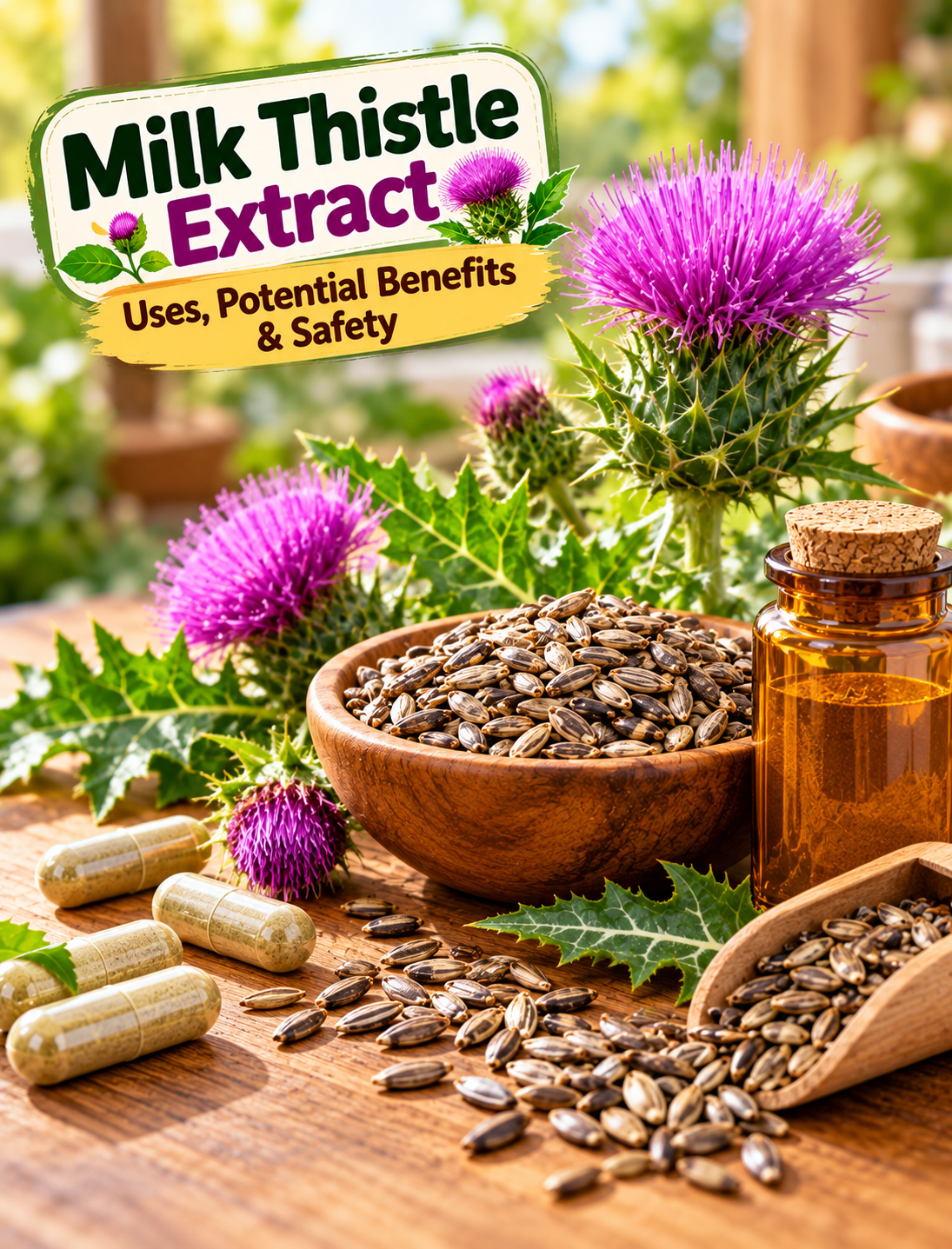
Milk Thistle Extract: Uses, Potential Benefits & Safety
Milk thistle (Silybum marianum) is a flowering plant best known for its traditional connection with liver health. Today, milk thistle extract is widely sold as a dietary supplement, often promoted for liver support, antioxidant effects, blood sugar control, and general wellness.
The main compounds in milk thistle are collectively called silymarin. However, the research is more complicated than many supplement advertisements suggest. Human studies have produced mixed results, especially for liver disease, so milk thistle should not be described as a liver “detox” or cure. (NCCIH)
This guide explains what milk thistle is, why people use it, what research has found, and what to know before taking an extract.
What Is Milk Thistle?
Milk thistle is a plant native to Europe that has also been introduced to North America. It produces distinctive purple flowers and is sometimes called Mary thistle or holy thistle. (NCCIH)
Milk thistle supplements are usually made from the plant’s seeds or fruits. The best-known active component is silymarin, which is actually a mixture of several plant compounds.
Milk thistle has a long history in traditional herbal practices, particularly for liver-related complaints. It has also traditionally been used for other purposes, including supporting breast milk production, although evidence for this use remains unclear. (NCCIH)
What Is Silymarin?
Silymarin is the main group of compounds found in milk thistle extract.
Researchers have studied silymarin because of its antioxidant and other biological activities. Most modern milk thistle research focuses on standardized extracts containing measured amounts of silymarin.
One important point is that milk thistle products are not all identical. Extract strength, formulation, and product quality can vary, which makes results from one study difficult to apply to every supplement.
Why Do People Use Milk Thistle?
Milk thistle is commonly marketed for:
- Liver health
- Antioxidant support
- Fatty liver concerns
- Blood sugar support
- General herbal wellness
Its strongest public association is with the liver. However, being commonly used for a condition does not mean that an herbal supplement has been proven to treat that condition.
The National Center for Complementary and Integrative Health (NCCIH) states that there is not enough high-quality evidence to reach definite conclusions about milk thistle’s effects on health conditions. (NCCIH)
Milk Thistle and Liver Health
Liver support is the main reason many people consider milk thistle supplements.
Researchers have studied silymarin in people with several liver conditions, including hepatitis B and C, alcohol-related liver disease, and nonalcoholic fatty liver disease.
The results have been mixed.
NCCIH reports that clinical trials of milk thistle for several liver conditions have been conflicting or too limited to support clear conclusions. Two NCCIH-funded studies, including research involving hepatitis C and nonalcoholic steatohepatitis, did not find a benefit from silymarin supplementation. (NCCIH)
What Does the Research Actually Show?
Some newer systematic reviews have reported improvements in certain laboratory markers, such as ALT and AST, among people taking silymarin. However, researchers have also pointed out limitations in study quality and called for better-designed clinical trials. (PubMed)
That distinction matters.
A change in a liver enzyme does not automatically mean that a supplement prevents liver damage, reverses disease, or improves long-term health outcomes.
Earlier systematic reviews also found insufficient evidence to recommend milk thistle as a treatment for chronic liver disease. (PubMed)
Can Milk Thistle Detox the Liver?
There is not enough evidence to say that milk thistle “detoxes” the liver.
Your liver already performs important processes that help metabolize substances and remove waste from the body.
Calling a supplement a “liver detox” can create unrealistic expectations. Milk thistle research should instead be discussed in terms of specific outcomes studied in humans, such as liver enzymes or symptoms.
If someone has abnormal liver tests or a diagnosed liver condition, the underlying cause should be evaluated rather than relying on an herbal supplement.
What Are the Potential Benefits?
Research has identified several areas of interest, but the evidence does not support treating milk thistle as a proven therapy.
Possible Liver Marker Effects
Some studies suggest silymarin may reduce certain liver enzymes in people with liver conditions. However, the clinical importance of these changes remains uncertain. (PubMed)
Antioxidant Activity
Silymarin contains compounds with antioxidant activity. Laboratory findings are interesting, but laboratory activity does not automatically translate into a proven health benefit in people.
Blood Sugar Research
Some small human studies have explored milk thistle in people with type 2 diabetes and reported possible improvements in blood sugar control. NCCIH notes that most of this research was conducted in Middle Eastern countries, so it remains unclear whether the same results would occur in other populations. (NCCIH)
General Wellness
Milk thistle may be used as part of an herbal supplement routine, but there is not enough high-quality evidence to recommend it for general disease prevention.
What Milk Thistle Cannot Be Claimed to Do
Avoid exaggerated claims that milk thistle:
- “Cleans” or detoxes the liver
- Reverses fatty liver disease
- Cures hepatitis
- Repairs liver damage
- Prevents liver cancer
- Replaces prescribed liver medication
- Guarantees better liver function
- Removes toxins from the body
These statements go beyond what current human evidence can support.
How Is Milk Thistle Extract Used?
Milk thistle is available as:
- Capsules
- Tablets
- Standardized extracts
- Powdered preparations
- Combination herbal supplements
Because products can contain different amounts and forms of silymarin, follow the product label rather than assuming that every milk thistle supplement has the same dose or strength.
There is also a quality issue to consider. NCCIH notes that some milk thistle dietary supplements have been found to contain different amounts of silymarin than their labels state, while some have had contamination concerns. (NCCIH)
Choosing a reputable manufacturer and checking the full Supplement Facts label is therefore important.
Milk Thistle Side Effects
Milk thistle is generally well tolerated when taken orally, but side effects can occur.
The most commonly reported problems include:
- Bloating
- Gas
- Nausea
- Indigestion
- Diarrhea
Allergic reactions are also possible, particularly in people who are sensitive to plants in the same family, such as ragweed, chrysanthemums, marigolds, and daisies. (NCCIH)
Stop using a supplement and seek appropriate medical advice if you develop a significant allergic reaction or other concerning symptoms.
Drug Interactions
Herbal supplements can interact with prescription and over-the-counter medicines.
The exact interaction risk depends on the medicine, dose, supplement formulation, and individual health factors. NCCIH recommends talking with a healthcare professional before using milk thistle if you take medications. (NCCIH)
Do not stop or change prescribed medication simply because you begin taking milk thistle.
Pregnancy and Breastfeeding
There is limited information about the safety of milk thistle during pregnancy or breastfeeding. (NCCIH)
If you are pregnant, trying to become pregnant, or breastfeeding, speak with a qualified healthcare professional before using milk thistle extract.
This is especially important with concentrated supplements because their strength can differ significantly from normal food exposure.
When Should You Speak With a Healthcare Professional?
Talk with a healthcare professional before using milk thistle if you:
- Have diagnosed liver disease
- Have abnormal liver enzyme results
- Take prescription medication
- Have diabetes
- Have allergies to related plants
- Are pregnant or breastfeeding
- Are preparing for surgery
- Take several dietary supplements
If you have symptoms such as yellowing of the skin or eyes, dark urine, severe abdominal pain, persistent vomiting, unusual bleeding, or unexplained weight loss, seek medical evaluation rather than trying to manage the problem with an herbal supplement.
How to Choose a Milk Thistle Supplement
If you decide to discuss milk thistle with your healthcare professional, use these steps:
Step 1: Check the ingredient
Look for milk thistle (Silybum marianum) and clearly stated silymarin content.
Step 2: Read the Supplement Facts panel
Check the serving size, amount per serving, additional ingredients, and suggested use.
Step 3: Avoid exaggerated claims
Be cautious of products promising a “complete liver cleanse,” instant detox, or guaranteed disease reversal.
Step 4: Choose transparent products
Look for manufacturers that provide clear information about ingredients and quality testing.
Step 5: Review medications
Ask a pharmacist or healthcare professional about possible interactions before starting the supplement.
Frequently Asked Questions
1. What is milk thistle extract used for?
Milk thistle extract is commonly used for liver-related wellness, but human evidence is not strong enough to establish it as a treatment for liver disease. (NCCIH)
2. What is silymarin?
Silymarin is a mixture of naturally occurring compounds that makes up the main active component of many milk thistle extracts.
3. Does milk thistle detox the liver?
No proven evidence shows that milk thistle “detoxes” the liver or removes toxins from the body.
4. Can milk thistle treat fatty liver?
Research is ongoing, but current evidence is not strong enough to recommend milk thistle as a proven treatment for fatty liver disease. (PubMed)
5. What are common milk thistle side effects?
Bloating, gas, nausea, indigestion, and diarrhea are among the commonly reported side effects. (NCCIH)
6. Can milk thistle interact with medications?
Yes. Because potential herb-drug interactions exist, people taking medication should consult a healthcare professional before using it. (NCCIH)
7. Is milk thistle safe during pregnancy?
Safety during pregnancy has not been adequately established, so pregnant people should consult a healthcare professional before using it. (NCCIH)
8. Is milk thistle proven to protect the liver?
Human studies have produced mixed results, and there is not enough high-quality evidence to make a broad liver-protection claim. (NCCIH)
Final Takeaway
Milk thistle is an interesting traditional herb with silymarin as its main group of active compounds. Its connection with liver health has led to substantial scientific research, but the human evidence remains mixed.
Some studies report changes in liver enzymes or other metabolic markers, while other well-designed studies have not found meaningful benefits. This means milk thistle should be viewed as a dietary supplement with ongoing research—not a proven liver treatment or detox product. (NCCIH)
If you are considering a milk thistle extract, focus on product quality, possible interactions, your existing health conditions, and the reason you want to use it. For diagnosed liver problems, professional medical evaluation should come before relying on an herbal supplement.