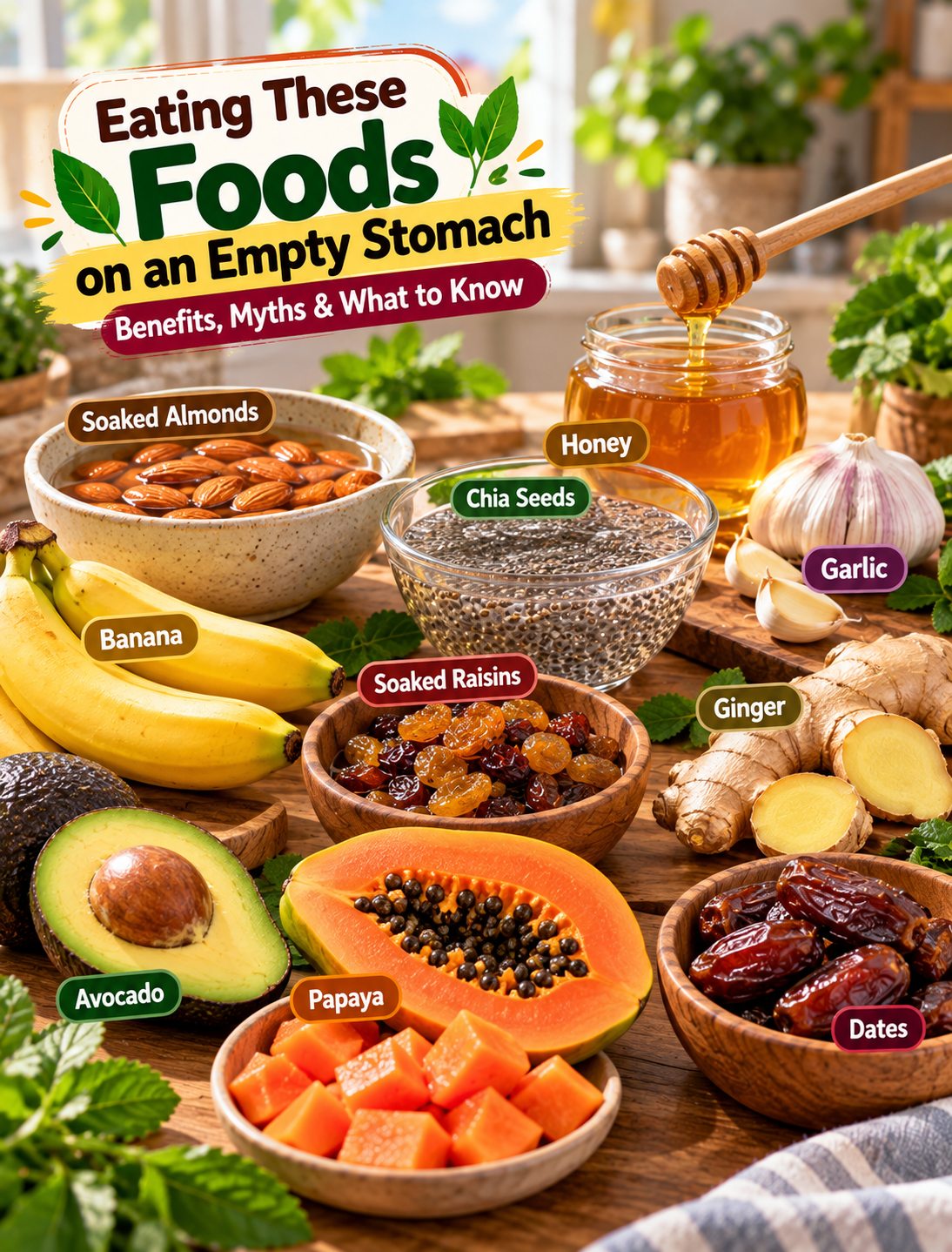
Eating These Foods on an Empty Stomach: Benefits, Myths & What to Know
There is a popular idea that certain foods work better when eaten first thing in the morning or on an empty stomach. You may have seen claims that soaked almonds improve energy, honey “cleanses” the body, or papaya and chia seeds provide special morning benefits.
The truth is more practical: there is no scientifically proven list of foods that everyone should eat on an empty stomach. The overall quality of your diet, portion sizes, fiber intake, protein, healthy fats, hydration, and eating pattern matter more than whether a particular food is eaten before breakfast.
That does not make these foods unhelpful. Many are nutritious choices that can fit into a balanced diet. The key is understanding what each food can realistically offer.
The Empty-Stomach Myth: What Actually Matters?
Your digestive system is designed to process food throughout the day. For most healthy adults, there is no special requirement to eat a particular food before anything else.
Instead of asking, “What is the best food to eat on an empty stomach?”, a more useful question is:
“How can I include nutritious foods in a balanced meal or snack that works for my body?”
Fruits, nuts, seeds, and other whole foods can provide fiber, vitamins, minerals, healthy fats, or other nutrients. CDC guidance also recommends eating a variety of fruits, vegetables, protein foods, nuts, seeds, and fiber-rich foods rather than relying on one “special” food. (CDC)
1. Soaked Almonds
Soaked almonds are commonly eaten first thing in the morning in some traditional food practices.
What they provide
Almonds contain:
- Protein
- Fiber
- Unsaturated fats
- Vitamins and minerals
- Plant compounds
What to know
Soaking may soften the almonds and change their texture, but there is no strong evidence that soaking makes almonds uniquely beneficial when eaten on an empty stomach.
You can eat almonds soaked or unsoaked depending on your preference.
Simple way to use them
Add a small portion of almonds to breakfast with fruit, yogurt, or oatmeal rather than treating them as a special morning remedy.
2. Honey
Honey is often recommended with warm water or eaten alone before breakfast.
What it provides
Honey contains naturally occurring sugars and small amounts of other compounds, but it is still a source of sugar.
What research says
Honey has been studied for certain uses, including cough relief, but that does not mean eating honey on an empty stomach provides a general detox or wellness effect. (NCCIH)
Important point
The CDC classifies honey as an added sugar when it is added to foods or drinks. (CDC)
Use it for flavor rather than assuming more honey means more health benefits.
3. Chia Seeds
Chia seeds are small but packed with nutrients.
What they provide
Chia seeds contain:
- Fiber
- Healthy fats
- Plant-based omega-3 fatty acids
- Protein
- Antioxidant compounds
They absorb liquid and form a gel-like texture. Their fiber can help support regular bowel movements and fullness. (MedlinePlus)
Does timing matter?
There is no proven requirement to eat chia seeds before breakfast.
How to use them
Mix chia seeds into yogurt, oatmeal, smoothies, or a prepared chia pudding. Drink enough fluids when increasing your fiber intake. NIDDK recommends increasing fiber gradually and drinking enough liquids. (NIDDK)
4. Raw Garlic
Raw garlic is one of the most common foods promoted as a morning wellness remedy.
What it provides
Garlic contains sulfur-containing compounds and can add flavor and nutrients to meals.
What research says
Garlic supplements have been studied for cholesterol, blood pressure, and blood sugar, but these findings do not prove that eating raw garlic on an empty stomach treats these conditions. (NCCIH)
Precautions
Raw garlic may cause:
- Heartburn
- Stomach discomfort
- Nausea
- Gas
- Strong breath odor
Garlic supplements may also increase bleeding risk and can interact with certain medicines. (NCCIH)
For most people, using garlic as part of normal meals is a simpler option.
5. Banana
Bananas are a convenient breakfast or snack because they require no preparation.
What they provide
Bananas provide:
- Carbohydrates
- Fiber
- Potassium
- Vitamin B6
- Natural sweetness
Does eating one on an empty stomach offer special benefits?
There is no strong evidence that bananas have a unique effect simply because they are eaten before other foods.
If a banana makes you feel comfortable and satisfied in the morning, it can be part of a healthy breakfast.
Easy combination
Pair a banana with plain yogurt, nuts, nut butter, or oatmeal for a more balanced meal containing protein and healthy fats.
6. Soaked Raisins
Raisins are dried grapes, and soaking them is a traditional preparation in some cultures.
What they provide
Raisins contain:
- Carbohydrates
- Natural sugars
- Some fiber
- Potassium and other micronutrients
What to know
Soaking changes their texture but does not turn them into a detox food.
Because raisins are dried fruit, a small amount contains more concentrated sugars and calories than the same volume of fresh grapes.
Enjoy them as part of breakfast or a snack rather than relying on them as a morning cleanse.
7. Ginger
Ginger is widely used in cooking, tea, and traditional wellness practices.
What research says
Ginger has been studied for nausea and vomiting. Research suggests it may help with nausea associated with pregnancy, although many studies use supplements rather than ordinary food amounts. (NCCIH)
Does it need to be eaten on an empty stomach?
No. There is no established rule that ginger must be consumed before breakfast to work.
Precautions
Ginger can cause heartburn, abdominal discomfort, diarrhea, or mouth and throat irritation in some people. People taking medicines should discuss concentrated ginger products with a healthcare professional. (NCCIH)
8. Avocado
Avocado is very different from sugary fruits because it provides mostly healthy fats along with fiber.
What it provides
Avocado contains:
- Unsaturated fats
- Fiber
- Potassium
- Folate
- Other vitamins and minerals
Best way to use it
Instead of eating avocado because it is supposedly “better on an empty stomach,” add it to a balanced breakfast.
Try avocado with:
- Whole-grain toast
- Eggs
- Beans
- Tomatoes
- A vegetable omelet
Whole foods such as avocado can fit well into a balanced eating pattern without requiring special timing.
9. Papaya
Papaya is a naturally sweet fruit that provides fiber, vitamin C, and other plant compounds.
What people often claim
Papaya is sometimes promoted as a morning detox or digestive cleanser.
What to know
Eating papaya provides nutrients and fiber, but there is no need to eat it on an empty stomach to “clean” your digestive system.
Your body already has organs and systems that process and eliminate waste.
Simple idea
Enjoy fresh papaya with Greek yogurt, chia seeds, or another protein-rich food to create a more satisfying breakfast.
10. Dates
Dates are naturally sweet fruits that provide carbohydrates, fiber, and several minerals.
Why they are popular
Their sweetness makes them an easy alternative to candy or highly processed desserts.
Does timing matter?
There is no proven special benefit to eating dates before breakfast.
Because dates are concentrated dried fruit, portion size matters. A few dates can add sweetness to oatmeal, yogurt, smoothies, or energy bites.
How to Build a Better Morning Meal
Instead of searching for one perfect food for an empty stomach, build your first meal around several useful components.
Step 1: Choose a fiber-rich food
Try:
- Chia seeds
- Oatmeal
- Whole fruit
- Whole-grain toast
Fiber supports digestive health and can help you feel full. (NIDDK)
Step 2: Add protein
Good choices include:
- Eggs
- Plain Greek yogurt
- Cottage cheese
- Nuts
- Seeds
- Beans
Step 3: Include healthy fats
Try:
- Avocado
- Almonds
- Walnuts
- Chia seeds
- Nut butter
Step 4: Add fruit if you enjoy it
Banana, papaya, berries, or a few dates can add natural sweetness and nutrients.
Step 5: Drink enough fluids
Water is usually enough for hydration. If you increase fiber, adequate fluids can help your digestive system handle the change. (NIDDK)
What Should You Avoid?
Be cautious with extreme morning routines that require large amounts of raw garlic, honey, concentrated ginger, or other ingredients.
More is not automatically better.
Also avoid claims that a particular food will:
- Detox your organs
- Melt belly fat
- Cure diabetes
- Clean your blood
- Repair your liver
- Guarantee weight loss
Those claims go beyond what the available evidence supports.
Frequently Asked Questions
1. What is the best food to eat on an empty stomach?
There is no scientifically established “best” food; choose nutritious foods that fit your dietary needs and make you feel comfortable.
2. Should I eat fruit before breakfast?
You can. Whole fruit provides fiber and nutrients, and there is no general requirement to eat it before other foods. (CDC)
3. Is honey on an empty stomach a detox?
No. Honey can be part of a diet, but eating it before breakfast has not been proven to detox the body.
4. Can I eat chia seeds every morning?
Chia can be part of a healthy diet because it provides fiber and healthy fats; increase fiber gradually and drink enough fluids. (MedlinePlus)
5. Is raw garlic safe every morning?
Food amounts are generally safe for most people, but raw garlic can cause stomach discomfort and may interact with some medicines. (NCCIH)
6. Does ginger need to be taken on an empty stomach?
No. Ginger can be included with meals or drinks, and there is no established requirement to consume it before eating.
7. Are soaked almonds healthier than regular almonds?
Soaking changes texture, but there is no strong evidence that soaked almonds have special health benefits because they are eaten on an empty stomach.
8. Can these foods replace breakfast?
Not necessarily. A balanced breakfast with protein, fiber, healthy fats, and fruit or vegetables can provide a broader range of nutrients than relying on one food.
Final Takeaway
The idea of a perfect empty-stomach food is more complicated than social media often suggests. Almonds, honey, chia seeds, garlic, bananas, raisins, ginger, avocado, papaya, and dates can all fit into a healthy eating pattern, but none needs to be eaten on an empty stomach to unlock a special benefit.
Focus on the bigger picture: whole foods, enough fiber, adequate protein, healthy fats, hydration, reasonable portions, and variety. That approach is more useful than building your morning routine around a single “miracle” ingredient. (CDC)