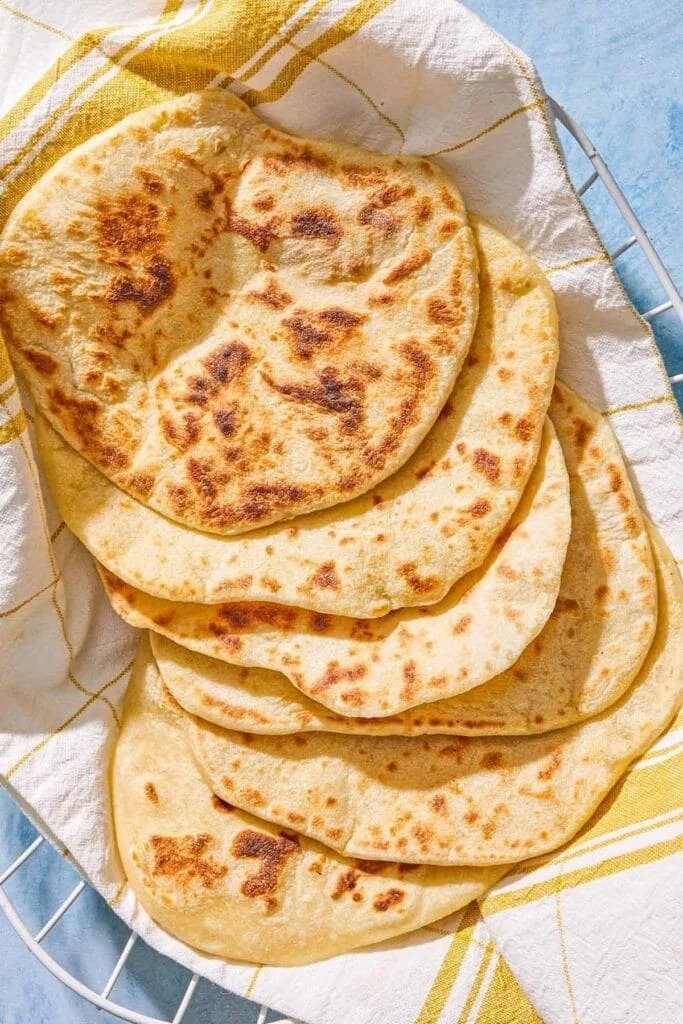
5-Ingredient Yogurt Flatbread
When you want homemade bread without waiting for yeast to rise, this 5-Ingredient Yogurt Flatbread is a perfect choice. It requires just five simple ingredients and cooks quickly in a hot skillet.
The Greek yogurt gives the flatbread a soft texture and gentle tang, while olive oil adds richness and helps create beautiful golden spots during cooking. Once you try this easy recipe, you may find yourself making it again and again.
Prep Time: 10 minutes
Resting Time: 10 minutes
Cook Time: 12–15 minutes
Total Time: About 30–35 minutes
Servings: 6 flatbreads
Ingredients
For the Flatbread
1½ cups all-purpose flour
1 cup plain Greek yogurt
1 teaspoon baking powder
½ teaspoon salt
1 tablespoon olive oil
For Cooking
A small amount of additional olive oil may be used to lightly grease the skillet if needed. This is optional and does not need to be counted among the five main ingredients.
Instructions
Make the Dough
Add the all-purpose flour, baking powder, and salt to a large mixing bowl. Stir everything together so the dry ingredients are evenly distributed.
Add the Greek yogurt and olive oil to the bowl. Mix with a wooden spoon or your hands until the ingredients begin to form a soft dough.
The dough should feel soft and slightly tacky but should not be extremely wet. If it feels too sticky to handle, lightly dust your hands and work surface with a little flour. Avoid adding too much extra flour because this can make the finished flatbreads dense instead of soft.
Knead the Dough
Transfer the dough to a lightly floured surface. Knead it gently for about 2–3 minutes, just until it becomes smoother and more cohesive.
You do not need to knead the dough like traditional yeast bread. The goal is simply to bring the ingredients together and create a smooth, workable dough.
Form the dough into a ball and place it back into the mixing bowl.
Let the Dough Rest
Cover the bowl with a clean kitchen towel or plastic wrap and let the dough rest for about 10 minutes.
This short resting period makes the dough easier to roll and helps prevent it from shrinking back when shaped.
Divide the Dough
After resting, transfer the dough to a lightly floured surface. Divide it into 6 roughly equal portions.
Roll each portion into a small ball. Keep the dough balls covered while you work with them so they do not dry out.
Shape the Flatbreads
Take one dough ball and gently flatten it with your fingertips. Use a rolling pin to roll it into a thin round or oval shape, approximately ⅛-inch thick.
You can make the flatbreads slightly thicker if you prefer a softer, breadier texture. For a more flexible wrap-style flatbread, roll them thinner.
Try to keep the thickness relatively even so the flatbread cooks evenly from edge to center.
Cook the Flatbreads
Heat a large skillet or cast-iron pan over medium-high heat. The pan should be hot before you add the dough.
Place one flatbread into the dry skillet. Cook for about 1–2 minutes, or until small bubbles begin appearing on the surface and the underside develops golden-brown spots.
Flip the flatbread and cook the other side for another 1–2 minutes.
If the pan looks completely dry and the flatbread is sticking, lightly brush the surface with a tiny amount of olive oil. However, these flatbreads generally cook very well without oil directly in the pan.
Continue cooking the remaining flatbreads, adjusting the heat as necessary. If they are browning too quickly before the centers cook, reduce the heat slightly.
Keep Them Soft
Transfer each cooked flatbread to a clean plate and cover it with a clean kitchen towel.
Keeping the flatbreads covered traps a little steam and helps them remain soft and flexible instead of becoming dry.
Serve them warm or allow them to cool completely before storing.
Tips for Perfect Yogurt Flatbread
Choose Thick Greek Yogurt
Thick plain Greek yogurt works especially well because it gives the dough structure while adding moisture and tenderness. Avoid flavored or sweetened yogurt.
If your yogurt is unusually thin, you may need slightly more flour to create a workable dough. Add flour gradually rather than adding a large amount at once.
Do Not Overwork the Dough
This recipe does not require extensive kneading. Overworking the dough can make the flatbreads tougher.
Once the dough looks smooth and holds together, stop kneading and let it rest.
Resting Makes Rolling Easier
Even though this is a quick recipe, do not skip the short resting period if you can avoid it. Ten minutes gives the dough time to relax, which makes rolling much easier.
If the dough keeps springing back while you roll it, let it rest for another 5 minutes.
Get the Skillet Hot
A properly heated skillet is important for creating the characteristic golden-brown spots. If the pan is too cool, the flatbread can take too long to cook and may become dry.
You want a hot surface that cooks the flatbread quickly without burning it.
Watch the Cooking Time
Flatbreads are thin, so they cook quickly. Keep an eye on them while they are in the skillet.
Once bubbles appear and golden patches develop, it is usually time to flip. Cooking them for too long can remove moisture and make them firm.
Keep Cooked Flatbreads Covered
Place the cooked flatbreads under a clean towel as you finish the batch. This simple step helps preserve their softness.
If you are serving them later, allow them to cool completely before placing them in an airtight container.
Adjust the Dough Carefully
Different brands of Greek yogurt can contain different amounts of moisture. If your dough is very sticky, add a small amount of flour at a time.
If the dough feels too dry or crumbly, add a teaspoon of yogurt and mix again.
The ideal dough should be soft and pliable without being difficult to handle.
Variations
Garlic Herb Yogurt Flatbread
For a flavorful variation, add dried herbs and minced garlic to the dough. Garlic, oregano, parsley, thyme, or rosemary can all work beautifully with the yogurt-based dough.
This version is especially delicious served alongside soups, roasted vegetables, grilled chicken, or Mediterranean dips.
Cheesy Flatbread
Sprinkle shredded mozzarella, Parmesan, or crumbled feta over the cooked flatbread while it is still warm. Fold it in half and let the residual heat soften the cheese.
For an even more flavorful option, combine feta with dried oregano and a drizzle of olive oil.
Mediterranean Flatbread
Serve the warm flatbread with hummus, cucumber, tomatoes, olives, feta, and fresh herbs. It makes an easy Mediterranean-style lunch or snack.
You can also use it as a base for grilled chicken, falafel, roasted vegetables, or a simple chopped salad.
Breakfast Flatbread
Use the flatbread as a quick breakfast wrap. Fill it with scrambled eggs, avocado, spinach, tomatoes, or feta.
For extra protein, add grilled chicken or a spoonful of Greek yogurt-based sauce.
Pizza-Style Flatbread
Roll the dough slightly thinner and cook it briefly on one side. Add tomato sauce, mozzarella, vegetables, or cooked chicken, then finish cooking until the toppings are warm and the cheese melts.
This creates a quick homemade flatbread pizza without needing yeast dough.
Sweet Version
Although the basic recipe is savory, you can create a simple sweet-style flatbread by leaving out the salt and serving the cooked flatbread with Greek yogurt, fresh berries, honey, or sliced banana.
This variation works particularly well as a quick breakfast or snack.
How to Serve Yogurt Flatbread
These flatbreads are extremely versatile and can be served in many different ways.
Serve them warm with hummus, tzatziki, baba ganoush, or a creamy garlic yogurt dip. They are also excellent alongside grilled chicken, salmon, shrimp, roasted vegetables, soups, and hearty salads.
For lunch, turn them into wraps filled with chicken, lettuce, cucumber, tomatoes, avocado, and a lemony yogurt sauce.
You can also cut the flatbread into triangles and toast them lightly for homemade dipping pieces. They are particularly delicious with Mediterranean-style dips and spreads.
For a simple snack, warm one flatbread and brush it lightly with olive oil before adding herbs, feta, or a sprinkle of Parmesan.
Storage and Reheating
Refrigerator Storage
Allow the flatbreads to cool completely before storing. Place them in an airtight container or reusable food-storage bag and refrigerate for up to 3–4 days.
Keep parchment paper between the flatbreads if you want to prevent them from sticking together.
Freezer Storage
These flatbreads can also be frozen. Place parchment paper between each cooled flatbread and store them in a freezer-safe bag or container for up to 2 months.
Thaw them in the refrigerator or reheat them directly from frozen.
Reheating
Warm the flatbreads in a dry skillet for about 30–60 seconds per side. You can also microwave them briefly, preferably covered with a slightly damp paper towel to help maintain moisture.
For the best texture, avoid overheating them.
Q&A
Can I make this yogurt flatbread without Greek yogurt?
Yes. Thick plain yogurt can be used instead of Greek yogurt. Because regular yogurt may contain more moisture, you may need to adjust the amount of flour slightly.
Why is my flatbread tough?
Flatbread can become tough when too much flour is added or when the dough is overworked. Keep the dough soft and avoid excessive kneading. Overcooking can also make the finished flatbread dry.
Can I make the dough ahead of time?
Yes. You can prepare the dough ahead of time and keep it covered in the refrigerator. Let it sit at room temperature for a short time before rolling so it becomes easier to work with.
Can I use whole wheat flour?
Yes, but the texture will be somewhat denser. For softer flatbreads, consider replacing only part of the all-purpose flour with whole wheat flour.
Can I make these flatbreads gluten-free?
You can try using a suitable gluten-free all-purpose flour blend designed for baking. Results can vary depending on the blend, so you may need to adjust the yogurt or flour slightly.
Do I need yeast for this recipe?
No. This recipe is completely yeast-free. Baking powder provides the leavening needed to help create a light and tender texture.
Can I cook the flatbread without oil?
Yes. The dough already contains olive oil, and the flatbreads can be cooked in a good-quality nonstick or well-seasoned skillet without adding extra oil.
How do I make softer flatbreads?
Use thick Greek yogurt, avoid adding excessive flour, cook the flatbreads quickly over medium-high heat, and keep the cooked pieces covered with a clean towel.
Can I use these as wraps?
Absolutely. Roll them thinner and avoid overcooking them. Their soft and flexible texture makes them excellent for wraps filled with chicken, vegetables, eggs, falafel, or salads.
How many flatbreads does this recipe make?
The recipe makes approximately 6 medium flatbreads. You can divide the dough into more portions for smaller flatbreads or fewer portions for larger ones.
Nutrition
Approximate nutrition per flatbread, assuming the recipe makes 6 flatbreads:
Calories: 145–165 kcal
Protein: 5–6 g
Carbohydrates: 23–26 g
Fat: 3–4 g
Fiber: 1 g
Sugar: 1–2 g
Sodium: 200–250 mg
Nutrition values are estimates and can vary depending on the specific flour, Greek yogurt, and other ingredients used.
Conclusion
Soft, quick, and wonderfully versatile, these yogurt flatbreads are an easy recipe to keep in your regular rotation. They require no yeast, no complicated techniques, and only five main ingredients.
Make a batch for dinner, meal prep, breakfast wraps, or a simple snack, and enjoy them warm straight from the skillet.
#FlatbreadRecipe #GreekYogurtRecipes #QuickRecipes #HomemadeBread #HealthyFood