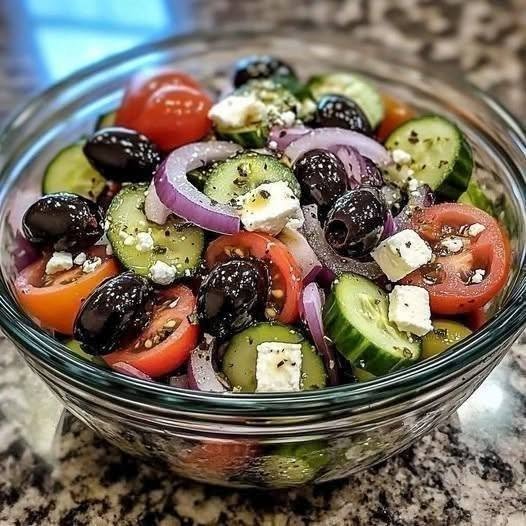
CLASSIC GREEK SALAD (HORIATIKI)
Description
Classic Greek Salad, also known as Horiatiki, is one of the simplest and most refreshing dishes in Greek cuisine. Made with ripe tomatoes, crisp cucumber, green bell pepper, red onion, Kalamata olives, and creamy feta cheese, this salad celebrates fresh ingredients rather than complicated cooking techniques.
Unlike many modern versions of Greek salad, a traditional Greek salad generally does not contain lettuce. Instead, large pieces of juicy tomatoes and crunchy vegetables are combined with briny olives and a generous piece or chunks of feta. Everything is finished with extra-virgin olive oil, oregano, and a simple red wine vinegar dressing.
The result is colorful, refreshing, salty, tangy, and incredibly satisfying. It makes a wonderful side dish for grilled chicken, fish, steak, gyros, or roasted vegetables, but it can also become a light meal when served with warm pita or crusty bread.
Recipe Information
Recipe Name: Classic Greek Salad
Greek Name: Horiatiki
Cuisine: Greek / Mediterranean
Course: Salad / Side Dish
Prep Time: 15 minutes
Cook Time: None
Total Time: 15 minutes
Servings: 6
Difficulty: Easy
Ingredients
For the Salad
- 4 large ripe tomatoes
- 1 large English cucumber or 2 small cucumbers
- 1 green bell pepper
- ½ medium red onion
- ¾ cup Kalamata olives
- 6–8 oz Greek feta cheese
- 1–2 teaspoons dried Greek oregano
For the Dressing
- ⅓ cup extra-virgin olive oil
- 2 tablespoons red wine vinegar
- 1 tablespoon fresh lemon juice, optional
- ½ teaspoon dried oregano
- ¼ teaspoon freshly ground black pepper
- Small pinch of salt, if needed
Optional Garnishes
- Fresh oregano
- Fresh parsley
- A few extra Kalamata olives
- Lemon wedges
- Crusty bread or warm pita
How to Make Classic Greek Salad
Step 1: Prepare the Tomatoes
Wash and dry the tomatoes thoroughly.
Cut them into large wedges or chunky pieces.
For an authentic rustic appearance, avoid cutting the tomatoes too small. The salad should look generous and naturally assembled rather than finely chopped.
Place the tomatoes in a large serving bowl.
Tip
Use the ripest tomatoes you can find. Since this recipe uses very few ingredients, the flavor of each ingredient really matters.
Step 2: Slice the Cucumber
Wash the cucumber and cut it into thick slices or half-moons.
If you’re using a standard cucumber with a thick or bitter skin, you can peel some or all of it. English cucumbers generally have a thin, mild skin and don’t need peeling.
Add the cucumber to the tomatoes.
Step 3: Add the Green Pepper
Remove the stem and seeds from the green bell pepper.
Cut it into thin strips or bite-sized pieces.
Add it to the bowl.
The green pepper provides a crisp texture and slightly bitter, fresh flavor that balances the sweetness of the tomatoes.
Step 4: Add Red Onion
Thinly slice the red onion.
If you prefer a milder onion flavor, place the slices in a bowl of cold water for approximately 5–10 minutes, then drain thoroughly.
Add the onion to the salad.
Step 5: Add Kalamata Olives
Add the Kalamata olives.
You can use whole olives or pitted olives depending on your preference.
Kalamata olives provide a deep, fruity, salty flavor that is essential to the Mediterranean character of this salad.
Step 6: Add the Feta
Cut te feta into large pieces or leave it in a thick slab on top of the vegetables.
A traditional Greek-style presentation often features a large piece of feta rather than finely crumbled feta.
This allows the creamy cheese to remain prominent in every serving.
Use authentic Greek feta made from sheep’s milk or a sheep-and-goat milk blend when available.
Step 7: Make the Dressing
In a small bowl, whisk together:
- Extra-virgin olive oil
- Red wine vinegar
- Lemon juice
- Dried oregano
- Black pepper
Taste before adding salt because both feta and Kalamata olives are naturally salty.
For a more traditional minimalist version, you can simply drizzle the olive oil directly over the salad and finish with vinegar and oregano.
Step 8: Finish the Salad
Drizzle the dressing over the vegetables and feta.
Sprinkle dried oregano generously over the top.
Add a few fresh oregano leaves or parsley if desired.
Do not aggressively toss the salad. Gently mix the vegetables around the feta so the tomatoes don’t become crushed and the feta retains its texture.
Serve immediately.
What Makes a Greek Salad Authentic?
A traditional Horiatiki is intentionally simple.
The essential ingredients are generally:
- Tomatoes
- Cucumber
- Green pepper
- Onion
- Olives
- Feta
- Olive oil
- Oregano
One of the biggest differences between traditional Greek salad and many restaurant-style versions is lettuce.
Traditional Greek Salad Usually Has No Lettuce
Modern recipes sometimes add romaine or mixed greens, but classic Horiatiki is primarily a combination of chunky vegetables, olives, and feta.
It’s also not typically overloaded with ingredients such as corn, avocado, ranch dressing, or creamy sauces.
The goal is to allow fresh vegetables, good olive oil, feta, olives, and oregano to shine.
Tips for the Best Greek Salad
1. Choose Excellent Tomatoes
Tomatoes are arguably the most important ingredient.
Choose ripe, juicy tomatoes that smell fragrant and have good color.
If tomatoes are underripe, the salad can taste watery and bland.
2. Use Good Olive Oil
Extra-virgin olive oil is not just a dressing ingredient—it is an important part of the flavor.
A fruity, high-quality olive oil can make a huge difference.
3. Don’t Overdress
Greek salad should taste fresh rather than heavy.
Start with a moderate amount of dressing and add more if needed.
Remember that the tomatoes will release their own juices.
4. Don’t Add Too Much Salt
Feta and Kalamata olives already contain plenty of salt.
Taste the finished salad before adding additional salt.
5. Add Oregano Generously
Dried oregano gives Greek salad its distinctive Mediterranean aroma.
Rub the oregano lightly between your fingers before sprinkling it over the salad to release more fragrance.
6. Serve It Fresh
This salad is best shortly after assembling.
If it sits for too long, the tomatoes and cucumbers release liquid and the vegetables lose some of their crispness.
Don’t Waste the Salad Juice!
One of the best parts of Greek salad is the flavorful liquid that collects at the bottom of the bowl.
The tomato juices combine with olive oil, vinegar, oregano, and feta to create an incredibly delicious dressing.
Serve the salad with warm crusty bread or pita and use it to soak up the juices.
This simple step turns an ordinary salad into a truly satisfying Mediterranean experience.
Serving Suggestions
Classic Greek salad pairs beautifully with almost any Mediterranean meal.
With Chicken
Serve it with:
- Greek lemon chicken
- Grilled chicken skewers
- Chicken gyros
- Garlic herb chicken
- Grilled chicken breast
With Seafood
Try it alongside:
- Grilled salmon
- Lemon garlic shrimp
- Baked white fish
- Grilled prawns
- Mediterranean cod
With Beef
It pairs wonderfully with:
- Beef gyros
- Grilled steak
- Beef kebabs
- Lamb chops
- Mediterranean meatballs
Vegetarian Meal
Make it a complete light meal by serving it with:
- Warm pita
- Hummus
- Falafel
- Lentil soup
- Roasted chickpeas
- Grilled halloumi
Easy Variations
Although classic Horiatiki is intentionally simple, you can adapt it for different occasions.
Greek Salad with Chickpeas
Add 1 cup of drained chickpeas for additional protein and fiber.
Greek Salad with Avocado
Add sliced avocado for a creamy texture. This isn’t traditional, but it makes a delicious modern variation.
Greek Chicken Greek Salad
Add sliced grilled chicken for a filling lunch or dinner.
Greek Salad with Herbs
Add fresh dill, parsley, or mint for a more herb-forward version.
Spicy Greek Salad
Add sliced fresh chili peppers or crushed red pepper flakes.
Storage
Greek salad is best eaten fresh, but leftovers can be refrigerated.
Store it in an airtight container for approximately 1–2 days.
For the best texture, keep the dressing separate if you are preparing the salad in advance.
If storing leftovers that have already been dressed, expect the vegetables to become softer and release more liquid.
Make-Ahead Instructions
If you’re preparing this salad for a party or dinner:
Up to 4 hours ahead
- Cut the tomatoes.
- Slice the cucumber.
- Prepare the pepper.
- Slice the onion.
- Measure the olives.
- Prepare the dressing separately.
Refrigerate everything.
Just before serving
Combine the vegetables, add olives and feta, drizzle with dressing, and finish with oregano.
This gives you a fresher, crunchier salad.
Approximate Nutritional Information
Based on approximately 6 servings:
Calories: 250–290 kcal
Protein: 7–9 g
Carbohydrates: 10–14 g
Fat: 21–24 g
Fiber: 3–4 g
Sugar: 5–7 g
Sodium: Approximately 550–750 mg
Calcium: Approximately 180–220 mg
Nutrition will vary depending on the amount of feta, olives, and olive oil used.
Potential Benefits
Tomatoes
Tomatoes provide vitamin C, potassium, fiber, and naturally occurring antioxidant compounds such as lycopene.
Cucumbers
Cucumbers contribute water and a refreshing crunch while adding relatively few calories.
Bell Peppers
Green peppers provide vitamin C and various plant compounds.
Extra-Virgin Olive Oil
Olive oil provides predominantly monounsaturated fat and is a foundational ingredient in Mediterranean-style eating.
Feta
Feta provides protein and calcium while contributing the characteristic salty, creamy flavor of Greek salad.
Olives
Kalamata olives contribute unsaturated fats and flavorful plant compounds.
Overall
This salad combines vegetables, olive oil, olives, and moderate amounts of cheese into a colorful Mediterranean-inspired dish.
These are general nutritional observations and are not medical advice.
Frequently Asked Questions
Does authentic Greek salad have lettuce?
Traditional Horiatiki generally does not contain lettuce. It is made primarily with chunky tomatoes, cucumber, green pepper, onion, olives, feta, olive oil, and oregano.
Can I use cherry tomatoes?
Yes. Cherry or grape tomatoes work well, especially when large ripe tomatoes aren’t available. Cut them in half before adding them.
What kind of feta is best?
Greek feta made from sheep’s milk or a sheep-and-goat milk blend is an excellent choice. Block feta generally provides a creamier texture than pre-crumbled feta.
Can I use black olives?
You can, but Kalamata olives are preferred for their distinctive Greek flavor.
Can I make Greek salad without feta?
Yes. The salad will still be delicious, although feta provides the classic salty and creamy element.
Can I add lettuce?
You can if you prefer. However, adding lettuce turns it into more of a modern Greek-style salad rather than traditional Horiatiki.
Can I use balsamic vinegar?
Yes, but red wine vinegar is more traditional for this style of Greek salad. Balsamic vinegar adds a sweeter, darker flavor.
Is lemon juice traditional?
Lemon juice can be used, but a very simple traditional preparation may rely primarily on olive oil, vinegar, and oregano.
How long does Greek salad last?
For the best texture, enjoy it the same day. Once dressed, the vegetables will gradually soften and release liquid.
Can I prepare it the night before?
You can prepare the vegetables and dressing separately the night before. Combine everything shortly before serving for the best result.
Why is my salad watery?
Tomatoes and cucumbers naturally contain a lot of water. Cutting them too early, adding salt too soon, or allowing the salad to sit dressed for a long time can increase the amount of liquid.
Should I peel the cucumber?
It’s optional. English cucumbers have thin skins and generally don’t need peeling.
Can I add chicken?
Absolutely. Grilled chicken makes this salad a satisfying high-protein meal.
What bread goes with Greek salad?
Warm pita, rustic sourdough, or crusty Mediterranean-style bread are all excellent choices.
Can I make it vegan?
Yes. Simply omit the feta or use a plant-based feta alternative.
Is Greek salad good for meal prep?
Yes, if you keep the dressing separate. Store chopped vegetables, olives, feta, and dressing separately and combine when ready to eat.