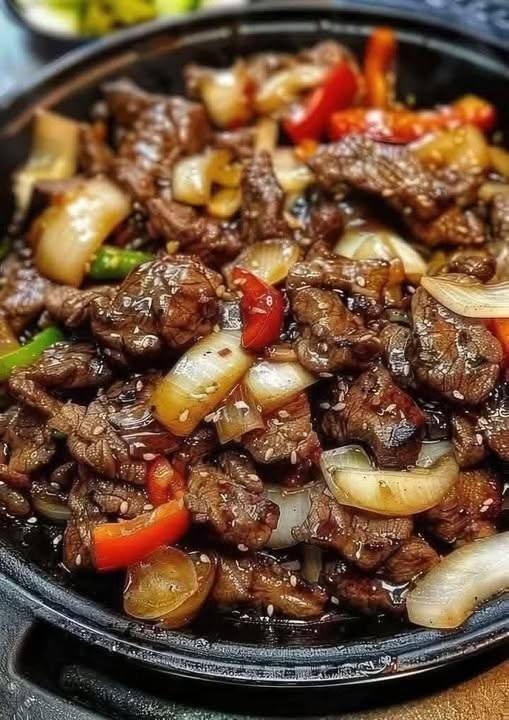
Asian-Style Garlic Beef Stir-Fry with Onions & Peppers
Description
This Asian-Style Garlic Beef Stir-Fry with Onions & Peppers is a quick, flavorful, restaurant-style meal made with tender strips of beef, colorful bell peppers, onions, garlic, and a glossy savory sauce. The beef is seared over high heat until beautifully browned, then tossed with crisp-tender vegetables and a rich sauce made with soy sauce, sesame oil, garlic, ginger, and a touch of sweetness.
The result is juicy, caramelized beef coated in a delicious sauce with tender onions and peppers. Sesame seeds and fresh green onions add the perfect finishing touch.
This recipe is ideal for busy weeknights because everything comes together in one skillet or wok. Serve it over steamed rice, fried rice, noodles, or cauliflower rice for a complete meal.
Recipe Information
Recipe Name: Asian-Style Garlic Beef Stir-Fry
Prep Time: 20 minutes
Cook Time: 15 minutes
Total Time: 35 minutes
Servings: 4–6
Course: Main Course
Cuisine: Asian-Inspired
Difficulty: Easy
Ingredients
For the Beef
- 1½ pounds beef sirloin, flank steak, or ribeye
- 2 tablespoons cornstarch
- ½ teaspoon salt
- ½ teaspoon black pepper
- 1 tablespoon neutral cooking oil
For the Vegetables
- 1 large yellow onion, cut into chunks
- 1 red bell pepper, sliced
- 1 green bell pepper, sliced
- 1 cup mushrooms, sliced
- 3 cloves garlic, minced
- 1 teaspoon fresh ginger, grated
- 2 green onions, sliced
- 1 tablespoon sesame seeds
For the Sauce
- ⅓ cup low-sodium soy sauce
- 2 tablespoons oyster sauce
- 1 tablespoon honey or brown sugar
- 1 tablespoon rice vinegar
- 1 teaspoon toasted sesame oil
- ½ cup beef broth or water
- 1 teaspoon cornstarch
- ½ teaspoon red pepper flakes, optional
Instructions
1. Slice the Beef
Place the beef on a cutting board.
For the most tender stir-fry, slice the beef thinly against the grain.
Cutting against the grain shortens the muscle fibers, making each bite easier to chew.
If the beef is difficult to slice thinly, place it in the freezer for approximately 15–20 minutes first. It will firm up slightly and become much easier to cut.
2. Season the Beef
Place the sliced beef in a bowl.
Add salt, black pepper, and cornstarch.
Toss until every piece is lightly coated.
The cornstarch helps create a delicious browned exterior while also helping the sauce cling to the beef.
Don’t use too much cornstarch. A light coating is enough.
3. Prepare the Sauce
In a small bowl, combine:
- Soy sauce
- Oyster sauce
- Honey or brown sugar
- Rice vinegar
- Sesame oil
- Beef broth
- Cornstarch
- Red pepper flakes
Whisk until smooth.
Set aside.
Preparing the sauce before cooking is important because stir-frying happens quickly.
You don’t want to stop cooking to measure ingredients while the beef is in the hot pan.
4. Prepare the Vegetables
Slice the onion into medium-sized pieces.
Cut the red and green bell peppers into strips.
Slice the mushrooms.
Mince the garlic.
Grate the fresh ginger.
Keep all the vegetables close to your cooking area.
5. Heat the Pan
Place a large wok or heavy skillet over high heat.
Allow it to become very hot before adding the oil.
Add the cooking oil and swirl it around the pan.
A properly heated pan is one of the secrets to achieving restaurant-style stir-fry.
6. Cook the Beef
Add the beef in a single layer.
Avoid overcrowding the pan.
If necessary, cook the beef in two batches.
Cook for approximately 1–2 minutes per side, depending on thickness.
You want the beef to develop a deep brown exterior.
Don’t continuously stir the beef.
Let it sit against the hot surface long enough to develop caramelization.
Once browned, transfer the beef to a plate.
It doesn’t need to be completely cooked at this stage because it will return to the pan later.
7. Stir-Fry the Vegetables
Add another small splash of oil if the pan looks dry.
Add the onions.
Stir-fry for approximately 1–2 minutes.
Add the bell peppers and mushrooms.
Cook for another 2–3 minutes.
The vegetables should become slightly tender while maintaining some crunch.
Add the garlic and ginger.
Stir-fry for approximately 30 seconds.
Be careful not to burn the garlic.
8. Return the Beef
Return the browned beef to the wok or skillet.
Give the prepared sauce another quick stir because the cornstarch may have settled at the bottom.
Pour the sauce over the beef and vegetables.
Toss everything together.
9. Let the Sauce Thicken
Cook for approximately 1–2 minutes, stirring constantly.
The sauce should begin to bubble and become glossy.
The cornstarch will help it thicken and coat the beef.
Don’t boil the sauce for too long because excessive cooking can make the beef tougher.
10. Finish the Stir-Fry
Turn off the heat.
Add sliced green onions and sesame seeds.
Toss everything together.
Taste and adjust the flavor if necessary.
For extra heat, add additional red pepper flakes.
For more sweetness, add a small amount of honey.
For extra acidity, add a few drops of rice vinegar.
11. Serve
Serve immediately while the beef is hot and the vegetables are crisp-tender.
This stir-fry is delicious over:
- Steamed white rice
- Brown rice
- Jasmine rice
- Fried rice
- Egg noodles
- Rice noodles
- Cauliflower rice
Garnish with additional sesame seeds and green onions.
Notes
Use the Right Cut of Beef
Flank steak and sirloin are excellent choices.
Ribeye creates an especially rich and tender stir-fry because of its marbling.
Slice Against the Grain
This is one of the most important techniques for tender beef.
Look for the visible lines running through the meat and cut perpendicular to them.
Keep the Heat High
Stir-frying works best over high heat.
High heat quickly sears the meat and vegetables while preventing them from becoming watery.
Don’t Overcrowd the Pan
Too much beef in the pan causes steaming instead of browning.
Cook in batches when necessary.
Prepare Everything First
Once cooking begins, the recipe moves quickly.
Have the beef, vegetables, sauce, and garnishes ready before turning on the stove.
Tips for the Best Beef Stir-Fry
1. Partially Freeze the Beef
A short time in the freezer makes slicing much easier.
Don’t freeze it completely.
You simply want it firm enough to cut thinly.
2. Don’t Marinate for Too Long
This recipe doesn’t require a long marinade.
The sauce provides plenty of flavor.
3. Use Fresh Garlic and Ginger
Fresh garlic and ginger provide a much brighter flavor than powdered versions.
4. Cook Vegetables in Stages
Harder vegetables should go into the pan first.
Softer vegetables can be added later.
This prevents everything from becoming overly soft.
5. Serve Immediately
Stir-fry is best straight from the wok.
The longer it sits, the more the vegetables soften.
Vegetable Variations
This recipe is very adaptable.
You can replace or add vegetables based on what you have available.
Broccoli
Add 2 cups of small broccoli florets.
For very crisp broccoli, blanch it briefly before stir-frying.
Snow Peas
Add snow peas during the final few minutes.
Carrots
Cut carrots into thin matchsticks so they cook quickly.
Baby Corn
Adds a pleasant crunch.
Bok Choy
Add chopped bok choy near the end of cooking.
Zucchini
Cut into thick half-moons and stir-fry briefly.
Green Beans
Use thinly sliced green beans and cook until crisp-tender.
Sauce Variations
Spicy Garlic Sauce
Add:
- 1 tablespoon chili garlic sauce
- Extra red pepper flakes
Sweet Teriyaki Style
Increase the honey and add a tablespoon of teriyaki sauce.
Ginger Sesame
Increase the fresh ginger and sesame oil slightly.
Honey Garlic
Add an additional tablespoon of honey and one extra clove of garlic.
Orange Beef Style
Add 1–2 tablespoons fresh orange juice and a little orange zest.
Serving Suggestions
With Rice
Steamed jasmine rice is one of the easiest and most delicious choices.
The rice absorbs the glossy sauce beautifully.
With Noodles
Toss the finished beef with cooked noodles for a complete noodle stir-fry.
With Cauliflower Rice
For a lighter option, serve the beef and vegetables over cauliflower rice.
With Lettuce Cups
Spoon the beef mixture into crisp lettuce leaves.
This creates a fresh, crunchy presentation.
With Asian-Inspired Sides
Serve with:
- Cucumber salad
- Edamame
- Steamed broccoli
- Spring rolls
- Vegetable dumplings
- Pickled vegetables
Make-Ahead Instructions
The beef and vegetables can be prepared ahead of time.
Slice the beef and store it covered in the refrigerator.
Prepare the sauce and refrigerate separately.
Chop the vegetables and store them in airtight containers.
When you’re ready to cook, everything will be ready to go.
For the best texture, cook the stir-fry shortly before serving rather than fully cooking it several hours in advance.
Storage
Allow leftovers to cool appropriately before refrigerating.
Store in an airtight container.
Refrigerate and enjoy within approximately 3–4 days.
Keep the beef refrigerated rather than leaving it at room temperature for extended periods.
Reheating
Skillet
The skillet is the best option for maintaining texture.
Heat over medium-high heat.
Add a small splash of water or broth.
Add the leftovers and cook until thoroughly heated.
Microwave
Place a serving in a microwave-safe container.
Cover loosely and heat in short intervals.
Stir between intervals.
Avoid overheating because the beef can become chewy.
Freezing
The cooked beef stir-fry can be frozen.
Place completely cooled leftovers in a freezer-safe container.
Freeze for approximately 2–3 months for best quality.
Thaw overnight in the refrigerator.
Reheat in a skillet until hot.
Keep in mind that frozen vegetables may become slightly softer after thawing.
Nutritional Information
Approximate values per serving, based on 6 servings and without rice:
- Calories: 390–440 kcal
- Protein: 38–42 g
- Carbohydrates: 17–22 g
- Fat: 19–23 g
- Saturated Fat: 5–7 g
- Fiber: 3–4 g
- Sugar: 7–9 g
- Sodium: 900–1,150 mg
- Potassium: 650–800 mg
- Iron: 4–5 mg
- Calcium: 50–80 mg
These values are estimates and can vary significantly depending on the beef cut, sauce ingredients, and portion size.
Serving the stir-fry with rice will increase the calories and carbohydrate content.
Benefits
High in Protein
Beef provides a substantial amount of protein, making this a filling main dish.
Provides Iron
Beef is a source of dietary iron.
Colorful Vegetables
Bell peppers, onions, and mushrooms provide fiber and a variety of vitamins, minerals, and plant compounds.
Ginger and Garlic
Fresh ginger and garlic contribute strong flavor, allowing the dish to taste rich without relying entirely on additional salt or sugar.
Balanced Meal
When served with vegetables and a moderate portion of rice or another whole-grain carbohydrate, this can form a satisfying meal.
These are general nutritional observations, not medical claims.
Frequently Asked Questions
1. What beef is best for stir-fry?
Flank steak, sirloin, and ribeye are excellent choices.
2. Why is my beef tough?
The beef may have been cut incorrectly, cooked too long, or the pan may not have been hot enough.
Slice thinly against the grain and cook quickly.
3. Can I use ground beef?
Yes. Brown the ground beef thoroughly and then add the vegetables and sauce.
4. Can I use chicken instead?
Absolutely. Thinly sliced chicken breast or boneless chicken thighs work well.
5. Can I use shrimp?
Yes. Shrimp cooks very quickly, so add it later and avoid overcooking.
6. Can I make this without oyster sauce?
Yes. Substitute additional soy sauce or use a suitable vegetarian oyster-style sauce.
7. Can I use coconut aminos?
Yes. Coconut aminos can replace soy sauce, although the flavor will be slightly sweeter.
8. Can I make it gluten-free?
Use certified gluten-free soy sauce or tamari and ensure that the oyster sauce and other ingredients are gluten-free.
9. Can I make it spicy?
Yes. Add chili garlic sauce, fresh chili, sriracha, or red pepper flakes.
10. Can I add broccoli?
Yes. Broccoli is one of the best additions to this stir-fry.
11. Can I use frozen vegetables?
Yes. Thawing and draining them first can help prevent excess water in the pan.
12. Can I make it without cornstarch?
Yes, although the sauce will be thinner.
13. What can replace cornstarch?
Arrowroot starch can be used as an alternative thickener.
14. Can I use honey instead of brown sugar?
Yes. Honey works beautifully in this sauce.
15. Can I prepare the sauce ahead?
Yes. The sauce can be mixed and refrigerated ahead of time.
16. Can I make this in a regular skillet?
Yes. A large skillet works perfectly.
17. Why should I cook the beef in batches?
Cooking in batches prevents overcrowding and gives the beef a better sear.
18. Can I serve it with noodles?
Absolutely. Toss with cooked egg noodles, rice noodles, or another favorite noodle.
19. How do I make the sauce thicker?
Mix another small amount of cornstarch with cold water and add it gradually while the sauce simmers.
20. How do I make it less salty?
Use low-sodium soy sauce and reduce the amount of oyster sauce.
You can also dilute the sauce with additional unsalted broth.
Restaurant-Style Secrets
Use Very High Heat
The hot cooking surface creates those delicious browned edges.
Don’t Stir Constantly
Let the beef touch the pan long enough to brown before tossing.
Don’t Add Wet Vegetables
Excess water can cool the pan and create steam.
Don’t Overcook the Beef
Beef strips require only a short cooking time.
Finish With Sesame Oil
A small amount of toasted sesame oil at the end adds a beautiful nutty aroma.
Easy Meal-Prep Version
For four meal-prep portions, divide the cooked beef and vegetables between containers.
Serve with approximately:
- ½–1 cup cooked rice
- Steamed broccoli
- Extra green onions
- Sesame seeds
Keep the rice and stir-fry refrigerated separately if you prefer to maintain the best texture.
Reheat thoroughly before serving.