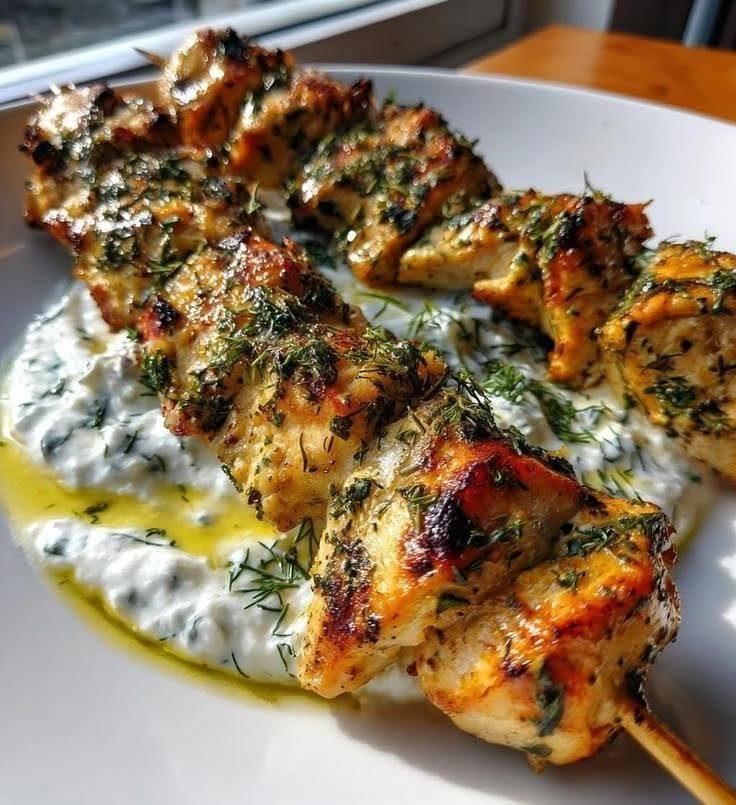
Greek-Style Garlic Herb Chicken Skewers with Tzatziki
Description
Greek-Style Garlic Herb Chicken Skewers with Tzatziki are juicy, tender, flavorful chicken pieces marinated with garlic, lemon, olive oil, oregano, and Mediterranean herbs, then grilled or roasted until lightly charred and golden. Served with cool, creamy homemade tzatziki, these chicken skewers make an easy high-protein meal that tastes fresh, bright, and incredibly satisfying.
The combination of lemon and garlic gives the chicken a vibrant flavor, while oregano and olive oil provide classic Greek-inspired character. The tzatziki adds a refreshing contrast with cucumber, Greek yogurt, lemon, garlic, and fresh herbs.
These skewers are perfect for summer grilling, family dinners, meal prep, parties, or a Mediterranean-inspired lunch. Serve them with warm pita, Greek salad, roasted potatoes, rice, couscous, or grilled vegetables.
Prep Time: 20 minutes
Marinating Time: 30 minutes–4 hours
Cook Time: 10–15 minutes
Total Time: About 1 hour
Servings: 4
Course: Main Dish
Cuisine: Greek-Inspired / Mediterranean
Difficulty: Easy
Ingredients
For the Chicken Skewers
- 2 pounds boneless, skinless chicken breasts or thighs
- 3 tablespoons extra-virgin olive oil
- 3 tablespoons fresh lemon juice
- 1 tablespoon lemon zest
- 4 cloves garlic, minced
- 2 teaspoons dried oregano
- 1 teaspoon dried thyme
- 1 teaspoon paprika
- ½ teaspoon onion powder
- 1 teaspoon salt
- ½ teaspoon black pepper
- ¼ teaspoon red pepper flakes, optional
- 2 tablespoons chopped fresh parsley
- 1 tablespoon chopped fresh dill, optional
For the Tzatziki
- 1½ cups plain Greek yogurt
- ½ large cucumber, grated
- 2 cloves garlic, finely minced
- 1 tablespoon fresh lemon juice
- 1 tablespoon extra-virgin olive oil
- 1 tablespoon fresh dill, chopped
- 1 tablespoon fresh mint, chopped, optional
- ¼ teaspoon salt
- ¼ teaspoon black pepper
For Serving
- Warm pita bread
- Lemon wedges
- Fresh parsley
- Fresh dill
- Sliced cucumber
- Cherry tomatoes
- Red onion
- Kalamata olives
- Greek salad
- Roasted potatoes
Instructions
1. Prepare the Chicken
Pat the chicken dry with paper towels.
Cut it into approximately 1½-inch cubes.
Try to keep the pieces similar in size so they cook evenly.
Chicken thighs are especially juicy and forgiving, while chicken breast creates a leaner option.
2. Make the Marinade
In a large bowl, combine:
- Olive oil
- Lemon juice
- Lemon zest
- Minced garlic
- Oregano
- Thyme
- Paprika
- Onion powder
- Salt
- Black pepper
- Red pepper flakes
- Fresh parsley
- Fresh dill
Whisk everything together until well combined.
The olive oil helps coat the chicken, while lemon, garlic, and herbs provide the main flavor.
3. Marinate the Chicken
Add the chicken pieces to the marinade.
Toss thoroughly until every piece is coated.
Cover the bowl and refrigerate for at least 30 minutes.
For deeper flavor, marinate for 2–4 hours.
Avoid marinating chicken in a highly acidic mixture for excessively long periods because the lemon can affect the texture.
4. Prepare the Tzatziki
Grate the cucumber using the large holes of a box grater.
Place the grated cucumber into a clean kitchen towel or several layers of paper towel.
Squeeze firmly to remove excess water.
This is one of the most important steps when making thick tzatziki.
5. Mix the Tzatziki
In a bowl, combine:
- Greek yogurt
- Drained cucumber
- Garlic
- Lemon juice
- Olive oil
- Dill
- Mint
- Salt
- Black pepper
Mix well.
Taste and adjust the seasoning.
If you prefer a stronger garlic flavor, add another small clove.
Cover and refrigerate for at least 15–30 minutes before serving.
This allows the flavors to develop.
6. Prepare the Skewers
If using wooden skewers, soak them in water for approximately 30 minutes before grilling.
This helps reduce the chance of burning.
Thread the marinated chicken onto the skewers.
Leave a small amount of space between pieces so heat can circulate around the chicken.
Don’t pack the chicken too tightly.
7. Grill the Chicken
Preheat the grill to medium-high heat.
Lightly oil the grill grates.
Place the chicken skewers on the grill.
Cook for approximately 3–4 minutes per side, turning several times.
The chicken should develop golden-brown edges and light char marks.
Cooking time will vary depending on the size of the chicken pieces.
The safest way to determine doneness is to check that the thickest piece reaches 165°F (74°C) internally.
8. Oven Method
If you don’t have a grill, the chicken can easily be cooked in the oven.
Preheat the oven to 425°F (220°C).
Arrange the skewers on a lightly greased baking sheet or place them on a wire rack over a baking sheet.
Bake for approximately 15–20 minutes, turning halfway through.
For extra browning, broil for the final 1–2 minutes.
Watch carefully under the broiler.
9. Air Fryer Method
Preheat the air fryer to approximately 400°F (200°C).
Arrange the chicken pieces or skewers in a single layer.
Cook for approximately 10–14 minutes, turning halfway through.
Check the internal temperature before serving.
Avoid overcrowding the basket because the chicken needs good airflow to brown properly.
10. Rest the Chicken
Remove the cooked chicken from the heat.
Let it rest for approximately 3–5 minutes.
This helps the juices redistribute throughout the meat.
11. Serve
Transfer the chicken skewers to a serving platter.
Garnish with fresh parsley and dill.
Add lemon wedges around the platter.
Serve with a generous bowl of homemade tzatziki.
Warm pita bread, cucumber, tomatoes, red onion, olives, and Greek salad make excellent accompaniments.
Notes
Use Chicken Thighs for Extra Juiciness
Chicken thighs contain more fat than chicken breast and tend to remain juicy during grilling.
Cut Chicken Evenly
Uniform pieces cook more consistently.
Don’t Skip the Cucumber Draining
Watery cucumber can make tzatziki thin.
Fresh Lemon Is Best
Fresh lemon juice gives the marinade and tzatziki a brighter flavor.
Don’t Overcook
Chicken breast especially can become dry if overcooked.
Use an instant-read thermometer.
Let the Chicken Rest
A few minutes of resting makes the meat juicier.
Tips for Perfect Chicken Skewers
1. Don’t Overcrowd the Skewers
Leave small gaps between pieces.
This encourages browning rather than steaming.
2. Use High-Quality Olive Oil
A good olive oil adds noticeable flavor to the marinade.
3. Marinate Properly
At least 30 minutes is useful, while 2–4 hours provides deeper flavor.
4. Pat the Chicken Dry if Necessary
Excess marinade dripping onto a hot grill can cause flare-ups.
5. Turn Frequently
Turning the skewers helps create even browning.
6. Don’t Press the Chicken
Avoid repeatedly pressing the chicken with a spatula because this can force out the juices.
7. Watch the Heat
Too much heat can burn garlic and herbs before the chicken is cooked.
Homemade Tzatziki Tips
The tzatziki is just as important as the chicken.
Use Thick Greek Yogurt
Full-fat or thick Greek yogurt creates a creamy texture.
Drain the Cucumber
This prevents watery tzatziki.
Fresh Garlic
Fresh garlic creates authentic-looking flavor.
Add Fresh Herbs
Dill is classic, while mint gives the sauce an especially refreshing flavor.
Chill Before Serving
Allowing tzatziki to rest improves its flavor.
Adjust Consistency
If your tzatziki is too thick, add a tiny amount of lemon juice or olive oil.
If it is too thin, add more Greek yogurt.
Flavor Variations
Lemon Herb Chicken
Increase the lemon zest and add extra oregano and parsley.
Spicy Greek Chicken
Add red pepper flakes, cayenne, or chili powder.
Mediterranean Chicken Skewers
Add chopped bell peppers and red onions between the chicken pieces.
Feta Chicken Skewers
Serve the cooked chicken with crumbled feta.
Pesto Chicken Skewers
Add a small amount of basil pesto to the marinade.
Smoky Chicken Skewers
Add smoked paprika to the seasoning.
Garlic Lover’s Version
Use an additional clove or two of garlic in the marinade.
Vegetable Skewer Variation
You can make mixed Mediterranean skewers by alternating chicken with vegetables.
Good choices include:
- Red onion
- Bell peppers
- Cherry tomatoes
- Zucchini
- Mushrooms
Cut vegetables into pieces that will cook at a similar rate.
For vegetables that cook quickly, you may want to use separate skewers.
Serving Suggestions
Greek Pita Plate
Serve chicken with:
- Warm pita
- Tzatziki
- Tomato
- Cucumber
- Red onion
- Olives
- Feta
Mediterranean Bowl
Build a bowl with:
- Chicken
- Rice
- Lettuce
- Cucumber
- Tomato
- Tzatziki
- Olives
- Feta
Greek Salad
Serve alongside a classic salad made with tomatoes, cucumber, red onion, olives, and feta.
Roasted Potatoes
Lemon-herb roasted potatoes make an excellent side.
Couscous
Serve the chicken over fluffy couscous with herbs and lemon.
Rice
Mediterranean-style rice provides a simple base.
Meal Prep
These chicken skewers are excellent for meal preparation.
Cook the chicken and allow it to cool.
Remove the chicken from the skewers and divide into containers.
Add:
- Rice or quinoa
- Cucumber
- Tomatoes
- Greens
- Tzatziki
Keep tzatziki separate until serving.
Refrigerate promptly.
For best quality, consume cooked chicken within 3–4 days.
Storage
Store cooked chicken in an airtight container in the refrigerator.
Keep tzatziki refrigerated separately.
The chicken is best consumed within 3–4 days.
Tzatziki should also remain refrigerated and should be used according to the freshness of the yogurt and other ingredients.
Reheating
Skillet
Heat a skillet over medium-low heat.
Add the chicken and a small splash of water or broth.
Cover briefly and heat until warm.
Oven
Place chicken in an oven-safe dish.
Cover loosely with foil and warm at 325°F (165°C).
Air Fryer
Reheat at approximately 350°F (175°C) for a few minutes.
Avoid overheating because chicken can dry out.
Microwave
Use short intervals and avoid excessive heating.
Don’t heat the tzatziki.
Serve it cold alongside the warm chicken.
Freezing
Cooked chicken can be frozen.
Allow it to cool completely before packaging.
Store in an airtight freezer-safe container.
For best quality, use within approximately 2–3 months.
Thaw overnight in the refrigerator.
Reheat gently.
It is best to make fresh tzatziki rather than freezing the yogurt sauce.
Servings
This recipe makes approximately 4 servings.
Each serving contains about ¼ of the cooked chicken.
For a larger gathering, double the recipe.
For appetizers, use smaller skewers and smaller chicken pieces.
Approximate Nutritional Information
Values are estimates and vary according to the exact ingredients and portion sizes.
Per Serving of Chicken and Tzatziki
- Calories: 400–460 kcal
- Protein: 48–55 g
- Carbohydrates: 6–9 g
- Dietary Fiber: 1–2 g
- Total Fat: 20–24 g
- Saturated Fat: 4–6 g
- Cholesterol: 145–170 mg
- Sodium: 700–850 mg
- Potassium: 750–900 mg
- Calcium: 120–180 mg
- Iron: 2–3 mg
Serving the chicken with pita, rice, potatoes, feta, or additional sauces will increase the nutritional values.
Benefits
1. High in Protein
Chicken and Greek yogurt provide substantial protein.
Protein contributes to normal muscle maintenance and helps make meals satisfying.
2. Contains Probiotic Yogurt
Traditional yogurt may contain live cultures, depending on the product.
3. Provides Vegetables
Cucumber and fresh herbs contribute plant-based nutrients.
4. Contains Olive Oil
Extra-virgin olive oil provides predominantly unsaturated fats.
5. Includes Fresh Herbs
Parsley, dill, and oregano contribute flavor and naturally occurring plant compounds.
6. Balanced Mediterranean-Inspired Meal
When served with vegetables, whole grains, and yogurt-based tzatziki, the meal can form a balanced Mediterranean-style plate.
Note: These are general nutritional benefits and are not medical claims.
Frequently Asked Questions
Q1: Can I use chicken thighs?
Yes. Chicken thighs are especially juicy and flavorful.
Q2: Can I use chicken breast?
Absolutely. Chicken breast works perfectly, but avoid overcooking it.
Q3: How long should I marinate the chicken?
At least 30 minutes is recommended. Two to four hours provides excellent flavor.
Q4: Can I marinate overnight?
It is generally better not to leave the chicken in a strongly acidic lemon marinade for excessively long periods because the texture can become affected.
Q5: Can I use bottled lemon juice?
You can, but fresh lemon juice provides a brighter flavor.
Q6: Can I use dried garlic?
Fresh garlic is preferred, but garlic powder can be used if necessary.
Q7: What if I don’t have oregano?
Use Italian seasoning or a combination of thyme and basil.
Q8: Can I make these without skewers?
Yes. Cook the marinated chicken pieces directly in a skillet, grill basket, oven, or air fryer.
Q9: Can I use metal skewers?
Yes. Metal skewers are reusable and don’t require soaking.
Q10: Why do wooden skewers burn?
They can burn when exposed directly to high heat. Soaking them before grilling helps.
Q11: Can I cook these in the oven?
Yes. Bake at approximately 425°F (220°C) until the chicken reaches 165°F (74°C).
Q12: Can I use an air fryer?
Yes. Air frying creates beautifully browned edges.
Q13: Can I make tzatziki without cucumber?
Yes, although cucumber is an important traditional ingredient.
You can make a simple garlic-herb Greek yogurt sauce instead.
Q14: Why is my tzatziki watery?
The cucumber probably wasn’t drained enough.
Squeeze out as much liquid as possible.
Q15: Can I use regular yogurt?
Yes, but Greek yogurt produces a thicker sauce.
Q16: Can I add mint?
Yes. Fresh mint provides a refreshing flavor.
Q17: Can I add feta?
Absolutely. Feta makes an excellent topping.
Q18: What vegetables can I grill with the chicken?
Bell peppers, zucchini, onions, mushrooms, and cherry tomatoes are excellent choices.
Q19: What should I serve with these skewers?
Pita, Greek salad, roasted potatoes, rice, couscous, hummus, olives, and tzatziki are excellent choices.
Q20: Can I make these ahead?
Yes. Marinate the chicken ahead and cook it shortly before serving.
Q21: Can I prepare tzatziki ahead?
Yes. Tzatziki can be prepared several hours in advance and kept refrigerated.
Q22: How long does cooked chicken last?
Refrigerated cooked chicken should generally be consumed within 3–4 days.
Q23: Can I freeze cooked chicken?
Yes. Freeze in an airtight container for approximately 2–3 months for best quality.
Q24: Can I freeze tzatziki?
It is not recommended because the yogurt and cucumber can change texture after freezing.
Q25: Can I make the recipe gluten-free?
Yes. The chicken and tzatziki are naturally gluten-free. Use gluten-free sides if needed.
Q26: Is this recipe low-carb?
The chicken and tzatziki themselves are relatively low in carbohydrates. Choose low-carb sides such as salad or roasted vegetables.
Q27: How do I prevent dry chicken?
Use chicken thighs, avoid overcooking, and check the internal temperature.
Q28: Why isn’t my chicken browning?
The grill may not be hot enough, or the chicken may be too wet. Allow excess marinade to drip off before cooking.
Q29: How do I get restaurant-style char marks?
Use a properly preheated grill and avoid moving the chicken constantly. Allow each side enough time to develop browning.
Q30: Can I make this recipe for a party?
Yes. Make smaller skewers for an easy appetizer.
Serve them with bowls of tzatziki, hummus, olives, and pita.