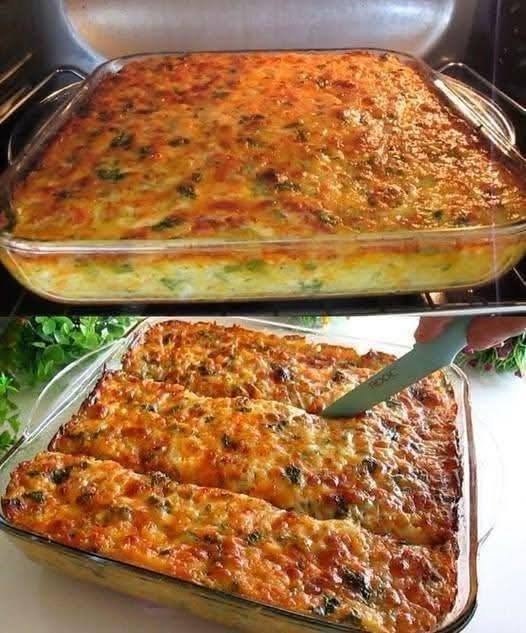
Loaded Cheesy Vegetable Egg Bake
Description
Loaded Cheesy Vegetable Egg Bake is a hearty, colorful, protein-rich breakfast casserole made with fluffy eggs, plenty of vegetables, and lots of melted cheese. It is an easy make-ahead recipe that works beautifully for breakfast, brunch, lunch, or even a light dinner.
This egg bake combines tender bell peppers, spinach, zucchini, onions, tomatoes, and mushrooms with seasoned eggs and two kinds of cheese. The vegetables are sautéed first so they become flavorful and release excess moisture. They are then combined with the egg mixture and baked until the center is set and the cheese is golden and bubbling.
The result is soft and creamy on the inside with a beautifully cheesy top. Every bite contains a mixture of colorful vegetables, savory herbs, and melted cheese.
One of the best things about this recipe is how customizable it is. You can use whatever vegetables you already have in the refrigerator, change the cheese, add cooked chicken or turkey, or make it vegetarian. It is also excellent for meal prep because individual portions can be refrigerated and reheated throughout the week.
This recipe is especially useful when you want something satisfying without spending a lot of time preparing breakfast every morning.
Prep Time: 20 minutes
Cook Time: 35–45 minutes
Total Time: 55–65 minutes
Servings: 8
Course: Breakfast / Brunch / Lunch
Cuisine: American-Inspired
Difficulty: Easy
Ingredients
For the Egg Mixture
- 10 large eggs
- ½ cup milk
- ½ cup heavy cream or half-and-half
- 1 teaspoon Italian seasoning
- ½ teaspoon garlic powder
- ½ teaspoon onion powder
- ½ teaspoon salt
- ½ teaspoon black pepper
- ¼ teaspoon paprika
- ¼ teaspoon red pepper flakes, optional
For the Vegetables
- 1 tablespoon olive oil
- 1 medium yellow onion, diced
- 1 red bell pepper, diced
- 1 green bell pepper, diced
- 1 medium zucchini, diced
- 1 cup mushrooms, sliced
- 2 cups fresh baby spinach
- 1 cup cherry tomatoes, halved
- 2 cloves garlic, minced
For the Cheese
- 1 cup shredded cheddar cheese
- 1 cup shredded mozzarella cheese
- ¼ cup grated Parmesan cheese
Optional Garnishes
- Fresh parsley
- Fresh basil
- Sliced green onions
- Chives
- Extra Parmesan
- Freshly cracked black pepper
- Red pepper flakes
Equipment
You will need:
- Large mixing bowl
- Whisk
- Large skillet
- Cutting board
- Sharp knife
- 9×13-inch baking dish
- Measuring cups and spoons
- Spatula
- Oven mitts
A glass, ceramic, or metal 9×13-inch baking dish can be used.
Instructions
1. Preheat the Oven
Preheat the oven to 375°F (190°C).
Lightly grease a 9×13-inch baking dish with cooking spray, butter, or olive oil.
Make sure the bottom and sides are well coated.
This makes serving easier and helps prevent the eggs from sticking.
2. Prepare the Vegetables
Wash and dry all vegetables thoroughly.
Dice the onion and bell peppers.
Cut the zucchini into small, evenly sized cubes.
Slice the mushrooms.
Halve the cherry tomatoes.
If using fresh spinach, rinse it and pat it dry.
Keeping the vegetables relatively small allows them to distribute evenly throughout the egg mixture.
3. Sauté the Onion and Peppers
Heat 1 tablespoon olive oil in a large skillet over medium heat.
Add the diced onion and bell peppers.
Cook for approximately 4–5 minutes, stirring occasionally.
The onions should become translucent and the peppers should begin to soften.
4. Add Zucchini and Mushrooms
Add the diced zucchini and sliced mushrooms.
Cook for another 4–5 minutes.
The vegetables should become tender but should still retain some texture.
Avoid overcooking them because they will continue cooking in the oven.
5. Add Garlic and Spinach
Add the minced garlic.
Cook for approximately 30 seconds, just until fragrant.
Add the spinach.
Stir continuously until the spinach wilts, approximately 1–2 minutes.
Remove the skillet from the heat.
6. Drain Excess Moisture
This is an important step.
Vegetables such as mushrooms, zucchini, spinach, and tomatoes contain a significant amount of water.
If too much moisture remains, the finished egg bake can become watery.
Allow the vegetables to cool slightly.
If there is visible liquid in the skillet, drain it carefully.
For particularly wet spinach, gently press it with the back of a spoon to remove excess moisture.
7. Prepare the Eggs
Crack the eggs into a large mixing bowl.
Add the milk and heavy cream.
Whisk until the mixture is completely combined.
Add:
- Italian seasoning
- Garlic powder
- Onion powder
- Salt
- Black pepper
- Paprika
- Red pepper flakes
Whisk again.
Do not over-whisk.
The goal is simply to combine the eggs and seasonings evenly.
8. Add the Cheese
Add approximately:
- ¾ cup cheddar
- ¾ cup mozzarella
- ¼ cup Parmesan
to the egg mixture.
Reserve the remaining cheddar and mozzarella for the top.
Stir gently.
9. Add the Vegetables
Add the sautéed vegetables to the egg mixture.
Add the halved cherry tomatoes.
Stir gently with a spatula until the vegetables are evenly distributed.
10. Transfer to the Baking Dish
Pour the egg and vegetable mixture into the prepared baking dish.
Use a spatula to distribute the vegetables evenly.
Make sure the mixture reaches all four corners.
Sprinkle the remaining cheddar and mozzarella evenly over the top.
For extra Parmesan flavor, add another small sprinkle of Parmesan.
11. Bake
Place the baking dish in the preheated oven.
Bake for approximately 35–45 minutes.
The exact time depends on the depth of the baking dish and the amount of vegetables.
The edges should be set and lightly golden.
The center should be firm but may have a very slight jiggle.
A knife inserted near the center should come out mostly clean.
The internal temperature should reach approximately 160°F (71°C) as measured in the center, with the casserole continuing to set slightly as it rests.
12. Rest Before Cutting
Remove the egg bake from the oven.
Allow it to rest for approximately 10 minutes.
This is important because the eggs continue setting as they cool slightly.
Resting also makes the casserole much easier to cut into neat squares.
13. Garnish
Sprinkle with fresh parsley, chives, basil, or green onions.
Add freshly cracked black pepper.
For a little heat, add red pepper flakes.
Serve warm.
Why You’ll Love This Recipe
There are many reasons this Loaded Cheesy Vegetable Egg Bake deserves a place in your regular recipe rotation.
Easy Preparation
Most of the work involves chopping vegetables, whisking eggs, and assembling everything in one baking dish.
Great for Meal Prep
You can prepare it ahead and enjoy individual portions throughout the week.
Vegetable-Packed
It contains a colorful mixture of spinach, zucchini, peppers, mushrooms, onions, and tomatoes.
Protein-Rich
Eggs and cheese provide substantial protein.
Family-Friendly
The vegetables can be customized according to your family’s preferences.
Flexible
You can change the vegetables, cheese, herbs, and protein additions.
Delicious Hot or Warm
It works for breakfast, brunch, lunch, or dinner.
Notes
Use Fresh Vegetables
Fresh vegetables generally provide the best texture.
Frozen vegetables can be used, but they should be thawed and drained thoroughly.
Cook Watery Vegetables First
Zucchini, mushrooms, spinach, and tomatoes can release water.
Sautéing the vegetables first helps remove some of this moisture.
Don’t Overload the Pan
If the baking dish contains too many vegetables relative to the eggs, the casserole may struggle to set properly.
Use Full-Fat Cheese for Best Melting
Cheddar, mozzarella, and Parmesan provide excellent flavor and texture.
Don’t Overbake
Overbaking eggs can make them rubbery.
Remove the casserole once the center is just set.
Tips for the Best Egg Bake
Tip 1: Chop Vegetables Uniformly
Small, even pieces distribute better throughout the casserole.
Tip 2: Dry Vegetables Thoroughly
Moisture is one of the biggest causes of watery egg bakes.
Tip 3: Season Every Layer
Seasoning the vegetables and egg mixture separately creates better flavor.
Tip 4: Don’t Use Excess Milk
Too much liquid can prevent the eggs from setting properly.
Tip 5: Let It Rest
A short resting period creates cleaner slices.
Tip 6: Use Freshly Grated Cheese
Freshly grated cheese generally melts more smoothly.
Tip 7: Add Fresh Herbs After Baking
Fresh parsley, basil, or chives provide a bright finishing flavor.
Tip 8: Check the Center
The center is the last part of the casserole to cook.
Don’t judge doneness only by the edges.
Vegetable Substitutions
This recipe is highly flexible.
Broccoli
Use small florets.
Steam or sauté briefly before adding.
Cauliflower
Use finely chopped or small florets and cook until slightly tender.
Asparagus
Cut into small pieces and sauté briefly.
Kale
Remove the tough stems and finely chop before sautéing.
Spinach
Fresh baby spinach is easiest, but frozen spinach can also work if thoroughly drained.
Bell Peppers
Use any combination of red, green, yellow, or orange peppers.
Mushrooms
White, cremini, or baby bella mushrooms all work well.
Tomatoes
Cherry tomatoes, grape tomatoes, or diced Roma tomatoes can be used.
Cheese Variations
Cheddar
Provides a classic sharp, savory flavor.
Mozzarella
Creates a mild, stretchy topping.
Monterey Jack
Melts beautifully and provides a creamy texture.
Pepper Jack
Excellent for a spicy version.
Feta
Adds a salty Mediterranean flavor.
Goat Cheese
Creates a tangy, creamy result.
Swiss
Provides a nutty flavor.
Gruyère
Creates an especially rich and sophisticated brunch casserole.
A combination of cheeses is often the best approach.
Protein Additions
Although this recipe is vegetarian, you can easily add cooked protein.
Cooked Chicken
Add approximately 1 cup diced cooked chicken.
Turkey
Diced cooked turkey works especially well.
Bacon
Add cooked and crumbled bacon.
Sausage
Brown breakfast sausage or Italian sausage before adding it.
Ham
Diced ham provides salty, savory flavor.
Smoked Turkey
Adds a subtle smoky flavor.
Always cook meat thoroughly before adding it to the casserole.
Mediterranean-Style Variation
For a Mediterranean-inspired version, replace some of the cheddar with feta.
Add:
- Spinach
- Cherry tomatoes
- Roasted red peppers
- Kalamata olives
- Feta
- Oregano
- Basil
You can also add a small amount of sun-dried tomato.
This creates a bright and savory variation that works especially well for brunch.
Spicy Vegetable Egg Bake
If you enjoy heat, add:
- Jalapeño
- Red pepper flakes
- Pepper Jack cheese
- Chili powder
- Hot sauce
For a smoky flavor, add a small amount of smoked paprika.
High-Protein Version
For a higher-protein option, increase the egg whites while keeping several whole eggs for flavor.
You can also add:
- Cottage cheese
- Greek yogurt
- Cooked chicken
- Turkey
- Turkey sausage
If adding cottage cheese, blend it into the egg mixture for a smooth texture or leave it slightly chunky for more texture.
Low-Carbohydrate Version
The basic recipe is naturally relatively low in carbohydrates.
To keep it lower in carbohydrates:
- Use non-starchy vegetables.
- Avoid potatoes.
- Use unsweetened dairy.
- Choose low-carbohydrate side dishes.
- Add extra leafy greens.
Serve with avocado or a fresh green salad.
Dairy-Free Version
For a dairy-free egg bake, replace the milk and cream with an unsweetened dairy-free alternative.
Use dairy-free shredded cheese or omit cheese entirely.
Nutritional yeast can provide additional savory flavor.
Gluten-Free Version
The basic recipe can easily be prepared gluten-free.
Eggs, vegetables, cheese, herbs, and milk are naturally gluten-free.
However, always check packaged ingredients such as sausage, broth, seasoning blends, and dairy-free cheese for gluten-containing additives if strict avoidance is required.
Serving Suggestions
Breakfast
Serve with fresh fruit, avocado, or whole-grain toast.
Brunch
Pair with a green salad, fruit platter, roasted potatoes, and coffee.
Lunch
Serve with a side salad and crusty bread.
Dinner
Pair with roasted vegetables or a light soup.
Meal Prep
Divide into portions and pair with fresh fruit or salad.
Topping Ideas
After baking, try adding:
- Fresh avocado
- Salsa
- Hot sauce
- Greek yogurt
- Fresh basil
- Chives
- Parsley
- Pesto
- Sliced green onions
- Crumbled feta
- Balsamic glaze
For a breakfast-style serving, a spoonful of salsa and avocado is particularly delicious.
Make-Ahead Instructions
One of the biggest advantages of this recipe is that it can be prepared ahead.
Prepare the vegetables and egg mixture.
Combine everything in the baking dish.
Cover tightly and refrigerate.
For best results, bake within approximately 24 hours.
Because the ingredients are refrigerated, the casserole may require several additional minutes in the oven.
Avoid leaving the unbaked egg mixture at room temperature.
Overnight Egg Bake
This makes an excellent overnight breakfast.
Prepare everything the evening before.
Cover and refrigerate.
The following morning, preheat the oven and bake.
Allow the casserole to sit out only briefly while the oven preheats, rather than leaving it at room temperature for a prolonged period.
If the casserole is very cold from the refrigerator, expect the baking time to increase slightly.
Meal Prep Instructions
After baking, allow the egg bake to cool.
Cut it into 8 portions.
Place each portion in an airtight container.
Refrigerate promptly.
Each morning, reheat one portion and serve with fresh fruit, avocado, toast, or salad.
This makes breakfast extremely convenient during busy weekdays.
Storage
Store leftovers in airtight containers.
Refrigerate for approximately 3–4 days.
For the best texture, reheat only the portion you plan to eat.
Reheating
Microwave
Place one portion on a microwave-safe plate.
Heat in 30–45-second intervals until warm.
Avoid overheating because eggs can become rubbery.
Oven
Place portions in an oven-safe dish.
Cover loosely with foil.
Reheat at 325°F (165°C) until warmed through.
Air Fryer
Reheat a portion at approximately 325°F (165°C) until hot.
Check frequently to avoid drying out the eggs.
Freezing
Egg bakes can be frozen.
Allow the casserole to cool completely.
Cut it into individual portions.
Wrap each piece tightly and place in a freezer-safe container or bag.
Freeze for approximately 2–3 months for best quality.
Thaw overnight in the refrigerator before reheating.
The vegetables may have a slightly softer texture after freezing, but the egg portion should remain delicious.
Servings
This recipe makes approximately 8 servings.
Each serving is roughly one-eighth of the 9×13-inch casserole.
For a brunch buffet, you can cut smaller squares to serve more people.
For a complete meal, serve each portion with fruit, salad, potatoes, or toast.
Approximate Nutritional Information
The nutrition will vary depending on the exact cheese, milk, cream, and vegetables used.
Estimated Per Serving
- Calories: 300–350 kcal
- Protein: 20–24 g
- Carbohydrates: 8–11 g
- Dietary Fiber: 2–3 g
- Total Fat: 21–25 g
- Saturated Fat: 9–12 g
- Cholesterol: 250–290 mg
- Sodium: 550–700 mg
- Potassium: 450–600 mg
- Calcium: 300–400 mg
- Iron: 2–3 mg
Adding bacon, sausage, additional cheese, or higher-fat dairy will increase the calories and fat.
Nutritional Benefits
1. Excellent Source of Protein
Eggs and cheese contribute substantial protein.
Protein is important for maintaining muscle and supporting normal body functions.
2. Contains Leafy Greens
Spinach provides folate, vitamin K, vitamin C, and carotenoid compounds.
3. Provides Vitamin C
Bell peppers and tomatoes contribute vitamin C.
4. Contains Calcium
Cheese and dairy ingredients provide calcium.
5. Provides Fiber
Vegetables contribute dietary fiber, which supports normal digestive health.
6. Variety of Vegetables
Using several vegetables provides a broader range of nutrients and plant compounds.
7. Satisfying Breakfast
The combination of protein, vegetables, and fat can make the meal more filling than a breakfast based primarily on refined carbohydrates.
Note: These are general nutritional benefits and should not be interpreted as medical claims.
Frequently Asked Questions
Q1: Can I make this egg bake without cream?
Yes. You can replace the cream with additional milk or unsweetened dairy-free milk.
The texture will be slightly lighter.
Q2: Can I use only whole milk?
Yes.
Q3: Can I use Greek yogurt?
Yes. Whisk a small amount into the eggs for additional creaminess.
Q4: Can I add cottage cheese?
Absolutely. Cottage cheese is a great addition to an egg bake and can increase the protein content.
Q5: Can I use frozen spinach?
Yes, but thaw it completely and squeeze out excess water before using.
Q6: Why is my egg bake watery?
The most likely cause is excess moisture from vegetables.
Sauté watery vegetables first and drain them thoroughly.
Q7: Can I skip sautéing the vegetables?
You can, but sautéing improves flavor and reduces moisture.
Q8: Can I use raw mushrooms?
It’s better to sauté them first because mushrooms release a lot of water.
Q9: Can I add potatoes?
Yes. Use cooked diced potatoes or roasted potatoes.
Raw potatoes may require additional cooking time.
Q10: Can I add sweet potatoes?
Yes. Use cooked or roasted sweet potato cubes.
Q11: Can I add broccoli?
Yes. Cut it into small florets and steam or sauté it briefly first.
Q12: Can I add asparagus?
Yes. Chop asparagus into bite-sized pieces and sauté briefly.
Q13: Can I add meat?
Yes. Use fully cooked bacon, ham, sausage, chicken, or turkey.
Q14: Can I make it vegetarian?
Yes. The recipe as written is vegetarian.
Q15: Can I make it vegan?
Traditional egg bake cannot be made vegan with eggs and dairy, but you can create a vegan version using an appropriate egg substitute and plant-based cheese.
Q16: Can I use different cheese?
Absolutely. Cheddar, mozzarella, feta, Swiss, Monterey Jack, Gruyère, and Pepper Jack all work.
Q17: How do I make it spicy?
Add jalapeños, red pepper flakes, hot sauce, or Pepper Jack cheese.
Q18: Can I prepare it the night before?
Yes. Assemble it, cover it, refrigerate it, and bake the next morning.
Q19: Can I freeze it?
Yes. Cut it into portions, wrap well, and freeze for approximately 2–3 months for best quality.
Q20: How long does it last in the refrigerator?
Approximately 3–4 days when properly refrigerated.
Q21: Can I reheat it in the microwave?
Yes. Use short intervals to avoid overcooking the eggs.
Q22: How do I keep the top from burning?
If the cheese browns too quickly, loosely cover the dish with foil during the remaining baking time.
Q23: Why did my egg bake puff up and then collapse?
Eggs naturally puff during baking because of steam and air. Some settling after removal from the oven is completely normal.
Q24: How do I get clean slices?
Allow the casserole to rest for approximately 10 minutes before cutting.
Q25: Can I make mini egg bakes?
Yes. Divide the mixture among greased muffin tins and reduce the cooking time.
Q26: Can I use a smaller baking dish?
Yes, but a deeper casserole will take longer to cook.
Q27: Can I use a cast-iron skillet?
Yes. A well-seasoned cast-iron skillet works beautifully.
Q28: Can I make it without onions?
Yes. Simply omit them or substitute green onions, chives, or shallots.
Q29: What herbs taste best?
Italian seasoning, basil, parsley, oregano, thyme, chives, and dill are all excellent.
Q30: Can I serve it cold?
Yes. It can be eaten chilled, although most people prefer it warm.
Q31: Is this good for brunch?
Absolutely. Its colorful appearance and cheesy topping make it excellent for brunch gatherings.
Q32: Can I add avocado?
Yes. Add fresh avocado after baking rather than before.
Q33: Can I add salsa?
Yes. Salsa is an excellent topping, especially for a Tex-Mex variation.
Q34: Can I add pesto?
Yes. A small amount of pesto can be swirled into the egg mixture or served on top.
Q35: What makes this recipe “loaded”?
It is packed with multiple vegetables, several types of cheese, herbs, and optional toppings, creating a hearty and flavorful casserole.