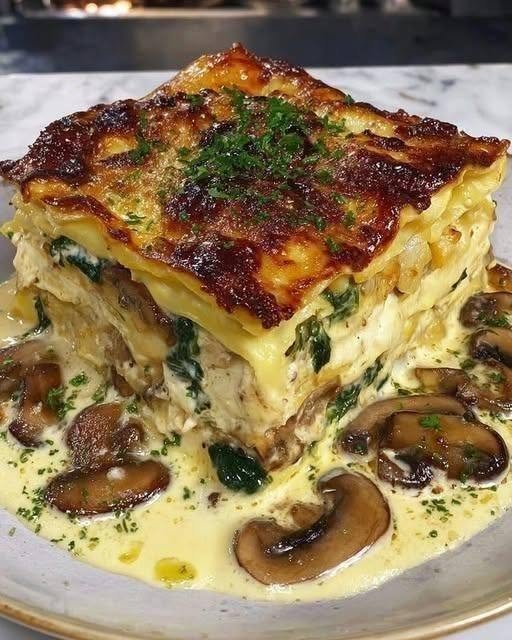
Cottage Cheese Mushroom & Spinach Lasagna Bake
Description
Cottage Cheese Mushroom & Spinach Lasagna Bake is a creamy, cheesy, and comforting vegetarian lasagna made with tender pasta sheets, savory mushrooms, fresh spinach, seasoned cottage cheese, rich marinara sauce, and layers of melted mozzarella and Parmesan. Cottage cheese creates a creamy, protein-rich filling while mushrooms add a delicious meaty texture and spinach brings freshness and color.
This lasagna is perfect for a cozy family dinner, weekend meal prep, potlucks, holidays, or a satisfying meatless dinner. It can be prepared ahead of time and reheats beautifully, making it an excellent option for busy schedules.
The combination of tomato sauce, garlic, Italian herbs, creamy cheese, earthy mushrooms, and bubbling mozzarella creates a classic comfort-food flavor in every bite.
Prep Time: 25 minutes
Cook Time: 45–50 minutes
Resting Time: 10–15 minutes
Total Time: About 1 hour 25 minutes
Servings: 6–8
Course: Main Dish
Cuisine: Italian-inspired
Difficulty: Easy to Moderate
Ingredients
For the Lasagna
- 9–12 lasagna noodles
- 2 tablespoons olive oil
- 2 cups sliced mushrooms
- 4 cups fresh baby spinach
- 1 small yellow onion, finely diced
- 4 cloves garlic, minced
- 3 cups marinara sauce
- 2 cups shredded mozzarella cheese
- ½ cup freshly grated Parmesan cheese
- 2 tablespoons fresh parsley, chopped
For the Cottage Cheese Filling
- 2 cups cottage cheese
- 1 large egg
- ½ cup grated Parmesan cheese
- 1 teaspoon Italian seasoning
- ½ teaspoon dried oregano
- ½ teaspoon garlic powder
- ½ teaspoon salt
- ½ teaspoon black pepper
- ¼ teaspoon red pepper flakes, optional
Optional Additions
- ½ cup chopped roasted red peppers
- ½ cup finely chopped zucchini
- ½ cup shredded mozzarella for extra topping
- Fresh basil
- A pinch of nutmeg
- 1 tablespoon fresh lemon zest
Instructions
1. Preheat the Oven
Preheat your oven to 375°F (190°C).
Lightly grease a 9×13-inch baking dish with olive oil or cooking spray.
Set the dish aside.
2. Cook the Lasagna Noodles
Bring a large pot of salted water to a boil.
Cook the lasagna noodles according to the package directions until just tender.
Avoid overcooking them because they will continue cooking in the oven.
Drain the noodles and arrange them separately on a baking sheet or lightly oiled plate to prevent them from sticking together.
If using oven-ready lasagna noodles, you can skip this step and use them according to the package directions.
3. Prepare the Mushroom and Spinach Mixture
Heat olive oil in a large skillet over medium heat.
Add the diced onion and cook for approximately 3–4 minutes, until softened.
Add the sliced mushrooms.
Cook for 6–8 minutes, stirring occasionally, until the mushrooms become golden and most of their moisture has evaporated.
This step is important because mushrooms contain a lot of water. Cooking them properly helps prevent a watery lasagna.
Add the minced garlic and cook for another 30–60 seconds.
Add the fresh spinach.
Cook for approximately 2 minutes, stirring until the spinach wilts.
Remove the skillet from the heat.
Allow the mixture to cool slightly.
4. Make the Cottage Cheese Filling
In a large bowl, combine:
- Cottage cheese
- Egg
- Parmesan
- Italian seasoning
- Oregano
- Garlic powder
- Salt
- Black pepper
- Red pepper flakes, if using
Stir until everything is evenly combined.
For an especially smooth filling, blend the cottage cheese in a food processor for 20–30 seconds before mixing it with the other ingredients.
If you enjoy a more textured filling, leave the cottage cheese as it is.
5. Begin Layering
Spread approximately ½ cup marinara sauce across the bottom of the prepared baking dish.
Arrange a layer of lasagna noodles over the sauce.
Spread approximately one-third of the cottage cheese mixture over the noodles.
Add one-third of the mushroom and spinach mixture.
Spoon marinara sauce over the vegetables.
Sprinkle with mozzarella.
6. Repeat the Layers
Repeat the layering process:
- Lasagna noodles
- Cottage cheese mixture
- Mushrooms and spinach
- Marinara sauce
- Mozzarella
Continue until the ingredients are used.
Try to distribute the ingredients evenly so every serving contains noodles, creamy cheese, vegetables, sauce, and melted cheese.
7. Finish the Lasagna
Place the final layer of noodles on top.
Spread the remaining marinara sauce over the noodles.
Sprinkle generously with the remaining mozzarella.
Finish with Parmesan.
For an especially golden top, add a little extra mozzarella.
8. Bake
Cover the baking dish tightly with aluminum foil.
Bake for approximately 25 minutes.
Remove the foil and continue baking for another 15–20 minutes, until the cheese is melted, bubbling, and golden.
If you want a deeper golden crust, place the lasagna under the broiler for approximately 1–2 minutes.
Watch carefully because the cheese can burn quickly.
9. Rest Before Serving
Remove the lasagna from the oven.
Allow it to rest for 10–15 minutes before slicing.
This step is important.
Resting allows the layers to settle, making the lasagna easier to cut and preventing the sauce from running everywhere.
Garnish with fresh parsley or basil.
Serve warm.
Notes
Cottage Cheese Texture
Cottage cheese gives the filling a creamy texture and adds protein.
If you don’t like the texture of cottage cheese, blend it until smooth before using.
Mushrooms
Cremini, white button, baby bella, or portobello mushrooms can be used.
For the best flavor, don’t overcrowd the skillet while cooking.
Spinach
Fresh spinach is ideal, but frozen spinach can also be used.
If using frozen spinach, thaw it completely and squeeze out as much water as possible before adding it to the lasagna.
Marinara Sauce
Use your favorite high-quality marinara sauce.
A tomato-basil sauce also works beautifully.
Cheese
Mozzarella provides the classic stretchy topping, while Parmesan adds salty, nutty flavor.
You can also add provolone, fontina, or ricotta if desired.
Tips for the Best Cottage Cheese Lasagna
1. Cook the Mushrooms Thoroughly
Don’t rush the mushroom step.
They should release their moisture and become lightly browned.
This gives them much more flavor and helps prevent watery lasagna.
2. Drain Spinach Properly
If using frozen spinach, squeeze it very dry.
Excess water is one of the biggest causes of watery vegetable lasagna.
3. Don’t Overfill Each Layer
Too much filling can make the lasagna difficult to cut.
Moderate, even layers work best.
4. Season the Cottage Cheese
Plain cottage cheese can taste bland on its own.
Italian seasoning, garlic, Parmesan, black pepper, and oregano make a huge difference.
5. Don’t Skip the Resting Period
Allowing the lasagna to rest helps the layers firm up.
6. Use Freshly Grated Parmesan
Fresh Parmesan melts and tastes better than many shelf-stable alternatives.
7. Don’t Overcook
Once the cheese is melted and bubbling and the center is hot, the lasagna is ready.
How to Make the Filling Extra Creamy
For a smoother, richer filling, blend the cottage cheese before adding the egg and seasonings.
You can also add 2–3 tablespoons of cream cheese to the mixture.
Another option is to mix cottage cheese with a small amount of ricotta.
This creates a particularly luxurious filling.
How to Add More Vegetables
This recipe is easy to customize with additional vegetables.
Good choices include:
- Zucchini
- Bell peppers
- Eggplant
- Roasted red peppers
- Broccoli
- Carrots
- Kale
- Artichoke hearts
Make sure vegetables with high water content are cooked first so they don’t release excess liquid into the lasagna.
Protein Variations
Although this is designed as a vegetarian lasagna, you can add protein if desired.
Try:
- Shredded chicken
- Ground turkey
- Italian sausage
- Cooked lentils
- White beans
For a vegetarian high-protein option, add cooked lentils or white beans between the layers.
Spicy Version
For extra heat, add:
- Red pepper flakes
- Calabrian chili paste
- Chopped jalapeño
- Hot Italian sausage
- A drizzle of chili oil
Keep the spice moderate if serving children.
Make-Ahead Instructions
This lasagna is excellent for preparing ahead.
Assemble the entire lasagna, cover it tightly, and refrigerate for up to 24 hours before baking.
When ready to cook, remove it from the refrigerator and allow it to sit at room temperature for approximately 15–20 minutes.
Bake according to the recipe, adding additional time if necessary because the lasagna will be cold.
For the freshest texture, add the final cheese topping immediately before baking.
Freezer Instructions
You can freeze this lasagna either before or after baking.
Freezing Before Baking
Assemble the lasagna in a freezer-safe baking dish.
Wrap it tightly with plastic wrap followed by aluminum foil.
Freeze for up to approximately 2–3 months for best quality.
Thaw overnight in the refrigerator before baking.
Freezing After Baking
Allow the cooked lasagna to cool completely.
Cut into individual portions and store in freezer-safe containers.
This makes convenient ready-to-reheat lunches or dinners.
Storage
Store leftover lasagna in an airtight container in the refrigerator.
It will keep for approximately 3–4 days.
Reheat individual portions in the microwave or reheat larger portions in a covered oven-safe dish at 350°F (175°C) until hot.
If the top becomes dry during reheating, add a small spoonful of marinara sauce before warming.
Serving Suggestions
Serve this lasagna with a simple side dish to create a complete meal.
Fresh Green Salad
A crisp salad with lettuce, cucumber, tomatoes, and lemon vinaigrette provides freshness.
Garlic Bread
Warm garlic bread is perfect for dipping into extra marinara sauce.
Roasted Vegetables
Roasted broccoli, asparagus, zucchini, or green beans make excellent sides.
Tomato Salad
Fresh tomatoes with basil, olive oil, and balsamic vinegar provide a bright contrast.
Soup
Serve with a light vegetable or tomato soup for a cozy Italian-inspired dinner.
Servings
This recipe makes approximately 6–8 servings.
For a larger gathering, double the recipe and bake in two 9×13-inch dishes.
If using a smaller dish, avoid making the lasagna too deep because the center may take significantly longer to heat.
Approximate Nutritional Information
Estimated per serving, assuming 8 servings:
- Calories: 400–470 kcal
- Protein: 23–28 g
- Carbohydrates: 42–48 g
- Dietary Fiber: 5–7 g
- Total Fat: 17–21 g
- Saturated Fat: 7–9 g
- Cholesterol: 60–75 mg
- Sodium: 750–950 mg
- Potassium: 700–850 mg
- Calcium: 300–400 mg
These numbers are estimates and will vary depending on the specific cottage cheese, pasta, marinara sauce, and cheese brands used.
Using low-fat cottage cheese and reduced-fat mozzarella can lower the total fat and calories.
Benefits of This Recipe
1. Good Source of Protein
Cottage cheese, eggs, mozzarella, and Parmesan provide protein, helping make this vegetarian meal filling.
2. Contains Vegetables
Mushrooms and spinach provide vitamins, minerals, fiber, and beneficial plant compounds.
3. Provides Calcium
Cottage cheese and other dairy ingredients provide calcium, an important nutrient for bones and teeth.
4. Contains Fiber
Spinach, mushrooms, tomato sauce, and vegetables contribute dietary fiber.
5. Satisfying Meatless Meal
The combination of pasta, cheese, and vegetables creates a substantial vegetarian dinner.
6. Customizable
You can easily add more vegetables, change the cheese, adjust the seasonings, or add additional protein.
7. Meal-Prep Friendly
Lasagna stores and reheats well, making it useful for busy weeks.
Frequently Asked Questions
Q1: Can I use ricotta instead of cottage cheese?
Yes. Ricotta can be substituted in equal amounts.
However, cottage cheese provides a slightly lighter, higher-protein filling depending on the product used.
Q2: Can I blend the cottage cheese?
Absolutely. Blending it creates a smooth filling that resembles traditional ricotta-based lasagna.
Q3: Can I use frozen spinach?
Yes. Thaw it completely and squeeze out as much liquid as possible before adding it.
Q4: Why is my lasagna watery?
The most common causes are excess moisture from mushrooms, spinach, or sauce.
Cook mushrooms thoroughly and drain frozen spinach very well.
Q5: Can I use no-boil noodles?
Yes. Follow the package instructions and make sure there is enough sauce to hydrate the noodles.
Q6: Can I use whole-wheat lasagna noodles?
Yes. Whole-wheat noodles provide a nuttier flavor and more fiber.
Q7: What mushrooms are best?
Cremini and baby bella mushrooms provide excellent flavor, but white button mushrooms work perfectly well.
Q8: Can I add meat?
Yes. Cooked ground beef, turkey, chicken, or Italian sausage can be added.
Q9: Can I make it gluten-free?
Yes. Use certified gluten-free lasagna noodles and check the labels of your marinara sauce and other packaged ingredients.
Q10: Can I make it dairy-free?
Yes, although you will need dairy-free cottage cheese or a suitable substitute and dairy-free mozzarella and Parmesan alternatives.
Q11: Can I make this lasagna ahead of time?
Yes. Assemble it up to 24 hours ahead and refrigerate before baking.
Q12: Can I freeze the lasagna?
Yes. It freezes well for approximately 2–3 months when properly wrapped.
Q13: How long should lasagna rest?
Allow it to rest for 10–15 minutes after baking.
Q14: Can I add extra cheese?
Of course. Add extra mozzarella to the top for a richer, more indulgent crust.
Q15: Can I use a different sauce?
Yes. Tomato basil sauce, roasted garlic marinara, or homemade tomato sauce can all work.
Q16: Can I add herbs?
Fresh basil, parsley, oregano, thyme, and rosemary all complement the ingredients.
Q17: Can I make individual lasagna portions?
Yes. Assemble the layers in small oven-safe baking dishes or ramekins and reduce the cooking time accordingly.
Q18: How do I make the top extra golden?
Use freshly grated mozzarella and Parmesan, uncover the dish during the final 15–20 minutes, and broil briefly at the end if desired.
Q19: Can I add zucchini?
Yes. Sauté diced zucchini before adding it so excess moisture doesn’t make the lasagna watery.
Q20: Is cottage cheese good in lasagna?
Yes. Cottage cheese creates a creamy filling and is an excellent alternative to ricotta. Blending it makes the texture especially smooth.