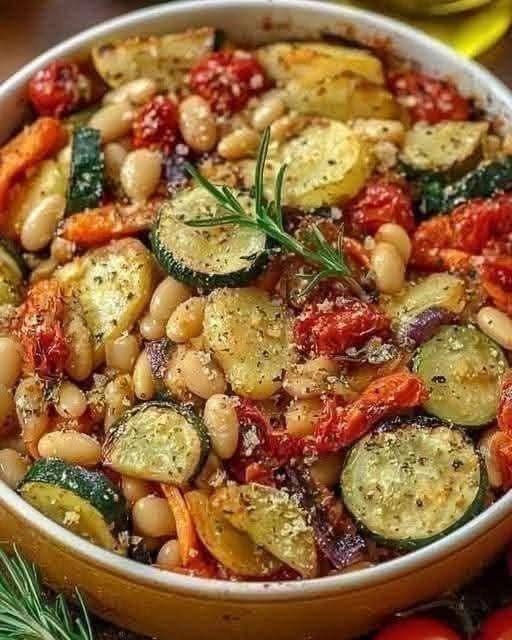
Mediterranean Roasted Vegetable & White Bean Bowl
Description
This Mediterranean Roasted Vegetable & White Bean Bowl is a colorful, hearty, and incredibly flavorful dish made with roasted zucchini, baby potatoes, carrots, red onion, sun-dried tomatoes, and creamy white beans. Everything is tossed with extra-virgin olive oil, garlic, oregano, rosemary, lemon, and a touch of balsamic vinegar before being roasted until the vegetables become beautifully golden around the edges.
The inspiration for this recipe comes from the classic Mediterranean combination of beans, vegetables, herbs, olive oil, and bright acidic flavors. White beans work especially well with zucchini and sun-dried tomatoes because they absorb the dressing while adding a creamy texture and satisfying plant-based protein. Similar Mediterranean white-bean recipes commonly pair beans with zucchini, sun-dried tomatoes, lemon, rosemary, and fresh herbs.
The result is a dish that feels comforting enough for dinner but fresh enough for lunch. It can be served warm straight from the oven, at room temperature as a salad, or chilled for meal prep.
The combination of colors also makes this recipe perfect for food photography and social-media reels. Golden roasted potatoes, green zucchini, bright carrots, red tomatoes, creamy white beans, and fresh rosemary create a naturally beautiful presentation.
Prep Time: 20 minutes
Cook Time: 35–40 minutes
Total Time: 55–60 minutes
Servings: 6
Cuisine: Mediterranean-inspired
Course: Main Dish / Side Dish / Lunch
Difficulty: Easy
Ingredients
For the Roasted Vegetables
- 2 medium zucchini, sliced into thick rounds or half-moons
- 2 medium yellow or baby potatoes, cut into small wedges
- 2 medium carrots, sliced diagonally
- 1 small red onion, cut into wedges
- 1 cup sun-dried tomatoes, roughly chopped
- 2 tablespoons extra-virgin olive oil
- 4 cloves garlic, minced
- 1 teaspoon dried oregano
- 1 teaspoon dried thyme
- ½ teaspoon smoked paprika
- ½ teaspoon black pepper
- ¾ teaspoon salt, or to taste
- 1 teaspoon fresh rosemary, finely chopped
For the White Beans
- 2 cans white beans or cannellini beans, 15 ounces each
- 1 tablespoon olive oil
- 1 tablespoon fresh lemon juice
- ½ teaspoon dried oregano
- Pinch of salt
- Pinch of black pepper
For the Lemon-Herb Dressing
- 3 tablespoons extra-virgin olive oil
- 2 tablespoons fresh lemon juice
- 1 tablespoon balsamic vinegar
- 1 teaspoon Dijon mustard
- 1 small garlic clove, finely grated
- ½ teaspoon dried oregano
- ½ teaspoon fresh rosemary, finely chopped
- ¼ teaspoon red pepper flakes, optional
- Salt and black pepper to taste
Optional Garnishes
- Fresh rosemary
- Fresh parsley
- Crumbled feta cheese
- Kalamata olives
- Lemon wedges
- Toasted pumpkin seeds
- A drizzle of extra-virgin olive oil
Instructions
1. Prepare the Oven
Preheat your oven to 425°F (220°C). Line a large baking sheet with parchment paper or lightly grease it with olive oil.
A hot oven is important because it helps the vegetables roast instead of simply steaming. Give the vegetables enough space on the baking sheet so that hot air can circulate around them.
2. Prepare the Vegetables
Wash and dry the zucchini, potatoes, and carrots thoroughly.
Cut the potatoes into relatively small wedges or cubes so they cook at approximately the same rate as the other vegetables. Slice the zucchini into thick rounds or half-moons. Cut the carrots diagonally and slice the red onion into chunky wedges.
Place the potatoes, carrots, zucchini, and red onion into a large mixing bowl.
Add the minced garlic, olive oil, oregano, thyme, smoked paprika, black pepper, salt, and chopped rosemary.
Toss everything thoroughly until the vegetables are evenly coated.
3. Start Roasting
Spread the vegetables across the prepared baking sheet in one even layer.
Place the tray into the preheated oven and roast for approximately 20 minutes.
After 20 minutes, remove the tray and gently turn the vegetables with a spatula.
Return the tray to the oven and continue roasting for another 10–15 minutes, or until the potatoes are tender and the vegetables have developed golden-brown edges.
Roasted vegetables are especially flavorful when they become slightly caramelized around the edges.
4. Add the Sun-Dried Tomatoes
Add the chopped sun-dried tomatoes during the final 8–10 minutes of roasting.
Adding them later prevents them from becoming overly dry or burnt while allowing their concentrated sweet and savory flavor to spread throughout the dish.
If your sun-dried tomatoes are packed in oil, you can use a small amount of their flavorful oil in the dressing instead of some of the olive oil.
5. Prepare the White Beans
While the vegetables are roasting, drain and rinse the white beans thoroughly under cool running water.
Place the beans in a bowl and gently toss them with 1 tablespoon olive oil, lemon juice, oregano, salt, and black pepper.
You don’t need to cook canned beans because they are already fully cooked. The goal is simply to season them so they taste flavorful rather than plain.
For a warmer dish, you can gently heat the beans in a small saucepan for 2–3 minutes before combining them with the roasted vegetables.
6. Make the Dressing
In a small bowl, whisk together the olive oil, lemon juice, balsamic vinegar, Dijon mustard, garlic, oregano, rosemary, and red pepper flakes.
Season with salt and black pepper.
Whisk until the dressing becomes slightly creamy and well combined.
Taste it before adding it to the vegetables. If you prefer a brighter flavor, add another teaspoon of lemon juice. For a sweeter balance, add ½ teaspoon honey or maple syrup.
7. Combine Everything
Transfer the roasted vegetables and sun-dried tomatoes to a large serving bowl.
Add the seasoned white beans.
Pour the lemon-herb dressing over everything.
Gently toss with a large spoon or spatula, being careful not to crush the beans or break the roasted potatoes.
Allow the mixture to sit for about 5–10 minutes before serving. This gives the beans and vegetables time to absorb some of the dressing.
Similar white-bean and vegetable salads are often especially good after the flavors have had time to mingle, making this style of recipe convenient for advance preparation.
How to Serve
Serve this Mediterranean roasted vegetable bowl warm, at room temperature, or chilled.
For a beautiful presentation, spoon the mixture into a large shallow serving bowl and finish with fresh rosemary or parsley.
Add crumbled feta if you enjoy a creamy, salty element. Kalamata olives are another excellent addition and bring classic Mediterranean flavor.
You can serve it alongside grilled chicken, baked fish, grilled shrimp, or crusty whole-grain bread. It can also be enjoyed on its own as a vegetarian meal.
For a creamy finishing touch, serve it with a spoonful of Greek yogurt or tzatziki.
Notes
Choose the Right Beans
Cannellini beans are my first choice because they have a creamy interior and delicate flavor. Great Northern beans or navy beans can also work.
Always drain and rinse canned beans before using them.
Don’t Overcrowd the Pan
This is one of the most important roasting tips.
If the vegetables are packed tightly together, they release moisture and may steam rather than roast. Use two baking sheets if necessary.
Cut Potatoes Small
Potatoes generally take longer to cook than zucchini. Cutting them into smaller pieces helps everything finish at approximately the same time.
Use Oil Carefully
You don’t need a large amount of oil. A moderate coating is enough to help the vegetables brown and develop flavor.
Fresh Herbs Make a Difference
Fresh rosemary and parsley provide a wonderful finishing flavor. If fresh rosemary isn’t available, use about one-third as much dried rosemary.
Make It Cheesy
Feta is an excellent addition. Add approximately ½ cup crumbled feta immediately before serving.
Make It Vegan
The base recipe is naturally plant-based. If adding cheese, simply leave it out to keep the dish vegan.
Make It Gluten-Free
The ingredients in this recipe are naturally gluten-free, but always check packaged ingredients such as mustard, canned beans, and sun-dried tomatoes if cross-contact is a concern.
Tips for the Best Results
1. Dry the vegetables well.
Excess moisture can prevent good browning.
2. Preheat the oven completely.
Starting with a properly heated oven gives the vegetables a better roasted texture.
3. Don’t skip the garlic.
Garlic adds depth and pairs beautifully with rosemary, oregano, and roasted vegetables.
4. Add the dressing after roasting.
This keeps the lemon and balsamic flavors bright while allowing the vegetables to develop caramelized edges.
5. Don’t overmix the beans.
White beans can become mushy if tossed too aggressively.
6. Taste before serving.
Roasted vegetables can vary in sweetness and saltiness, so adjust lemon juice, salt, pepper, or vinegar according to your preference.
7. Let it rest briefly.
Five to ten minutes is enough for the dressing to soak into the beans and vegetables.
8. Serve with contrast.
A little feta, fresh herbs, lemon zest, or olives can add contrasting salty, fresh, creamy, and acidic flavors.
Make-Ahead & Storage
This recipe is excellent for meal preparation.
You can roast the vegetables and prepare the beans and dressing in advance. Store them in separate airtight containers in the refrigerator and combine them before serving.
For best quality, enjoy the prepared dish within 3–4 days.
If you are storing it for meal prep, keep fresh herbs, feta, and crunchy toppings separate until serving.
The salad can be enjoyed cold, but if you prefer it warm, gently reheat the vegetable-and-bean mixture in a skillet or microwave. Add fresh herbs and a small squeeze of lemon after reheating.
Recipe Variations
Mediterranean Chickpea Version
Replace the white beans with chickpeas for a slightly firmer texture.
Greek-Style Version
Add feta, Kalamata olives, cucumber, fresh parsley, and extra lemon juice.
Spicy Version
Add ½ teaspoon crushed red pepper flakes or a little chili powder to the vegetables before roasting.
Creamy Version
Serve with tzatziki or a lemon-garlic Greek yogurt sauce.
Protein-Rich Version
Serve the roasted vegetables and beans alongside grilled chicken, salmon, shrimp, or baked tofu.
Grain Bowl
Serve over cooked quinoa, brown rice, farro, or bulgur for a more substantial grain bowl.
Servings
This recipe makes approximately 6 servings as a side dish or about 4 generous servings as a main meal.
Serving Size
Approximately 1½ cups per main-dish serving.
For a lighter side dish, serve approximately 1 cup per person.
Approximate Nutritional Information
Estimated per serving, based on 6 servings and without optional feta:
- Calories: 330–360 kcal
- Protein: 11–13 g
- Carbohydrates: 45–50 g
- Dietary Fiber: 10–12 g
- Total Fat: 13–15 g
- Saturated Fat: 2 g
- Sugar: 8–10 g
- Sodium: 450–600 mg
- Potassium: 800–950 mg
Nutritional values are estimates and will vary depending on the exact ingredients, brands, bean variety, amount of oil used, and serving size.
Adding feta, olives, or additional dressing will increase the calorie, fat, and sodium content.
Benefits of This Recipe
1. Provides Plant-Based Protein
White beans contribute plant-based protein, making this dish more satisfying than a vegetable-only side. Beans are commonly used in Mediterranean-style meals as a source of protein and fiber.
2. Good Source of Fiber
Beans and vegetables provide dietary fiber. Fiber contributes to normal digestive function and can help make meals more filling.
3. Vegetable-Rich
This recipe combines several vegetables in one meal, including zucchini, carrots, potatoes, onion, and tomatoes.
4. Contains Healthy Fats
Extra-virgin olive oil provides predominantly unsaturated fats and is a traditional ingredient in Mediterranean-style cooking.
5. Naturally Flavorful
Instead of relying on heavy sauces, the recipe gets its flavor from garlic, herbs, lemon, balsamic vinegar, sun-dried tomatoes, and olive oil.
6. Satisfying Without Meat
The combination of beans, vegetables, potatoes, and olive oil makes the dish substantial enough to serve as a vegetarian main course.
7. Great for Meal Prep
The flavors hold up well in the refrigerator, making this a practical option for preparing lunches ahead of time.
8. Versatile
You can easily change the beans, vegetables, herbs, toppings, or protein according to what you have available.
Frequently Asked Questions
Q1: Can I use frozen vegetables?
Yes. Frozen zucchini or other vegetables can work, although they may release more moisture than fresh vegetables. Roast them in a single layer and avoid overcrowding the pan.
Q2: Can I use chickpeas instead of white beans?
Absolutely. Chickpeas are an excellent substitute and provide a firmer bite. They are particularly good when roasted until slightly crisp.
Q3: Can I make this recipe without potatoes?
Yes. Simply replace the potatoes with additional zucchini, bell peppers, eggplant, cauliflower, or another vegetable.
Q4: Can I add feta cheese?
Yes. Crumbled feta is one of the best toppings for this recipe. Add approximately ½ cup just before serving.
Q5: Is this recipe vegan?
Yes, when prepared without feta or Greek yogurt. The main recipe uses vegetables, beans, olive oil, herbs, and seasonings.
Q6: Is this recipe gluten-free?
The basic ingredients are naturally gluten-free. However, check packaged ingredients such as mustard and sun-dried tomatoes for their specific labeling if you need strict gluten-free preparation.
Q7: Can I make it ahead?
Yes. You can prepare the vegetables, beans, and dressing ahead of time. Store them refrigerated and combine before serving.
Q8: Can I eat it cold?
Definitely. It works beautifully as a chilled Mediterranean-style salad. Let it sit at room temperature for a few minutes before serving for the best flavor.
Q9: What other vegetables can I add?
Bell peppers, eggplant, cherry tomatoes, mushrooms, broccoli, cauliflower, or artichoke hearts would all work well.
Q10: What can I serve with it?
Try grilled chicken, salmon, shrimp, baked fish, crusty bread, hummus, tzatziki, or a simple green salad.
Q11: How can I make it more filling?
Add quinoa, farro, brown rice, chickpeas, grilled chicken, tofu, or a little feta.
Q12: Can I make it spicy?
Yes. Add red pepper flakes, chili powder, or a small amount of harissa to the vegetables before roasting.
Q13: Why are my vegetables not crispy?
The most common reasons are too much moisture, overcrowding the baking sheet, or an oven that isn’t hot enough. Spread the vegetables out and roast at 425°F (220°C).
Q14: Can I use dried herbs instead of fresh rosemary?
Yes. Dried rosemary is more concentrated, so use a smaller quantity. Fresh parsley can be added at the end for freshness.
Q15: What makes this recipe Mediterranean-style?
The combination of vegetables, beans, olive oil, garlic, lemon, herbs, sun-dried tomatoes, and optional feta or olives reflects the ingredient profile commonly associated with Mediterranean-style cooking. Mediterranean recipes frequently emphasize vegetables, legumes, herbs, olive oil, and other minimally processed ingredients.