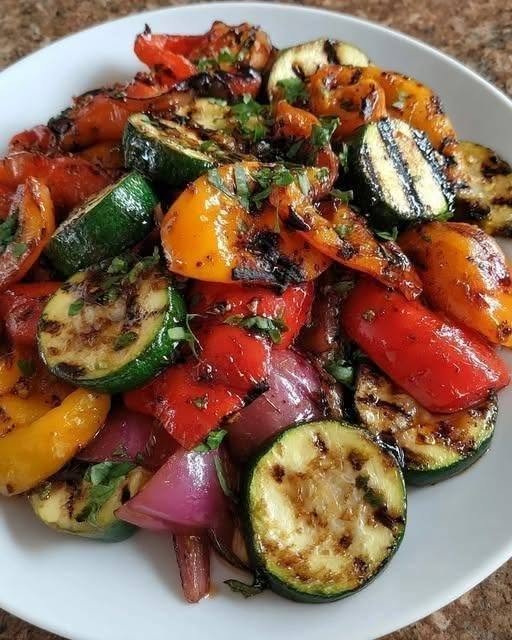
Balsamic Grilled Vegetables
Description
Balsamic Grilled Vegetables are a simple, colorful, and flavorful side dish made with fresh vegetables tossed in olive oil, balsamic vinegar, garlic, and Italian-inspired herbs, then grilled until tender with beautifully charred edges. The combination of smoky grilled vegetables and tangy-sweet balsamic dressing creates a delicious balance of flavors.
This recipe is perfect for summer barbecues, weeknight dinners, meal prep, picnics, and gatherings. It can be served hot straight from the grill, warm as a side dish, or chilled and added to salads, grain bowls, sandwiches, wraps, or pasta.
The recipe uses zucchini, bell peppers, red onion, mushrooms, and cherry tomatoes, but the vegetables can easily be changed according to what you have available. The key is to cut the vegetables into appropriately sized pieces so they cook evenly while maintaining some texture.
Recipe Details
Recipe Name: Balsamic Grilled Vegetables
Course: Side Dish
Cuisine: Mediterranean-inspired
Prep Time: 15 minutes
Marinating Time: 15–30 minutes
Cook Time: 12–18 minutes
Total Time: About 45–60 minutes
Servings: 6
Difficulty: Easy
Ingredients
For the Vegetables
- 2 medium zucchini, sliced lengthwise or into thick rounds
- 2 bell peppers, preferably different colors, seeded and cut into large pieces
- 1 large red onion, cut into thick wedges
- 8 ounces mushrooms, halved
- 1½ cups cherry tomatoes
- 1 small eggplant, cut into thick slices or cubes
- 2 tablespoons extra-virgin olive oil
For the Balsamic Marinade
- ¼ cup balsamic vinegar
- 2 tablespoons extra-virgin olive oil
- 2 cloves garlic, finely minced
- 1 teaspoon dried Italian seasoning
- ½ teaspoon dried oregano
- ½ teaspoon honey or maple syrup, optional
- ½ teaspoon salt
- ¼ teaspoon black pepper
- 1 tablespoon fresh lemon juice
For Garnishing
- 2 tablespoons chopped fresh parsley
- 1 tablespoon fresh basil, torn
- 1–2 tablespoons crumbled feta cheese, optional
- Extra balsamic glaze, optional
- Lemon wedges, for serving
Instructions
1. Prepare the Vegetables
Wash and dry all vegetables thoroughly.
Cut the zucchini into thick slices or long strips. Remove the seeds and membranes from the bell peppers and cut them into large pieces.
Cut the red onion into thick wedges, keeping some of the layers together so they don’t fall apart on the grill.
Clean the mushrooms and cut larger mushrooms in half.
Cut the eggplant into thick slices or medium-sized cubes.
Keep the cherry tomatoes whole.
Try to keep the vegetable pieces relatively large. Smaller pieces can fall through grill grates or cook too quickly.
2. Prepare the Balsamic Marinade
In a large bowl, whisk together balsamic vinegar, olive oil, minced garlic, Italian seasoning, oregano, honey or maple syrup if using, salt, black pepper, and fresh lemon juice.
The balsamic vinegar provides acidity and a slightly sweet flavor, while olive oil helps coat the vegetables and encourages browning.
The small amount of honey or maple syrup is optional but can help create beautiful caramelized edges.
3. Toss the Vegetables
Add the zucchini, bell peppers, red onion, mushrooms, eggplant, and cherry tomatoes to the bowl.
Toss gently until all vegetables are coated with the balsamic mixture.
Allow the vegetables to marinate for approximately 15–30 minutes.
Avoid marinating them for many hours because the vinegar can soften delicate vegetables too much.
4. Preheat the Grill
Preheat an outdoor grill or grill pan to medium-high heat, approximately 400–450°F (200–230°C).
Clean the grill grates and lightly oil them to help prevent sticking.
If you’re using a grill pan, allow it to become properly hot before adding the vegetables.
A hot cooking surface is important because it creates the delicious charred edges that make grilled vegetables so flavorful.
5. Grill the Vegetables
Place the larger vegetables on the grill first.
Grill zucchini, bell peppers, onion, eggplant, and mushrooms for approximately 3–5 minutes per side, depending on thickness.
Turn them occasionally so they develop grill marks without burning.
Cherry tomatoes can be grilled in a grill basket or on skewers for approximately 4–6 minutes, turning occasionally.
The vegetables should become tender but should not be completely soft or mushy.
You want the centers to retain some texture while the outside develops smoky, caramelized edges.
6. Watch the Balsamic Marinade
Because balsamic vinegar contains natural sugars, it can caramelize quickly.
Keep an eye on the vegetables during the final few minutes of grilling.
If they begin browning too quickly, move them to a cooler part of the grill.
Do not brush large amounts of leftover marinade onto the vegetables repeatedly while they are over high heat because the sugars can burn.
7. Remove and Rest
Transfer the grilled vegetables to a large serving platter.
Allow them to rest for approximately 5 minutes.
As they rest, the vegetables will continue releasing juices, creating a naturally flavorful coating.
Taste and adjust the seasoning with a small pinch of salt, black pepper, or a splash of fresh lemon juice.
8. Garnish and Serve
Sprinkle the vegetables with fresh parsley and basil.
For a Mediterranean-style finish, add a little crumbled feta cheese.
You can also drizzle the vegetables with a small amount of balsamic glaze immediately before serving.
Serve warm, at room temperature, or chilled.
Notes
Choose Seasonal Vegetables
The best grilled vegetables are fresh, firm, and flavorful.
Zucchini, peppers, onions, mushrooms, eggplant, and tomatoes work particularly well because they hold their shape during grilling.
You can also add asparagus, broccoli, cauliflower, yellow squash, carrots, or sweet potatoes.
Keep Pieces Large
Vegetables shrink as they cook. Cutting them too small can cause them to become overly soft or fall through the grill.
Thicker slices and larger pieces are easier to handle.
Don’t Overcrowd the Grill
Arrange the vegetables in a single layer whenever possible.
Overcrowding creates steam and prevents proper browning.
If necessary, grill the vegetables in batches.
Use a Grill Basket
A grill basket is especially useful for mushrooms, cherry tomatoes, small pieces of zucchini, or other vegetables that might fall through the grates.
Balsamic Glaze vs. Balsamic Vinegar
The marinade uses regular balsamic vinegar.
Balsamic glaze is thicker and sweeter and is best used as a finishing drizzle rather than as the primary marinade.
Helpful Tips for Perfect Grilled Vegetables
1. Dry the vegetables well.
Excess water can interfere with browning.
2. Preheat the grill properly.
A hot grill creates better grill marks and caramelization.
3. Don’t constantly move the vegetables.
Let them sit long enough to develop attractive grill marks.
4. Turn vegetables with tongs.
Tongs provide better control and reduce the risk of vegetables breaking apart.
5. Don’t over-marinate.
The balsamic mixture is flavorful, but too much acid for too long can soften vegetables excessively.
6. Add fresh herbs after grilling.
Fresh basil and parsley taste brighter when added at the end.
7. Finish with lemon.
A small squeeze of lemon helps brighten the smoky balsamic flavor.
8. Use good olive oil.
Extra-virgin olive oil contributes noticeable flavor to this simple recipe.
9. Grill vegetables according to their size.
Harder vegetables need more time, while zucchini and tomatoes cook relatively quickly.
10. Taste before serving.
Grilled vegetables can benefit from a final pinch of salt, black pepper, lemon juice, or balsamic glaze.
Serving Suggestions
Balsamic Grilled Vegetables are extremely versatile.
Serve them alongside:
- Grilled chicken
- Grilled salmon
- Steak
- Shrimp
- Turkey burgers
- Grilled tofu
- Baked fish
- Pasta
- Couscous
- Quinoa
- Brown rice
- Crusty bread
- Hummus
- Tzatziki
For a Mediterranean-inspired dinner, serve the vegetables with grilled chicken, warm pita bread, hummus, feta, and a simple cucumber salad.
They can also be served over quinoa or couscous to create a satisfying vegetarian bowl.
Ways to Use Leftovers
Leftover grilled vegetables are excellent for meal preparation.
Grain Bowls
Combine them with quinoa, brown rice, farro, or couscous. Add chickpeas and feta for extra protein and flavor.
Pasta
Chop the vegetables and toss them with cooked pasta, olive oil, Parmesan, and fresh basil.
Sandwiches
Place the vegetables inside toasted ciabatta or a crusty roll with hummus, mozzarella, or feta.
Wraps
Add the vegetables to a tortilla with hummus, lettuce, cucumber, and grilled chicken or chickpeas.
Salads
Chop the chilled vegetables and combine them with mixed greens, arugula, feta, olives, and a little extra balsamic dressing.
Pizza
Use leftover grilled vegetables as a topping for homemade pizza with mozzarella and fresh basil.
Nutritional Information
The following nutrition is an approximate estimate based on six servings and will vary depending on the exact vegetables, olive oil, balsamic vinegar, and optional toppings used.
Calories: Approximately 160–190 kcal
Protein: 3–4 g
Carbohydrates: 15–18 g
Fat: 10–12 g
Fiber: 4–5 g
Sugar: 7–9 g
Sodium: Approximately 300–400 mg
Adding feta cheese or additional balsamic glaze will increase the calories, fat, sugar, and sodium.
Benefits
Rich in Vegetables
This recipe combines several colorful vegetables in one dish, making it an easy way to add variety to a meal.
Provides Dietary Fiber
Zucchini, eggplant, peppers, onions, mushrooms, and tomatoes contribute dietary fiber, which is an important part of a balanced diet.
Source of Healthy Fats
Extra-virgin olive oil provides predominantly unsaturated fats and is commonly used in Mediterranean-style cooking.
Naturally Flavorful
Fresh vegetables, garlic, herbs, balsamic vinegar, and olive oil provide plenty of flavor without requiring a heavy sauce.
Versatile Side Dish
The vegetables can accompany meat, seafood, grains, pasta, or vegetarian proteins, making them useful for many different meal styles.
Colorful and Appealing
Using different colored peppers, tomatoes, zucchini, and red onion creates a visually attractive dish that works especially well for gatherings.
These are general nutritional observations and are not medical advice.
Recipe Variations
Spicy Balsamic Vegetables
Add ¼–½ teaspoon crushed red pepper flakes to the marinade.
You can also add sliced jalapeño or a pinch of cayenne.
Garlic Herb Vegetables
Increase the garlic and add fresh rosemary, thyme, and parsley.
Mediterranean Version
Add Kalamata olives and crumbled feta after grilling.
Serve with hummus and warm pita.
Balsamic Parmesan Vegetables
After grilling, sprinkle with freshly grated Parmesan cheese.
The residual heat will slightly melt the cheese.
Honey Balsamic Vegetables
Add 1 teaspoon honey to the marinade for a sweeter caramelized finish.
Lemon Herb Version
Reduce the balsamic vinegar slightly and increase the fresh lemon juice. Finish with fresh parsley, basil, and lemon zest.
Frequently Asked Questions
Q: Can I make these vegetables without an outdoor grill?
Yes. A grill pan or large cast-iron skillet works very well. You can also roast them in the oven at approximately 425°F (220°C), although you won’t get exactly the same smoky grill flavor.
Q: Can I prepare the vegetables ahead of time?
Yes. You can wash and cut the vegetables several hours ahead and keep them refrigerated. Prepare the marinade separately and toss the vegetables shortly before grilling.
Q: Can I use frozen vegetables?
Fresh vegetables are recommended because frozen vegetables contain more moisture and may not develop the same grilled texture. If using frozen vegetables, thaw and drain them thoroughly first.
Q: Can I use balsamic glaze in the marinade?
It is better to use regular balsamic vinegar for the marinade. Balsamic glaze is thicker and sweeter and can burn more easily. Use it as a finishing drizzle instead.
Q: How do I stop the vegetables from sticking?
Make sure the grill grates are clean and properly preheated. Lightly oil the grates and coat the vegetables with olive oil before grilling.
Q: Why are my vegetables soggy?
They may have been overcrowded, cut too thin, or cooked at too low a temperature. Use a hot grill and arrange vegetables in a single layer.
Q: Can I add chicken?
Absolutely. Grilled chicken pairs beautifully with these vegetables. Cook the chicken separately until it reaches a safe internal temperature, then serve it alongside the vegetables.
Q: Can I make this recipe vegan?
Yes. The basic recipe is vegan as long as you skip optional feta cheese or use a plant-based alternative.
Q: Can I make this gluten-free?
Yes. The vegetables and marinade are naturally gluten-free when using certified gluten-free ingredients where necessary.
Q: How long do leftovers last?
Store leftover grilled vegetables in an airtight container in the refrigerator for approximately 3–4 days.
Q: Can I eat them cold?
Yes. They are delicious warm, at room temperature, or chilled. Cold leftovers work particularly well in salads and grain bowls.
Q: What is the best vegetable combination?
Zucchini, bell peppers, red onion, mushrooms, eggplant, and cherry tomatoes make a balanced combination because they provide different textures and cooking times.
Q: Can I grill the vegetables on skewers?
Yes. Larger pieces can be threaded onto skewers. If using wooden skewers, soak them in water beforehand to help prevent burning.
Storage and Reheating
Place cooled vegetables in an airtight container and refrigerate.
To reheat, use a skillet over medium heat for a few minutes or warm them in a 350°F (175°C) oven.
Avoid overcooking during reheating because the vegetables are already tender.
For meal prep, divide them into individual containers with cooked grains, beans, chicken, or another protein.