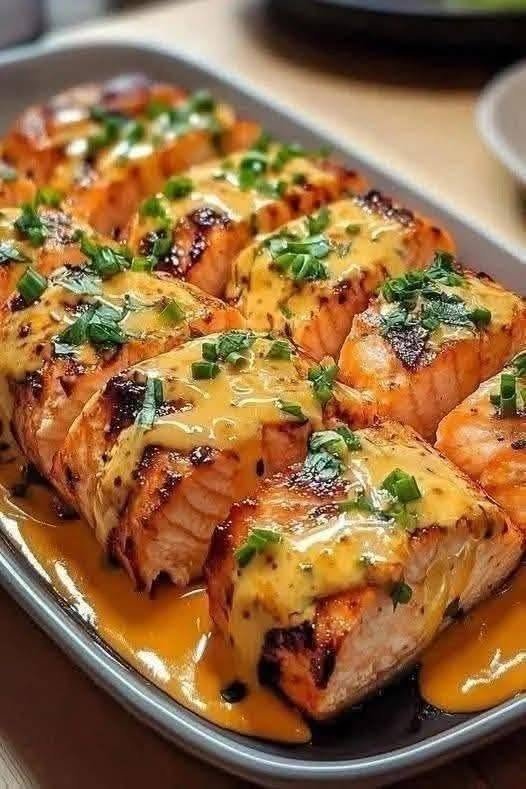
Honey Garlic Butter Glazed Salmon
This Honey Garlic Butter Glazed Salmon is a delicious, restaurant-style seafood recipe featuring tender, flaky salmon coated in a rich, glossy sauce made with honey, garlic, butter, lemon, and simple seasonings. The salmon is cooked until beautifully caramelized on the outside while remaining moist and tender inside.
The image shows thick salmon portions covered with a golden, creamy-looking glaze and finished with fresh green herbs. This recipe recreates that irresistible combination with an easy oven method.
The sweet honey balances the savory garlic, while butter adds richness and lemon cuts through the sweetness with fresh acidity. A touch of Dijon mustard adds depth and helps create a beautifully balanced glaze.
It is perfect for a quick weeknight dinner, date-night meal, family dinner, or an impressive dish for guests.
Recipe Details
Prep Time: 10 minutes
Cook Time: 15–18 minutes
Total Time: 25–30 minutes
Servings: 4
Course: Main Course
Cuisine: American-inspired
Difficulty: Easy
Ingredients
For the Salmon
- 4 salmon fillets, approximately 6 ounces each
- 1 tablespoon olive oil
- ½ teaspoon salt
- ½ teaspoon black pepper
- ½ teaspoon paprika
- ½ teaspoon garlic powder
- ¼ teaspoon onion powder
- ½ teaspoon dried Italian seasoning
For the Honey Garlic Butter Glaze
- 4 tablespoons unsalted butter
- 3 tablespoons honey
- 3 cloves garlic, finely minced
- 1 tablespoon fresh lemon juice
- 1 teaspoon lemon zest
- 1 tablespoon Dijon mustard
- 1 tablespoon soy sauce
- ¼ teaspoon red pepper flakes, optional
- ½ teaspoon dried oregano
- ¼ teaspoon black pepper
For Garnishing
- 2 tablespoons chopped fresh parsley
- 1 tablespoon chopped green onions
- Lemon wedges
- Optional sesame seeds
Instructions
1. Prepare the Salmon
Preheat your oven to 400°F (200°C).
Pat the salmon fillets completely dry using paper towels.
Removing excess moisture helps the seasoning stick and encourages better browning.
Place the salmon pieces in a lightly greased baking dish or on a parchment-lined baking sheet.
Drizzle the salmon with olive oil.
Season evenly with salt, black pepper, paprika, garlic powder, onion powder, and Italian seasoning.
Gently rub the seasoning over the top and sides of each fillet.
2. Prepare the Honey Garlic Butter Sauce
Place a small saucepan over medium-low heat.
Add the butter and allow it to melt gently.
Add the minced garlic and cook for approximately 30–60 seconds, just until fragrant.
Do not let the garlic become dark brown because burnt garlic can taste bitter.
Add:
- Honey
- Lemon juice
- Lemon zest
- Dijon mustard
- Soy sauce
- Oregano
- Black pepper
- Red pepper flakes, if using
Whisk everything together until smooth.
Allow the sauce to simmer gently for about 1–2 minutes.
Remove from the heat.
The sauce should be glossy and slightly thickened.
3. Glaze the Salmon
Brush approximately half of the honey garlic butter sauce generously over the salmon fillets.
Make sure the tops are well coated.
Reserve the remaining sauce for later.
The honey will help the salmon develop a beautiful caramelized surface as it cooks.
4. Bake the Salmon
Place the salmon in the preheated oven.
Bake for approximately 10–14 minutes, depending on the thickness of the fillets.
Thicker pieces may require a few additional minutes.
The salmon should flake easily with a fork while remaining moist in the center.
For a more caramelized finish, switch the oven to broil for the final 1–2 minutes.
Watch carefully during this step because the honey in the glaze can brown quickly.
5. Add More Glaze
Remove the salmon from the oven.
Brush the remaining honey garlic butter sauce over the top.
For an especially glossy finish, spoon some of the warm sauce around the salmon before serving.
If desired, place the salmon under the broiler for another brief 30–60 seconds to caramelize the glaze.
6. Garnish and Serve
Sprinkle the salmon with freshly chopped parsley and green onions.
Add a few lemon wedges to the serving platter.
Serve immediately while the salmon is warm and the glaze is glossy.
Description
This Honey Garlic Butter Glazed Salmon combines several flavors that work exceptionally well together.
Honey provides sweetness and helps create caramelized edges. Garlic adds savory intensity, while butter gives the sauce a rich and silky texture.
Fresh lemon juice balances the sweetness and keeps the sauce from feeling too heavy. Dijon mustard adds a subtle tangy flavor, while soy sauce contributes savory depth and umami.
The salmon itself provides a naturally rich and buttery flavor that pairs beautifully with the glaze.
The final result is tender salmon with slightly caramelized edges, a glossy golden coating, and plenty of fresh herb flavor.
It is one of those recipes that looks impressive on a dinner table but requires surprisingly little preparation.
Recipe Notes
Choose Good-Quality Salmon
Fresh salmon with firm, moist flesh works best.
Atlantic salmon, sockeye salmon, coho salmon, or another preferred variety can be used.
Keep the Skin On or Off
You can cook the salmon with the skin on or use skinless fillets.
If using skin-on salmon, place it skin-side down while baking.
Don’t Overcook
Salmon becomes dry when overcooked.
Start checking the thickest part around the minimum cooking time.
Watch the Honey
Honey caramelizes quickly under high heat.
If broiling, stay close to the oven.
Don’t Burn the Garlic
Cook garlic gently in the butter just until fragrant.
Burnt garlic can overpower the entire sauce.
Use Fresh Lemon
Fresh lemon juice provides a brighter flavor than bottled lemon juice.
Helpful Tips for Perfect Salmon
1. Pat the Salmon Dry
This is one of the easiest ways to improve browning.
2. Bring Salmon Closer to Room Temperature
Allow the salmon to sit out for approximately 10–15 minutes before cooking rather than putting it directly into the oven ice-cold.
Don’t leave raw fish at room temperature for an extended period.
3. Don’t Overcrowd the Pan
Leave a little space between the salmon pieces so heat can circulate evenly.
4. Use a Meat Thermometer
For precise cooking, check the thickest portion with an instant-read thermometer.
For food safety, the FDA recommends cooking fish to 145°F (63°C) or until the flesh is opaque and flakes easily with a fork.
5. Reserve Some Sauce
Don’t use every bit of sauce before baking. Keeping some for the final drizzle gives the finished salmon a much more attractive glossy appearance.
6. Broil Carefully
A brief broil creates beautiful caramelization, but the honey can burn quickly.
Delicious Variations
Spicy Honey Garlic Salmon
Add:
- ½ teaspoon chili flakes
- 1 teaspoon hot sauce
- A pinch of cayenne
This creates a sweet and spicy glaze.
Lemon Herb Salmon
Skip the soy sauce and add extra lemon juice, parsley, dill, and oregano.
This version has a lighter Mediterranean flavor.
Maple Garlic Salmon
Replace honey with pure maple syrup.
Maple gives the glaze a deeper, slightly caramel-like sweetness.
Orange Honey Salmon
Replace half of the lemon juice with fresh orange juice and add a little orange zest.
The citrus adds a beautiful fresh aroma.
Creamy Honey Garlic Salmon
After baking the salmon, combine the glaze with 2–3 tablespoons of heavy cream over low heat to create a richer sauce.
Don’t boil the cream aggressively.
Sesame Honey Salmon
Add 1 teaspoon sesame oil to the sauce and garnish with sesame seeds and sliced green onions.
What to Serve With Honey Garlic Salmon
This salmon pairs well with almost any vegetable, grain, or salad.
Vegetable Sides
- Roasted asparagus
- Garlic green beans
- Broccoli
- Brussels sprouts
- Roasted zucchini
- Sautéed spinach
- Honey-glazed carrots
Grains and Starches
- Jasmine rice
- Basmati rice
- Brown rice
- Garlic mashed potatoes
- Roasted baby potatoes
- Quinoa
- Couscous
Fresh Sides
- Cucumber salad
- Greek salad
- Avocado tomato salad
- Mediterranean orzo salad
- Lemon herb salad
For a lighter meal, serve the salmon over fresh greens with cucumber, tomato, avocado, and a little lemon dressing.
Storage
Allow leftover salmon to cool before placing it in an airtight container.
Refrigerate for up to 3 days.
For the best texture, reheat gently.
Oven
Place salmon in a covered baking dish and warm at 300°F (150°C) for approximately 8–12 minutes.
Air Fryer
Reheat at approximately 300°F (150°C) for 3–5 minutes, depending on thickness.
Microwave
Microwave gently in short intervals to prevent the salmon from becoming dry.
Avoid repeatedly reheating the same portion.
Can You Make It Ahead?
Yes, but salmon is best when freshly cooked.
You can prepare the glaze up to 2 days ahead and store it refrigerated in a sealed container.
When ready to cook, prepare the salmon and warm the sauce gently before glazing.
This makes the recipe particularly convenient for busy weeknights.
Nutritional Information
Estimated per serving, based on 4 servings:
- Calories: Approximately 500–540 kcal
- Protein: 38–42 g
- Carbohydrates: 17–20 g
- Fat: 30–34 g
- Saturated Fat: 9–11 g
- Fiber: Less than 1 g
- Sugar: 14–16 g
- Sodium: Approximately 650–800 mg
- Omega-3 fatty acids: Naturally present in salmon
Actual nutritional values vary depending on the salmon variety, portion size, butter, honey, and soy sauce used.
Benefits
1. High-Quality Protein
Salmon is naturally rich in high-quality protein, making it a satisfying main course.
2. Omega-3 Fatty Acids
Fatty fish such as salmon naturally provides EPA and DHA omega-3 fatty acids.
3. Provides Vitamin D and B Vitamins
Salmon is a source of several important nutrients, including vitamin D and B vitamins.
4. Satisfying Healthy-Fat Source
Salmon naturally contains beneficial unsaturated fats, while the recipe also uses olive oil.
5. Easy Vegetable Pairing
Because salmon cooks quickly, it is easy to build a balanced meal by adding vegetables and a whole grain.
Note: These nutritional benefits are general properties of the ingredients and are not intended as medical advice or treatment for any health condition.
Frequently Asked Questions
Can I use frozen salmon?
Yes. Thaw it completely in the refrigerator before cooking and pat it dry thoroughly.
Can I use skinless salmon?
Absolutely. Skinless fillets work very well for this recipe.
Can I grill the salmon?
Yes. Grill over medium heat and brush with the glaze during the final few minutes. Because honey can burn, avoid applying a thick layer too early.
Can I cook this salmon in an air fryer?
Yes. Air-fry the salmon at approximately 380°F (193°C) for about 7–10 minutes, depending on thickness. Brush with the glaze before cooking and add additional glaze near the end.
Can I use maple syrup instead of honey?
Yes. Maple syrup is an excellent substitute and gives the glaze a slightly deeper flavor.
What if I don’t have Dijon mustard?
You can omit it or use a small amount of yellow mustard. Dijon provides the best balance of tang and depth.
Can I omit soy sauce?
Yes. If you don’t want soy sauce, replace it with a small pinch of salt or use coconut aminos.
How do I know when salmon is done?
The thickest part should be opaque and flake easily. For the most reliable food-safety check, use a thermometer and cook fish to 145°F (63°C).
Why is my glaze watery?
The sauce may need another minute or two of gentle simmering to reduce slightly. Remember that it will also thicken as it cools.
Can I make the sauce less sweet?
Yes. Reduce the honey from 3 tablespoons to 2 tablespoons and add a little extra lemon juice.
Can I make it spicier?
Absolutely. Add red pepper flakes, cayenne, chili sauce, or a little hot honey.
Can I use another fish?
Yes. The same glaze works well with trout, cod, halibut, or other firm fish. Cooking time will vary depending on the thickness and type of fish.
Can I freeze cooked salmon?
Yes, although fresh salmon has the best texture. Cool the cooked salmon completely, wrap it tightly, and freeze in an airtight container. Use within approximately 2–3 months for best quality.
What is the best way to reheat it?
Gentle oven reheating is usually best. Low heat helps prevent the salmon from becoming dry.