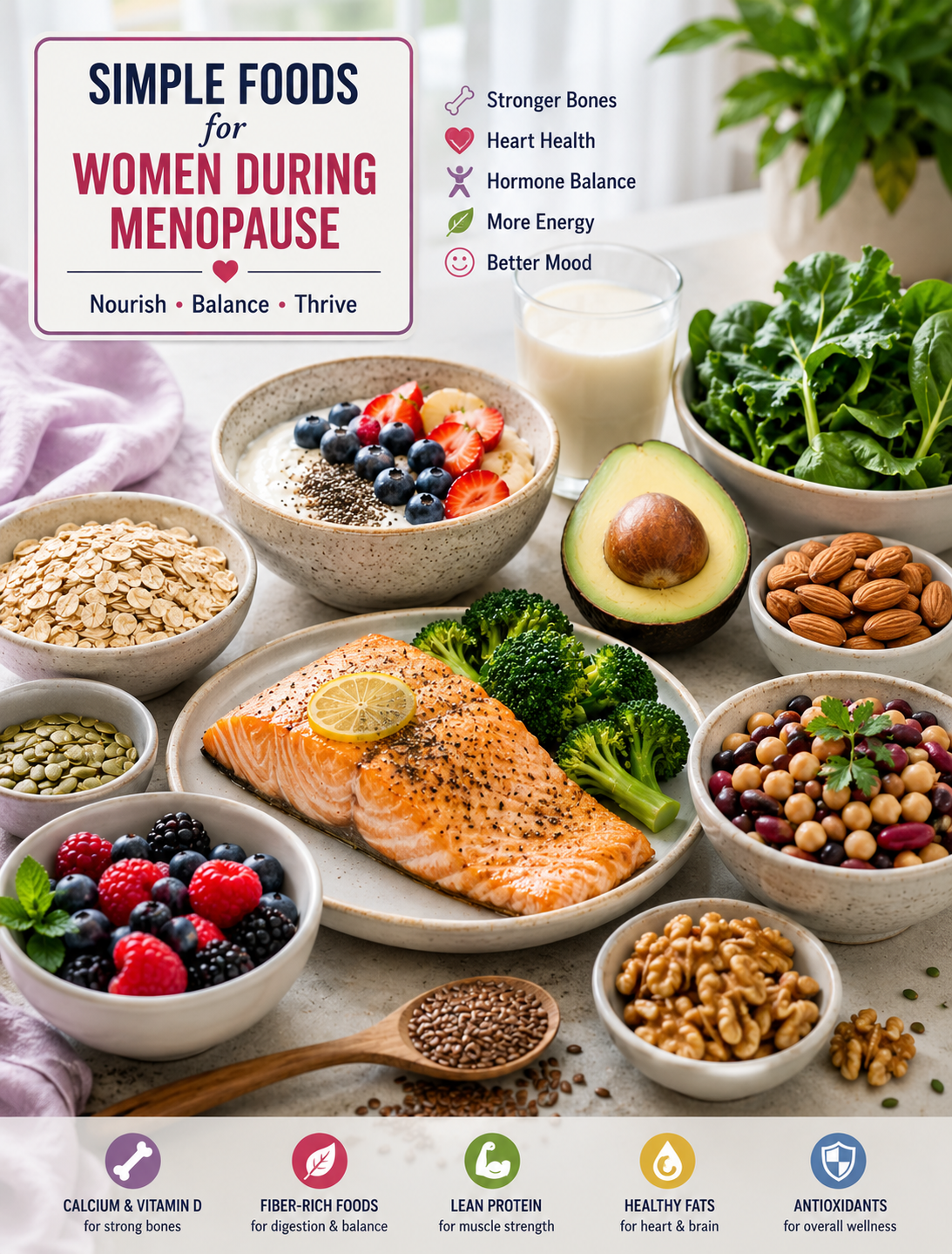
Simple Foods for Women During Menopause: 10 Healthy Choices

Simple Foods for Women During Menopause: 10 Healthy Choices

Simple Foods for Women During Menopause

10 Healthy Choices

Menopause is a normal stage of life, but the changes that come with it can affect how you feel and how your body uses energy. Hormone changes can also increase the long-term risk of conditions such as heart disease and osteoporosis. A balanced diet can help support your bones, muscles, heart, and overall health during this transition.

There is no single food that can prevent every menopause symptom. However, choosing nutrient-rich foods can help you meet your changing nutritional needs while supporting healthy aging.

The best approach is simple: eat more whole foods, include enough protein and fiber, choose healthy fats, and pay special attention to calcium and vitamin D. These habits can become part of an everyday eating pattern without requiring expensive supplements or complicated meal plans.

Why Nutrition Matters During Menopause

Estrogen levels decline during menopause, and this change can affect several areas of health. Bone loss can become a greater concern, while heart health, muscle mass, body weight, and blood sugar also deserve attention.

Women may also need fewer calories as they age because muscle mass and activity levels can change. This makes food quality especially important because each meal should provide useful nutrients without relying heavily on added sugar or highly processed foods.

A practical menopause diet does not need to be restrictive. Build meals around vegetables, fruits, whole grains, lean proteins, beans, nuts, seeds, and healthy fats.

1. Greek Yogurt for Protein and Calcium

Plain Greek yogurt is an easy food to add to breakfast or snacks. It provides protein and calcium, two nutrients that become especially important for maintaining strength and bone health.

Choose plain yogurt instead of heavily sweetened varieties to keep added sugar lower. Add berries, sliced fruit, chia seeds, or walnuts for extra fiber and healthy fats.

Greek yogurt can also replace sour cream in some recipes, making it a simple way to add more protein to everyday meals.

Women over 50 generally need more calcium than younger adult women. The Office on Women’s Health recommends 1,200 milligrams of calcium daily for women ages 51 and older.

2. Salmon for Vitamin D and Healthy Fats

Salmon provides high-quality protein and is also a source of vitamin D. It contains omega-3 fatty acids, which are part of a heart-conscious eating pattern.

Try baked or grilled salmon with roasted vegetables and a whole grain such as quinoa or brown rice. This creates a balanced meal without needing a heavy sauce.

Other seafood options can also add protein and nutrients to your diet. Choosing different types of seafood throughout the week can help keep meals varied.

Vitamin D is important because it helps the body absorb calcium and supports bone health. Fatty fish such as salmon are among the food sources of vitamin D.

3. Leafy Greens for Fiber and Minerals

Spinach, kale, collard greens, and other dark leafy vegetables can add fiber and important nutrients to meals.

Try adding spinach to scrambled eggs, kale to a grain bowl, or cooked greens to a bean-based dinner. You can also blend spinach into a smoothie with fruit and plain yogurt.

Leafy greens can contribute to your daily calcium intake, although the amount absorbed varies by the type of vegetable. They are also useful sources of fiber and other nutrients.

4. Berries for a Fiber-Rich Sweet Option

Strawberries, blueberries, raspberries, and blackberries can satisfy a sweet craving while adding fiber and nutrients.

Add berries to oatmeal, plain yogurt, or whole-grain cereal. Frozen berries are also a convenient choice when fresh fruit is expensive or unavailable.

Fiber is important for digestive health and is part of a heart-healthy eating pattern. The Office on Women’s Health notes that many women do not get enough fiber and recommends foods such as berries, beans, whole grains, vegetables, and nuts.

5. Beans and Lentils for Plant Protein

Beans and lentils are affordable sources of plant protein and fiber. They can help make meals more filling without relying on large portions of meat.

Add black beans to tacos, chickpeas to salads, or lentils to soups. You can also use beans as the base for a simple grain bowl with vegetables and avocado.

Increasing fiber gradually can help reduce digestive discomfort. Drink enough fluids as you increase high-fiber foods.

6. Nuts and Seeds for Healthy Fats

Walnuts, almonds, chia seeds, flaxseeds, and pumpkin seeds are easy additions to a menopause-friendly eating pattern.

Sprinkle chia or ground flaxseed over oatmeal and yogurt. Add walnuts or almonds to salads for crunch and flavor.

Nuts and seeds provide unsaturated fats along with other nutrients. They can also make meals more satisfying, which may help you avoid reaching for highly processed snacks between meals.

Because nuts and seeds are calorie-dense, a small serving is usually enough.

7. Oats for Fiber and a Filling Breakfast

Oats are a simple whole-grain option for breakfast. They provide fiber and can be combined with several other nutrient-rich foods.

Try oatmeal topped with berries, walnuts, chia seeds, and cinnamon. Avoid making the bowl mostly sugar by limiting large amounts of syrup, brown sugar, or sweetened creamers.

Oats can also provide soluble fiber, which is useful as part of a heart-conscious eating pattern. This makes them a practical breakfast choice for women concerned about cholesterol as they age.

8. Calcium-Fortified Foods

Milk, yogurt, cheese, calcium-fortified soy beverages, tofu made with calcium, and some fortified cereals can help women meet their calcium needs.

If you do not consume dairy, check food labels for calcium-fortified alternatives. Fortified soy beverages can provide calcium while also contributing protein.

Calcium supports bones, muscles, nerves, and several other body functions. After menopause, adequate calcium becomes particularly important because bone loss can increase.

Food is often the best place to start. If you are unsure whether your diet provides enough calcium, discuss your needs with a healthcare professional before starting a supplement.

9. Avocado for Healthy Fats

Avocado provides unsaturated fats, fiber, and several vitamins and minerals. Its creamy texture makes it easy to use in place of foods higher in saturated fat.

Spread avocado on whole-grain toast, add it to a salad, or use it as a topping for beans and vegetables.

A balanced diet should include healthy sources of fat rather than trying to eliminate dietary fat completely.

10. Water-Rich Foods and Fluids

Hydration remains important during every stage of life. Water, unsweetened beverages, fruits, and vegetables can all contribute to daily fluid intake.

Keep a reusable water bottle nearby and drink throughout the day rather than waiting until you feel very thirsty.

If hot flashes make you uncomfortable, some women find that limiting individual triggers such as caffeine or alcohol may help, but triggers vary from person to person. Menopause symptoms can differ widely between women.

Foods to Limit During Menopause

You do not need to completely remove your favorite foods. Instead, make highly processed foods and sugary drinks occasional choices.

Limit foods that are consistently high in added sugar, saturated fat, and sodium. Examples include sugary sodas, candy, pastries, heavily processed meats, and many packaged snack foods.

Alcohol is another item worth limiting. The National Institute on Aging recommends limiting or avoiding alcohol and not smoking as part of staying healthy during and after menopause.

Replacing these foods with vegetables, fruits, whole grains, beans, nuts, seeds, seafood, and lean protein can improve the overall quality of your diet.

A Simple Menopause-Friendly Day of Eating

Breakfast can be oatmeal with berries, chia seeds, and plain Greek yogurt.

Lunch can include a large salad with chickpeas, leafy greens, avocado, tomatoes, and grilled chicken.

For a snack, choose plain yogurt with berries or a small handful of walnuts and fresh fruit.

Dinner can include baked salmon, roasted broccoli, and quinoa.

This type of meal pattern provides protein, fiber, healthy fats, whole grains, fruits, vegetables, calcium, and other nutrients without requiring complicated recipes.

A Few Healthy Habits to Pair With Your Diet

Food is only one part of healthy aging. Staying physically active is also important during and after menopause.

Walking, strength training, balance exercises, and other activities can support physical function and help maintain muscle and bone health. The National Institute on Aging recommends being physically active as part of a healthy lifestyle during and after menopause.

Good sleep habits also matter. Try to keep a regular sleep schedule and make your bedroom comfortable and cool if night sweats disturb your sleep.

If menopause symptoms are severe, persistent, or affecting your daily life, speak with a healthcare professional. Diet can support overall health, but it is not a replacement for appropriate medical care.

The Bottom Line

The best foods for women during menopause are not exotic or complicated. Greek yogurt, salmon, leafy greens, berries, beans, oats, nuts, seeds, avocado, and calcium-fortified foods can all fit into a balanced eating pattern.

Focus on variety instead of searching for one “menopause superfood.” Include protein at meals, choose fiber-rich foods, use healthier fats, and make calcium and vitamin D a regular part of your nutrition plan.

Small changes can add up. A bowl of oatmeal instead of a sugary pastry, berries instead of candy, or beans instead of processed meat can make an everyday meal more nutrient-dense.

Menopause is a natural life stage, and your food choices can help support your health through the transition and beyond.

Frequently Asked Questions

What are the best foods for women during menopause?

Foods rich in protein, fiber, calcium, vitamin D, healthy fats, fruits, vegetables, and whole grains are useful choices during menopause.

What foods are good for menopause symptoms?

There is no single food that treats all symptoms, but a balanced diet with vegetables, fruits, whole grains, protein, and healthy fats supports overall health.

Should women eat more calcium after menopause?

Yes. Women age 51 and older generally need 1,200 mg of calcium daily to support bone health.

What foods contain vitamin D?

Salmon and other fatty fish, fortified milk, fortified soy beverages, some cereals, and fortified orange juice can provide vitamin D.

Are berries good during menopause?

Yes. Berries provide fiber and nutrients and can add natural sweetness to yogurt, oatmeal, and other meals.

Is Greek yogurt good for menopause?

Plain Greek yogurt can provide protein and calcium, making it a convenient option for breakfast or snacks.

Are oats good for women during menopause?

Yes. Oats provide whole-grain carbohydrates and fiber and can be paired with fruit, seeds, nuts, or yogurt.

What foods support bone health after menopause?

Calcium-rich foods, vitamin-D sources, adequate protein, and a balanced diet can help support bone health after menopause.

Should women avoid dairy during menopause?

No. Dairy can be a useful source of calcium and protein unless you have an allergy, intolerance, or another reason to avoid it.

Can diet help with menopause weight gain?

A nutrient-dense diet with appropriate portions, adequate protein, fiber-rich foods, and regular physical activity can support healthy weight management.

How much fiber do women need after age 50?

The Office on Women’s Health lists 22 grams of fiber per day for women age 51 and older.

Should I take calcium or vitamin D supplements?

Not everyone needs supplements, so discuss your diet, health history, medications, and nutritional needs with your healthcare professional before taking them.
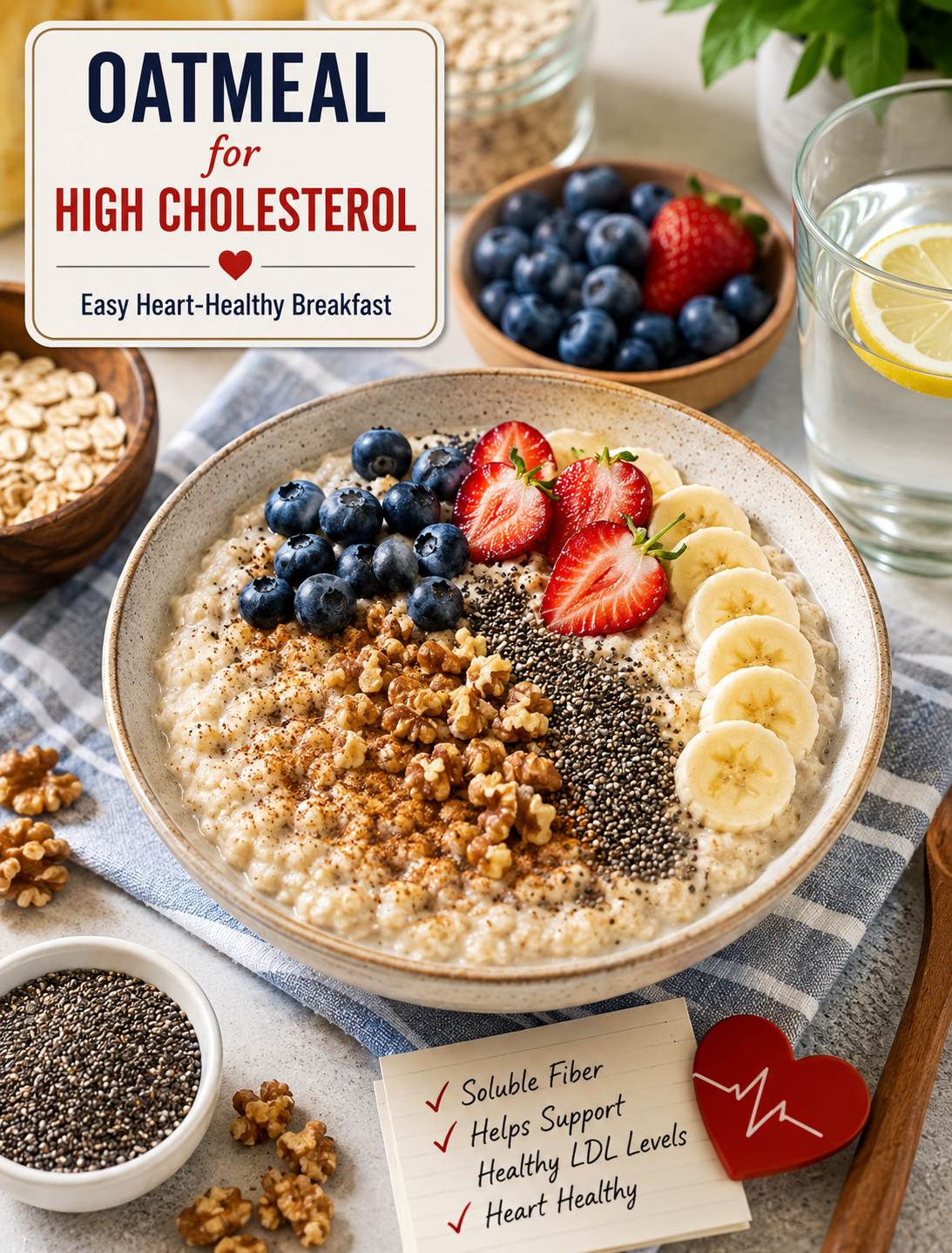

Oatmeal for high cholesterol

oatmeal for high cholesterol

Oatmeal for high cholesterol

Try This Easy Heart-Healthy Food

High cholesterol can be easy to overlook because it usually does not cause noticeable symptoms. Yet high levels of LDL cholesterol can increase the risk of heart disease and stroke over time. One simple way to improve your daily eating pattern is to choose more foods that provide soluble fiber, including oats.

Oatmeal is an affordable, filling, and versatile breakfast that can fit into a heart-conscious diet. The key ingredient is a type of soluble fiber called beta-glucan, which is naturally found in oats. Soluble fiber can help reduce the amount of cholesterol absorbed through the digestive tract.

That does not mean one bowl of oatmeal will fix high cholesterol. Your cholesterol level is influenced by your overall diet, activity level, genetics, age, and other health factors. Still, making oatmeal a regular part of a balanced eating pattern can be a practical step toward better heart health.

Why Oatmeal May Help With Cholesterol

The main reason oats stand out is their soluble fiber content. When soluble fiber mixes with water in the digestive tract, it forms a gel-like substance that can affect how cholesterol and bile acids are handled by the body.

NHLBI includes oats among the foods that can provide soluble fiber as part of its cholesterol-lowering eating approach. MedlinePlus also recommends soluble-fiber foods such as oatmeal and oat bran for people working to improve cholesterol through diet.

Oats also provide whole-grain carbohydrates, fiber, and several vitamins and minerals. A typical cup of cooked oatmeal contains about 4 grams of dietary fiber, although the exact amount varies by product and serving size.

For people concerned about LDL cholesterol, replacing less nutritious breakfast choices with plain oats can be a useful dietary change. The benefit comes from the overall food pattern rather than oatmeal acting as a medicine.

The Best Type of Oatmeal to Choose

Not all oatmeal products are equally useful for a heart-healthy breakfast. Plain rolled oats and steel-cut oats are simple choices because they contain the whole oat grain and can be prepared without large amounts of added sugar.

Old-fashioned rolled oats cook quickly and work well for everyday breakfasts. Steel-cut oats have a chewier texture and usually take longer to prepare. Both can provide soluble fiber.

Instant oats can also fit into a healthy diet. The important step is checking the Nutrition Facts label and choosing varieties with little or no added sugar and a reasonable amount of sodium.

Flavored oatmeal packets can contain added sugars that make an otherwise nutritious breakfast less balanced. If you enjoy flavored oats, compare labels and look for options with less added sugar.

Easy Heart-Healthy Oatmeal Recipe

You do not need a complicated recipe to make oatmeal more nutritious.

Ingredients

  • ½ cup dry rolled oats
  • 1 cup water or unsweetened milk
  • ½ cup fresh or frozen berries
  • 1 tablespoon chia seeds
  • 1 tablespoon chopped walnuts
  • Cinnamon for flavor
  • Optional: a small amount of sliced banana

Directions

  1. Add oats and liquid to a small saucepan.
  2. Cook according to the package directions until creamy.
  3. Transfer the oatmeal to a bowl.
  4. Add berries, chia seeds, walnuts, and cinnamon.
  5. Stir gently and serve warm.

This combination adds more fiber, plant foods, and unsaturated fats without requiring a large amount of added sugar.

Why Berries, Chia Seeds, and Walnuts Make a Good Topping

Oatmeal provides the base, but the toppings can determine whether your breakfast remains heart-conscious.

Berries add natural sweetness and fiber without requiring syrup or large amounts of added sugar. Fresh and frozen berries can both work well.

Chia seeds provide fiber and plant-based nutrients. They also add texture and can make oatmeal more filling.

Walnuts provide mostly unsaturated fats, which can be a better choice than toppings high in saturated fat. Nuts and seeds are included among foods that can fit into heart-healthy eating patterns.

If you want a creamier bowl, choose plain low-fat yogurt instead of heavy cream. Another option is unsweetened soy or almond milk fortified with calcium and vitamin D.

What to Avoid Adding to Oatmeal

A healthy bowl can become less heart-friendly when it is loaded with added sugar and saturated fat.

Try to limit large amounts of brown sugar, flavored syrups, sweetened creamers, candy pieces, and high-sugar granola.

You also do not need butter to make oatmeal taste good. Cinnamon, berries, banana, chopped nuts, vanilla, or unsweetened nut butter can provide plenty of flavor.

If you use peanut or almond butter, choose a product with minimal added sugar and no partially hydrogenated oils.

The goal is not to make breakfast completely fat-free. Instead, choose more unsaturated fats and limit saturated fat as part of an overall heart-healthy eating pattern. The American Heart Association’s 2026 dietary guidance emphasizes whole grains, vegetables, fruits, healthy protein sources, unsaturated fats, and minimally processed foods.

How Much Oatmeal Should You Eat?

A practical starting point is about ½ cup of dry oats, which produces roughly one serving after cooking. Your ideal portion depends on your calorie needs and the rest of your breakfast.

Eating more oatmeal is not automatically better. A balanced meal can include oats along with fruit, seeds, nuts, or another nutritious protein source.

If you are increasing fiber quickly, start gradually and drink enough fluids. A sudden increase in fiber can cause gas, bloating, or abdominal discomfort in some people.

Oatmeal Is Part of a Bigger Cholesterol Strategy

Eating oatmeal can support a healthier diet, but it should not be your only strategy for managing LDL cholesterol.

NHLBI recommends reducing saturated fat while increasing soluble fiber and choosing foods such as whole grains, fruits, vegetables, beans, nuts, and seeds.

Regular physical activity can also support cardiovascular health. Maintaining a healthy weight, avoiding tobacco, and following your healthcare professional’s treatment plan are important parts of managing heart disease risk.

If you have been diagnosed with high cholesterol, continue taking prescribed medication unless your healthcare professional tells you otherwise. Food choices can complement treatment but should not replace medical care.

Can Oatmeal Lower LDL Cholesterol?

Research and clinical guidance support the role of oat-based soluble fiber in helping maintain healthier cholesterol levels. The FDA has an authorized health claim connecting soluble fiber from certain whole-oat foods with reduced coronary heart disease risk when specific conditions are met.

The effect depends on the amount and overall dietary pattern. Eating a small serving occasionally is unlikely to produce the same benefit as consistently choosing fiber-rich foods as part of a balanced diet.

This is why the most useful approach is to make oats one regular part of your weekly meal plan.

A Simple Breakfast Upgrade Worth Trying

If your usual breakfast is sugary cereal, pastries, or a highly processed breakfast bar, switching to plain oatmeal can be a simple improvement.

Start with rolled or steel-cut oats and add fruit for natural sweetness. Then add chia seeds or walnuts for extra texture and nutrients.

This breakfast is inexpensive, easy to customize, and suitable for busy mornings. It can also be prepared the night before as overnight oats if you prefer a cold breakfast.

Most importantly, keep the bigger picture in mind. A heart-healthy diet is built from many small choices rather than one miracle food.

Oatmeal can provide soluble fiber, but your overall eating pattern matters more than any single ingredient. Pairing oats with fruits, vegetables, legumes, nuts, seeds, whole grains, and healthier fats creates a stronger foundation for cardiovascular health.

Frequently Asked Questions

Is oatmeal good for high cholesterol?

Yes. Oatmeal provides soluble fiber, including beta-glucan, which can support healthier LDL cholesterol levels when included in a balanced diet.

What type of oatmeal is best for cholesterol?

Plain rolled oats, steel-cut oats, and unsweetened oat products are good choices because they provide soluble fiber without requiring added sugar.

How does oatmeal help lower LDL cholesterol?

The soluble fiber in oats can reduce cholesterol absorption in the digestive tract and support healthier blood cholesterol levels.

Can I eat oatmeal every day?

Yes, oatmeal can be eaten regularly as part of a varied diet that includes other whole grains, fruits, vegetables, legumes, nuts, and seeds.

Are instant oats good for cholesterol?

Plain instant oats can fit a heart-healthy diet, but check the label for added sugar and sodium before choosing flavored varieties.

What should I add to oatmeal for heart health?

Try berries, chia seeds, walnuts, sliced fruit, cinnamon, or unsweetened nut butter instead of large amounts of sugar or syrup.

Is oatmeal better than sugary cereal?

Plain oatmeal is often a better choice because it can provide more soluble fiber and allows you to control added sugar and toppings.

Can oatmeal replace cholesterol medicine?

No. Oatmeal can support a heart-healthy diet but should not replace cholesterol medication prescribed by your healthcare professional.

How much soluble fiber should I get?

MedlinePlus recommends about 10 to 25 grams of soluble fiber daily for people trying to lower cholesterol through diet, with foods such as oats, beans, and fruit contributing to that total.

Can oatmeal cause bloating?

Increasing fiber too quickly can cause gas or bloating, so gradually increase high-fiber foods and drink enough fluids.

Is oatmeal good for heart health?

Oatmeal can support heart health because it provides whole-grain nutrients and soluble fiber that can help improve blood cholesterol levels.

Can I add honey to oatmeal?

You can use a small amount, but berries or sliced fruit can add sweetness while keeping added sugar lower.

Lemon-Ginger Morning Drink for a Heavy Stomach

Warm lemon-ginger morning drink with fresh lemon slices and ginger for a simple healthy morning routine

Lemon-Ginger Morning Drink for a Heavy Stomach

Sometimes you wake up feeling like your stomach needs a fresh start. You may feel full, sluggish, mildly bloated, or simply uncomfortable after a late dinner or a heavy meal. Before reaching for a complicated supplement or an expensive wellness drink, try something much simpler: warm water with fresh ginger and lemon.

This easy lemon-ginger morning drink combines three basic ingredients: water, fresh ginger, and lemon juice. It is quick to prepare, naturally refreshing, and easy to fit into a daily routine.

Ginger has a long history of use for digestive discomfort, and research has found that it may help with certain types of nausea. Lemon adds fresh flavor and vitamin C while making plain water easier for some people to enjoy.

This drink is not a medical treatment or a “detox” cure. Instead, think of it as a simple morning habit that can support hydration and add ginger and lemon to your diet.

Why Your Stomach May Feel Heavy in the Morning

A heavy stomach can happen for many everyday reasons. Eating a large dinner, eating close to bedtime, drinking alcohol, or choosing rich and fatty foods may leave you feeling uncomfortable the next morning.

Eating quickly can also make you swallow more air, which may contribute to gas and bloating. Constipation is another common reason for abdominal fullness.

Your morning routine can influence how you feel, too. After several hours of sleep without fluids, drinking water can help you begin replacing the fluid your body needs. Water remains the main source of hydration, whether you drink it plain or add lemon for flavor.

If stomach heaviness happens often, becomes painful, or comes with vomiting, unexplained weight loss, blood in the stool, or difficulty swallowing, do not rely on a home drink. Talk with a healthcare professional about persistent or concerning symptoms.

How to Make a Lemon-Ginger Morning Drink

You only need a few ingredients to make this simple morning drink.

Ingredients

  • 1 cup warm or room-temperature water
  • 3 to 5 thin slices of fresh ginger
  • 1 to 2 teaspoons fresh lemon juice
  • Optional: 1 teaspoon honey for taste

Directions

  1. Add the ginger slices to a cup of warm water.
  2. Let the ginger steep for 5 to 10 minutes.
  3. Remove the ginger slices if you prefer a milder drink.
  4. Add fresh lemon juice and stir.
  5. Let the drink cool to a comfortable temperature before drinking.

You do not need boiling-hot water. Warm or room-temperature water works well and may make the drink easier to enjoy.

For a stronger ginger flavor, use a few extra slices or allow the ginger to steep longer. Start with a small amount if you are not used to ginger.

How This Morning Drink May Help

The main benefit of this drink is that it gives you an easy way to drink water at the beginning of your day. Adding lemon can make water more appealing, which may help some people drink more fluids.

Ginger is the ingredient with the most relevant research behind it. Studies have examined ginger for several types of nausea and vomiting, although much of the research has used ginger supplements rather than a homemade beverage.

Lemon provides vitamin C and adds a bright flavor without needing a sugary drink. Fresh lemon juice is also low in calories when used in small amounts.

The combination can therefore be a practical alternative to sweetened morning beverages. It gives you water, fresh flavor, and small amounts of nutrients from lemon without turning the drink into a high-sugar beverage.

Best Time to Drink It

There is no special hour when lemon-ginger water suddenly becomes more effective. Morning is simply a convenient time because it can become part of an established routine.

Try drinking it after waking up or alongside your normal breakfast. If drinking acidic beverages on an empty stomach causes discomfort, have it with food instead.

You also do not need to drink it every day. Your overall eating pattern, hydration, sleep, physical activity, and medical care matter much more than one morning beverage.

If you enjoy the taste and it helps you choose water instead of a sugary drink, it can be a useful habit.

Tips to Make It Taste Better

Fresh ginger has a naturally spicy flavor, while lemon adds acidity. If the combination tastes too strong, dilute it with additional water.

You can also add a few fresh mint leaves for a cooler flavor. A small amount of honey can soften the sharp taste, but keeping added sweeteners low is a better choice if you are trying to reduce sugar.

For a chilled version, prepare the drink ahead of time, refrigerate it, and serve it over ice. You can also add cucumber slices for extra freshness.

Avoid turning the drink into a sugary lemonade. The goal is to keep the recipe simple and lightly flavored.

What This Drink Cannot Do

A lemon-ginger drink cannot “flush toxins” from your body or melt belly fat overnight. Your liver and kidneys already perform the body’s major waste-processing functions.

It also cannot cure constipation, acid reflux, ulcers, food intolerance, or other digestive conditions.

Ginger may help some forms of nausea, but research does not support treating every digestive complaint with ginger. Evidence also varies depending on the condition and the form of ginger used.

That is why it is better to view this recipe as a healthy beverage option rather than a miracle remedy.

When to Be Careful With Lemon and Ginger

Although both ingredients are common foods, they may not suit everyone.

Ginger can cause side effects such as abdominal discomfort, heartburn, diarrhea, or mouth and throat irritation in some people.

Lemon juice is acidic and may worsen heartburn, acid reflux, or stomach irritation in sensitive people.

If you take medications, especially medicines that may interact with herbal products, ask your healthcare professional before using large amounts of ginger or ginger supplements. Food amounts are different from concentrated supplements.

If lemon water is part of your regular routine, remember that frequent exposure to acidic drinks can affect tooth enamel. Diluting the lemon juice and rinsing your mouth with plain water afterward can help reduce acid exposure.

Simple Ways to Support Better Digestion

A morning drink is only one small part of digestive health.

Eat meals at a comfortable pace and chew food thoroughly. Choose fiber-rich foods such as vegetables, fruits, beans, whole grains, nuts, and seeds as part of a balanced diet.

Regular movement can also support normal bowel function. A short walk after meals may be an easy habit to add to your day.

Pay attention to foods that repeatedly make you feel uncomfortable. Keeping a simple food and symptom journal can help you identify patterns to discuss with a healthcare professional.

Most importantly, do not ignore symptoms that keep returning. Frequent abdominal pain, persistent bloating, ongoing heartburn, or major changes in bowel habits deserve proper evaluation.

A Simple Morning Habit Worth Trying

If your stomach occasionally feels heavy in the morning, this warm lemon-ginger drink is an easy option to try. It takes only a few minutes to prepare and uses ingredients that are easy to find at most U.S. grocery stores.

The biggest advantage may be its simplicity. You are starting your day with water instead of a sugary beverage while adding fresh ginger and lemon to your routine.

Just keep expectations realistic. This drink is not a cure or detox treatment. It is a refreshing beverage that can support hydration and provide small nutritional benefits while ginger may be useful for certain types of nausea.

If you enjoy it, make it part of a bigger healthy routine that includes balanced meals, regular movement, enough fluids, and good sleep.

Frequently Asked Questions

Can I drink lemon-ginger water every morning?

Yes, if it agrees with you and you use normal food amounts, but you do not need it daily to maintain good health.

Is lemon-ginger water good for digestion?

It may be a refreshing hydration choice, while ginger has been studied for certain types of nausea; evidence does not support it as a cure for digestive disorders.

Can this drink reduce bloating?

It may feel soothing for some people, but there is not enough evidence to claim that a homemade lemon-ginger drink reliably eliminates bloating.

Should I drink it on an empty stomach?

You can, but eating something first may be more comfortable if lemon or ginger causes stomach irritation or heartburn.

Can I use ground ginger instead of fresh ginger?

Yes, but start with a small amount because ground ginger has a stronger, more concentrated flavor.

Can I add honey?

Yes, a small amount can improve the taste, but honey still counts as added sugar.

Is warm water better than cold water?

There is no strong reason to believe warm water provides special digestive benefits; choose the temperature that feels comfortable to you.

How much lemon should I use?

Start with 1 to 2 teaspoons of fresh lemon juice per cup of water and adjust the flavor to your preference.

Can I drink it if I have acid reflux?

Lemon may worsen reflux symptoms in some people, so avoid it if acidic drinks consistently trigger your symptoms.

Is this drink a detox?

No. The body already has organs that process and remove waste, so lemon-ginger water should not be promoted as a detox treatment.

Does ginger help with nausea?

Research suggests ginger may help with some forms of nausea, although results vary by condition and many studies have used supplements rather than beverages.

When should I see a doctor about stomach heaviness?

Seek medical advice if symptoms are persistent, severe, worsening, or accompanied by warning signs such as vomiting, bleeding, unexplained weight loss, or trouble swallowing.

Shocking Benefits of Baking Soda

The Shocking Benefits of Baking Soda: A Simple Morning Drink

Baking soda is one of those inexpensive kitchen staples that seems to have endless uses. It is commonly used in baking, cleaning, and household care, but some people also mix a small amount with water as a homemade drink.This simple Baking Soda Water recipe takes less than a minute to prepare and uses just two ingredients. Baking soda, also known as sodium bicarbonate, is an alkaline compound that can temporarily neutralize stomach acid. Because of this, it has traditionally been used as an occasional home remedy for heartburn and indigestion.However, more is not better. Baking soda contains a significant amount of sodium, and drinking too much can be harmful. This recipe is therefore designed around a small amount for occasional use, not as a daily detox or cure-all drink.

Why I Love This Recipe

I love this recipe because it is incredibly simple. There is no blender, cooking, or special equipment required.

With just water and a small amount of baking soda, you can prepare it almost instantly.

It is also inexpensive and uses an ingredient that many people already have in their kitchen.

Most importantly, this recipe highlights an important point about homemade wellness drinks: simple doesn’t always mean you should consume more of it. Baking soda can have useful properties, but because it is high in sodium, it should be used thoughtfully.

Ingredients For Shocking Benefits of Baking Soda

½ teaspoon baking soda

8–12 ounces water

Lemon slice, optional for flavor

Important Ingredient Note

Use food-grade baking soda (sodium bicarbonate) intended for culinary use.

Do not substitute baking powder. Baking powder contains additional ingredients and is not the same product.

Instructions For Shocking Benefits of Baking Soda

Add the Water

Pour 8–12 ounces of room-temperature or cool water into a glass.

Add Baking Soda

Add ½ teaspoon or less of baking soda to the water.

For anyone trying baking soda water for the first time, using a smaller amount is a sensible approach.

Stir Well

Stir thoroughly until the baking soda dissolves.

You may notice slight bubbling if you add lemon juice. This happens because baking soda reacts with acidic ingredients.

Taste

Take a small sip. Baking soda water can have a distinctly salty or alkaline taste.

If you find the flavor unpleasant, there is no need to force yourself to drink it.

Serve

Drink it slowly rather than consuming a large quantity quickly.

Because baking soda is high in sodium, this should not be treated like ordinary drinking water.

Tips for Making Baking Soda Water

Measure carefully: Don’t estimate large amounts by eye. Baking soda is concentrated, so using too much can cause problems.

Use plain baking soda: Make sure the ingredient is food-grade sodium bicarbonate.

Room-temperature or cool water works perfectly.Don’t use hot water

Don’t make it overly concentrated: Increasing the amount does not automatically increase the benefits.

Don’t use it as your main source of hydration: Plain water remains the better everyday choice for hydration.

Skip the lemon if you want: Lemon can improve the flavor, but it also reacts chemically with baking soda.

Don’t use it as a daily detox: Your body already has organs, including the liver and kidneys, that handle normal waste removal.

Potential Benefits of Baking Soda

Baking soda has a few legitimate uses, but internet claims often go far beyond the evidence.

May Temporarily Relieve Heartburn

Sodium bicarbonate can neutralize stomach acid. This is why it has historically been used as an antacid.

However, frequent heartburn should not simply be treated with baking soda at home. Recurring symptoms may need proper evaluation.

May Help Neutralize Acidity

The alkaline nature of sodium bicarbonate allows it to react with acids. This property is useful in cooking and has medical applications under appropriate supervision.

May Have Sports-Performance Applications

Sodium bicarbonate has been studied in sports nutrition, particularly for high-intensity exercise. However, research protocols often use carefully calculated doses, and these are not equivalent to casually drinking baking soda water.

An Inexpensive Household Ingredient

One of the most “shocking” things about baking soda is how versatile and inexpensive it is. The same basic ingredient can be useful in cooking and a variety of household applications.

Important Reality Check

Baking soda does not magically detox the body, melt body fat, cure chronic disease, or permanently change your body’s overall pH.

Your body tightly regulates blood pH. Drinking alkaline substances does not simply make your entire body alkaline.

Serving Suggestions For Shocking Benefits of Baking Soda

Baking soda water has a strong flavor, so there aren’t many culinary serving options. If you’re using it occasionally as an antacid-type home remedy, plain water is the simplest preparation.

For a more pleasant drink, you can add a little lemon, but remember that lemon reacts with baking soda and produces carbon dioxide.

You can also simply use baking soda in normal cooking and baking, where it is an established culinary ingredient.

Nutrition Facts For Shocking Benefits of Baking Soda

Approximate nutrition for ½ teaspoon baking soda mixed with water:

Calories: 0

Carbohydrates: 0 g

Protein: 0 g

Fat: 0 g

Sugar: 0 g

Fiber: 0 g

Sodium: Approximately 630 mg

The sodium content is the main nutritional consideration.

Because the sodium amount is substantial compared with the amount of baking soda used, this drink is not appropriate as an everyday beverage for everyone.

Frequently Asked Questions

Can I drink baking soda water every morning?

It is not recommended to make baking soda water a routine daily drink without discussing it with a healthcare professional. Baking soda contains a considerable amount of sodium, and excessive intake can cause dangerous electrolyte and acid-base disturbances.

Does baking soda water detox the body?

No. There is no good evidence that drinking baking soda water “detoxes” the body. Your liver, kidneys, lungs, and other physiological systems already perform waste removal and pH regulation.

Can baking soda help heartburn?

Sodium bicarbonate can neutralize stomach acid and may provide temporary relief from occasional heartburn. However, it should not be relied upon for frequent or persistent symptoms.

Can I drink baking soda with lemon?

You can, but the two ingredients react. The acid in lemon juice reacts with sodium bicarbonate, producing carbon dioxide, water, and sodium citrate. This causes fizzing and changes the mixture’s composition.

Is baking soda the same as baking powder?

No. Baking soda is sodium bicarbonate. Baking powder contains sodium bicarbonate plus acidic ingredients and other components. They are not interchangeable for this drink.

Can baking soda help with weight loss?

There is no reliable evidence that drinking baking soda directly causes meaningful fat loss. It should not be used as a weight-loss drink.

Who should avoid baking soda drinks?

People who need to limit sodium, including some people with high blood pressure, heart disease, kidney disease, or other medical conditions, should speak with a healthcare professional before consuming baking soda for this purpose.

It may also interact with certain medications or affect how some medicines are absorbed.

What happens if I drink too much baking soda?

Excessive baking soda can cause nausea, vomiting, diarrhea, abdominal problems, high sodium levels, electrolyte disturbances, and metabolic alkalosis. Very large amounts can be dangerous.

If someone has consumed a large quantity and develops concerning symptoms, seek urgent medical advice or contact a poison-control service where available.

Final Thoughts For Shocking Benefits of Baking Soda

Baking soda is genuinely a fascinating kitchen ingredient, but its benefits are often exaggerated online.Its ability to neutralize acids is real, which explains its traditional use as an occasional antacid and its many culinary applications. However, that does not make baking soda water a miracle detox drink or a replacement for medical treatment.If you choose to use this recipe, keep the quantity small and occasional, and remember that plain water is the better choice for everyday hydration.For heartburn that happens frequently, unexplained digestive symptoms, or any medical condition requiring a low-sodium diet, talk with a healthcare professional rather than relying on baking soda water.Sometimes the most important wellness tip is not adding another “miracle” ingredient to your routine — it’s knowing when a simple home remedy has limits.

I Put Baking Soda on My Feet Before Bed

I Put Baking Soda on My Feet Before Bed: A Simple Soothing Foot Soak

After a long day, your feet deserve a little extra care. A warm baking soda foot soak is an easy, inexpensive home ritual that can help you relax before bedtime while leaving your feet feeling clean and refreshed. With just a few basic ingredients and about 15–20 minutes, you can turn an ordinary evening into a calming self-care routine.This baking soda foot soak combines warm water with baking soda to create a simple soak for tired feet. While it isn’t a medical treatment or a “detox,” soaking your feet can be relaxing, and baking soda can help gently cleanse and soften the skin.

Why You’ll Love This Recipe

There are plenty of reasons to make this simple bedtime foot soak part of your routine:

Uses inexpensive ingredients

Takes only a few minutes to prepare

Creates a relaxing bedtime ritual

Helps cleanse the feet

Can leave rough skin feeling softer

Requires no complicated equipment

Easy to customize with a gentle moisturizer afterward

Perfect after a long day of standing or walking

The best part is that you probably already have the main ingredient in your kitchen.

Ingredients For baking soda foot soak 

For the Baking Soda Foot Soak

4 cups comfortably warm water

2 tablespoons baking soda

1 tablespoon plain Epsom salt, optional

1 teaspoon gentle liquid soap, optional

Clean towel

Foot basin or large bowl

After the Soak

Fragrance-free moisturizer or foot cream

Clean cotton socks, optional

Instructions For baking soda foot soak 

Prepare the Basin

Choose a clean foot basin or large bowl that gives your feet enough room to sit comfortably. Wash and rinse the container before use.

Add Warm Water

Pour about 4 cups of comfortably warm water into the basin. Test the temperature with your hand before putting your feet in.

Add Baking Soda

Add 2 tablespoons of baking soda to the water. Stir until it is mostly dissolved.

If you want, you can add a small amount of gentle liquid soap for cleansing. Epsom salt is also optional, although it isn’t necessary for the basic recipe.

Soak Your Feet

Place your clean feet into the mixture and soak for approximately 15–20 minutes.

Use this time to relax, read, listen to something calming, or simply sit quietly before bed.

Rinse

After soaking, rinse your feet with clean lukewarm water if your skin feels powdery or slippery.

Dry Thoroughly

Pat your feet dry with a clean towel. Pay special attention to the skin between your toes, where trapped moisture can cause problems.

Moisturize

Apply a fragrance-free moisturizer or foot cream to the tops, bottoms, and heels of your feet. Avoid applying thick moisturizer between the toes.

For especially dry heels, you can put on clean cotton socks afterward to help keep the moisturizer against the skin.

Tips for the Best Baking Soda Foot Soak

Keep the water comfortably warm. Hot water isn’t better and may leave your skin dry or irritated.

Don’t overdo the baking soda. More isn’t necessarily better. A couple of tablespoons in a small basin is sufficient for this simple soak.

Keep the soak short. About 15–20 minutes is plenty. Very long soaks can contribute to dry skin.

Moisturize afterward. Baking soda and repeated soaking may dry some people’s skin, so moisturizing after the soak is helpful.

Clean your basin. Wash and dry the container after every use to keep it hygienic.

Don’t scrub aggressively. If you have rough heels, gently use a washcloth or foot file after soaking. Avoid harsh scraping.

Potential Benefits For baking soda foot soak 

A warm foot soak can be a pleasant way to unwind at the end of the day. The warmth and quiet routine may help you feel more relaxed and comfortable.

Baking soda also has mild cleansing properties and may help remove sweat, dirt, and surface residue from the feet.

The soak can temporarily make dry, thickened skin feel softer, which may make gentle moisturizing easier.

However, it’s important to keep expectations realistic. A baking soda foot soak does not remove toxins from your body, burn fat, cure infections, or treat underlying medical conditions. Your liver and kidneys handle the body’s normal waste-removal processes.

If you have persistent foot odor, itching, peeling, cracking, pain, swelling, or changes in your toenails, a foot soak shouldn’t replace professional medical advice.

Serving Suggestions For baking soda foot soak 

Since this is a self-care recipe rather than food, there isn’t a traditional serving suggestion. For a relaxing bedtime routine, try pairing your foot soak with:

A glass of water

A calming book

Gentle stretching

A relaxing skincare routine

Clean cotton pajamas

A quiet, screen-free few minutes before bed

You can also make it part of a weekly at-home foot-care routine rather than using it every night.

Nutrition Facts For baking soda foot soak 

Estimated nutrition per foot soak:

Calories: 0

Protein: 0 g

Carbohydrates: 0 g

Fat: 0 g

Sugar: 0 g

Frequently Asked Questions

Can I use baking soda on my feet every night?

It’s better not to assume that daily use is necessary. Frequent soaking or baking soda exposure may dry or irritate some people’s skin. Start with occasional use and stop if your skin becomes dry, red, itchy, or uncomfortable.

Does baking soda remove foot odor?

It may help cleanse the feet and reduce some surface odors temporarily, but persistent odor can have several causes. Keeping feet dry, changing socks regularly, and wearing breathable footwear are also important.

Can baking soda cure athlete’s foot?

No. Baking soda shouldn’t be considered a treatment for athlete’s foot or other fungal infections. Persistent itching, peeling, burning, or cracking should be evaluated by a healthcare professional.

Can I use this for cracked heels?

A warm soak may temporarily soften rough skin, but it doesn’t cure severely cracked heels. Moisturizing regularly is important. Avoid aggressive filing or scrubbing, especially if cracks are deep or painful.

Can I add essential oils?

You can, but they’re not necessary. Essential oils can irritate or trigger allergic reactions in some people, particularly on sensitive or damaged skin. The simplest version with warm water and baking soda is perfectly adequate.

Is baking soda safe for everyone?

Not necessarily. People with sensitive or damaged skin may experience irritation. If you have diabetes, poor circulation, reduced sensation in your feet, open wounds, or another foot condition, it’s best to ask your healthcare professional before using foot soaks.

Should I rinse my feet afterward?

If your skin feels coated or irritated after the soak, rinse with clean lukewarm water. Always dry thoroughly, especially between your toes.

Final Thoughts For baking soda foot soak 

A baking soda foot soak before bed is a simple, budget-friendly way to turn ordinary foot care into a relaxing evening ritual. Warm water can feel comforting after a busy day, while baking soda provides gentle cleansing and can leave your feet feeling refreshed.Just remember that this is a self-care recipe, not a detox treatment or cure for medical conditions. Keep the water comfortably warm, limit the soaking time, moisturize afterward, and pay attention to how your skin responds.Sometimes the simplest routines are the easiest to maintain—and this one takes only a few minutes to prepare. So if your feet feel tired after a long day, set aside 15–20 minutes, make this easy baking soda foot soak, and enjoy a peaceful moment before bedtime.

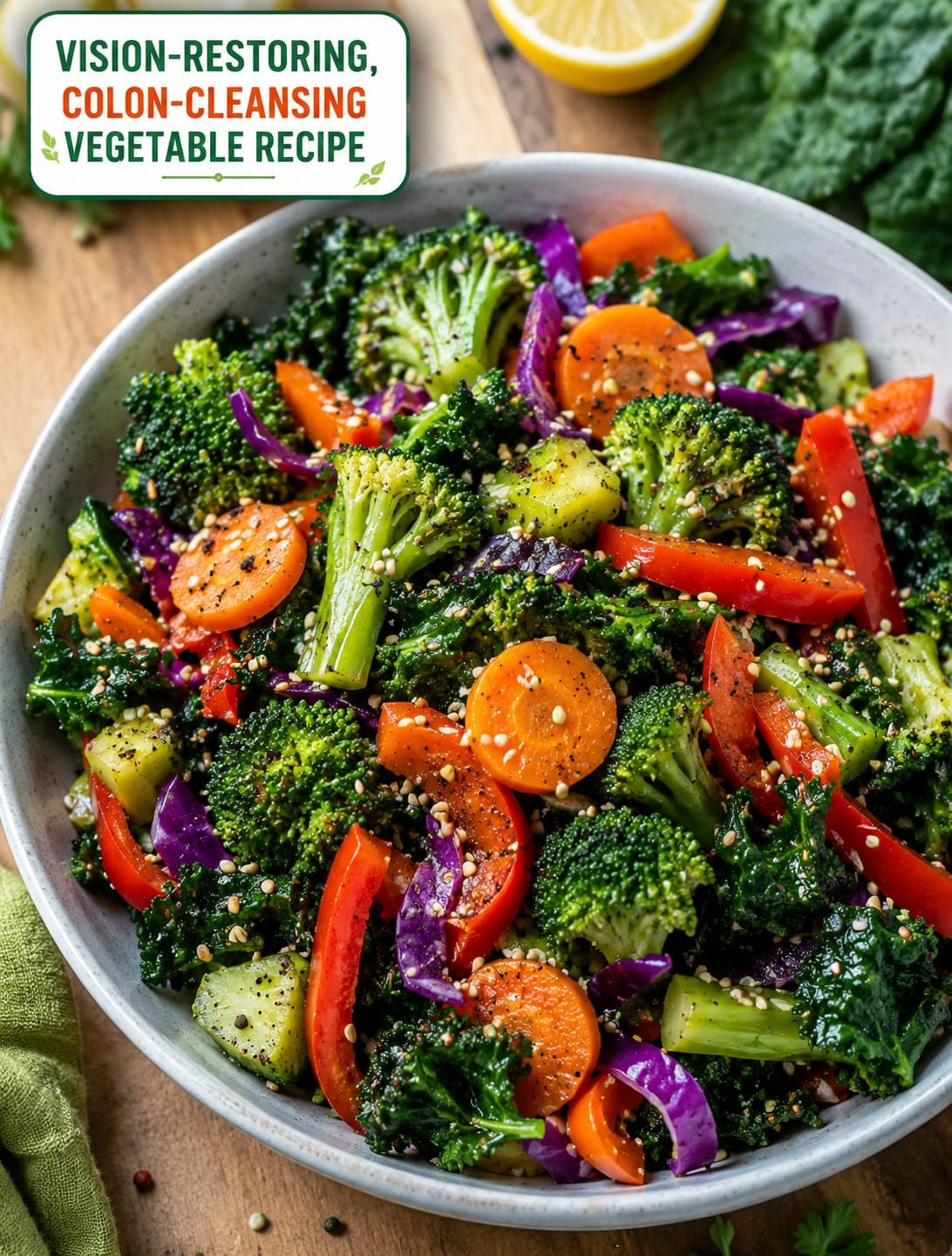
Nutrient-Packed Vegetable Recipe for Eye

The Nutrient-Packed Vegetable Recipe for Eye, Liver & Digestive Health

This Nutrient-Packed Vegetable Recipe is a colorful, flavorful option made with fresh vegetables and nourishing ingredients. It’s an easy dish to enjoy as a light meal or healthy side.What makes this Nutrient-Packed Vegetable Recipe so appealing is its combination of colorful vegetables, fiber, vitamins, minerals, and plant-based goodness. Every bite brings delicious flavor along with ingredients that fit beautifully into a balanced eating routine.This Nutrient-Packed Vegetable Recipe is also a great choice when you want to include more vegetables in your diet without making complicated meals. It can be prepared with simple pantry staples and customized with your favorite herbs and seasonings.Whether you’re looking for a wholesome lunch, a light dinner, or an easy vegetable side, this Nutrient-Packed Vegetable Recipe is a delicious addition to your weekly menu. It’s simple, satisfying, and packed with natural vegetable goodness.

Why You’ll Love This Recipe

Full of Colorful Vegetables

This recipe combines carrots, broccoli, spinach, bell peppers, and onion for a colorful and nutritious meal.

Great Source of Fiber

The vegetables provide dietary fiber, which supports normal digestion and bowel regularity.

Eye-Friendly Nutrients

Carrots provide beta-carotene, while spinach contains lutein and zeaxanthin. These nutrients are associated with maintaining normal eye health.

Simple and Delicious

The vegetables are roasted with olive oil, garlic, herbs, and lemon, creating a flavorful dish without complicated ingredients.

Easy to Customize

You can substitute vegetables depending on what you have in your refrigerator.

Meal-Prep Friendly

Prepare a large batch and use it throughout the week as a side dish, salad topping, or bowl ingredient.

Ingredients For Nutrient-Packed Roasted Vegetable Bowl

For the Vegetables

3 medium carrots, peeled and sliced

2 cups broccoli florets

red bell pepper, sliced

1 small red onion, sliced

fresh spinach 2 cups

extra-virgin olive oil 2 tablespoons

3 cloves garlic, minced

paprika ½ teaspoon

dried oregano ½ teaspoon

ground black pepper ¼ teaspoon

salt ¼ teaspoon

½ teaspoon ground cumin

For the Lemon Dressing

2 tablespoons fresh lemon juice

1 tablespoon extra-virgin olive oil

Dijon mustard 1 teaspoon

1 small garlic clove, minced

chopped fresh parsley 1 tablespoon

Pinch of black pepper

Optional Toppings

2 tablespoons pumpkin seeds

chopped walnuts 2 tablespoons

Fresh parsley

Crumbled feta cheese

Sliced avocado

Red pepper flakes

Instructions For Nutrient-Packed Roasted Vegetable Bowl

Prepare the Vegetables

Preheat your oven to 425°F (220°C).

Wash and dry all the vegetables thoroughly.

Peel the carrots and cut them into thin rounds or small pieces. Cut the broccoli into bite-sized florets. Slice the bell pepper and red onion.

Try to cut the vegetables into relatively similar sizes so they cook evenly.

Season the Vegetables

Add the carrots, broccoli, bell pepper, and red onion to a large mixing bowl.

Drizzle with olive oil.

Add minced garlic, paprika, oregano, cumin, salt, and black pepper.

Toss everything thoroughly until the vegetables are evenly coated.

Arrange on a Baking Sheet

Spread the vegetables across a large baking sheet.

Keep them in a relatively even layer and avoid overcrowding.

If the vegetables are packed too closely together, they may release moisture and steam rather than roast.

Roast

Place the baking sheet in the preheated oven.

Roast for 20–25 minutes, stirring or flipping the vegetables halfway through cooking.

The vegetables should become tender with lightly browned, caramelized edges.

 Add the Spinach

Remove the baking sheet from the oven.

Add the fresh spinach and gently toss it with the hot vegetables.

Return the tray to the oven for approximately 2–3 minutes, just until the spinach wilts.

You can also simply toss the spinach with the hot vegetables and allow residual heat to wilt it.

Make the Lemon Dressing

While the vegetables are roasting, combine lemon juice, olive oil, Dijon mustard, garlic, parsley, and black pepper in a small bowl.

Whisk until smooth.

Taste and adjust the seasoning according to your preference.

Combine and Serve

Transfer the roasted vegetables to a serving bowl.

Drizzle the lemon dressing over the top.

Gently toss to combine.

Sprinkle with pumpkin seeds, walnuts, parsley, feta, or another topping if desired.

Serve warm.

Tips for the Best Results

Dry Your Vegetables

After washing, dry the vegetables thoroughly. Excess water can interfere with browning.

Don’t Overcrowd the Pan

Use two baking sheets if necessary. Giving the vegetables enough room helps them roast rather than steam.

Cut Carrots Smaller

Carrots can take longer to become tender than peppers and spinach. Cutting them into smaller pieces helps everything finish at approximately the same time.

Add Spinach at the End

Spinach needs very little cooking. Adding it near the end helps preserve its texture and fresh flavor.

Use Fresh Lemon

Fresh lemon juice adds brightness and balances the sweetness of the roasted carrots.

Add Protein

For a complete meal, add grilled chicken, salmon, chickpeas, lentils, eggs, tofu, or beans.

Benefits For Nutrient-Packed Roasted Vegetable Bowl

This recipe provides a variety of vegetables, which means you get a broad range of nutrients rather than relying on one “miracle” food.

Carrots and sweet-colored vegetables provide beta-carotene, a carotenoid that the body can convert into vitamin A. Vitamin A plays an important role in normal vision.

Spinach provides lutein and zeaxanthin, carotenoids found in the retina that are associated with eye health.

Broccoli and bell peppers provide vitamin C, while the combination of vegetables supplies dietary fiber.

Fiber helps support normal bowel function and can contribute to digestive health when consumed regularly as part of a balanced diet.

The olive oil provides predominantly unsaturated fat and makes the roasted vegetables more satisfying.

It is important to remember that these benefits are part of an overall healthy eating pattern. No single food can restore damaged eyesight, remove fat from the liver, or physically cleanse the colon.

Serving Suggestions For Nutrient-Packed Roasted Vegetable Bowl

With Grilled Chicken

Serve the roasted vegetables alongside grilled chicken breast for a protein-rich dinner.

With Salmon

Pair them with baked or air-fried salmon for a flavorful, nutrient-rich meal.

With Chickpeas

Add roasted chickpeas to turn the vegetable bowl into a satisfying vegetarian meal.

Over Quinoa

Spoon the vegetables over cooked quinoa and finish with lemon dressing.

With Avocado

Add sliced avocado for creaminess and additional healthy fats.

With Greek Yogurt Sauce

Serve with a garlic-lemon Greek yogurt sauce for a creamy contrast.

As a Salad

Allow the roasted vegetables to cool slightly and serve over mixed greens with the lemon dressing.

Nutrition Facts For Nutrient-Packed Roasted Vegetable Bowl

Approximate nutrition per serving, without optional toppings:

Calories: 220

Protein: 5 g

Carbohydrates: 20 g

Fat: 14 g

Saturated Fat: 2 g

Fiber: 7 g

Sugar: 9 g

Sodium: 230 mg

Vitamin C: High

Vitamin A: High

Nutrition information is an estimate and can vary according to the exact vegetables and quantities used.

Frequently Asked Questions

Can this vegetable recipe restore eyesight?

No food can reliably restore damaged or lost vision. However, vegetables such as carrots and leafy greens contain nutrients associated with normal eye health. If you experience blurred vision, vision loss, flashes, or other persistent changes, seek evaluation from an eye-care professional.

Does this recipe clean the colon?

The colon does not need a special vegetable “cleanse.” Your digestive system naturally removes waste. Eating enough fiber from vegetables, fruits, legumes, and whole grains can support normal bowel regularity.

Can vegetables remove fat from the liver?

No single vegetable removes liver fat. Improving liver health generally involves an overall healthy eating pattern, physical activity, weight management when appropriate, and addressing any underlying medical conditions with a healthcare professional.

Can I make this recipe in an air fryer?

Yes. Place the carrots, broccoli, peppers, and onion in the air fryer and cook at approximately 375°F (190°C) for 12–18 minutes, shaking halfway through. Add the spinach during the final 1–2 minutes.

Can I use frozen vegetables?

Yes. Frozen broccoli and other vegetables can be used, although they may release more moisture. Avoid overcrowding the air fryer or baking tray.

Can I make this recipe vegan?

Yes. The recipe is vegan as written. Simply avoid adding optional feta cheese.

How long do leftovers last?

Store leftovers in an airtight container in the refrigerator for approximately 3–4 days.

Can I freeze the roasted vegetables?

You can freeze them, although the vegetables may become softer after thawing. For the best texture, prepare them fresh or refrigerate leftovers.

What other vegetables can I add?

Zucchini, cauliflower, Brussels sprouts, mushrooms, asparagus, cabbage, and green beans are all good options.

Final Thoughts For Nutrient-Packed Roasted Vegetable Bowl

This Nutrient-Packed Roasted Vegetable Bowl is a delicious way to add more colorful vegetables, fiber, and important micronutrients to your diet. Carrots provide beta-carotene, spinach contributes lutein and zeaxanthin, and broccoli and bell peppers add vitamin C and other beneficial nutrients.Rather than relying on claims about miracle foods or quick cleanses, focus on a consistent pattern of nutritious meals. Your body already has natural systems for eliminating waste, and supporting those systems with vegetables, fiber, adequate fluids, regular movement, and a balanced diet is a much more realistic approach.Serve these roasted vegetables with chicken, salmon, chickpeas, quinoa, or another protein source for a satisfying meal. The bright lemon-garlic dressing brings everything together and makes this simple vegetable recipe flavorful enough to enjoy again and again.

Doctors Reveal That Eating Bananas Causes…

Doctors Reveal That Eating Bananas Causes…

Doctors Reveal That Eating Bananas Causes…

Healthy Boost to Your Daily Diet

Bananas are one of the world’s most popular fruits, loved for their naturally sweet flavour, convenience, and impressive nutritional value. While headlines often exaggerate health claims, doctors and nutrition experts generally agree that eating bananas as part of a balanced diet can support heart health, digestion, energy production, and overall wellness. They are rich in potassium, vitamin B6, vitamin C, fibre, and natural carbohydrates that provide sustained energy.

The bananas in your image appear ripe, with several dark patches on the peel. This is normal and usually indicates that the fruit inside is sweeter and softer, making it ideal for baking. As long as the bananas are not leaking, mouldy, or have an unpleasant smell, they are perfectly suitable for recipes such as banana bread.

Ultimate Moist Banana Bread Recipe

This classic banana bread transforms ripe bananas into a soft, moist, and flavourful loaf with a tender crumb. Perfect for breakfast, afternoon tea, dessert, or as a healthy snack, this recipe is easy enough for beginners while producing bakery-quality results every time.

Preparation Time
Prep Time: 15 minutes
Cooking Time: 55–65 minutes
Total Time: About 1 hour 20 minutes
Servings
Makes: 10 slices
Serves: 10 people

Ingredients

4 ripe bananas, mashed
250 g plain flour
150 g light brown sugar
100g unsalted butter, melted
2 large eggs
1 teaspoon vanilla extract
1 teaspoon baking soda
½ teaspoon baking powder
½ teaspoon salt
1 teaspoon ground cinnamon (optional)
50g chopped walnuts or pecans (optional)
50g dark chocolate chips (optional)
Equipment
Mixing bowls
Fork or potato masher
Whisk
Rubber spatula
2 lb loaf tin
Baking paper
Cooling rack

Instructions

Preheat the oven to 180°C (160°C fan) or 350°F. Grease and line a loaf tin with baking paper.

Peel the ripe bananas and mash thoroughly until smooth with only a few small lumps remaining.

In another bowl, whisk together the melted butter and brown sugar until well combined.

Add the eggs one at a time, whisking after each addition.

Mix in the vanilla extract.

In a separate bowl, combine the flour, baking soda, baking powder, salt, and cinnamon.

Gradually fold the dry ingredients into the wet ingredients.

Add the mashed bananas and stir gently until just combined.

Avoid overmixing, as this can make the bread dense.

Fold in the walnuts or chocolate chips if using.

Pour the batter into the prepared loaf tin and smooth the top.

Bake for 55–65 minutes, or until a skewer inserted into the centre comes out clean.

Allow the loaf to cool in the tin for 10 minutes before transferring to a cooling rack.

Slice and serve warm or at room temperature.

Chef’s Notes

Very ripe bananas create the sweetest bread.
Dark brown spots on the peel indicate natural sugar development.
If your bananas become too ripe, freeze them for future baking.
Room-temperature eggs mix more evenly.
A little cinnamon enhances the banana flavour without overpowering it.

Recipe Tips
Do not overmix the batter.
Measure flour accurately.
Check doneness at 55 minutes.
Cover loosely with foil if the top browns too quickly.
Let the loaf cool before slicing for cleaner pieces.

Variations
Chocolate Banana Bread

Add 100 g of chocolate chips.

Nutty Banana Bread

Use walnuts, pecans, or almonds.

Tropical Banana Bread

Add shredded coconut and chopped pineapple.

Healthy Version

Replace half the flour with wholemeal flour and reduce the sugar slightly.

Berry Banana Bread

Fold in fresh blueberries before baking.

Storage
Room Temperature:

Up to 3 days in an airtight container.

Refrigerator:

Up to 1 week.

Freezer:

Wrap tightly and freeze for up to 3 months.

Nutritional Information (Per Serving)
Approximate values

Calories: 245 kcal
Protein: 4 g
Fat: 9 g
Saturated Fat: 5 g
Carbohydrates: 38 g
Fiber: 2.5 g
Sugar: 18 g
Sodium: 190 mg
Potassium: 240 mg
Vitamin B6: 15% DV
Vitamin C: 8% DV
Calcium: 4% DV
Iron: 6% DV

Health Benefits of Bananas

1. Rich in Potassium
Potassium supports normal muscle function and nerve signalling and helps maintain healthy blood pressure.

2. Good Source of Fiber
Bananas contain dietary fibre that supports digestive health and can help promote regular bowel movements.

3. Natural Energy
Their natural carbohydrates make bananas a convenient source of energy before or after exercise.

4. Supports Heart Health
A diet that includes potassium-rich foods may contribute to cardiovascular health when combined with an overall balanced diet.

5. Contains Vitamin B6
Vitamin B6 helps with normal energy metabolism and the production of neurotransmitters.

6. Provides Antioxidants
Bananas contain natural antioxidants that help protect cells from oxidative stress.

7. Gentle on the Stomach
Ripe bananas are often easy to digest and can be a suitable food during mild digestive upset for many people.

8. Naturally Fat-Free
Bananas are naturally low in fat and contain no cholesterol.

Serving Suggestions

Serve warm with butter.
Spread with peanut butter or almond butter.
Drizzle with honey.
Top with Greek yoghurt.
Enjoy alongside coffee or tea.
Toast slices for extra flavour.
Add fresh berries on the side.
Serve with vanilla yoghurt for dessert.

Frequently Asked Questions

Q1. Can I use frozen bananas?
Yes. Thaw them completely and drain excess liquid before mashing.

Q2. Why are my bananas black?
Black patches on the peel are a normal sign of ripening. If the fruit inside is free of mould and doesn’t smell spoilt, it is usually excellent for baking.

Q3. Can I reduce the sugar?
Yes. Since ripe bananas are naturally sweet, you can reduce the sugar to suit your taste.

Q4. Can I make it dairy-free?
Yes. Replace the butter with a plant-based alternative or a neutral vegetable oil.

Q5. Can I make it gluten-free?
Yes. Use a gluten-free plain flour blend designed for baking.

Q6. Why is my banana bread dry?
Overbaking, adding too much flour, or using bananas that are not ripe enough can make the loaf dry.

Q7. Why did my loaf sink?
Opening the oven too early, underbaking, or adding too much raising agent can cause sinking.

Q8. Can children eat this?
Yes. Banana bread can be enjoyed by children as part of a balanced diet, taking into account any allergies to ingredients such as nuts.

Q9. Can I add oats?
Yes. Replace about 50g of the flour with rolled oats for a heartier texture.

Q10. How do I know when it is baked?
Insert a skewer into the centre. If it comes out clean or with only a few moist crumbs, the loaf is ready.

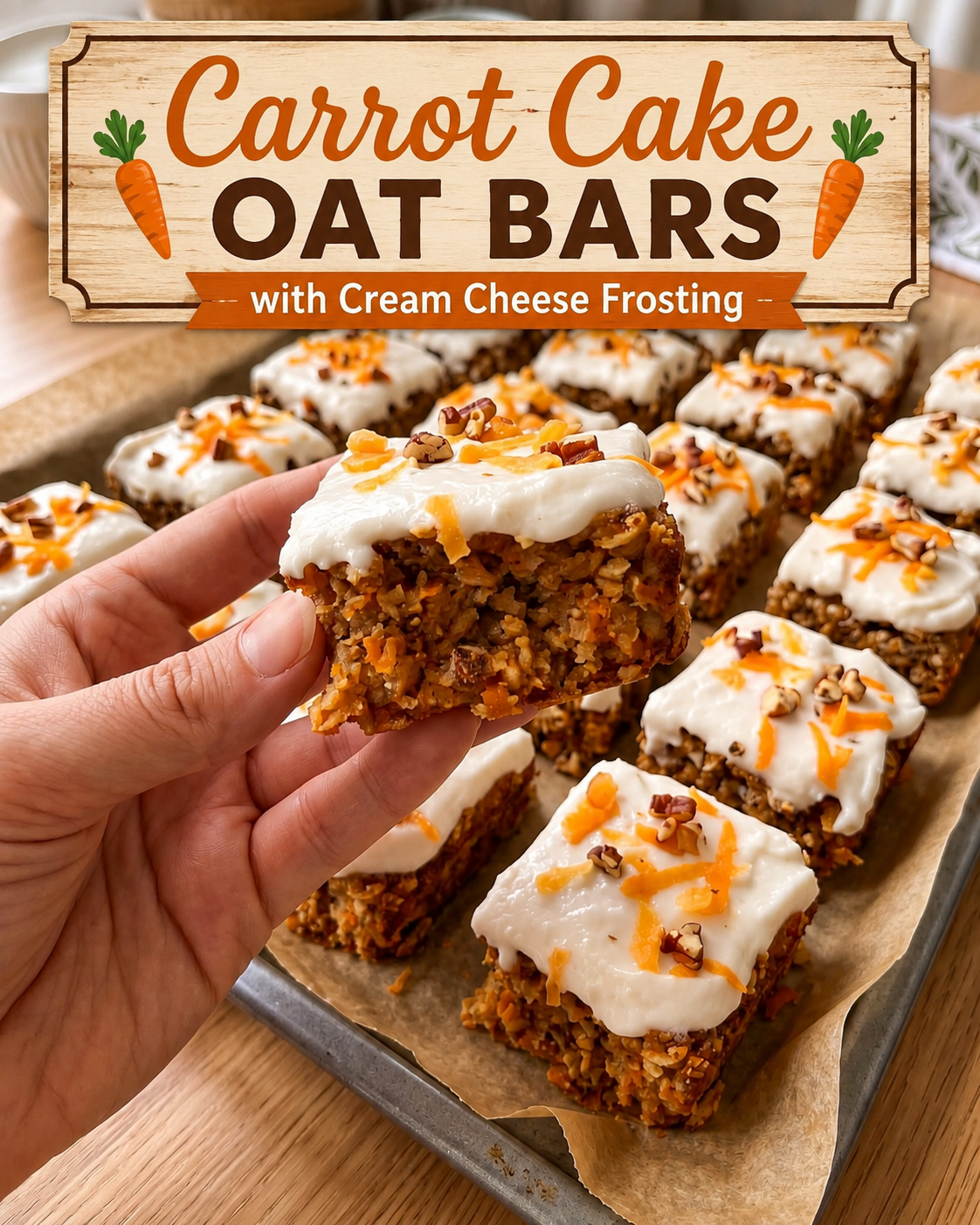
Carrot Cake Oat Bars with Cream Cheese Frosting

🥕 Carrot Cake Oat Bars with Cream Cheese Frosting


Soft, chewy, naturally sweet carrot-oat bars topped with a rich cream cheese frosting and crunchy pecans. Perfect for breakfast, snack time, or dessert.

Ingredients

For the Carrot Oat Bars

  • 2 cups rolled oats
  • 1 cup quick oats
  • 1½ cups finely grated carrots
  • ½ cup all-purpose flour
  • ½ cup brown sugar
  • ¼ cup granulated sugar
  • 2 large eggs
  • ½ cup unsweetened applesauce
  • ⅓ cup melted butter or coconut oil
  • 1 tsp vanilla extract
  • 1½ tsp ground cinnamon
  • ½ tsp ground nutmeg
  • ½ tsp baking powder
  • ¼ tsp baking soda
  • ¼ tsp salt
  • ½ cup chopped pecans or walnuts
  • ⅓ cup raisins, optional

For the Cream Cheese Frosting

  • 8 oz (225 g) cream cheese, softened
  • ¼ cup unsalted butter, softened
  • 1 cup powdered sugar
  • 1 tsp vanilla extract
  • 1–2 tbsp milk, if needed


For Topping

  • ¼ cup chopped pecans
  • ¼ cup shredded or finely grated carrot

Instructions

1. Preheat the oven to 350°F (175°C). Line a 9×13-inch baking pan with parchment paper and lightly grease it.

2. Prepare the carrots. Finely grate the carrots and gently squeeze out excess moisture. Don’t squeeze them completely dry—you want some moisture to keep the bars soft.

3. In a large bowl, combine the rolled oats, quick oats, flour, brown sugar, granulated sugar, cinnamon, nutmeg, baking powder, baking soda, and salt.

4. In another bowl, whisk together the eggs, applesauce, melted butter, and vanilla extract.

5. Pour the wet mixture into the dry ingredients. Stir until just combined.

6. Fold in the grated carrots, chopped pecans, and raisins if using.

7. Spread the mixture evenly into the prepared pan. Press it down gently with a spatula so the bars bake evenly.

8. Bake for 25–32 minutes, or until the center is set and a toothpick inserted in the middle comes out mostly clean.

9. Allow the bars to cool completely in the pan before frosting. This is important—the frosting will melt if the bars are still warm.

Cream Cheese Frosting

10. Beat the softened cream cheese and butter together until smooth and creamy.

11. Add the powdered sugar and vanilla. Beat until fluffy.

12. If the frosting is too thick, add milk 1 teaspoon at a time until you reach a smooth, spreadable consistency.

13. Spread the frosting generously over the cooled carrot oat bars.

14. Sprinkle with chopped pecans and a little grated carrot.

15. Chill for 20–30 minutes, then cut into squares.


🍰 Tips

For extra-moist bars, don’t overbake them.

Use freshly grated carrots for the best texture.

Toast the pecans for 5–7 minutes before adding them for a deeper nutty flavor.

Store frosted bars in the refrigerator for up to 4 days.

For cleaner cuts, chill the bars before slicing with a sharp knife.

Yield: 12–16 bars

Prep time: 20 minutes

Bake time: 25–32 minutes

Total time: About 1 hour

Cheesy Cauliflower Casserole

🧀 Cheesy Cauliflower Casserole


A creamy, cheesy cauliflower bake with a golden, crispy breadcrumb topping—perfect as a comforting side dish or light main course.

Ingredients

For the cauliflower

  • 1 large head cauliflower, cut into florets
  • 1 tbsp olive oil
  • ½ tsp salt
  • ¼ tsp black pepper

For the creamy cheese sauce

  • 3 tbsp butter
  • 3 tbsp all-purpose flour
  • 2 cups whole milk
  • ½ cup heavy cream
  • 1 cup shredded sharp cheddar cheese
  • ½ cup shredded mozzarella cheese
  • ½ cup grated Parmesan cheese
  • ½ tsp garlic powder
  • ½ tsp onion powder
  • ¼ tsp paprika
  • Salt and black pepper, to taste

For the crispy topping

  • ¾ cup breadcrumbs or panko
  • 2 tbsp melted butter
  • ¼ cup shredded Parmesan
  • ¼ cup shredded cheddar
  • 1 tbsp chopped fresh parsley

Instructions

1. Prepare the cauliflower:

Preheat oven to 375°F (190°C). Bring a large pot of salted water to a boil. Add cauliflower florets and cook for 4–5 minutes, just until slightly tender. Drain very well.

2. Make the sauce:

Melt butter in a saucepan over medium heat. Whisk in the flour and cook for about 1 minute.

3. Slowly whisk in the milk and heavy cream. Continue cooking for 3–5 minutes, stirring constantly, until the sauce thickens.

4. Reduce the heat to low. Add cheddar, mozzarella, and Parmesan. Stir until completely melted and smooth.

5. Season with garlic powder, onion powder, paprika, salt, and black pepper.

6. Combine:

Place the drained cauliflower in a greased baking dish. Pour the cheese sauce over it and gently toss to coat every piece.

7. Make the topping:

Mix breadcrumbs, melted butter, Parmesan, and cheddar in a small bowl. Sprinkle evenly over the cauliflower.

8. Bake:

Bake uncovered for 25–30 minutes, until bubbling and beautifully golden brown on top.

9. For an extra-crispy top, switch to broil for 1–2 minutes, watching carefully so it doesn’t burn.

10. Sprinkle with fresh parsley and let it rest for 5 minutes before serving


🍽️ Serving


Serve hot as a side with roasted chicken, steak, grilled fish, or enjoy it on its own.


Tip:

Make sure the cauliflower is drained very well. Excess water can make the cheese sauce thin and prevent the casserole from becoming rich and creamy.

Crispy Homemade Chicken Tenders

🍗 Crispy Homemade Chicken Tenders


Ingredients

For the chicken:

  • 500 g boneless, skinless chicken breast
  • 1 cup buttermilk
  • 1 egg
  • 1 tsp salt
  • 1 tsp paprika
  • ½ tsp black pepper
  • ½ tsp garlic powder
  • ½ tsp onion powder
  • ½ tsp chili powder
  • 1 tbsp hot sauce (optional)

For the crispy coating:

  • 1½ cups all-purpose flour
  • ½ cup cornstarch
  • 1 tsp paprika
  • 1 tsp garlic powder
  • 1 tsp onion powder
  • ½ tsp black pepper
  • ½ tsp salt
  • ½ tsp baking powder
  • ½ tsp chili powder
  • 1 egg
  • ½ cup cold water
  • Oil, for frying


Instructions

1. Prepare the chicken:

Cut chicken breasts into long, even strips.

2. Make the marinade:

In a large bowl, whisk together buttermilk, egg, salt, paprika, black pepper, garlic powder, onion powder, chili powder, and hot sauce.

3. Marinate:

Add chicken strips and coat well. Cover and refrigerate for at least 30 minutes, preferably 2–4 hours.

4. Prepare the coating:

Mix flour, cornstarch, paprika, garlic powder, onion powder, black pepper, salt, baking powder, and chili powder in a bowl.

5. Make the wet batter:

In another bowl, whisk 1 egg with ½ cup cold water.

6. Coat the chicken:

Remove a chicken strip from the marinade and dip it into the flour mixture. Then dip into the egg-water mixture and coat again generously with the seasoned flour. Press the flour onto the chicken with your fingers to create a rough, crispy texture.

7. Heat the oil:

Heat about 2–3 inches of oil in a deep pan to 175°C / 350°F.

8. Fry:

Carefully place the chicken strips into the hot oil in batches. Don’t overcrowd the pan. Fry for about 4–6 minutes per side, depending on thickness, until deeply golden and cooked through.

9. Drain:

Transfer to a wire rack or paper towels. Let them rest for a couple of minutes so the coating stays crispy.

🍯 Easy Dipping Sauce

Mix:

  • ½ cup mayonnaise
  • 2 tbsp ketchup
  • 1 tbsp honey
  • 1 tsp mustard
  • ½ tsp garlic powder
  • A pinch of paprika

Serving

Serve the crispy chicken tenders hot with dipping sauce, ketchup, fries, coleslaw, or lemon wedges.


Tip: For extra-crispy tenders, add 2–3 tablespoons of the buttermilk marinade into the seasoned flour and rub it in with your fingers before coating the chicken. This creates little crunchy flakes on the outside.

Cheesy Chicken Wraps

🌯 Cheesy Chicken Wraps


Ingredients

  • 2 large flour tortillas
  • 2 cups cooked chicken, shredded or diced
  • 1 cup mozzarella cheese, shredded
  • ½ cup cheddar cheese, shredded
  • ½ bell pepper, thinly sliced
  • ½ small onion, thinly sliced
  • 2 tbsp mayonnaise
  • 2 tbsp cream cheese
  • 1 tbsp ketchup
  • 1 tsp garlic powder
  • ½ tsp paprika
  • ½ tsp black pepper
  • ½ tsp salt
  • 1 tbsp cooking oil
  • Fresh lettuce, optional


Instructions

1. Cook the chicken: Heat oil in a pan. Add onion and bell pepper and sauté for 2–3 minutes.

2. Add cooked chicken, garlic powder, paprika, black pepper, and salt. Cook for 3–4 minutes until hot and well seasoned.

3. Make the sauce: Mix mayonnaise, cream cheese, and ketchup in a small bowl.

4. Assemble: Place a tortilla on a flat surface. Spread some sauce over it, then add lettuce if using.

5.Cheesy Chicken Wraps Add the cheesy chicken mixture and sprinkle generously with mozzarella and cheddar.

6. Fold the sides inward and roll tightly into a wrap.

7. Toast: Heat a dry skillet over medium heat. Place the wraps seam-side down and cook for 2–3 minutes per side until golden and the cheese is melted.

8. Slice in half and serve hot.


🌟 Tip

For an extra crispy wrap, brush the outside lightly with melted butter before toasting.

Serving: 2 large wraps

Prep time: 10 minutes

Cook time: 10 minutes

Total: 20 minutes

Hearty Tuscan White Bean Soup

Hearty Tuscan White Bean Soup

Description

Hearty Tuscan White Bean Soup is a rustic Italian-inspired soup packed with creamy white beans, tender vegetables, leafy greens, herbs, and a flavorful tomato-infused broth. It’s comforting, filling, budget-friendly, and perfect for a cozy lunch or dinner. Serve it with crusty bread for a complete meal.

Prep Time: 15 minutes
Cook Time: 35 minutes
Total Time: 50 minutes
Servings: 6
Cuisine: Italian-inspired
Difficulty: Easy

Ingredients

  • 2 tablespoons olive oil
  • 1 medium yellow onion, diced
  • 2 medium carrots, diced
  • 2 celery stalks, diced
  • 4 cloves garlic, minced
  • 1 teaspoon dried Italian seasoning
  • ½ teaspoon dried thyme
  • ¼ teaspoon red pepper flakes, optional
  • 2 tablespoons tomato paste
  • 2 cans (15 oz/425 g each) cannellini or other white beans, drained and rinsed
  • 1 can (14.5 oz/411 g) diced tomatoes
  • 6 cups vegetable broth or chicken broth
  • 2 cups chopped kale or baby spinach
  • 1 bay leaf
  • ½ teaspoon salt, plus more to taste
  • ¼ teaspoon freshly ground black pepper
  • 1 tablespoon lemon juice
  • ¼ cup freshly grated Parmesan cheese, plus extra for serving
  • 1 tablespoon chopped fresh parsley
  • Crusty bread, for serving

Instructions

  1. Sauté the vegetables:
    Heat olive oil in a large soup pot or Dutch oven over medium heat. Add onion, carrots, and celery. Cook for 6–8 minutes, stirring occasionally, until the vegetables begin to soften.
  2. Add garlic and seasonings:
    Stir in garlic, Italian seasoning, thyme, and red pepper flakes. Cook for about 30–60 seconds, just until fragrant.
  3. Build the tomato base:
    Add tomato paste and stir continuously for 1–2 minutes. Cooking the tomato paste briefly helps develop a deeper, richer flavor.
  4. Add the beans and broth:
    Stir in white beans, diced tomatoes, broth, bay leaf, salt, and black pepper.
  5. Simmer:
    Bring the soup to a gentle boil, then reduce the heat. Cover partially and simmer for 20–25 minutes, allowing the flavors to blend and the vegetables to become tender.
  6. Make it creamy:
    For a naturally thicker soup, mash about ½–1 cup of the beans against the side of the pot with a spoon or briefly blend a small portion of the soup with an immersion blender.
  7. Add the greens:
    Stir in chopped kale and cook for 4–6 minutes, until tender. If using baby spinach, cook for only 1–2 minutes.
  8. Finish the soup:
    Remove the bay leaf. Stir in lemon juice and Parmesan. Taste and adjust the salt, pepper, or lemon juice as desired.
  9. Serve:
    Ladle into bowls and garnish with fresh parsley and additional Parmesan. Serve hot with crusty bread.

Recipe Notes

  • Beans: Cannellini beans provide a creamy texture, but Great Northern or navy beans work beautifully too.
  • Greens: Kale gives the soup a hearty texture, while spinach makes it softer and cooks faster.
  • Consistency: Mash some beans for thickness instead of adding flour or cream.
  • Vegetarian: Use vegetable broth and Parmesan suitable for your dietary preference.
  • Vegan: Replace Parmesan with nutritional yeast or a vegan Parmesan alternative.
  • Storage: Refrigerate leftovers in an airtight container for up to 4 days.
  • Freezing: Freeze in individual portions for up to about 3 months. The texture of the greens may soften slightly after thawing.

Tips for the Best Tuscan White Bean Soup

  1. Don’t rush the vegetables. Sautéing the onion, carrot, and celery first creates a flavorful foundation.
  2. Toast the tomato paste. A minute or two of cooking adds depth and reduces its raw tomato flavor.
  3. Use good-quality broth. Since broth makes up much of the soup, its flavor matters.
  4. Mash some beans. This creates a creamy, satisfying texture without heavy cream.
  5. Add lemon at the end. A small amount of acidity brightens the entire soup.
  6. Taste before serving. Beans and broth can vary considerably in saltiness, so adjust seasoning at the end.
  7. Serve with bread. Crusty sourdough, ciabatta, or rustic Italian bread is excellent for dipping.

Nutritional Information

Approximate per serving, based on 6 servings and excluding bread:

Nutrient Amount
Calories ~290 kcal
Protein ~14 g
Carbohydrates ~42 g
Fiber ~11 g
Fat ~8 g
Saturated Fat ~2 g
Sugar ~8 g
Sodium ~650 mg
Calcium ~150 mg
Iron ~4 mg

Benefits

  • Good source of plant protein: White beans make the soup satisfying and filling.
  • High in fiber: Beans and vegetables provide substantial dietary fiber, which supports digestive health.
  • Vegetable-rich: Carrots, celery, tomatoes, and leafy greens contribute vitamins, minerals, and antioxidants.
  • Comforting but not heavy: The soup gets its creamy texture primarily from blended or mashed beans rather than heavy cream.
  • Flexible and budget-friendly: Canned beans and everyday vegetables make it easy to prepare without expensive ingredients.
  • Meal-prep friendly: The flavor often becomes even better after resting overnight.

Frequently Asked Questions

Can I use dried white beans?

Yes. Cook the dried beans separately until tender before adding them to the soup. You can also prepare a larger batch and freeze the extra beans for future soups.

Can I make this soup creamy?

Absolutely. Blend 1–2 cups of the finished soup and stir it back into the pot. This gives you a creamy consistency while keeping plenty of whole beans and vegetables.

Can I add meat?

Yes. Cooked Italian sausage, pancetta, shredded chicken, or diced ham can be added. If using sausage or pancetta, sauté it before the vegetables and use the rendered fat as part of the cooking base.

What can I use instead of kale?

Baby spinach, Swiss chard, collard greens, or escarole are good alternatives. Adjust cooking time according to the green you choose.

Why is my soup too thick?

Add additional broth or water a little at a time until you reach your preferred consistency.

Why is my soup too thin?

Simmer it uncovered for several minutes, or mash/blend more of the beans to naturally thicken the broth.

Can I make it ahead of time?

Yes. This is an excellent make-ahead soup. Refrigerate it and gently reheat on the stovetop, adding a splash of broth if it has thickened.

Is this soup gluten-free?

The soup itself can be gluten-free when made with gluten-free broth and ingredients. Check packaged ingredients carefully, especially broth and seasonings, if gluten-free preparation is important.

Can I make it vegan?

Yes. Use vegetable broth and omit the Parmesan or substitute a vegan Parmesan-style topping.

What should I serve with it?

Crusty bread is the classic choice. You can also serve it with a simple green salad, roasted vegetables, or toasted garlic bread.

Can I use fresh tomatoes instead of canned?

Yes, although canned tomatoes generally provide a more concentrated tomato flavor. For the best result with fresh tomatoes, use ripe, flavorful tomatoes and adjust the cooking time as needed.

How do I reheat leftovers?

Reheat gently over medium-low heat on the stovetop, stirring occasionally. Add a little broth or water if necessary to loosen the soup.

Blueberry Cottage Cheese Oat Muffins

🫐 Blueberry Cottage Cheese Oat Muffins


These Blueberry Cottage Cheese Oat Muffins are soft, naturally sweet, protein-rich, and packed with juicy blueberries. They’re made by blending simple ingredients into a smooth batter, making them especially easy for breakfast or a quick snack.


🛒 Ingredients

  • 1 cup cottage cheese
  • 2 large eggs
  • 1½ cups rolled oats
  • 2–3 tbsp honey or maple syrup
  • 1 tsp vanilla extract
  • 1 tsp baking powder
  • ½ tsp cinnamon
  • ¼ tsp salt
  • 1 cup fresh blueberries
  • 1 tbsp lemon juice, optional
  • 1–2 tbsp milk, only if needed
  • Cooking spray or a little oil for the muffin pan


👩‍🍳 Instructions

1. Preheat the oven

Preheat your oven to 350°F (175°C). Lightly grease a mini muffin pan or line it with mini muffin liners.

2. Blend the batter

Add the cottage cheese, eggs, rolled oats, honey or maple syrup, vanilla, baking powder, cinnamon, and salt to a blender.

Blend for 30–60 seconds, scraping down the sides if necessary, until you have a mostly smooth, thick batter.

If the batter seems excessively thick, add 1–2 tablespoons of milk.

3. Add the blueberries

Transfer the batter to a bowl. Gently fold in about ¾ cup of blueberries, reserving the remaining berries for the tops.

If using lemon juice, stir it in at this stage.

4. Fill the muffin pan

Spoon the batter into the prepared mini muffin cups, filling each about ¾ full.

Press a few reserved blueberries onto the top of each muffin.

5. Bake

Bake for approximately 15–20 minutes, or until the muffins are golden on top and a toothpick inserted into the center comes out mostly clean.

For regular-size muffins, bake approximately 20–25 minutes.

6. Cool

Allow the muffins to cool in the pan for about 5–10 minutes, then transfer them to a wire rack.

They will become firmer as they cool.

Recipe Tips

Don’t over-blend after adding blueberries—fold them in gently to prevent the batter from turning purple.

Full-fat or low-fat cottage cheese both work well.

Fresh blueberries are excellent, but frozen blueberries can also be used. Add them frozen rather than thawing first.

For extra flavor, add a little lemon zest.

If you prefer sweeter muffins, increase the honey or maple syrup to ¼ cup.

For a more textured muffin, blend the oats only partially instead of making the batter completely smooth.


🫐 Optional Variations


Blueberry Lemon: Add 1 tsp lemon zest and 1 tbsp lemon juice.

Chocolate Blueberry: Add 2 tbsp mini chocolate chips.

Cinnamon Berry: Add an extra ½ tsp cinnamon and a pinch of nutmeg.

Banana Blueberry: Add ½ ripe banana and reduce the sweetener slightly.

🧊 Storage

Store cooled muffins in an airtight container in the refrigerator for up to 4 days.

They can also be frozen for up to 2 months. Thaw overnight in the refrigerator or warm briefly before serving.

Prep Time: 10 minutes

Bake Time: 15–20 minutes

Total Time: 30 minutes

Yield: About 24 mini muffins

Course: Breakfast / Snack

Cuisine: American-inspired

Cheesy Ground Beef Stuffed Bread

🧀 Cheesy Ground Beef Stuffed Bread


These Cheesy Ground Beef Stuffed Bread Boats are crispy on the outside, juicy and savory inside, and covered with plenty of melted cheese. They’re perfect for a quick dinner, party appetizer, or game-day snack.


🛒 Ingredients

For the Beef Filling

  • 1 lb (450 g) ground beef
  • 1 tbsp olive oil
  • 1 small onion, finely diced
  • 1 green bell pepper, diced
  • 3 cloves garlic, minced
  • 1 tsp salt
  • ½ tsp black pepper
  • 1 tsp paprika
  • ½ tsp Italian seasoning
  • 1 tbsp Worcestershire sauce
  • 2 tbsp ketchup
  • 1 tbsp mustard
  • ¼ cup beef broth or water

For the Bread

  • 4 small baguettes or hoagie-style roll
  • 2 tbsp melted butter
  • 1 clove garlic, minced
  • 1 tbsp fresh parsley, chopped

For the Cheese

  • 1½ cups shredded mozzarella
  • 1 cup shredded provolone or Monterey Jack
  • ¼ cup shredded Parmesan, optional

👩‍🍳 Instructions

1. Prepare the beef filling

Heat olive oil in a large skillet over medium-high heat. Add the ground beef and cook for 5–7 minutes, breaking it apart with a spoon, until browned.

Drain excess grease if necessary.

Add the diced onion and green bell pepper. Cook for another 3–4 minutes, until softened.

Add garlic, salt, black pepper, paprika, and Italian seasoning. Cook for 30 seconds.

2. Make it flavorful

Stir in Worcestershire sauce, ketchup, mustard, and beef broth. Simmer for 3–5 minutes, stirring occasionally, until the mixture is juicy but not watery.

Taste and adjust the seasoning.

3. Prepare the bread

Preheat oven to 400°F (200°C).

Slice the rolls lengthwise, but don’t cut completely through the bottom. Gently press down the center to create a pocket for the filling.

Mix melted butter with minced garlic and parsley. Brush the inside and edges of the bread with the garlic butter.

4. Add the filling

Generously spoon the seasoned beef mixture into each bread pocket.

Place the stuffed breads on a baking sheet lined with parchment paper.

5. Add lots of chees

Sprinkle mozzarella and provolone generously over the beef. Add Parmesan if desired.

For an especially cheesy result, make sure the cheese reaches the edges of the bread.

6. Bake

Bake for 8–12 minutes, until the bread is crisp and the cheese is completely melted and bubbling.

For a beautifully golden top, switch to the broiler/grill for the final 1–2 minutes. Watch carefully so the cheese doesn’t burn.

7. Serve

Remove from the oven and sprinkle with fresh parsley. Let cool for 2–3 minutes, then serve warm.

Tips for the Best Cheesy Beef Bread

Use 80/20 ground beef for a juicy filling.

Don’t make the beef mixture too wet, or the bread can become soggy.

Toasting the bread slightly before adding the filling makes it extra crispy.

Use a combination of mozzarella + provolone for excellent melting and flavor.

Add sliced jalapeños or red pepper flakes if you like a little heat.

🌶️ Optional Add-Ins

You can customize these stuffed breads with:

Mushrooms

Jalapeños

Red bell pepper

Caramelized onions

Sliced olives

Pepperoni

Crispy bacon


🥗 What to Serve With It

Serve these cheesy beef breads with a fresh green salad, coleslaw, fries, potato wedges, or a bowl of tomato soup.

Prep Time: 15 minutes

Cook Time: 20 minutes

Total Time: 35 minutes

Servings: 4

Cuisine: American-inspired

Course: Dinner / Appetizer

Chicken Shawarma Pita Wraps with Creamy Garlic Tzatziki

🌯 Chicken Shawarma Pita Wraps with Creamy Garlic Tzatziki


These juicy, warmly spiced Chicken Shawarma Pita Wraps are loaded with tender grilled chicken, fresh vegetables, and a cool, creamy garlic-herb yogurt sauce. They’re perfect for lunch, dinner, meal prep, or a casual family meal.

🛒 Ingredients

For the Chicken Shawarma

  • 1½ lbs (700 g) boneless, skinless chicken thighs
  • 3 tbsp olive oil
  • 2 tbsp lemon juice
  • 4 cloves garlic, minced
  • 1 tsp ground cumin
  • 1 tsp smoked paprika
  • 1 tsp ground coriander
  • 1 tsp paprika
  • ½ tsp turmeric
  • ½ tsp ground cinnamon
  • ½ tsp dried oregano
  • ½ tsp black pepper
  • 1 tsp salt
  • ¼ tsp cayenne pepper, optional

For the Tzatziki Sauce

  • 1 cup Greek yogurt
  • ½ cucumber, finely grated and squeezed dry
  • 2 cloves garlic, minced
  • 1 tbsp lemon juice
  • 1 tbsp olive oil
  • 1 tbsp fresh dill, chopped
  • 1 tbsp fresh parsley, chopped
  • ¼ tsp salt¼ tsp black pepper

For the Wraps

  • 6 pita breads or flatbreads
  • 1 tomato, sliced
  • ½ red onion, thinly sliced
  • ½ cucumber, sliced
  • Fresh parsley, chopped
  • Lettuce, optional
  • Pickled cucumbers or turnips, optional

👩‍🍳 Instructions

1. Marinate the Chicken

In a large bowl, combine olive oil, lemon juice, minced garlic, cumin, paprika, coriander, turmeric, cinnamon, oregano, black pepper, salt, and cayenne.

Add the chicken thighs and coat thoroughly with the marinade.

Cover and refrigerate for at least 30 minutes, although 2–8 hours will give you even better flavor.

2. Make the Tzatziki

Add Greek yogurt, grated cucumber, garlic, lemon juice, olive oil, dill, parsley, salt, and black pepper to a bowl.

Mix well. Taste and adjust the seasoning if needed.

Cover and refrigerate until ready to serve.

3. Cook the Chicken

Heat a large skillet or grill pan over medium-high heat.

Add the marinated chicken and cook for approximately 5–7 minutes per side, depending on thickness, until nicely browned and completely cooked through.

The chicken should reach an internal temperature of 165°F (74°C).

Transfer to a plate and rest for about 5 minutes.

4. Slice the Chicken

Slice the chicken into thin strips. For extra flavor, return the sliced chicken to the hot pan for 1–2 minutes to give the edges a little extra char.

5. Warm the Pitas

Warm the pita breads in a dry skillet for about 20–30 seconds per side, or heat them briefly in the oven.

Don’t overheat them or they may become difficult to fold.

6. Assemble the Wraps

Place a warm pita on a plate.

Spread a generous spoonful of tzatziki over the center. Add:

  • Sliced chicken shawarma
  • Tomato
  • Cucumber
  • Red onion
  • Lettuce, if using
  • Fresh parsley
  • Pickles, if desired
  • Drizzle with additional tzatziki.

Fold the bottom of the pita upward and wrap the sides around the filling.

Tips for the Best Chicken Shawarma

Use chicken thighs: They stay juicy and flavorful, making them ideal for shawarma-style wraps.


Don’t skip the marinade: Even 30 minutes makes a difference, but several hours develops much deeper flavor.


Get the chicken nicely charred: The browned edges provide the characteristic grilled flavor.


Squeeze the cucumber well: Removing excess water keeps the tzatziki thick and creamy.


Warm the pita: Warm pita is softer and much easier to wrap without tearing.


🥗 What to Serve With Chicken Shawarma

Serve these wraps with:

  • French fries or seasoned potato wedges
  • Hummus
  • Baba ganoush
  • Tabouli
  • Greek salad
  • Pickled vegetables
  • Extra tzatziki
  • Garlic sauce

🧊 Storage & Meal Prep


Store cooked chicken in an airtight container in the refrigerator for up to 3–4 days. Keep the vegetables, pita, and tzatziki separately so the wraps don’t become soggy.


For meal prep, reheat the chicken and assemble the pita fresh just before eating.


Prep Time: 20 minutes + marinating

Cook Time: 15 minutes

Total Time: About 35 minutes, plus marinating

Servings: 6 wraps


Pro tip: For a restaurant-style presentation, wrap each pita halfway in parchment paper and serve with extra tzatziki and sliced vegetables on the side.

Fenugreek and Castor Oil for Thin Hair

Fenugreek + Castor Oil for Thin Hair

A Simple Natural Hair-Care Remedy

Discover how to make a fenugreek and castor oil hair treatment for thin hair, including ingredients, application steps, tips, FAQs, and safety advice.

Thin hair can be frustrating, especially when your hair starts looking less full or you notice more strands on your brush or pillow. While many commercial hair products are available, some people prefer simple, traditional ingredients as part of their regular hair-care routine.

Fenugreek seeds and castor oil:

Two popular ingredients used in homemade hair treatments. Fenugreek seeds contain plant compounds and nutrients, while castor oil is a thick vegetable oil commonly used to condition and moisturise hair.

This homemade fenugreek and castor oil treatment is easy to prepare and can be incorporated into a gentle scalp and hair-care routine. It should be viewed as a cosmetic conditioning treatment rather than a medically proven treatment for hair loss.

What Is Fenugreek and Castor Oil Hair Treatment?

Fenugreek, also known as methi, is an aromatic seed traditionally used in cooking and various beauty practices. When soaked and blended, fenugreek seeds can form a soft paste that is easy to apply to the scalp and hair.

Castor oil is a dense plant-based oil that helps provide lubrication and can make dry hair feel softer and more conditioned.

Together, fenugreek paste and castor oil create a simple homemade hair mask that may help improve the feel, moisture, and manageability of dry or brittle hair.

Benefits of Fenugreek and Castor Oil for Hair

1. Helps Condition Dry Hair

Castor oil has a rich, thick texture that can coat the hair shaft. This may make dry hair feel smoother and more moisturized.

Fenugreek paste can also add conditioning properties to a homemade hair mask.

2. Supports a Healthy-Looking Scalp

A comfortable, well-maintained scalp is an important part of a good hair-care routine. Fenugreek has traditionally been used in scalp-care preparations.

However, this treatment should not be considered a cure for scalp diseases or medical hair-loss conditions.

3. May Reduce the Appearance of Dry, Brittle Hair

Hair that lacks moisture can become rough and more prone to breakage. Regular conditioning can help improve the appearance and manageability of such hair.

Because breakage can make hair appear thinner, gentle conditioning may be useful as part of an overall hair-care routine.

4. Makes Hair Feel Softer

The combination of a fenugreek paste and oil can provide a conditioning treatment before shampooing. After washing, hair may feel softer and easier to manage.

5. Simple Homemade Hair-Care Option

One advantage of this treatment is that it uses only a few ingredients and doesn’t require complicated equipment.

How to Make Fenugreek + Castor Oil Hair Treatment

Ingredients

2 tablespoons fenugreek seeds

3 tablespoons warm water

1 tablespoon castor oil

1 tablespoon coconut oil or olive oil — optional

3–5 drops essential oil — optional and only if tolerated

Why These Ingredients?

Fenugreek seeds: Used to create the nourishing-looking herbal paste.

Castor oil: Provides a rich, conditioning oil base.

Coconut or olive oil: Can make the mixture easier to spread and provide additional conditioning.

Essential oil: Completely optional. Avoid it if you have sensitive skin or have previously reacted to essential oils.

Step-by-Step Preparation

Step 1: Soak the Fenugreek Seeds

Place 2 tablespoons of fenugreek seeds in a clean bowl.

Add approximately 3 tablespoons of warm water and leave the seeds to soak for 6–8 hours or overnight.

The seeds should become softer and easier to blend.

Step 2: Make the Fenugreek Paste

Drain any excess water.

Transfer the softened seeds to a blender and blend until you get a relatively smooth paste.

If the mixture is too thick, add a very small amount of water.

Step 3: Add Castor Oil

Place the fenugreek paste in a clean bowl.

Add 1 tablespoon of castor oil and mix thoroughly.

If you find castor oil too thick, add 1 tablespoon of coconut or olive oil to improve the texture.

Step 4: Apply the Treatment

Part your hair into sections.

Apply a small amount to the scalp and gently massage with your fingertips for a few minutes. Then distribute the remaining mixture through the lengths of your hair.

Avoid aggressive rubbing or scratching.

Step 5: Leave It On

Allow the treatment to remain on your hair for approximately 20–30 minutes.

You don’t need to leave it overnight. A shorter application can make the treatment easier to wash out and may be more comfortable for sensitive scalps.

Step 6: Wash Thoroughly

Rinse with lukewarm water and shampoo thoroughly.

Because castor oil is thick, you may need to shampoo twice to remove the residue completely.

Finish with your normal conditioner if needed.

How Often Should You Use It?

For a general hair-conditioning routine, you can try this treatment once a week.

Using larger quantities or applying it more frequently isn’t necessarily better. Hair and scalp needs vary, so stop or reduce use if you experience irritation, excessive dryness, itching, or discomfort.

Tips for Better Results

Use Fresh Ingredients

Use clean, good-quality fenugreek seeds and fresh oils.

Don’t Overuse Castor Oil

Castor oil is considerably thicker than many other oils. Using too much can make the scalp and hair greasy and difficult to wash.

Keep the Paste Smooth

A finely blended fenugreek paste is easier to distribute and rinse out.

Be Gentle With Thin Hair

Avoid tight hairstyles, aggressive brushing, excessive heat, and vigorous scalp scratching.

Follow With a Balanced Hair Routine

A homemade mask works best as one small part of overall hair care. Adequate nutrition, gentle washing, conditioning, and protection from excessive heat can all contribute to healthier-looking hair.

Important Safety Considerations

Although fenugreek and castor oil are commonly used in homemade beauty treatments, natural does not automatically mean risk-free.

Before applying the mixture to your scalp, perform a small patch test on an area of skin and wait to see whether irritation develops.

Stop using the treatment if you experience:

Burning

Severe itching

Redness

Swelling

Rash

Increased scalp irritation

Avoid applying the mixture to broken, infected, or irritated skin.

If you have significant or rapidly worsening hair loss, bald patches, scalp inflammation, or other unusual symptoms, consider speaking with a dermatologist or other qualified healthcare professional. Hair thin can have many different causes, including nutritional deficiencies, hormonal changes, medications, stress, genetics, and scalp conditions.

Nutrition Facts

Approximate topical ingredients

Ingredient Amount
Fenugreek seeds 2 tbsp
Castor oil 1 tbsp
Optional coconut/olive oil 1 tbsp
Water As needed

Important: Do not consume this hair mask. It is intended for external use only.

Frequently Asked Questions

Does fenugreek and castor oil make hair grow faster?

There isn’t enough high-quality evidence to claim that this homemade mixture makes hair grow faster. It can be used as a conditioning hair treatment, but it should not replace evidence-based treatment for hair loss.

Can I leave fenugreek and castor oil on overnight?

It’s generally unnecessary. A 20–30 minute treatment is sufficient for a simple conditioning routine. Leaving oily mixtures on the scalp overnight may be uncomfortable or irritating for some people.

Can I use this treatment every day?

Daily application isn’t recommended. Start with once a week and see how your scalp and hair respond.

Can I use castor oil alone?

Yes. Castor oil can be used as a conditioning oil, although its thick texture means that many people prefer diluting it with a lighter oil.

Can I use this remedy on colored hair?

You can, but always test a small area first. Hair that has been chemically treated or colored may be more sensitive and can require a gentler routine.

How long should I use this treatment?

You can evaluate how your hair feels after several weeks of occasional use. If you’re experiencing genuine hair loss rather than simple dryness or breakage, don’t rely on a homemade treatment alone.

Can this remedy stop hair loss?

There is no reliable basis for claiming that fenugreek and castor oil can stop all types of hair loss. Hair loss has many possible causes, and the appropriate treatment depends on the cause.

Final Thoughts

Fenugreek + castor oil for thin hair is a simple traditional-inspired hair-care treatment that can be used to condition dry hair and support a gentle scalp-care routine. Fenugreek provides the herbal component, while castor oil gives the treatment its rich, moisturizing texture.

The most important thing is to keep expectations realistic. This homemade mask may help your hair feel softer, smoother, and better conditioned, but it shouldn’t be presented as a guaranteed cure for thin hair or baldness.

For persistent, sudden, or significant hair loss, identifying the underlying cause is much more important than relying on a single home remedy. Combine gentle hair care with appropriate professional advice when needed.

Crispy Garlic Parmesan Potatoes

🥔 Crispy Garlic Parmesan Potatoes


Ingredients

  • 1 kg baby potatoes, halved
  • 3 tbsp olive oil
  • 4 cloves garlic, minced
  • ½ cup freshly grated Parmesan cheese
  • 1 tsp Italian seasoning
  • 1 tsp paprika
  • ½ tsp salt
  • ½ tsp black pepper
  • 2 tbsp fresh parsley, chopped
  • Optional: ¼ tsp chili flakes

👩‍🍳 Instructions

1. Preheat oven: Heat oven to 220°C (425°F). Line a baking sheet with parchment paper.

2. Prepare potatoes: Wash and halve the potatoes. Pat them very dry—this helps them become extra crispy.

3. Make the Parmesan mixture: In a bowl, combine Parmesan, olive oil, garlic, Italian seasoning, paprika, salt, and black pepper.

4. Coat the potatoes: Add the potatoes and toss thoroughly until well coated.

5. Arrange: Place the potatoes cut-side down on the baking sheet. Make sure they aren’t overcrowded.

6. Bake: Roast for 30–40 minutes, until deeply golden and crispy on the bottom and tender inside.

7. Finish: Let them cool for 2–3 minutes, then carefully lift them from the pan. Sprinkle with fresh parsley and extra Parmesan.

Tips for Extra Crispy Potatoes

Dry the potatoes thoroughly before seasoning.

Use freshly grated Parmesan for the best crust.

Don’t overcrowd the baking sheet.

Keep the potatoes cut-side down while baking.

For even more crunch, broil for 1–2 minutes at the end, watching carefully.

Prep Time: 10 minutes

Cook Time: 35 minutes

Total Time: 45 minutes

Servings: 4–6


🔥 Perfect as a side dish, appetizer, or snack—crispy on the outside, fluffy inside, and loaded with garlic Parmesan flavor!

Mediterranean Chicken Bowl

🥗 Mediterranean Chicken Bowl


Ingredients

For the chicken

  • 500 g boneless chicken breast, cut into bite-size pieces
  • 2 tbsp olive oil
  • 1 tbsp lemon juice
  • 3 cloves garlic, minced
  • 1 tsp dried oregano
  • 1 tsp paprika
  • ½ tsp cumin
  • ½ tsp salt
  • ¼ tsp black pepper

For the bowl

  • 2 cups cooked rice or quinoa
  • 1 cucumber, diced
  • 1 cup cherry tomatoes, halved
  • ½ red onion, thinly sliced
  • ½ cup Kalamata olives
  • ½ cup feta cheese, crumbled
  • ½ cup hummus
  • Fresh parsley, chopped
  • Lemon wedges
  • Quick tzatziki
  • ½ cup Greek yogurt
  • ½ cucumber, grated and squeezed dry
  • 1 small garlic clove, minced
  • 1 tbsp lemon juice
  • 1 tbsp fresh dill or parsley
  • Salt to taste

Method

1. Marinate the chicken: Mix chicken with olive oil, lemon juice, garlic, oregano, paprika, cumin, salt, and pepper. Let it marinate for 15–30 minutes.

2. Cook the chicken: Heat a large skillet over medium-high heat. Cook the chicken for 6–8 minutes, turning occasionally, until golden brown and cooked through. Chicken should reach 74°C/165°F internally.

3. Make the tzatziki: Mix Greek yogurt, grated cucumber, garlic, lemon juice, herbs, and salt. Chill until ready to serve.

4. Build the bowls: Divide cooked rice or quinoa between 4 bowls. Arrange chicken, cucumber, tomatoes, red onion, olives, feta, and hummus on top.

5. Finish: Add a generous spoonful of tzatziki, sprinkle with fresh parsley, and serve with lemon wedges.

⏱️ Details

Prep: 20 minutes

Marinating: 15–30 minutes

Cook: 10 minutes

Servings: 4


Tip: For extra flavor, drizzle the finished bowls with olive oil and a little fresh lemon juice before serving. 🍋

Marry Me Chicken

🍗 Marry Me Chicken — 


📝 Ingredients

For the Chicken:

  • 4 boneless, skinless chicken breasts
  • 1 tsp salt
  • ½ tsp black pepper
  • 1 tsp Italian seasoning
  • ½ cup all-purpose flour, for lightly coating
  • 2 tbsp olive oil
  • 2 tbsp butter

For the Creamy Sauce:

  • 3–4 cloves garlic, minced
  • ½ cup sun-dried tomatoes, chopped
  • 1 cup heavy cream
  • ½ cup chicken broth
  • ½ cup freshly grated Parmesan cheese
  • 1 tsp Italian seasoning
  • ½ tsp red pepper flakes, optional
  • ½ tsp paprika
  • Salt and black pepper, to taste
  • 1 tbsp fresh basil or parsley, chopped

👩‍🍳 Instructions

1. Prepare the chicken

Pat the chicken breasts dry. Season both sides with salt, black pepper, Italian seasoning, and paprika. Lightly coat each piece with flour and shake off the excess.

2. Sear the chicken

Heat olive oil and butter in a large skillet over medium-high heat. Add the chicken and cook for about 4–5 minutes per side, until golden brown. Remove the chicken and set aside. It does not need to be completely cooked through yet.

3. Make the garlic-tomato base

Using the same skillet, add the minced garlic and chopped sun-dried tomatoes. Sauté for about 1 minute, until fragrant.

4. Make the creamy sauce

Pour in the chicken broth and scrape up the flavorful browned bits from the bottom of the pan. Add the heavy cream, Parmesan, Italian seasoning, paprika, and red pepper flakes. Stir well and let the sauce gently simmer for 2–3 minutes.

5. Return the chicken

Place the chicken breasts back into the skillet. Spoon the sauce over the chicken and reduce the heat to medium-low.

Cover loosely and simmer for 8–12 minutes, or until the chicken reaches an internal temperature of 165°F / 74°C and the sauce has thickened.

6. Finish and serve

Taste and adjust the seasoning. Sprinkle with fresh basil or parsley and extra Parmesan if desired.

🍝 Best Ways to Serve

Serve this creamy chicken with:

Pasta or spaghetti

Mashed potatoes

Rice

Garlic bread

Steamed vegetables

Roasted potatoes


Tips for the Best Marry Me Chicken

Don’t skip the sun-dried tomatoes—they give the sauce its signature sweet, tangy flavor.

Freshly grated Parmesan melts more smoothly into the sauce.

Keep the sauce at a gentle simmer rather than a rapid boil to prevent the cream from separating.

If the sauce becomes too thick, add a splash of chicken broth.

Pound very thick chicken breasts to an even thickness so they cook more evenly.

Prep Time: 15 minutes

Cook Time: 25 minutes

Total Time: 40 minutes

Servings: 4


Creamy, cheesy, garlicky, and packed with sun-dried tomato flavor—this Marry Me Chicken is perfect for an easy family dinner or a special date-night meal. ❤️🍗

Garlic in Honey

Garlic in Honey: Benefits, How to Make It & Easy Ways to Use It

A Simple Garlic-and-Honey Mixture for Your Kitchen

Garlic in honey is a traditional homemade combination made by covering fresh garlic cloves with honey and allowing them to infuse over time. The result is a sweet, savory mixture with a mellow garlic flavor that can be used in dressings, marinades, sauces, toast, roasted vegetables, and other recipes.Garlic and honey are both well-known foods with interesting nutritional properties. Garlic contains sulfur compounds, including allicin-related compounds that are produced when garlic is crushed or chopped. Honey contains naturally occurring plant compounds and has been studied for its antioxidant properties.However, it’s important to separate traditional uses from proven medical effects. Garlic in honey can be a flavorful food, but it should not be considered a cure or treatment for infections, high blood pressure, diabetes, or other medical conditions.

Ingredients for Garlic in Honey

1 cup raw or pasteurized honey

10–15 fresh garlic cloves

Why People Like Garlic in Honey

Garlic in honey has become popular because it combines two simple ingredients into a versatile sweet-savory mixture.

People commonly enjoy it because:

Garlic provides strong savory flavor.

Honey adds natural sweetness.

The combination works well in marinades.

It can be added to salad dressings.

It makes roasted vegetables more flavorful.

Garlic becomes milder as it sits in honey.

It’s easy to prepare.

Both ingredients are widely available.

Potential Benefits of Garlic

Garlic has been studied for several aspects of health and nutrition.

Contains Sulfur Compounds

Garlic contains sulfur-containing compounds that contribute to its distinctive aroma and flavor. Crushing or chopping garlic activates enzymes that help produce compounds such as allicin.

These compounds are one reason garlic has attracted scientific interest.

Provides Antioxidant Compounds

Garlic contains various compounds with antioxidant activity.

Antioxidants help protect cells from oxidative stress, although eating garlic does not mean that it can prevent or cure a specific disease.

May Support Cardiovascular Health

Some research has investigated garlic and cardiovascular risk factors, including blood pressure and cholesterol.

The evidence is mixed and effects can vary depending on the form and amount of garlic consumed.

Garlic should therefore be viewed as part of a balanced diet rather than a replacement for prescribed treatment.

Potential Benefits of Honey

Contains Antioxidant Compounds

Honey contains naturally occurring polyphenols and other compounds that contribute to its antioxidant activity.

The exact composition varies depending on the floral source.

Provides Quick Energy

Honey primarily contains carbohydrates, so it provides a readily available source of energy.

Because honey is still an added sugar, portion size matters.

Soothes the Throat

Honey is commonly used in warm drinks for its soothing texture and sweetness.

It may also help relieve cough symptoms in some situations, particularly when used appropriately.

Honey should never be given to babies under 12 months of age because of the risk of infant botulism.

What About the Combination?

Garlic in honey is often promoted online as a natural remedy for immunity, infections, inflammation, cholesterol, and blood pressure.

Some of these claims are based on research into garlic or honey individually, while others come from traditional use or laboratory studies.

There is not enough clinical evidence to conclude that homemade garlic-in-honey preparations can prevent or cure diseases.

Think of it as a flavorful food rather than a medicinal treatment.

How to Make Garlic in Honey

Choose the Garlic

Select fresh, firm garlic cloves.

Avoid cloves that are moldy, damaged, soft, or visibly spoiled.

Peel the garlic carefully.

Lightly Crush the Garlic

Place each garlic clove on a cutting board and gently crush it with the flat side of a knife.

You don’t need to completely mince the garlic.

Lightly crushing the cloves helps release their flavor and allows the honey to surround them more easily.

Add Garlic to a Clean Jar

Place the garlic cloves into a clean, dry glass jar.

Don’t pack the jar completely full.

Leave enough room for the honey and for the contents to be stirred safely.

Add Honey

Pour honey over the garlic until the cloves are completely covered.

Use a clean spoon to gently move the garlic around and release trapped air bubbles.

Make sure the garlic remains submerged.

Refrigerate

For a homemade preparation, refrigerate the garlic-and-honey mixture.

Allow the flavors to develop for at least several days.

The garlic will gradually become softer and mellower as it sits.

For food safety, avoid treating homemade garlic-in-honey as a shelf-stable fermented product unless you are following a tested preservation/fermentation method with appropriate controls.

How to Use Garlic in Honey

Once the mixture has developed its flavor, there are many ways to use it.

Salad Dressing

Mix a small amount with olive oil, lemon juice, and black pepper.

Marinade

Use it as part of a marinade for chicken, salmon, or vegetables.

Roasted Vegetables

Drizzle a small amount over roasted carrots, sweet potatoes, or Brussels sprouts.

Toast

Spread softened garlic over toast and drizzle lightly with honey.

Stir-Fry

Add a small spoonful to a vegetable or chicken stir-fry toward the end of cooking.

Glaze

Brush a thin layer over roasted chicken or vegetables during the final minutes of cooking.

Important Food Safety Information

Garlic stored in an oxygen-free environment can create conditions favorable to Clostridium botulinum, the bacterium associated with botulism.

Honey does not automatically make raw garlic safe for long-term room-temperature storage.

For this reason, don’t assume that a jar of fresh garlic covered with honey is safe to keep indefinitely in a cupboard.

For homemade preparations:

Use clean equipment.

Use fresh garlic.

Keep the garlic covered by honey.

Refrigerate the mixture.

Discard it if you notice mold, unusual spoilage, or an unpleasant off odor.

Don’t rely on taste or smell alone to determine whether a potentially unsafe food is safe.

Don’t give honey to children younger than 12 months.

If you want a shelf-stable product, use a commercially prepared product made under appropriate food-safety controls.

Who Should Be Careful?

Honey is high in sugar, so people managing blood glucose should account for it within their overall carbohydrate intake.

People taking medications, especially medications that affect blood clotting or blood pressure, should talk with their healthcare professional before consuming large amounts of concentrated garlic preparations.

If you’re pregnant, breastfeeding, immunocompromised, or managing a medical condition, it’s best to discuss concentrated homemade preparations with your healthcare professional rather than using them as a treatment.

Storage for Garlic in honey

Keep homemade garlic in honey refrigerated in a clean, sealed container.

Use clean utensils whenever removing garlic or honey from the jar.

Do not keep homemade garlic-in-honey at room temperature for prolonged periods.

If you are uncertain about its safety, discard it.

Frequently Asked Questions

Can I eat garlic in honey every day?

Small culinary amounts can be incorporated into a normal diet, but there is no established medical dosage for homemade garlic in honey. It should be treated as a food, not a medicine.

Does garlic in honey boost immunity?

Garlic and honey contain compounds that have been studied for various biological effects, but there isn’t strong evidence that a homemade garlic-and-honey mixture can “boost” immunity in a clinically meaningful way.

How long should garlic sit in honey?

For flavor, several days can mellow the garlic, while longer periods produce a stronger infusion. However, longer storage does not automatically make a homemade mixture safer.

Can I use raw honey?

Yes, but using raw honey does not eliminate the food-safety concerns associated with storing fresh garlic in honey. Refrigeration is still important.

Can children eat garlic in honey?

Honey should never be given to children under 12 months old. For older children, ordinary culinary amounts may be appropriate, depending on their individual circumstances.

Can garlic in honey cure a cold?

No. Although honey may soothe a cough, garlic in honey has not been established as a cure for colds or other infections.

Final Thoughts for Garlic in honey

Garlic in honey is a simple and flavorful combination that has been used traditionally and has attracted scientific interest because both garlic and honey contain biologically active compounds. Garlic contributes sulfur compounds and savory flavor, while honey provides sweetness and naturally occurring antioxidant compounds.The most useful way to enjoy this combination is as a food ingredient rather than a medical remedy. Add small amounts to salad dressings, marinades, roasted vegetables, chicken, fish, or toast for a delicious sweet-and-savory flavor.Most importantly, homemade garlic submerged in honey should be handled carefully. Refrigerate it rather than assuming it is shelf-stable, use clean equipment, and never give honey to babies under one year of age.With proper food-safety precautions, garlic and honey can be a delicious addition to your kitchen and an easy way to create flavorful homemade sauces and marinades.

15 High-Fiber Meals for Constipation and Better Digestion

15 High-Fiber Meals

15 High-Fiber Meals for Constipation and Better Digestion

High-fiber meals for constipation can support regular bowel movements naturally. Discover 15 easy meal ideas, nutrition facts, fiber-rich foods, helpful tips, and FAQs.

Constipation can make you feel uncomfortable, heavy, and bloated. Although several factors can cause it, not eating enough fiber is one of the most common dietary reasons. Adding high-fiber meals for constipation to your daily routine may soften stool, support healthy digestion, and encourage regular bowel movements.

Fiber is naturally found in fruits, vegetables, whole grains, legumes, nuts, and seeds. However, increasing fiber too quickly may cause gas or cramping. Add it gradually and drink enough water throughout the day.

This guide includes satisfying breakfast, lunch, dinner, and snack ideas that make getting more fiber simple and delicious.

How Does Fiber Help Relieve Constipation?

Dietary fiber is the part of plant food that the body cannot completely digest. It travels through the digestive system and helps manage bowel movements.

Soluble Fiber

Soluble fiber absorbs water and forms a soft, gel-like substance in the digestive tract. This may make stool easier to pass. Oats, chia seeds, apples, beans, pears, and barley are excellent sources.

Insoluble Fiber

Insoluble fiber adds bulk to stool and helps food move through the digestive system. It is found in wheat bran, whole grains, leafy vegetables, nuts, and fruit skins.

A balanced diet should include both types of fiber.

How Much Fiber Do You Need?

Most adults should aim for approximately 25–38 grams of fiber daily, depending on age, sex, and individual health needs. Unfortunately, many people consume much less.

Start by adding around 3–5 grams of extra fiber at a time. Increase your water intake as you add more fiber because fiber works best when sufficient fluid is available.

Best High-Fiber Foods for Constipation

Some of the most useful fiber-rich foods include:

  • Raspberries, pears, apples, oranges, and prunes
  • Broccoli, Brussels sprouts, carrots, spinach, and sweet potatoes
  • Lentils, black beans, chickpeas, and split peas
  • Oatmeal, barley, quinoa, and whole-grain bread
  • Chia seeds, ground flaxseed, almonds, and walnuts
  • Avocado and air-popped popcorn

Combining several of these ingredients in one meal can help you reach your daily fiber target without relying on supplements.

15 High-Fiber Meals for Constipation

1. Oatmeal with Chia Seeds and Raspberries

Cook rolled oats with milk or water, then add chia seeds, raspberries, and a small amount of honey. Oats and chia provide soluble fiber, while raspberries add both fiber and natural sweetness.

Estimated fiber: 12–14 grams per serving

2. Pear and Flaxseed Yogurt Bowl

Top plain Greek yogurt with one chopped pear, ground flaxseed, walnuts, and cinnamon. Keep the pear skin on because it contains valuable fiber.

Estimated fiber: 9–11 grams per serving

3. Avocado and White Bean Toast

Mash half an avocado with white beans, lemon juice, black pepper, and a pinch of salt. Spread the mixture on two slices of whole-grain toast.

Estimated fiber: 12–15 grams per serving

4. Prune and Oat Breakfast Smoothie

Blend four or five pitted prunes with oats, yogurt, chia seeds, and water or milk. Prunes contain fiber and sorbitol, a natural sugar alcohol that may help promote bowel movements.

Estimated fiber: 8–10 grams per serving

5. Lentil and Vegetable Soup

Simmer lentils with carrots, celery, spinach, tomatoes, onions, garlic, and low-sodium vegetable broth. Lentils provide an excellent combination of fiber and plant-based protein.

Estimated fiber: 14–17 grams per serving

6. Chickpea Quinoa Salad

Combine cooked quinoa, chickpeas, cucumber, cherry tomatoes, spinach, parsley, and avocado. Finish with a dressing made from olive oil and lemon juice.

Estimated fiber: 13–16 grams per serving

7. Black Bean and Sweet Potato Bowl

Serve roasted sweet potato over brown rice with black beans, corn, avocado, lettuce, and tomato salsa. Leave the sweet potato skin on after washing it thoroughly.

Estimated fiber: 15–18 grams per serving

8. Mediterranean Chickpea Wrap

Fill a whole-grain wrap with chickpeas, hummus, spinach, cucumber, tomatoes, grated carrots, and red onion. This portable lunch offers fiber, healthy fats, and plant protein.

Estimated fiber: 11–14 grams per serving

9. Barley and Roasted Vegetable Bowl

Pair cooked barley with roasted Brussels sprouts, carrots, broccoli, and chickpeas. Add a creamy tahini and lemon dressing before serving.

Estimated fiber: 14–17 grams per serving

10. Whole-Wheat Pasta with Beans and Spinach

Toss whole-wheat pasta with cannellini beans, spinach, tomatoes, garlic, and olive oil. The combination of whole grains, beans, and vegetables makes this an especially filling dinner.

Estimated fiber: 13–16 grams per serving

11. Baked Salmon with Quinoa and Broccoli

Salmon does not contain fiber, but it provides protein and beneficial fats. Serve it with quinoa, roasted broccoli, and avocado to create a balanced high-fiber meal.

Estimated fiber: 9–12 grams per serving

12. Three-Bean Vegetable Chili

Prepare a hearty chili using kidney beans, black beans, pinto beans, tomatoes, bell peppers, onions, corn, and spices. Choose a low-sodium broth or canned products when possible.

Estimated fiber: 16–20 grams per serving

13. Stuffed Sweet Potato with Lentils

Bake a sweet potato and fill it with seasoned lentils, spinach, diced tomatoes, and plain yogurt or tahini. It is warm, comforting, and naturally rich in fiber.

Estimated fiber: 14–17 grams per serving

14. Chia Pudding with Kiwi

Mix chia seeds with milk and refrigerate the mixture until thick. Top it with sliced kiwi, berries, and a few almonds. Kiwi may support stool frequency and digestive comfort in some people.

Estimated fiber: 10–13 grams per serving

15. Apple, Almond Butter, and Popcorn Snack Plate

Pair a skin-on apple with almond butter and a serving of plain air-popped popcorn. This simple snack plate can help satisfy hunger between meals.

Estimated fiber: 8–10 grams per serving

Sample One-Day High-Fiber Meal Plan

Breakfast

Oatmeal with chia seeds and raspberries: approximately 13 grams of fiber.

Lunch

Lentil and vegetable soup with whole-grain toast: approximately 18 grams of fiber.

Snack

One pear with a handful of almonds: approximately 8 grams of fiber.

Dinner

Baked salmon with quinoa, broccoli, and avocado: approximately 11 grams of fiber.

Estimated Daily Total

This sample menu provides approximately 50 grams of fiber. That amount may be too high for someone who currently eats very little fiber. Reduce portions or introduce these foods gradually to suit your needs.

Nutrition Facts for a High-Fiber Meal

The following values are estimates for one serving of a chickpea quinoa salad:

Nutrient Estimated Amount
Calories 450
Protein 16 g
Carbohydrates 62 g
Dietary fiber 14 g
Total fat 17 g
Saturated fat 2.5 g
Natural sugars 8 g
Sodium 350 mg
Potassium 900 mg

Exact nutrition facts will vary according to ingredients, brands, serving sizes, and dressings.

Tips for Increasing Fiber Safely

Add Fiber Gradually

A sudden increase in fiber can cause bloating, gas, or abdominal discomfort. Add one new fiber-rich meal at a time.

Drink More Water

Drink water regularly throughout the day. Without adequate fluid, a large increase in fiber may make constipation worse.

Keep Fruit and Vegetable Skins

Edible skins from apples, pears, potatoes, and sweet potatoes provide additional fiber. Wash produce thoroughly before eating.

Stay Physically Active

Regular movement, even a short walk after a meal, may help stimulate the digestive system.

Create a Regular Routine

Try not to ignore the urge to have a bowel movement. Allow yourself enough time and maintain a consistent bathroom routine when possible.

Foods That May Worsen Constipation

The effects of food vary between individuals, but frequently eating low-fiber processed foods may contribute to constipation. Examples include:

  • Refined white bread and pastries
  • Large portions of cheese
  • Fried fast food
  • Processed meats
  • Low-fiber packaged snacks
  • Excessive amounts of refined grains

These foods do not always need to be eliminated. Instead, balance them with vegetables, fruit, beans, and whole grains.

Frequently Asked Questions

What Is the Best High-Fiber Meal for Constipation?

Lentil vegetable soup is one of the best choices because it provides soluble and insoluble fiber along with fluid. Bean chili, oatmeal with berries, and chickpea quinoa salad are also excellent options.

Which Breakfast Can Help You Have a Bowel Movement?

Oatmeal topped with chia seeds, ground flaxseed, raspberries, kiwi, or prunes can be helpful. Drink a glass of water with breakfast for additional hydration.

How Quickly Can High-Fiber Food Relieve Constipation?

Some people notice improvement within a day or two, while others may need several days of consistent dietary changes. Results depend on hydration, activity, medications, health conditions, and the cause of constipation.

Are Bananas Good for Constipation?

Ripe bananas contain fiber and may help some people. However, less-ripe bananas contain more resistant starch and can feel binding for certain individuals. Responses can vary.

Can Too Much Fiber Make Constipation Worse?

Yes. Increasing fiber too quickly or consuming it without enough water can worsen bloating and constipation. Make changes gradually and maintain adequate hydration.

When Should I Contact a Healthcare Professional?

Seek medical advice if constipation is severe, keeps returning, lasts for several weeks, or occurs with blood in the stool, vomiting, fever, unexplained weight loss, intense abdominal pain, or an inability to pass gas.

Conclusion

High-fiber meals for constipation can support regular digestion while providing important vitamins, minerals, and plant-based nutrients. Oatmeal, chia seeds, berries, pears, lentils, beans, quinoa, vegetables, and whole grains are practical ingredients for building fiber-rich meals.

For the best results, increase fiber slowly, drink sufficient water, stay active, and pay attention to how your body responds. Persistent or painful constipation should be discussed with a qualified healthcare professional, as diet may not be the only underlying factor.

Golden Cabbage Patties

🥬 Golden Cabbage Patties

Crispy on the outside, tender and flavorful inside, these golden cabbage patties are packed with cabbage, onion, fresh dill, and simple seasonings. They make a delicious breakfast, snack, side dish, or light vegetarian meal.

Ingredients

For the patties:

  • 1 medium green cabbage, finely shredded
  • 1 small red onion, thinly sliced or finely chopped
  • 2 large eggs
  • ½ cup all-purpose flour
  • ½ cup breadcrumbs
  • ½ cup shredded cheddar or mozzarella cheese
  • 2–3 tablespoons fresh dill, chopped
  • 2 tablespoons fresh parsley, chopped
  • 2 cloves garlic, minced
  • 1 teaspoon salt
  • ½ teaspoon black pepper
  • ½ teaspoon paprika
  • ½ teaspoon dried oregano
  • ¼ teaspoon chili flakes, optional
  • 2–3 tablespoons olive oil or vegetable oil, for cooking

For serving:

  • Sour cream or Greek yogurt
  • Fresh dill or parsley
  • Lemon wedges, optional

Instructions

1. Prepare the cabbage:

Finely shred the cabbage. Place it in a large bowl, sprinkle with about ½ teaspoon salt, and gently massage it with your hands for 2–3 minutes to soften it.

2. Remove excess moisture:

Let the cabbage sit for about 10 minutes. Squeeze it firmly with your hands or place it in a clean kitchen towel and squeeze out as much liquid as possible. This step helps the patties hold together and become crispy.

3. Mix the ingredients:

Add the cabbage, red onion, eggs, flour, breadcrumbs, shredded cheese, dill, parsley, garlic, remaining salt, black pepper, paprika, oregano, and chili flakes to a large bowl.

4. Combine:

Mix everything thoroughly until you have a thick mixture that holds together when pressed. If it seems too wet, add 1–2 tablespoons more breadcrumbs. If it seems too dry, add a little beaten egg.

5. Shape the patties:

Take a portion of the mixture and shape it into a round patty about ½-inch thick. Repeat with the remaining mixture.

6. Pan-fry:

Heat the oil in a large skillet over medium heat. Carefully place the patties in the pan, leaving a little space between them.

7. Cook until golden:

Cook for about 4–5 minutes per side, or until deeply golden brown and crisp. Avoid turning them too early so they have time to form a good crust.

8. Drain:

Transfer the cooked patties to a plate lined with paper towels to absorb excess oil.

9. Serve:

Serve warm with sour cream or Greek yogurt. Garnish with fresh dill and parsley, and add a squeeze of lemon if desired.

🔥 Oven-Baked Version

For a lighter option, place the patties on a parchment-lined baking sheet and lightly brush or spray them with oil. Bake at 200°C / 400°F for 20–25 minutes, flipping halfway through, until golden and crisp.

Air Fryer Version

Air fry at 190°C / 375°F for 12–16 minutes, turning halfway through. Lightly spray the patties with oil before cooking.

Tips for Perfect Patties

Squeeze the cabbage very well—excess water is the biggest reason patties fall apart.

Don’t make the patties too thick; thinner patties become crispier.

Let the mixture rest for 5–10 minutes before shaping.

For extra crunch, use panko breadcrumbs.

You can add grated carrot, zucchini, or spring onions for variation.

A little Parmesan can add extra savory flavor.

Yield: About 8–10 patties

Prep time: 20 minutes

Cook time: 20 minutes

Total time: About 40 minutes

Fluffy Homemade Pancakes

🥞 Fluffy Homemade Pancakes


These classic pancakes are soft, thick, fluffy, and golden brown—perfect for a cozy breakfast or weekend brunch.

Ingredients

  • 2 cups all-purpose flour
  • 2 tablespoons granulated sugar
  • 1 tablespoon baking powder
  • ½ teaspoon salt
  • 2 large eggs
  • 1¾ cups milk
  • ¼ cup melted butter, plus extra for cooking
  • 1 teaspoon vanilla extract

Instructions

1. Mix the dry ingredients:

In a large bowl, whisk together the flour, sugar, baking powder, and salt.

2. Mix the wet ingredients:

In another bowl, whisk the eggs, milk, melted butter, and vanilla until well combined.

3. Combine:

Pour the wet ingredients into the dry ingredients. Gently whisk until just combined. A few small lumps are perfectly fine. Do not overmix, as this can make the pancakes tough.

4. Rest the batter:

Let the batter sit for 5–10 minutes. This helps create lighter, fluffier pancakes.

5. Heat the pan:

Heat a nonstick skillet or griddle over medium heat. Lightly grease it with butter.

6. Cook:

Pour about ¼ cup of batter onto the hot pan for each pancake.

7. Flip:

Cook for about 2–3 minutes, until bubbles appear on the surface and the edges look set. Flip and cook another 1–2 minutes, until golden brown.

8. Repeat:

Continue with the remaining batter, lightly greasing the pan as needed.

🍯 Serving Suggestions

Stack the warm pancakes and serve with:

Butter

Maple syrup

Fresh strawberries or blueberries

Banana slices

Honey

Whipped cream

Chocolate chips

Powdered sugar

⭐ Tips for Extra-Fluffy Pancakes

Don’t overmix the batter.

Make sure your baking powder is fresh.

Keep the heat at medium; excessive heat can brown the outside before the center cooks.

For especially thick pancakes, use slightly less milk—about 1½ cups.

Don’t press down on the pancakes after flipping.


Prep Time: 10 minutes

Resting Time: 5–10 minutes

Cook Time: 20 minutes

Total Time: About 40 minutes

Servings: 6–8

Makes: Approximately 12–14 pancakes

Chicken in a Hurry — Easy 4-Ingredient Baked Chicken

🍗 Chicken in a Hurry — Easy 4-Ingredient Baked Chicken


A deliciously simple baked chicken recipe with a sweet, tangy, savory sauce made from just a few pantry staples. The chicken turns beautifully caramelized and juicy while the sauce thickens around it.


Ingredients

  • 2½–3 lb chicken pieces — thighs, drumsticks, breasts, or a combination
  • ¼ cup brown sugar
  • ½ cup ketchup
  • ¼ cup water
  • 1 packet dry onion soup mix

Instructions

1. Preheat the oven to 350°F (175°C).

2. Lightly grease a 9×13-inch casserole dish or another baking dish large enough to hold the chicken in a single layer.

3. In a bowl, combine the brown sugar, ketchup, water, and dry onion soup mix. Stir until well blended.

4. Arrange the chicken pieces in the prepared casserole dish.

5. Pour the sauce evenly over the chicken, making sure the pieces are well coated.

6. Cover the dish loosely with aluminum foil and bake for about 45 minutes.

7. Remove the foil and continue baking for another 20–30 minutes, or until the chicken is completely cooked and nicely browned.

8. The chicken is done when the thickest part reaches 165°F (74°C) on a meat thermometer.

9. Let the chicken rest for 5–10 minutes before serving.

10. Spoon some of the delicious caramelized sauce from the pan over the chicken.

🍽️ Serving Suggestions

Serve this chicken with:

Mashed potatoes

White or brown rice

Roasted vegetables

Green beans

Corn

A fresh garden salad

Dinner rolls or crusty bread

Tips for the Best Chicken


Don’t overcrowd the dish so the chicken browns properly.


For extra caramelization, leave the chicken uncovered during the final 20–30 minutes.


Chicken thighs and drumsticks are especially juicy and flavorful with this sauce.


If using chicken breasts, choose pieces of similar size so they cook evenly.


Always check the internal temperature rather than relying only on cooking time.


Prep Time: 10 minutes

Cook Time: 1 hour 10–15 minutes

Total Time: About 1 hour 20 minutes

Servings: 4–6

Oven: 350°F (175°C)

Cheesy Creamy Potato Skillet Casserole

🥔Cheesy Creamy Potato Skillet Casserole


A delicious, comforting potato dish made with crispy golden potato slices, a creamy herbed egg mixture, and plenty of melted cheese. Perfect for breakfast, brunch, or a family dinner.

Ingredients

For the potatoes

  • 5–6 medium potatoes
  • 2–3 tbsp cooking oil
  • 1 tsp salt
  • ½ tsp black pepper
  • ½ tsp paprika
  • ½ tsp garlic powder

For the creamy mixture

  • 4 large eggs
  • ½ cup heavy cream or cooking cream
  • ½ cup milk
  • ½ cup mayonnaise or sour cream
  • ½ cup finely chopped green onions
  • ¼ cup chopped bell pepper
  • 2 tbsp chopped fresh parsley or coriander
  • ½ tsp salt
  • ½ tsp black pepper
  • ½ tsp Italian seasoning
  • ½ cup shredded mozzarella

For topping

  • 1–1½ cups shredded mozzarella or cheddar
  • 2 tbsp chopped parsley/coriander
  • A pinch of paprika or chili flakes

Instructions

1. Prepare the potatoes:

Peel the potatoes and slice them into thin, even rounds. Rinse and pat them very dry.

2. Season:

Place the potato slices in a bowl. Add salt, black pepper, paprika, garlic powder, and oil. Toss until evenly coated.

3. Cook the potatoes:

Heat a large oven-safe skillet over medium heat. Arrange the potato slices in a single layer and cook for about 4–5 minutes per side, or until golden brown and almost tender. Work in batches if necessary.

4. Make the creamy mixture:

In a large bowl, whisk together the eggs, cream, milk, mayonnaise or sour cream, salt, pepper, and Italian seasoning.

5. Stir in the green onions, bell pepper, parsley/coriander, and ½ cup mozzarella.

6. Combine:

Arrange the cooked potato slices evenly in the skillet. Pour the creamy mixture slowly over the potatoes, making sure it reaches between the slices.

7. Add cheese:

Sprinkle the remaining mozzarella or cheddar generously over the top.

8. Bake:

Transfer the skillet to a preheated oven at 180°C (350°F). Bake for approximately 25–30 minutes, until the egg mixture is completely set and the cheese is melted and golden.

9. Brown the top:

For a more golden, bubbly top, switch to broil/grill for 2–3 minutes, watching carefully.

10. Garnish and serve:

Let it rest for 5–10 minutes, then sprinkle with fresh parsley or coriander. Slice and serve warm.

⏱️ Quick Details

Prep: 20 minutes

Cook: 35–40 minutes

Total: About 1 hour

Servings: 6

💡 Tips

Slice the potatoes evenly so they cook at the same rate.

For extra flavor, add cooked chicken, beef, mushrooms, or turkey.

Cheddar gives a stronger flavor, while mozzarella makes the dish especially stretchy and creamy.

Don’t cut it immediately after baking; resting helps the creamy filling set properly.

Serving suggestion: Serve with a fresh salad, yogurt dip, or your favorite chutney for a delicious complete meal.