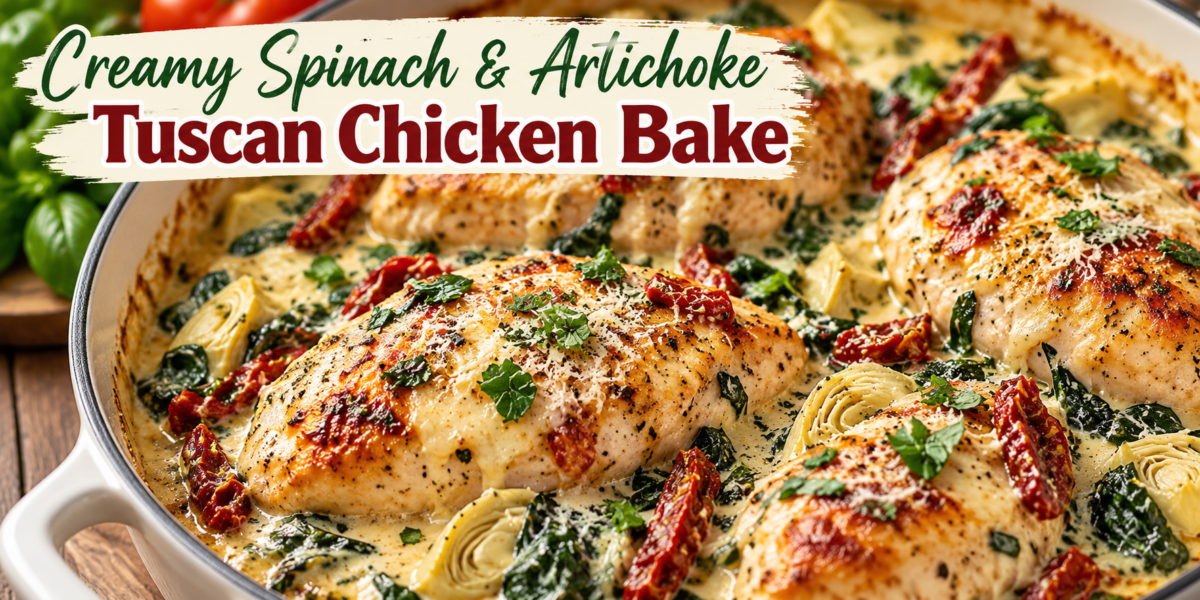
Creamy Spinach & Artichoke Tuscan Chicken Bake

Creamy Tuscan Chicken Bake with spinach, artichokes, sun-dried tomatoes, Parmesan, and tender baked chicken

Creamy Spinach & Artichoke Tuscan Chicken Bake

Tuscan Chicken Bake is a rich, creamy oven-baked dinner made with tender chicken breasts, spinach, artichokes, sun-dried tomatoes, garlic, herbs, and a Parmesan cream sauce. It brings together the comforting flavors of a creamy chicken casserole with bright Mediterranean-inspired ingredients. If you want a satisfying family dinner that feels special without requiring complicated steps, this recipe is a dependable choice for your weekly rotation.

The combination of juicy chicken, tangy artichokes, earthy spinach, and savory Parmesan creates a balanced dish with plenty of texture. Tuscan Chicken Bake also works well for meal prep and pairs easily with pasta, rice, potatoes, or vegetables.

Prep Time: 20 minutes
Cook Time: 30 to 35 minutes
Total Time: 55 minutes
Servings: 4

Ingredients

For the Chicken

4 boneless, skinless chicken breasts

1 tablespoon olive oil

1 teaspoon Italian seasoning

1 teaspoon garlic powder

1/2 teaspoon paprika

1/2 teaspoon salt

1/4 teaspoon black pepper

For the Creamy Tuscan Sauce

2 tablespoons butter

3 cloves garlic, minced

1 tablespoon all-purpose flour

1 cup heavy cream

1/2 cup chicken broth

1/2 cup freshly grated Parmesan cheese

1/2 teaspoon dried basil

1/2 teaspoon dried oregano

1/4 teaspoon red pepper flakes, optional

For the Vegetables

2 cups fresh baby spinach

1 cup artichoke hearts, drained and chopped

1/2 cup sun-dried tomatoes, sliced

1/3 cup shredded mozzarella cheese

For Garnish

Fresh parsley

Fresh basil

Extra Parmesan cheese

Cracked black pepper

Why You’ll Love This Recipe

Tuscan Chicken Bake gives you a creamy, comforting dinner without needing to stand over the stove for long. Most of the work is simple preparation, while the oven handles the final cooking.

Spinach and artichokes add freshness and texture, while sun-dried tomatoes contribute slightly sweet and tangy flavor. The creamy Parmesan sauce ties everything together without hiding the taste of the chicken.

Another reason to love Tuscan Chicken Bake is its versatility. You can serve it over pasta for a hearty dinner, pair it with roasted vegetables for something lighter, or enjoy it with warm bread for soaking up the creamy sauce.

How to Make Creamy Spinach & Artichoke Tuscan Chicken Bake

Step 1: Prepare the Chicken

Preheat your oven to 400°F or 200°C.

Pat the chicken breasts dry with paper towels. If they are very thick, gently pound them to an even thickness so they cook at approximately the same rate.

Rub the chicken with olive oil, Italian seasoning, garlic powder, paprika, salt, and black pepper.

Evenly seasoned chicken gives Tuscan Chicken Bake more flavor from the inside out and creates a more balanced finished dish.

Step 2: Sear the Chicken

Heat a large oven-safe skillet over medium-high heat.

Add the seasoned chicken and sear for about 2 to 3 minutes per side.

You are not trying to cook the chicken completely during this step. The goal is simply to develop a lightly golden exterior.

Remove the chicken from the skillet and set it aside.

Searing first gives Tuscan Chicken Bake a deeper savory flavor and helps the chicken look more appetizing after baking.

Step 3: Make the Garlic Cream Sauce

Reduce the heat to medium.

Add the butter to the same skillet. Once melted, stir in the minced garlic and cook for about 30 seconds until fragrant.

Sprinkle in the flour and whisk continuously for about 1 minute.

Slowly pour in the chicken broth while whisking to prevent lumps. Add the heavy cream and continue stirring until smooth.

Stir in Parmesan, basil, oregano, and red pepper flakes.

The sauce for Tuscan Chicken Bake should be creamy enough to coat a spoon but still loose enough to surround the chicken as it bakes.

Step 4: Add the Vegetables

Add the fresh spinach to the sauce and stir until it begins to wilt.

Next, add the chopped artichoke hearts and sliced sun-dried tomatoes.

Mix gently until everything is distributed evenly throughout the creamy sauce.

Taste the sauce and adjust the salt, pepper, or herbs if necessary.

These vegetables give Tuscan Chicken Bake its signature color, texture, and Mediterranean-inspired flavor.

Step 5: Assemble the Bake

Return the seared chicken breasts to the skillet.

Spoon some of the spinach, artichoke, and cream mixture over each piece of chicken.

Sprinkle mozzarella evenly over the top.

If your skillet is not oven-safe, transfer the sauce and chicken to a lightly greased baking dish before adding the mozzarella.

Tuscan Chicken Bake should have plenty of creamy sauce surrounding the chicken without completely covering it.

Step 6: Bake Until Juicy

Transfer the skillet or baking dish to the preheated oven.

Bake for approximately 20 to 25 minutes. The exact cooking time depends on the thickness of your chicken breasts.

Check the thickest part of the chicken with an instant-read thermometer. It should reach 165°F or 74°C.

Avoid baking longer than necessary because chicken breasts can dry out quickly.

When cooked correctly, Tuscan Chicken Bake should have juicy chicken surrounded by a hot, bubbling Parmesan sauce.

Step 7: Rest and Garnish

Remove the dish from the oven and let it rest for approximately 5 minutes.

Resting allows the chicken juices to settle and gives the sauce a little time to thicken.

Top Tuscan Chicken Bake with chopped fresh parsley, basil, extra Parmesan, and cracked black pepper before serving.

Serving Suggestions

Tuscan Chicken Bake pairs especially well with pasta because the creamy sauce coats noodles beautifully. Fettuccine, linguine, spaghetti, and penne are all excellent choices.

For a comforting meal, serve the chicken with mashed potatoes, roasted potatoes, or garlic bread.

Rice, quinoa, or couscous are also good options because they absorb the flavorful sauce.

For a lighter dinner, pair Tuscan Chicken Bake with roasted asparagus, green beans, broccoli, zucchini, or a crisp green salad dressed with lemon and olive oil.

For another easy one-pan chicken dinner, try our Mediterranean Lemon Garlic Chicken Orzo Skillet.

Recipe Tips

Use chicken breasts that are similar in size so they cook evenly.

Drain the artichoke hearts thoroughly to avoid adding excess liquid to the sauce.

Oil-packed sun-dried tomatoes should also be drained before using.

Freshly grated Parmesan melts more smoothly than many packaged grated cheeses.

Avoid boiling the cream sauce aggressively after adding Parmesan because excessive heat may affect its texture.

For the juiciest Tuscan Chicken Bake, check the chicken with a thermometer instead of relying only on the cooking time.

Allow the finished dish to rest for a few minutes before serving.

If the sauce becomes too thick, stir in a small splash of chicken broth or cream.

Easy Variations

Add sliced mushrooms, roasted red peppers, or zucchini if you want more vegetables.

Boneless, skinless chicken thighs can replace chicken breasts. Just adjust the cooking time as necessary.

For more heat, increase the red pepper flakes or add a small pinch of cayenne pepper.

You can make Tuscan Chicken Bake even cheesier by adding extra mozzarella or Parmesan before baking.

For a slightly lighter sauce, substitute half-and-half for the heavy cream. Keep in mind that the finished sauce may not be quite as thick.

Kale can also replace part or all of the spinach for a heartier vegetable option.

Make-Ahead Instructions

Tuscan Chicken Bake can be partially prepared ahead of time, making it useful for busy evenings.

Season and sear the chicken, prepare the creamy sauce, and assemble everything in the baking dish several hours before you plan to cook it.

Cover the dish tightly and store it in the refrigerator.

Before baking, let it stand at room temperature for approximately 15 minutes. Because the ingredients will still be chilled, you may need to add a few extra minutes to the baking time.

Storage and Reheating

Store leftover Tuscan Chicken Bake in an airtight container in the refrigerator for up to 3 days.

Keep some of the creamy sauce with each chicken breast so the meat remains moist while stored.

For reheating, place the chicken and sauce in a covered skillet over low heat until warmed through. Individual portions can also be reheated in the microwave using short intervals.

If the sauce becomes too thick after refrigeration, add a small splash of broth or cream while reheating.

Freezing is possible, although cream-based sauces can sometimes become slightly grainy after thawing.

Nutrition Information

Approximate nutrition per serving:

Calories: 540
Protein: 48 g
Carbohydrates: 15 g
Fat: 34 g
Saturated Fat: 18 g
Fiber: 4 g
Sugar: 5 g
Sodium: 890 mg

Nutrition values are estimates. Exact amounts depend on the size of the chicken breasts and the brands of cream, cheese, artichokes, and sun-dried tomatoes used.

Frequently Asked Questions

Can I use frozen spinach?

Yes. Thaw frozen spinach completely and squeeze out as much excess moisture as possible before adding it to the sauce.

Can I use marinated artichokes?

Yes. Drain them thoroughly before adding them. Marinated artichokes can give Tuscan Chicken Bake extra herbs, seasoning, and acidity.

Can I make it without sun-dried tomatoes?

Absolutely. Leave them out or substitute roasted red peppers or halved cherry tomatoes.

Can I use chicken thighs?

Yes. Boneless, skinless chicken thighs work well and tend to remain very juicy. Adjust the cooking time according to their thickness.

How do I know when the chicken is done?

Use an instant-read meat thermometer. The thickest part of each chicken breast should reach 165°F or 74°C.

Can I make this lower in carbs?

Yes. Serve Tuscan Chicken Bake with cauliflower rice, zucchini noodles, steamed broccoli, or roasted vegetables instead of pasta, rice, or potatoes.

What can I use instead of heavy cream?

Half-and-half can work if you prefer a lighter sauce. The finished consistency will be thinner, so you may need to let the sauce simmer briefly to thicken.

Final Thoughts

Creamy Spinach & Artichoke Tuscan Chicken Bake is an easy way to transform everyday chicken breasts into a rich and colorful dinner. Garlic, Parmesan, spinach, artichokes, and sun-dried tomatoes come together in a creamy sauce that delivers plenty of savory flavor.

The dish works equally well for a busy weeknight or a relaxed weekend dinner. Pair it with pasta, potatoes, rice, vegetables, or fresh salad depending on how hearty you want the meal to be.

Whether you are preparing dinner for your family or planning meals ahead, this creamy chicken recipe offers tender meat, a flavorful sauce, and Mediterranean-inspired ingredients in one comforting dish.

If you enjoy simple Mediterranean chicken recipes, you may also like our Mediterranean Baked Chicken Juicy and Flavorful.

Chicken & Cabbage Pie

Chicken & Cabbage Pie

Description

Chicken & Cabbage Pie is a delicious, comforting, and satisfying dish that combines tender seasoned chicken with soft cabbage, onion, garlic, and a creamy, savoury filling, all baked beneath a golden, cheesy crust. It has the cosy flavour and texture of a traditional savoury pie while using cabbage instead of a conventional flour-heavy crust.

This recipe is a wonderful option when you want something hearty and flavourful without relying on a traditional pastry crust. The cabbage becomes tender and slightly sweet as it cooks, while the chicken provides plenty of satisfying protein. A little cheese helps bring everything together and creates a golden finish in the oven.

It is perfect for a family dinner, meal prep, or a cosy weekend meal. Serve it with a crisp green salad, roasted vegetables, or steamed broccoli for a complete meal.

6 servings

20 minutes

40 minutes

Approximately 1 hour

Ingredients

For the Chicken & Cabbage Filling

  • 1 1/2 pounds boneless, skinless chicken breasts or chicken thighs, cut into small pieces
  • 1 tablespoon olive oil
  • 1 tablespoon butter
  • 5 cups finely shredded green cabbage
  • 1 medium yellow onion, finely diced
  • 3 cloves of garlic, minced
  • 1/2 cup diced carrots
  • 1/2 teaspoon salt
  • 1/2 teaspoon black pepper
  • 1 teaspoon paprika
  • 1/2 teaspoon dried thyme
  • 1/2 teaspoon dried oregano
  • 1/2 teaspoon onion powder
  • 1/4 teaspoon garlic powder
  • 1/2 cup chicken broth
  • 1/3 cup heavy cream
  • 1 tablespoon Dijon mustard
  • 1/2 cup shredded mozzarella cheese
  • 1/4 cup grated Parmesan cheese
  • 2 tablespoons chopped fresh parsley

For the Low-Carb Topping

  • 3 large eggs
  • 1/2 cup shredded mozzarella cheese
  • 1/4 cup grated Parmesan cheese
  • 1/4 cup heavy cream
  • 1/2 teaspoon baking powder
  • 1/4 teaspoon salt
  • 1/4 teaspoon black pepper
  • 1/2 teaspoon dried Italian seasoning

Instructions

Step 1: Prepare the Oven and Baking Dish

Preheat your oven to 375°F (190°C).

Lightly grease a 9-inch pie dish or similar oven-safe baking dish with butter or cooking spray.

Set the dish aside while you prepare the filling.

Step 2: Cook the Chicken

Heat the olive oil and butter in a large skillet over medium-high heat.

Add the diced chicken and season with salt, black pepper, paprika, thyme, oregano, onion powder, and garlic powder.

Cook for approximately 5–7 minutes, stirring occasionally, until the chicken is cooked through and lightly golden on the outside.

Transfer the cooked chicken to a plate and set aside.

If using chicken thighs, cook them until they reach a safe internal temperature of 165°F (74°C).

Step 3: Cook the Vegetables

Using the same skillet, add the diced onion and carrots.

Cook for 3–4 minutes until the onion begins to soften.

Add the minced garlic and cook for another 30 seconds, just until fragrant.

Add the shredded cabbage.

Season lightly with additional salt and pepper if needed.

Cook the cabbage for approximately 6–8 minutes, stirring frequently, until it begins to soften and reduce in volume.

The cabbage does not need to be completely soft at this stage because it will continue cooking in the oven.

Step 4: Make the Creamy Filling

Pour the chicken broth into the skillet and stir well, scraping up any flavourful browned bits from the bottom.

Add the heavy cream and Dijon mustard.

Stir everything together and simmer gently for 2–3 minutes.

Return the cooked chicken to the skillet and stir until the chicken and cabbage are evenly combined.

Turn off the heat.

Stir in the mozzarella and Parmesan cheese until the cheese begins to melt into the warm mixture.

Taste and adjust the seasoning if necessary.

Step 5: Transfer to the Baking Dish

Pour the chicken and cabbage mixture into the prepared pie dish.

Spread it evenly using the back of a spoon or spatula.

Sprinkle the chopped fresh parsley over the filling.

Set the dish aside while you prepare the topping.

Step 6: Prepare the Low-Carb Topping

In a medium bowl, whisk together the eggs, mozzarella, Parmesan, heavy cream, baking powder, salt, black pepper, and Italian seasoning.

Whisk until the mixture is smooth and well combined.

The egg-and-cheese mixture will bake into a soft, savoury topping that helps hold the pie together while creating a golden surface.

Step 7: Add the Topping

Slowly pour the egg mixture over the chicken and cabbage filling.

Gently spread it across the surface so the topping covers as much of the pie as possible.

For an extra cheesy finish, sprinkle a small amount of additional mozzarella over the top if desired.

Step 8: Bake

Place the pie in the preheated oven.

Bake for approximately 30–35 minutes, or until the topping is set and the surface is lightly golden.

If the top begins browning too quickly, loosely cover the dish with foil during the final part of baking.

Step 9: Rest Before Serving

Remove the pie from the oven and allow it to rest for 10–15 minutes before slicing.

This resting time is important because it allows the filling to settle and makes the pie much easier to serve neatly.

Garnish with additional fresh parsley before serving.

Recipe Notes

The cabbage should be finely shredded so it cooks evenly and blends naturally with the chicken.

You can use either chicken breasts or boneless chicken thighs. Chicken thighs will provide a richer flavour, while chicken breasts are leaner.

Do not add too much liquid to the filling. Cabbage naturally releases water as it cooks, and an overly wet filling can prevent the pie from setting properly.

For the best texture, allow the cooked cabbage mixture to simmer until most of the excess liquid has evaporated before transferring it to the baking dish.

The Parmesan adds savoury flavour, while the mozzarella gives the filling and topping a deliciously melty texture.

Letting the pie rest after baking is one of the most important steps. Cutting it immediately can cause the filling to spread instead of holding its shape.

Helpful Tips

Shred the cabbage finely.

Thinly shredded cabbage cooks faster and creates a more cohesive pie filling.

Don’t Skip Browning the Chicken

Lightly browning the chicken adds much more flavour than simply boiling or steaming it.

Cook Out Excess Moisture

If your cabbage releases a lot of liquid, continue cooking the mixture for a few extra minutes. The filling should be creamy rather than watery.

Season in Layers

Season the chicken, vegetables, and creamy filling as you cook instead of adding all the seasoning at the end.

Let the Pie Rest

Allowing the finished pie to rest for 10–15 minutes makes slicing easier and gives the filling time to firm up.

Watch the Cheese

Different cheeses contain different amounts of moisture. If using a particularly moist cheese, you may need to cook the filling slightly longer before assembling the pie.

Variations

Chicken & Mushroom Cabbage Pie

Add 1 cup of sliced mushrooms when cooking the onion. Cook until the mushrooms release their moisture and begin to brown.

Spicy Chicken & Cabbage Pie

Add 1/2 teaspoon crushed red pepper flakes or a little cayenne pepper to the filling.

Cheesy Chicken Pie

Increase the mozzarella to 1 cup and add extra Parmesan for a richer cheese flavour.

Broccoli Chicken & Cabbage Pie

Replace 1 cup of cabbage with finely chopped broccoli florets for additional vegetable variety.

Creamy Garlic Version

Add one additional minced garlic clove and a little extra black pepper for a stronger garlic flavour.

Herb Chicken & Cabbage Pie

Add fresh parsley, dill, chives, or thyme to the filling for a fresh herbal flavour.

Make-Ahead Instructions

You can prepare the filling up to 1 day ahead.

Cook the chicken and cabbage mixture according to the recipe, allow it to cool, cover it, and refrigerate.

When ready to bake, prepare the egg-and-cheese topping, spread it over the chilled filling, and bake until hot throughout and the topping is completely set.

Because a chilled filling may require additional baking time, check the centre before removing the pie from the oven.

Storage

Allow leftovers to cool and place them in an airtight container.

Refrigerate for up to 3–4 days.

Reheat individual portions in the microwave until hot, or reheat larger portions in a 350°F (175°C) oven until warmed through.

For the best texture, reheating in the oven helps maintain the golden topping.

Freezing Instructions

This pie can be frozen, although the texture of the cabbage and creamy filling may change slightly after thawing.

For best results, allow the cooked pie to cool completely.

Wrap it tightly and place it in a freezer-safe container.

Freeze for up to 2 months for best quality.

Thaw overnight in the refrigerator before reheating.

Reheat in a covered baking dish at 350°F (175°C) until hot throughout, then uncover during the final few minutes to refresh the top.

Serving Suggestions

Chicken & Cabbage Pie is filling enough to serve as a main dish.

Pair it with:

  • Green salad with lemon vinaigrette
  • Roasted broccoli
  • Steamed green beans
  • Roasted zucchini
  • Cauliflower rice
  • Cucumber and tomato salad
  • Simple Mediterranean salad
  • Sautéed spinach

For a particularly comforting dinner, serve a warm slice alongside a fresh salad and roasted vegetables.

Nutritional Information

Approximate nutrition per serving, based on 6 servings:

  • Calories: 390
  • Protein: 36 g
  • Carbohydrates: 12 g
  • Fat: 23 g
  • Saturated Fat: 10 g
  • Fibre: 3 g
  • Sugar: 5 g
  • Sodium: 650 mg

Nutritional values are estimates and will vary depending on the chicken, cheese, cream, and other ingredients used.

Benefits

Provides Protein

Chicken is a convenient source of high-quality protein, which contributes to maintaining and repairing body tissues and can help make a meal more satisfying.

Includes Vegetables

Cabbage, carrots, onions, and garlic provide a variety of vitamins, minerals, fibre, and plant compounds.

Lower in Carbohydrates Than Traditional Pie

Because this recipe does not use a conventional flour-based pastry crust, it can be substantially lower in carbohydrates than many traditional savoury pies. The exact carbohydrate content will depend on the ingredients and serving size.

Satisfying Comfort Food

The combination of protein, vegetables, fat, and cheese makes this a hearty meal that can be served as a main course.

Flexible for Meal Prep

The pie stores and reheats well, making it convenient for preparing several meals in advance.

Is Chicken & Cabbage Pie Good for a Low-Carb Diet?

It can fit into many lower-carbohydrate meal plans because it replaces a traditional flour-based crust with an egg-and-cheese topping and uses cabbage as a major vegetable ingredient.

However, “low-carb” depends on the ingredients and the overall dietary pattern. The nutritional values provided here are estimates.

Can This Recipe Help With Weight Management?

A single food or recipe cannot specifically cause fat loss or target belly fat.

This pie can, however, be included in a balanced eating pattern because it provides protein and vegetables and can be portioned appropriately. Overall calorie intake, dietary pattern, activity, sleep, and many other factors influence body weight.

Recipe Q&A

Can I use leftover cooked chicken?

Yes. Leftover roasted or grilled chicken works very well. Simply chop or shred it and add it to the cooked cabbage mixture. Reduce the cooking time for the filling since the chicken is already cooked.

Can I use ground chicken?

Absolutely. Brown ground chicken in the skillet just as you would diced chicken. Break it into small pieces as it cooks.

Can I use red cabbage?

Yes, although the colour of the finished dish will be different. Green cabbage gives the most traditional appearance and mild flavour.

Can I leave out the carrots?

Yes. If you want to reduce the carbohydrate content slightly or simply do not have carrots available, you can omit them.

Can I use Greek yoghurt instead of heavy cream?

You can substitute some or all of the heavy cream with plain Greek yoghurt, but add it over low heat and avoid boiling the mixture aggressively to reduce the chance of curdling.

Why is my pie watery?

The most common reason is excess moisture from the cabbage. Cook the cabbage mixture longer before assembling the pie so excess liquid evaporates.

How do I know when the pie is done?

The topping should be fully set in the centre and lightly golden around the edges and surface. If using a thermometer, the centre should reach a safe temperature for the ingredients used.

Can I make it dairy-free?

Yes, but you will need to replace the butter, cream, mozzarella, and Parmesan with suitable dairy-free alternatives. The texture and flavour will be somewhat different.

Can I make it ahead for a party?

Yes. Prepare and bake it ahead of time, refrigerate it, and reheat before serving. Allowing the pie to rest after reheating also makes it easier to slice.

Can I add other vegetables?

Definitely. Mushrooms, spinach, zucchini, broccoli, bell peppers, and cauliflower can all work well. Be mindful of excess moisture from vegetables such as zucchini and spinach.

Can I make individual pies?

Yes. Divide the filling among small oven-safe ramekins and top each with the egg-and-cheese mixture. Reduce the baking time and watch closely until the topping is set.

Final Thoughts

Chicken & Cabbage Pie is a cosy, flavourful way to turn simple ingredients into a satisfying family meal. Tender seasoned chicken, sweet and savoury cabbage, aromatic garlic and onion, creamy sauce, and a golden cheesy topping come together beautifully in one baking dish.

It delivers the comforting feeling of a traditional savoury pie while skipping the conventional flour-based pastry crust. Whether you’re looking for a lower-carbohydrate dinner, an easy meal-prep recipe, or simply a new way to enjoy cabbage and chicken, this recipe is versatile enough to become a regular favourite.

Serve it warm with a crisp salad or your favourite roasted vegetables, and let the pie rest for a few minutes before slicing for the best texture.

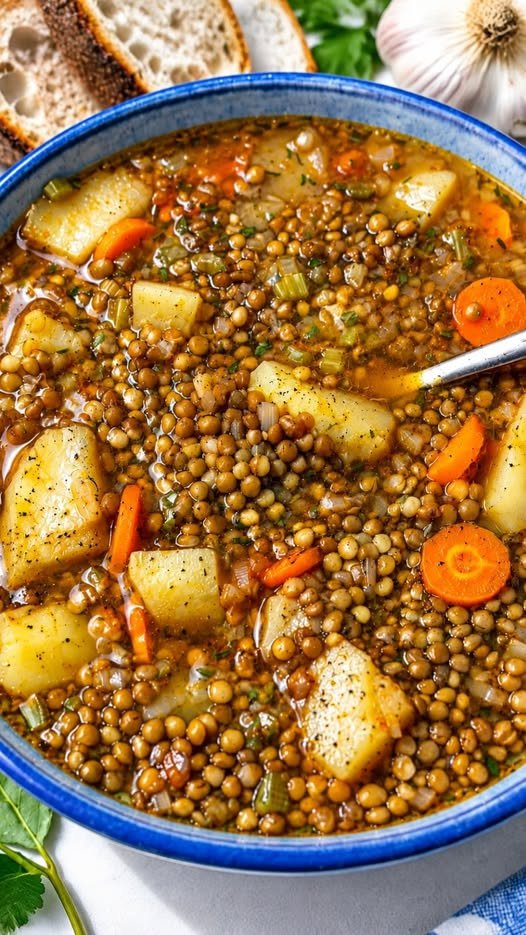
Hearty Lentil and Vegetable Soup

Hearty Lentil and Vegetable Soup

Description

Hearty Lentil and Vegetable Soup is a comforting, nutritious, and flavorful one-pot meal packed with tender lentils, fresh vegetables, and aromatic herbs simmered in a rich savory broth. This wholesome soup is perfect for chilly evenings, healthy lunches, meal prep, or a simple family dinner. The combination of protein-rich lentils, hearty potatoes, sweet carrots, celery, and warming spices creates a satisfying dish that is both delicious and filling. Lentils provide a naturally creamy texture while absorbing the flavors of garlic, onions, herbs, and vegetables during cooking. This budget-friendly recipe uses simple pantry ingredients but delivers incredible depth of flavor. Whether you are looking for a cozy vegetarian meal, a healthy comfort food option, or an easy make-ahead recipe, this lentil soup is a perfect choice. Serve it with crusty bread, a fresh salad, or a drizzle of olive oil for a complete and satisfying meal. The flavors become even better the next day, making it an excellent recipe for leftovers and weekly meal preparation.

Ingredients For the Soup Base

  • 2 cups brown or green lentils, rinsed
  • 2 tablespoons olive oil
  • 1 large onion, diced
  • 3 cloves garlic, minced
  • 3 medium carrots, sliced
  • 2 celery stalks, chopped
  • 3 medium potatoes, peeled and diced
  • 1 can diced tomatoes (14.5 oz)
  • 6 cups vegetable broth or chicken broth
  • 2 tablespoons tomato paste

For Seasoning

  • 1 teaspoon ground cumin
  • 1 teaspoon smoked paprika
  • 1 teaspoon dried thyme
  • 1 teaspoon dried oregano
  • 1 bay leaf
  • 1 teaspoon salt (adjust to taste)
  • ½ teaspoon black pepper
  • ½ teaspoon chili flakes (optional)

For Garnish

  • Fresh parsley or cilantro
  • Lemon wedges
  • Extra virgin olive oil drizzle

Step-by-Step Instructions

  1. Prepare the Vegetables
    Wash and prepare all vegetables before cooking. Dice the onion, chop the carrots and celery, and cut the potatoes into evenly sized pieces so everything cooks evenly.
  2. Sauté the Aromatics
    Heat olive oil in a large soup pot over medium heat. Add diced onion and cook for 3–4 minutes until softened. Add minced garlic and cook for another 30 seconds until fragrant.
  3. Add Vegetables and Seasonings
    Add carrots, celery, and potatoes to the pot. Stir in cumin, smoked paprika, thyme, oregano, salt, and black pepper. Cook for 2–3 minutes to allow the spices to release their flavors.
  4. Add Lentils and Broth
    Add rinsed lentils, diced tomatoes, tomato paste, bay leaf, and broth. Stir everything together until well combined.
  5. Simmer the Soup
    Bring the soup to a boil, then reduce the heat to low. Cover and simmer for 35–45 minutes, or until the lentils and vegetables are tender. Stir occasionally and add extra broth if the soup becomes too thick.
  6. Finish and Serve
    Remove the bay leaf and taste the soup. Adjust seasoning if needed. For a creamier texture, blend a small portion of the soup with an immersion blender and mix it back in. Serve hot with fresh parsley, lemon juice, or a drizzle of olive oil.

Tips, Notes & Q&A

Tips:

  • Rinse lentils before cooking to remove any dust and improve texture.
  • Use green or brown lentils because they hold their shape well in soup.
  • Cut vegetables into similar sizes for even cooking.
  • Add lemon juice at the end to brighten the flavors.
  • For a richer taste, use homemade broth if available.
  • Add spinach or kale during the final minutes for extra nutrition.

Notes:

  • Store leftover soup in an airtight container in the refrigerator for up to 5 days.
  • This soup freezes well for up to 3 months.
  • The soup naturally thickens as it cools; add broth when reheating to reach your preferred consistency.
  • Flavors develop even more after resting overnight.

Q&A:

Can I use canned lentils instead of dry lentils?
Yes, canned lentils can be used. Reduce the cooking time and add them near the end since they are already cooked.

Can I make this soup vegan?
Yes, simply use vegetable broth and keep all ingredients plant-based.

How can I add more protein?
You can add beans, chickpeas, tofu, or serve the soup with Greek yogurt on the side.

Can I make this in a slow cooker?
Yes, combine all ingredients and cook on low for 6–8 hours or until the lentils and vegetables are tender.

Servings & Nutrition

Servings: 6
Prep Time: 15 minutes
Cook Time: 45 minutes
Total Time: About 1 hour

Approximate Nutrition Per Serving:
Calories: 320
Protein: 16g
Carbohydrates: 52g
Fat: 7g
Fiber: 15g
Sugar: 8g

Hearty Lentil and Vegetable Soup is a nourishing and flavorful recipe that combines simple ingredients into a warm bowl of comfort. Perfect for busy weeknights, healthy meal planning, or cozy family dinners, this soup delivers incredible taste, satisfying texture, and wholesome nutrition in every spoonful.

Chinese Chicken Cabbage

Chinese Chicken Cabbage Stir-Fry (Quick & Healthy)

Chinese Chicken Cabbage Stir-Fry is a quick, healthy, and delicious one-pan dinner featuring tender chicken, crunchy cabbage, colorful vegetables, and a rich, savory garlic-ginger sauce. This easy Asian-inspired recipe delivers restaurant-style flavor using simple ingredients and takes just 30 minutes to prepare.

If you’re looking for a nutritious weeknight dinner that doesn’t require hours in the kitchen, this Chinese Chicken Cabbage Stir-Fry is an excellent choice. The juicy chicken provides satisfying protein, while cabbage, carrots, and bell peppers add freshness, texture, and natural sweetness.

The homemade stir-fry sauce combines soy sauce, garlic, ginger, sesame oil, and a touch of honey. Every bite offers a delicious balance of savory, slightly sweet, and aromatic flavors.

Whether you’re preparing dinner for your family, planning healthy lunches, or searching for an affordable meal, this easy chicken and cabbage stir-fry deserves a place in your weekly recipe collection.

Prep Time: 15 minutes

Cook Time: 15 minutes

Total Time: 30 minutes

Servings: 4

Ingredients

For the Chicken

  • 1½ pounds boneless, skinless chicken breast, thinly sliced

  • 1 tablespoon low-sodium soy sauce

  • 1 teaspoon cornstarch

  • ½ teaspoon black pepper

  • 1 tablespoon vegetable oil

For the Vegetables

  • 4 cups green cabbage, thinly shredded

  • 1 medium carrot, julienned

  • 1 red bell pepper, thinly sliced

  • 3 green onions, chopped

  • 3 garlic cloves, minced

  • 1 tablespoon fresh ginger, grated

  • 1 tablespoon vegetable oil

For the Stir-Fry Sauce

  • 3 tablespoons low-sodium soy sauce

  • 1 tablespoon oyster sauce

  • 1 tablespoon rice vinegar

  • 1 teaspoon toasted sesame oil

  • 1 tablespoon honey

  • ¼ cup low-sodium chicken broth or water

  • 1 teaspoon cornstarch

  • ¼ teaspoon crushed red pepper flakes, optional

For Garnishing

  • 1 teaspoon toasted sesame seeds

  • 2 tablespoons chopped green onions

  • Fresh cilantro, optional

  • Lime wedges, optional

How to Make Chinese Chicken Cabbage Stir-Fry

Step 1: Prepare the Chicken

Begin by placing the chicken breasts on a clean cutting board. Using a sharp knife, slice the chicken into thin, bite-sized strips.

Try to cut the pieces into similar sizes so they cook evenly.

Transfer the sliced chicken to a mixing bowl. Add one tablespoon of low-sodium soy sauce, cornstarch, and black pepper.

Mix thoroughly until every piece is lightly coated.

Allow the chicken to marinate for approximately 10 minutes while preparing the vegetables.

The cornstarch helps the chicken develop a tender texture during stir-frying.

Step 2: Prepare the Vegetables

Remove the outer leaves of the cabbage if they are damaged.

Cut the cabbage into quarters, remove the tough core, and slice into thin strips.

Wash and drain thoroughly.

Peel the carrot and cut it into thin matchsticks.

Remove the seeds from the red bell pepper and slice it into strips.

Finely chop the green onions, mince the garlic, and grate the fresh ginger.

Keep the vegetables ready near your stove because stir-frying happens quickly.

Step 3: Make the Stir-Fry Sauce

In a small mixing bowl, combine the soy sauce, oyster sauce, rice vinegar, sesame oil, honey, chicken broth, and cornstarch.

Add red pepper flakes if you prefer a slightly spicy stir-fry.

Whisk thoroughly until the honey dissolves and the cornstarch is completely incorporated.

Set the sauce aside.

Preparing the sauce before cooking makes the process smoother and prevents the vegetables from becoming overcooked.

Step 4: Cook the Chicken

Heat a large wok or nonstick skillet over medium-high heat.

Add one tablespoon of vegetable oil.

Once the oil is hot, arrange the sliced chicken in a single layer.

Cook for approximately 3–4 minutes, then turn the pieces and continue cooking until golden and fully cooked.

Work in batches if necessary to avoid overcrowding.

The chicken should reach an internal temperature of 165°F (74°C).

Transfer the cooked chicken to a clean plate and set aside.

Step 5: Sauté the Garlic and Ginger

In the same wok, add the remaining tablespoon of vegetable oil.

Add the minced garlic and freshly grated ginger.

Stir-fry for approximately 20–30 seconds until fragrant.

Be careful not to burn the garlic because it can become bitter.

This aromatic mixture creates the flavorful foundation of Chinese Chicken Cabbage Stir-Fry.

Step 6: Stir-Fry the Vegetables

Add the sliced carrots and bell peppers to the hot wok.

Cook for approximately 2 minutes, stirring frequently.

Next, add the shredded cabbage.

Toss everything together using a spatula or kitchen tongs.

Continue stir-frying for another 3–4 minutes until the cabbage begins to soften but maintains some crunch.

Avoid cooking the cabbage for too long. Slightly crisp vegetables give this dish its delicious texture.

Step 7: Add the Chicken and Sauce

Return the cooked chicken to the wok.

Stir the prepared sauce again to redistribute the cornstarch, then pour it over the chicken and vegetables.

Toss thoroughly until everything is evenly coated.

Cook for another 1–2 minutes, allowing the sauce to bubble and thicken.

The sauce should lightly coat the ingredients without becoming overly thick.

Taste and adjust the seasoning if necessary.

Step 8: Garnish and Serve

Turn off the heat and sprinkle chopped green onions and toasted sesame seeds over the stir-fry.

Add fresh cilantro or a squeeze of lime juice if desired.

Serve immediately while the chicken is juicy and the vegetables are tender-crisp.

This Chinese Chicken Cabbage Stir-Fry tastes delicious on its own or alongside steamed rice, brown rice, or noodles.

Tips for the Best Chinese Chicken Cabbage Stir-Fry

Slice the Chicken Thinly

Thin chicken strips cook quickly and absorb the flavorful sauce more evenly. For easier slicing, place the chicken in the freezer for approximately 10–15 minutes before cutting.

Cook Over Medium-High Heat

Stir-frying works best when the skillet is properly heated. This helps the ingredients cook quickly while maintaining their texture.

Avoid Overcrowding the Pan

Adding too much chicken at once can lower the pan temperature and cause steaming instead of browning.

Cook the chicken in batches if using a smaller skillet.

Keep the Cabbage Slightly Crisp

Cabbage should be tender but retain some bite. Overcooking makes it soft and watery.

Use Fresh Garlic and Ginger

Fresh aromatics create a stronger, more authentic stir-fry flavor than dried substitutes.

Prepare Everything Before Cooking

Because the cooking process moves quickly, chop the vegetables and mix the sauce before turning on the stove.

Adjust the Sauce Thickness

If the sauce becomes too thick, add one or two tablespoons of water.

If it appears too thin, allow it to simmer briefly while stirring.

Delicious Recipe Variations

1. Spicy Chinese Chicken Cabbage Stir-Fry

For a spicy version, add one teaspoon of chili garlic sauce or chili crisp to the sauce mixture. Adjust the quantity according to your preferred heat level.

2. Low-Carb Chicken Cabbage Stir-Fry

Skip the honey or replace it with a suitable low-carb sweetener. Serve the stir-fry with cauliflower rice instead of regular rice.

3. Chicken and Mushroom Stir-Fry

Add one cup of sliced mushrooms alongside the carrots and bell peppers. Cook away any excess moisture before adding the cabbage.

4. Chicken Cabbage Noodle Stir-Fry

Add two cups of cooked noodles to the wok during the final cooking stage.

Toss everything together until the noodles are coated with the savory sauce.

5. Extra Vegetable Stir-Fry

Add broccoli florets, snap peas, zucchini, or baby corn for additional color and texture.

For harder vegetables such as broccoli, blanch or briefly steam them before stir-frying.

6. Vegetarian Cabbage Stir-Fry

Replace the chicken with extra-firm tofu.

Use vegetarian mushroom stir-fry sauce instead of traditional oyster sauce and replace chicken broth with vegetable broth.

What to Serve with Chinese Chicken Cabbage Stir-Fry

This delicious stir-fry pairs beautifully with several simple side dishes.

Steamed Jasmine Rice: Fluffy jasmine rice absorbs the savory garlic-ginger sauce and makes the meal more filling.

Brown Rice: Brown rice adds a nutty flavor and additional fiber.

Cauliflower Rice: A great option when you want a lighter, lower-carbohydrate meal.

Rice Noodles: Thin rice noodles complement the chicken and vegetables while creating a satisfying noodle bowl.

Steamed Broccoli: Lightly steamed broccoli adds freshness and extra vegetables.

Asian Cucumber Salad: A refreshing cucumber salad with rice vinegar and sesame oil balances the warm, savory flavors.

For an easy weeknight dinner, serve Chinese Chicken Cabbage Stir-Fry over a small portion of steamed jasmine rice and garnish with fresh green onions.

Storage and Meal Prep Instructions

Refrigerator Storage

Allow the cooked stir-fry to cool slightly.

Transfer leftovers to an airtight container and refrigerate within two hours of cooking.

Store in the refrigerator for up to 3–4 days at 40°F (4°C) or below.

Freezer Storage

You can freeze this stir-fry for up to 2 months for best quality.

However, cabbage may become softer after freezing and reheating.

Allow the food to cool before transferring it to freezer-safe containers.

Reheating Instructions

Reheat leftovers in a skillet over medium heat.

Add one or two tablespoons of water to loosen the sauce if necessary.

Stir occasionally until the chicken and vegetables are thoroughly heated to 165°F (74°C).

Alternatively, reheat individual portions in the microwave.

Meal Prep Tips

Prepare the vegetables and sauce ahead of time to reduce cooking time.

For weekly meal prep, divide cooked stir-fry into four airtight containers.

Store rice separately to prevent it from becoming overly soft.

Refrigerate promptly and reheat before serving.

Health Benefits of Chicken and Cabbage Stir-Fry

High in Protein

Chicken breast is an excellent source of lean protein, which supports muscle maintenance and helps create a satisfying meal.

Contains Fiber

Cabbage, carrots, and bell peppers provide dietary fiber that supports normal digestion.

Rich in Vegetables

This recipe includes several colorful vegetables that contribute vitamins, minerals, and beneficial plant compounds.

Provides Vitamin C

Cabbage and bell peppers contain vitamin C, which supports normal immune function.

Easy to Customize

You can adjust the amount of chicken, vegetables, sauce, and rice according to your dietary preferences.

Suitable for Meal Prep

Because the dish reheats well, it is convenient for preparing balanced lunches and dinners in advance.

For a lower-sodium meal, choose reduced-sodium sauces and adjust the quantity according to your needs.

Frequently Asked Questions

Can I use chicken thighs instead of chicken breasts?

Yes. Boneless, skinless chicken thighs work wonderfully in this recipe. They remain juicy and tender during stir-frying and provide a slightly richer flavor.

Can I use purple cabbage?

Absolutely! Purple cabbage can replace green cabbage. However, it may slightly change the color of the finished dish and usually requires a little extra cooking time.

How do I prevent my stir-fry from becoming watery?

Make sure the vegetables are thoroughly drained before cooking.

Use a large, hot skillet and avoid overcrowding.

Also, do not overcook the cabbage because it naturally releases moisture.

Can I make Chinese Chicken Cabbage Stir-Fry without soy sauce?

Yes. You can substitute coconut aminos for soy sauce. The flavor will be slightly sweeter, so consider reducing the honey.

Is this recipe gluten-free?

Traditional soy sauce and some oyster sauces contain wheat.

To make a gluten-free version, use certified gluten-free tamari and gluten-free oyster sauce or a suitable alternative. Check all packaged ingredients.

Can I prepare the ingredients ahead of time?

Yes. Slice the vegetables, prepare the sauce, and store them separately in the refrigerator.

Keep raw chicken properly refrigerated and cook within the recommended storage period.

Can I add eggs?

Yes. Scramble one or two eggs separately, then fold them into the stir-fry during the final cooking stage.

This creates a variation inspired by Asian-style fried rice and noodle dishes.

How can I make this stir-fry spicier?

Add chili flakes, sliced fresh chilies, chili garlic sauce, or a small amount of sriracha.

Start with a little and adjust according to taste.

Can I use a bag of coleslaw mix?

Yes. Pre-shredded coleslaw mix is a convenient substitute for fresh cabbage and carrots.

Choose an unseasoned mix without dressing.

Can I make this recipe without oyster sauce?

Yes. Replace oyster sauce with an additional tablespoon of soy sauce or mushroom stir-fry sauce. Adjust to taste, as different sauces have different sodium levels.

Estimated Nutritional Information

Approximate values per serving, based on 4 servings, without rice or noodles. Actual values depend on the ingredients and brands used.

Nutrient Amount
Calories 370 kcal
Protein 42 g
Carbohydrates 19 g
Total Fat 13 g
Saturated Fat 2 g
Dietary Fiber 4 g
Sugar 10 g
Sodium 850 mg

Final Thoughts

Chinese Chicken Cabbage Stir-Fry (Quick & Healthy) is a flavorful, nutritious, and easy-to-make meal that brings together tender chicken, crunchy vegetables, and a delicious homemade garlic-ginger sauce.

With simple preparation and just one skillet, this recipe is perfect for busy families, healthy lunches, or quick weeknight dinners.

The combination of juicy chicken, colorful cabbage, fresh ginger, and savory sauce makes every bite satisfying without requiring complicated cooking techniques.

Serve it with rice, noodles, or enjoy it on its own for a delicious homemade meal that’s easy to prepare and packed with flavor.

Cranberry Walnut Pinwheels

Cranberry Walnut Pinwheels with golden flaky puff pastry, creamy cheese filling, dried cranberries, and crunchy walnuts. Copy

Cranberry Walnut Cream Cheese Puff Pastry Pinwheels

Description

These Cranberry Walnut Cream Cheese Puff Pastry Pinwheels are the perfect combination of buttery, flaky pastry, creamy cheese, sweet dried cranberries, and crunchy walnuts. Each bite delivers a delicious contrast of textures and flavours, making these golden pinwheels an irresistible appetiser for parties, holidays, brunches, potlucks, and family gatherings.

The recipe is incredibly simple to prepare, yet the finished pinwheels look elegant enough for a special occasion. Refrigerated or thawed puff pastry provides a light and flaky base, while softened cream cheese creates a rich and creamy filling. Sweet dried cranberries add a beautiful burst of flavour, and chopped walnuts provide a satisfying crunch.

These pinwheels are especially wonderful during the holiday season. The red cranberries and golden pastry make them look festive on a serving platter, while the combination of sweet and savoury flavours makes them appealing to both adults and children.

You can prepare them ahead of time and bake them just before your guests arrive. They are best served warm, when the pastry is crisp and the cream cheese filling is soft and creamy.

Whether you’re looking for an easy Thanksgiving appetiser, a Christmas party snack, New Year’s Eve finger food, or a simple addition to a brunch buffet, these cranberry walnut pinwheels are a recipe worth saving.

Ingredients

For the Pinwheels

  • 1 sheet puff pastry, thawed
  • 8 ounces cream cheese, softened
  • ¼ cup powdered sugar
  • 1 teaspoon vanilla extract
  • ½ cup dried cranberries
  • ½ cup walnuts, finely chopped
  • ¼ teaspoon ground cinnamon
  • 1 tablespoon honey
  • 1 egg
  • 1 tablespoon water
  • 1 tablespoon powdered sugar, optional for finishing

Optional Additions

  • 1 teaspoon orange zest
  • ¼ cup finely shredded white cheddar cheese
  • 1 tablespoon finely chopped fresh rosemary
  • Pinch of salt

Instructions

1. Prepare the Oven

Preheat your oven to 400°F (200°C).

Line a large baking sheet with parchment paper. This prevents the pastry from sticking and makes cleanup much easier.

2. Prepare the Cream Cheese Filling

Place the softened cream cheese in a medium mixing bowl.

Add the powdered sugar, vanilla extract, cinnamon, and honey.

Beat or stir until the mixture is smooth and creamy.

If you want a bright citrus flavour, add 1 teaspoon of freshly grated orange zest. Orange pairs particularly well with cranberries and gives the filling a festive flavour.

Do not worry if the mixture is slightly thick. It should be spreadable but not runny.

3. Prepare the Puff Pastry

Place the thawed puff pastry sheet on a lightly floured work surface.

Gently roll it out into a rectangle if necessary. Avoid rolling it too thin because you want the finished pinwheels to have plenty of flaky layers.

If the pastry becomes too soft or sticky while you are working with it, place it in the refrigerator for 5–10 minutes.

4. Add the Filling

Spread the cream cheese mixture evenly over the puff pastry.

Leave approximately ½ inch around the edges so the filling does not squeeze out excessively when you roll the pastry.

Sprinkle the dried cranberries evenly over the cream cheese.

Follow with the finely chopped walnuts.

Press the cranberries and walnuts gently into the cream cheese layer so they stay in place when the pastry is rolled.

5. Roll the pastry.

Starting from one long side, carefully roll the pastry into a tight log.

Try to keep the roll firm without pressing so hard that the filling is pushed out.

Once completely rolled, place the seam side down.

Wrap the log in plastic wrap and refrigerate for approximately 20–30 minutes.

Chilling the pastry makes it much easier to slice and helps the pinwheels maintain their shape while baking.

6. Slice the Pinwheels

Remove the chilled pastry log from the refrigerator.

Using a sharp knife, cut it into approximately ½-inch slices.

If the knife becomes sticky, wipe it clean between cuts.

Arrange the slices on the prepared baking sheet, leaving about 1–2 inches between each one because the puff pastry will expand as it bakes.

7. Prepare the Egg Wash

In a small bowl, whisk together the egg and 1 tablespoon of water.

Lightly brush the exposed pastry surfaces with the egg wash.

This gives the pinwheels a beautiful golden-brown finish.

Be careful not to brush too much egg wash onto the sides because it can make the layers stick together.

8. Bake

Place the baking sheet in the preheated oven.

Bake for approximately 15–20 minutes, or until the pastry is puffed and beautifully golden brown.

The exact baking time can vary depending on the thickness of your slices and your oven.

Watch the pinwheels closely during the final few minutes.

9. Cool and Serve

Remove the pinwheels from the oven and allow them to cool on the baking sheet for approximately 5 minutes.

Transfer them to a serving platter.

If desired, lightly dust the tops with powdered sugar before serving.

Serve warm or at room temperature.

Notes

Use cream cheese that has been softened to room temperature. Cold cream cheese can be difficult to spread and may tear the delicate puff pastry.

Make sure the puff pastry is thawed but still cool. Puff pastry works best when it is cold. If it becomes warm and soft, return it to the refrigerator before rolling or slicing.

Chopping the walnuts fairly small makes the pinwheels easier to slice and ensures you get crunchy walnuts in every bite.

You can use sweetened or unsweetened dried cranberries. Sweetened cranberries provide a more dessert-like flavour, while unsweetened cranberries create a slightly more tart contrast.

If you prefer a more savoury appetiser, reduce the powdered sugar and honey and add a little shredded sharp cheddar or goat cheese instead.

Tips for Perfect Pinwheels

Keep the Pastry Cold

Cold puff pastry creates the best flaky layers. If your kitchen is warm or the pastry starts becoming soft, refrigerate it for several minutes before continuing.

Don’t Overfill

It can be tempting to add lots of cream cheese, cranberries, and walnuts, but too much filling can cause the pinwheels to unravel or leak while baking.

Roll Firmly

A firm, even roll helps create beautiful spirals. Roll from the long side and keep the pressure consistent.

Chill Before Slicing

Don’t skip the chilling step. A cold pastry log is much easier to cut cleanly and produces more attractive pinwheels.

Use a Sharp Knife

A sharp knife will slice through the pastry without crushing the layers.

Don’t Overcrowd the Pan

Leave enough room between the pinwheels for the puff pastry to expand.

Watch the Baking Time.

Puff pastry can brown quickly. If the tops are becoming dark before the pastry is fully baked, loosely cover the tray with foil for the remaining baking time.

Flavour Variations

Orange Cranberry Walnut

Add fresh orange zest to the cream cheese filling. You can also replace some of the honey with orange marmalade for an extra citrus flavour.

Cranberry Pecan

Replace the walnuts with chopped pecans. Pecans provide a slightly sweeter, buttery flavour.

Savoury Cranberry & Goat Cheese

Replace part of the cream cheese with soft goat cheese and reduce the powdered sugar. Add fresh rosemary and black pepper for an elegant savoury version.

Cranberry Brie

Add thin slices or small pieces of Brie along with the cream cheese. The brie melts beautifully inside the pastry.

Apple Cranberry Walnut

Add a small amount of finely diced dried apple to the filling for an extra fruity flavour.

Make-Ahead Instructions

These pinwheels are excellent for entertaining because you can prepare them ahead of time.

Prepare and roll the pastry according to the recipe. Instead of slicing immediately, wrap the entire log tightly in plastic wrap and refrigerate it for up to 24 hours.

When you’re ready to bake, slice the chilled log and arrange the pieces on a parchment-lined baking sheet.

Brush with egg wash and bake as directed.

You can also freeze the unbaked pastry log. Wrap it tightly and freeze for up to 1 month. Thaw it in the refrigerator before slicing and baking.

Storage

Store leftover pinwheels in an airtight container in the refrigerator for up to 3 days.

For the best texture, reheat them in a 350°F (175°C) oven or air fryer until warmed through and crisp again.

Avoid relying entirely on the microwave because it can make puff pastry soft.

Servings

This recipe makes approximately 20–24 pinwheels, depending on the size of your slices.

Serving size: 2–3 pinwheels.

Nutritional Information

Approximate nutrition per 2 pinwheels:

  • Calories: 235
  • Protein: 4 g
  • Carbohydrates: 19 g
  • Fibre: 1 g
  • Sugar: 7 g
  • Fat: 16 g
  • Saturated Fat: 7 g
  • Cholesterol: 35 mg
  • Sodium: 170 mg
  • Calcium: 35 mg

Nutritional values are estimates and may vary depending on the puff pastry, cream cheese, walnuts, cranberries, and portion size used.

Benefits

Provides Healthy Fats

Walnuts contain unsaturated fats, including omega-3 fatty acids, which can be part of a balanced diet.

Contains Protein

Cream cheese and walnuts contribute a modest amount of protein, making these pinwheels more satisfying than a plain pastry snack.

Provides Antioxidants

Cranberries and walnuts contain naturally occurring antioxidant compounds.

Easy Portion Control

Because these are individual bite-sized pinwheels, they are easy to portion for parties and gatherings.

Convenient for Entertaining

The pinwheels can be prepared ahead of time, making them especially useful when you’re hosting guests.

Versatile

The filling can easily be adapted with different cheeses, nuts, dried fruits, and herbs.

Frequently Asked Questions

Can I use crescent roll dough instead of puff pastry?

Yes. Crescent roll dough can be used, although the texture will be softer and less flaky than traditional puff pastry.

Can I use pecans instead of walnuts?

Absolutely. Pecans are an excellent substitute and provide a slightly sweeter, buttery flavour.

Can I use fresh cranberries?

Fresh cranberries are much more tart and contain more moisture than dried cranberries. For this recipe, dried cranberries are recommended for the best texture.

Can I make these savory instead of sweet?

Yes. Reduce or omit the powdered sugar and honey. Add goat cheese, cheddar, Parmesan, rosemary, thyme, or black pepper for a savory version.

Can I use flavored cream cheese?

Yes. Honey, cinnamon, or berry-flavored cream cheese can work well. However, check the sweetness of the cream cheese before adding additional sugar or honey.

Why did my pinwheels unravel?

This usually happens when the pastry is not rolled tightly enough, there is too much filling, or the log was not chilled before slicing. Make sure the roll is firm and refrigerate it before cutting.

How do I keep the filling from leaking?

Leave a small border around the pastry and avoid overfilling. Chilling the rolled pastry before baking also helps the filling stay in place.

Can I freeze baked pinwheels?

Yes, but freezing the unbaked pinwheels generally gives you a better texture. If freezing baked pinwheels, cool them completely first and store them in an airtight freezer-safe container.

How should I serve them?

Serve them warm or at room temperature on an appetizer platter. They pair beautifully with fruit, cheese boards, salads, sparkling beverages, and other party appetizers.

Can I make them the night before?

Yes. Prepare the pastry log the night before, refrigerate it overnight, then slice and bake shortly before serving.

Final Thoughts

These Cranberry Walnut Cream Cheese Puff Pastry Pinwheels are proof that an impressive appetizer doesn’t have to be complicated. With just a few simple ingredients, you can create golden, flaky spirals filled with creamy cheese, sweet cranberries, and crunchy walnuts.

They are beautiful enough for holiday entertaining but easy enough to make whenever you’re craving something special. The combination of buttery pastry, creamy filling, chewy cranberries, and toasted walnuts gives every bite a delicious balance of textures and flavors.

Prepare the roll ahead of time, keep it chilled, slice it just before baking, and you’ll have a warm, golden appetizer ready to impress your guests.

No-Knead Rustic Rosemary Garlic Bread

No-Knead Rustic Rosemary Garlic Bread

Description

No-Knead Rustic Rosemary Garlic Bread is a simple homemade bread with a crisp, golden crust and a soft, airy centre filled with the comforting flavours of fresh rosemary and garlic. The best part is that there is no kneading, no complicated equipment, and no special bread-making skills required.

The dough comes together in just a few minutes using basic pantry ingredients. Instead of kneading the dough, you simply mix everything together and allow time to do the work. A long resting period gives the flour and yeast time to develop flavour while creating the beautiful texture that makes rustic bread so delicious.

Fresh rosemary adds an earthy, fragrant flavour, while garlic gives the loaf a savoury aroma that fills the kitchen as it bakes. The finished bread is wonderful served warm with butter, alongside soup or salad, or used for sandwiches and toast.

Ingredients

For the Bread

  • 3 cups all-purpose flour
  • 1½ teaspoons salt
  • 1 teaspoon instant yeast
  • 1½ cups warm water
  • 2 tablespoons extra-virgin olive oil
  • 2 tablespoons fresh rosemary, finely chopped
  • 3 cloves of garlic, finely minced
  • 1 teaspoon honey or sugar, optional

For Finishing

  • 1 tablespoon olive oil
  • 1 teaspoon fresh rosemary
  • 1 small garlic clove, finely minced
  • Flaky sea salt, optional

Instructions

1. Prepare the Garlic and Rosemary

Begin by finely chopping the fresh rosemary. Fresh rosemary works particularly well in this recipe because its fragrant oils are released into the dough during mixing and baking.

Finely mince the garlic. Make sure the pieces are small so the garlic distributes evenly throughout the bread.

For a milder garlic flavour, use two cloves. For a stronger garlic flavour, use four cloves.

2. Mix the Dry Ingredients

In a large mixing bowl, combine the all-purpose flour, salt, and instant yeast.

Stir well so the yeast and salt are distributed throughout the flour.

Add the chopped rosemary and minced garlic and mix again.

3. Add the Wet Ingredients

Pour the warm water and olive oil into the flour mixture.

If using honey or sugar, add it now.

Using a wooden spoon, sturdy spatula, or your hands, mix everything together until a rough, sticky dough forms.

There is no need to knead the dough.

The mixture should look shaggy and somewhat sticky. Do not add a large amount of extra flour just because the dough feels sticky. A wetter dough helps create the rustic, open texture of no-knead bread.

4. Let the Dough Rise

Cover the bowl tightly with plastic wrap, a lid, or a clean kitchen towel.

Leave the dough at room temperature for approximately 8–12 hours.

Overnight is ideal.

As the dough rests, the yeast slowly develops flavour and structure. When ready, the dough should look noticeably larger, bubbly, and airy.

If your kitchen is particularly warm, the dough may rise faster. If your kitchen is cool, it may require additional time.

5. Prepare the Dough for Baking

Lightly flour a clean work surface.

Gently transfer the dough onto the surface.

Sprinkle a little flour over the top if it is very sticky.

Without kneading, gently fold the dough over itself a few times to create a loose round shape.

Avoid pressing out all the air. Those air bubbles help create the rustic texture inside the finished loaf.

Cover the dough loosely and let it rest for approximately 30–45 minutes.

6. Preheat the Oven

Place a Dutch oven with its lid inside the oven.

Preheat the oven to 450°F (230°C).

Allow the Dutch oven to heat for at least 30 minutes.

The hot Dutch oven creates steam around the bread during the first part of baking, helping produce a crisp crust and beautifully developed loaf.

7. Transfer the Dough

Carefully remove the hot Dutch oven from the oven.

Place a piece of parchment paper underneath the dough and carefully lower the dough into the Dutch oven.

Be extremely careful because the Dutch oven and lid will be very hot.

Brush the top of the dough lightly with olive oil.

Sprinkle with fresh rosemary and a little flaky sea salt if desired.

Using a sharp knife or bread lame, make one or two shallow cuts across the top of the dough. This allows the bread to expand as it bakes.

8. Bake Covered

Place the lid on the Dutch oven.

Bake at 450°F for approximately 25–30 minutes.

Keeping the bread covered during this stage traps steam inside the pot. This helps the loaf rise and develop a beautiful crust.

9. Bake Uncovered

Carefully remove the lid.

Continue baking for another 10–15 minutes, or until the bread is deep golden brown and the crust looks crisp.

For a darker crust, allow it to bake for a few additional minutes, watching carefully so the garlic does not burn.

10. Cool Before Slicing

Remove the bread from the Dutch oven and place it on a wire rack.

Allow it to cool for at least 30–60 minutes before slicing.

Although it may be tempting to cut into the loaf immediately, allowing it to cool helps the interior finish setting and prevents the bread from becoming gummy.

Slice with a serrated bread knife and serve.

Notes

The dough should be sticky. Resist the temptation to add too much flour because a wetter dough generally creates a lighter, more rustic crumb.

Instant yeast works especially well because it can be mixed directly into the flour.

If using active dry yeast instead, dissolve it in the warm water first and allow it to sit for approximately 5–10 minutes before mixing.

The water should be warm but not extremely hot. Very hot water can damage the yeast.

Fresh rosemary provides the best flavour, but dried rosemary can be substituted. Use approximately 2 teaspoons dried rosemary instead of the fresh rosemary.

If you want a stronger garlic flavour, add roasted garlic instead of raw minced garlic. Roasted garlic creates a sweeter, milder flavour.

Tips for Perfect No-Knead Bread

Measure Flour Correctly

For the most consistent results, use a kitchen scale if possible. If measuring with cups, spoon the flour into the measuring cup and level it rather than packing it down.

Don’t Rush the First Rise

The long fermentation is one of the secrets to good no-knead bread. Give the dough enough time to become bubbly and airy.

Don’t Overwork the Dough

No-knead bread doesn’t need traditional kneading. Gentle folding is enough.

Use a Dutch Oven.

A heavy Dutch oven with a tight-fitting lid is ideal because it traps steam around the loaf. If you don’t have one, the bread can still be baked on a heavy baking sheet, but the crust may be different.

Preheat the Pot

Putting the dough into a properly heated Dutch oven helps the crust begin forming immediately.

Don’t Slice Too Soon

Allow the loaf to cool before slicing. This gives the interior time to set and creates a better crumb.

Watch the Garlic

Garlic exposed directly on the surface can brown quickly. If you notice the garlic becoming too dark, reduce the oven temperature slightly during the uncovered portion of baking.

Variations

Parmesan Rosemary Garlic Bread

Add ½ cup finely grated Parmesan cheese to the dough for a richer, savoury loaf.

Roasted Garlic Bread

Replace the raw garlic with ½ cup mashed roasted garlic cloves. This gives the bread a sweet and mellow garlic flavour.

Garlic Herb Bread

Add chopped parsley, thyme, oregano, or basil along with the rosemary.

Cheesy Garlic Bread

Add ½ cup shredded mozzarella or sharp cheddar to the dough.

Lemon Rosemary Bread

Add 1 teaspoon of finely grated lemon zest along with the rosemary for a bright flavour.

Spicy Garlic Bread

Add ¼–½ teaspoon crushed red pepper flakes for a gentle spicy kick.

Servings

Makes 1 rustic loaf.

Approximately 8–10 servings, depending on slice size.

Nutritional Information

Approximate nutrition per serving, based on 10 servings:

Calories: 180–200

Protein: 4–5 g

Carbohydrates: 30–33 g

Dietary Fibre: 1–2 g

Sugar: 1 g

Fat: 5–6 g

Saturated Fat: Less than 1 g

Sodium: 300–350 mg

Nutritional values are estimates and will vary depending on the exact ingredients and serving size.

Benefits

Simple Ingredients

This bread is made with basic ingredients that are commonly found in the pantry, making it an easy alternative to store-bought artisan bread.

No Kneading Required

The long fermentation process develops the dough without requiring traditional kneading.

Fresh Homemade Bread

Homemade bread allows you to control the ingredients and avoid unnecessary preservatives commonly found in some packaged breads.

Rosemary Adds Flavour

Fresh rosemary provides a fragrant herbal flavour that makes the bread delicious without needing a complicated recipe.

Garlic Adds Aroma

Garlic gives the loaf a savoury aroma and rich flavour that pairs beautifully with soups, salads, roasted vegetables, and main dishes.

Versatile

The bread can be served as a side, used for sandwiches, toasted for breakfast, or turned into garlic toast.

Frequently Asked Questions

Why is my no-knead dough so sticky?

Sticky dough is normal. No-knead bread typically uses a relatively wet dough. If it is extremely difficult to handle, lightly flour your hands and work surface rather than adding large amounts of flour.

Can I let the dough rise overnight?

Yes. Overnight fermentation is one of the easiest ways to make this recipe. Cover the bowl and leave it at room temperature for approximately 8–12 hours.

Can I use whole wheat flour?

Yes. You can replace part of the all-purpose flour with whole wheat flour. Start by replacing about 1 cup of all-purpose flour with whole wheat flour. The bread will be denser and have a more hearty flavour.

Can I use bread flour?

Yes. Bread flour works very well and can create a slightly chewier loaf.

Can I use dried rosemary?

Yes. Substitute approximately 2 teaspoons dried rosemary for the fresh rosemary.

Can I use garlic powder?

Yes, although fresh garlic provides better flavour. Use about 1 teaspoon garlic powder if you don’t have fresh garlic.

Do I need a Dutch oven?

A Dutch oven is highly recommended because it creates a steam-filled environment that helps produce the classic crisp crust. However, the bread can be baked without one using a heavy baking sheet and a separate source of steam.

How do I know when the bread is done?

The loaf should have a deep golden-brown crust and sound hollow when tapped on the bottom. If using an instant-read thermometer, the internal temperature should generally be around 200–210°F (93–99°C).

Why did my bread turn out dense?

A dense loaf can result from insufficient rising time, old yeast, too much flour, or dough that was overworked. Make sure the dough becomes visibly bubbly and expanded before shaping.

How should I store the bread?

Once completely cool, store the bread in a paper bag or loosely wrapped at room temperature for up to 2 days. Avoid storing freshly baked bread in the refrigerator because refrigeration can make it stale faster.

Can I freeze the bread?

Yes. Once completely cooled, slice the loaf and place the slices in a freezer-safe bag or container. Freeze for up to about 2–3 months. Thaw at room temperature and warm in the oven or toaster before serving.

What should I serve with rosemary garlic bread?

It pairs beautifully with soups, stews, pasta, salads, roasted chicken, grilled vegetables, seafood, and creamy dips. It is also delicious simply toasted with butter or olive oil.

Final Thoughts

No-Knead Rustic Rosemary Garlic Bread is one of the easiest ways to make bakery-style bread at home. There is no complicated kneading process and no need for special bread-making skills. A simple mixture of flour, yeast, water, olive oil, garlic, and rosemary transforms into a beautiful rustic loaf with a crisp golden crust and soft, flavorful center.