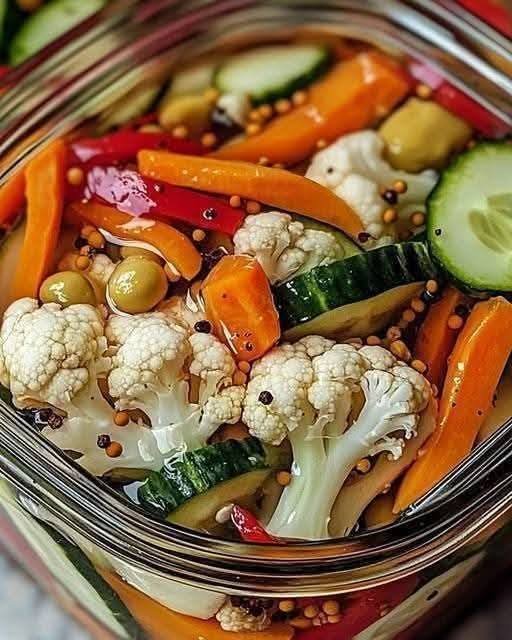
Crunchy Tangy Refrigerator Pickled Vegetables
Forget the canning jars and the boiling water baths. These Refrigerator Pickled Vegetables are the “set it and forget it” champions of the condiment world. Crisp, vibrant, and punchy, these pickles rely on a simple vinegar brine to transform raw veggies into a zesty snack or topping in just a few hours.
Whether you’re looking to rescue that lone carrot in the crisper drawer or want to elevate your next charcuterie board, this recipe is your go-to. It’s infinitely customizable—think of this as a template rather than a rigid rulebook.
Recipe Overview
-
Prep time: 20 minutes
-
Chill time: 2–24 hours (for best flavor)
-
Servings: Makes approx. 2 quart-sized jars
-
Shelf Life: Up to 3 weeks in the refrigerator
Ingredients
The Vegetables
-
4 cups mixed crunchy vegetables (sliced cucumbers, cauliflower florets, carrot sticks, radishes, red onion, or green beans)
-
4 cloves garlic, smashed
The Brine
-
1 ½ cups White vinegar (or Apple Cider Vinegar for a fruitier profile)
-
1 ½ cups Water
-
2 tbsp Kosher salt (non-iodized)
-
2 tbsp Granulated sugar (adjust to taste)
The Flavor Boosters (Optional)
-
1 tsp Whole peppercorns
-
1 tsp Mustard seeds
-
½ tsp Red pepper flakes (for heat)
-
2 sprigs Fresh dill or thyme
Instructions
-
Prep the Veggies: Wash all vegetables thoroughly. Slice them into your preferred shapes—coins, spears, or bite-sized florets.
-
Pack the Jars: Divide the garlic and spices between two clean quart-sized glass jars. Pack the vegetables tightly into the jars, leaving about an inch of headspace at the top.
-
Simmer the Brine: In a small saucepan, combine the vinegar, water, salt, and sugar. Bring to a simmer over medium heat, stirring until the salt and sugar are completely dissolved.
-
Pour and Seal: Carefully pour the hot brine over the vegetables until they are completely submerged. Tap the jars gently on the counter to release any trapped air bubbles.
-
Cool and Chill: Let the jars sit at room temperature until cool. Screw on the lids and place them in the refrigerator.
-
Wait (The Hard Part): While you can eat them in 2 hours, they are significantly better after 24 hours.
Nutritional Info (Per ½ Cup Serving)
| Metric | Amount |
| Calories | 25 kcal |
| Total Fat | 0g |
| Sodium | 480mg |
| Carbohydrates | 5g |
| Fiber | 1g |
| Sugar | 3g |
| Protein | 1g |
Benefits of Pickling
-
Waste Reduction: A perfect way to preserve vegetables before they go bad.
-
Low Calorie: High-flavor impact with very little fat or heavy caloric load.
-
Digestive Aid: While not fermented (like kimchi), the vinegar can help stimulate digestion and the fiber keeps things moving.
-
Vitamin Retention: Since the vegetables aren’t cooked, they retain much of their original vitamin C and B-complex content.
Tips for Success
-
Keep it Cold: These are not shelf-stable. They must stay refrigerated.
-
The Crunch Factor: For maximum crunch, use the freshest vegetables possible. If using cucumbers, Kirby or Persian varieties work best because they have thinner skins.
-
Salt Matters: Use Kosher or pickling salt. Table salt contains anti-caking agents that can make your brine look cloudy and unappetizing.
-
Submerge: Ensure the veggies stay under the brine. If they float, they may soften or spoil faster.
Q&A
Q: Can I use less sugar?
A: Absolutely. The sugar is there to balance the acidity of the vinegar. You can omit it entirely, though the result will be very sharp.
Q: How long do they last?
A: They are safest and tastiest within 3 weeks. After that, the vegetables begin to lose their “crunch” and become mushy.
Q: Why is my brine cloudy?
A: This usually happens if you use table salt or if your water has high mineral content. It’s generally safe to eat, just less “pretty.”
Q: Can I reuse the brine?
A: You can reuse it once for another quick batch, but keep in mind the vegetables release water, so the second batch will be slightly more diluted and less tangy.