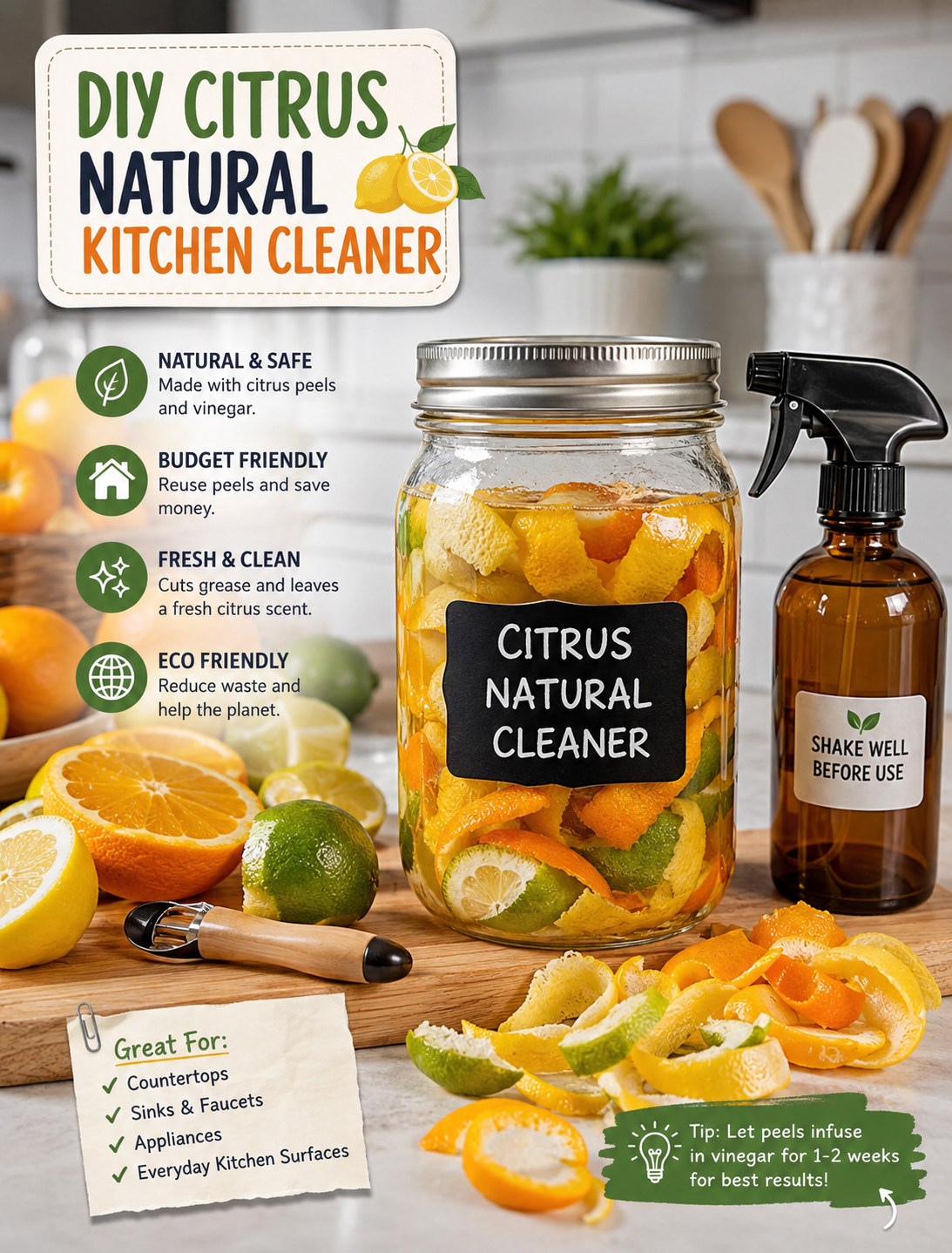
DIY Citrus Natural Kitchen Cleaner: Easy Homemade Cleaning Hack

DIY Citrus Natural Kitchen Cleaner

DIY Citrus Natural Kitchen Cleaner

If you usually throw orange and lemon peels into the trash, save them for your next cleaning project. Citrus peels can be used to make a simple homemade cleaner for many everyday kitchen surfaces. This DIY citrus natural kitchen cleaner is easy to prepare, budget-friendly, and gives your home a fresh citrus scent.

The recipe uses citrus peels and white vinegar to create a useful household cleaning solution. The citrus oils released from the peels add a fresh aroma, while vinegar helps cut through common kitchen grime and mineral buildup. It is a practical option for people who want to reduce their use of heavily scented commercial cleaners.

This homemade citrus cleaner works best for routine cleaning on suitable surfaces such as sealed countertops, sinks, appliances, and other washable areas. Always check the manufacturer’s care instructions before using any homemade solution on a new surface.

Why Make a Citrus Kitchen Cleaner at Home?

Making your own cleaner lets you reuse food scraps that would otherwise become waste. Orange, lemon, lime, and grapefruit peels can all be used for a naturally fresh cleaning solution.

A homemade cleaner can also cost less than buying multiple specialty products. You only need a few basic supplies, a jar, and some patience while the mixture infuses.

The citrus aroma is another reason many people enjoy this method. Fresh peels can give the solution a pleasant scent without adding artificial fragrance.

This approach also supports a lower-waste kitchen routine. Instead of immediately discarding citrus skins after making juice or eating fruit, you can give them another practical purpose.

Ingredients You Need

You only need a few simple ingredients and supplies to prepare this natural kitchen cleaning solution.

  • Fresh orange, lemon, lime, or grapefruit peels
  • White distilled vinegar
  • A clean glass jar with a lid
  • A fine strainer or cheesecloth
  • A spray bottle
  • Water for dilution

Use clean citrus peels without large amounts of fruit pulp attached. Fresh peels work well, but make sure the jar and spray bottle are clean before preparing the solution.

How to Make DIY Citrus Natural Kitchen Cleaner

  • Start by collecting enough citrus peels to loosely fill a clean glass jar. You can use one type of citrus or combine different peels for a mixed citrus scent.
  • Place the peels inside the jar without packing them too tightly. Pour white vinegar over the peels until they are completely covered.
  • Close the jar tightly and place it in a cool, dark area. Let the citrus peels infuse in the vinegar for about one to two weeks. Gently swirl the jar every few days to help distribute the citrus oils.
  • After the infusion period, strain the liquid through a fine strainer or cheesecloth. Discard the used peels and keep the infused vinegar.
  • Pour the strained liquid into a clean spray bottle. For routine surface cleaning, dilute the infused vinegar with an appropriate amount of water before use.
  • Label the bottle clearly and store it away from children and pets. Use a fresh batch when the solution develops an unusual appearance or odor.

How to Use Citrus Cleaner in the Kitchen

  • Shake the bottle gently before each use. Spray a small amount onto a suitable washable surface and wipe it with a clean microfiber cloth.
  • Use it for everyday grime around sinks, sealed countertops, cabinet surfaces, and other compatible kitchen areas. For greasy surfaces, remove heavy grease first with warm water and dish soap because vinegar-based cleaners are not designed to replace a dedicated degreaser.
  • For mineral spots around a compatible sink or faucet, allow the solution to sit briefly before wiping. Rinse the surface afterward when required by the material.
  • Always test the cleaner on a small hidden area before treating a larger surface. Different finishes can react differently to acidic solutions.

Best Citrus Peels to Use

  • Lemon peels are a popular choice because they provide a bright, fresh aroma. They are especially useful when you want a cleaner with a crisp citrus smell.
  • Orange peels provide a sweeter scent and are easy to collect after snacking or juicing. They can be combined with lemon peels for a balanced fragrance.
  • Lime peels offer a sharper aroma and work well in a mixed citrus infusion. Grapefruit peels can also be used, although their scent is stronger and more distinctive.
  • Avoid using spoiled or moldy peels. Fresh, clean citrus skins are the better choice for a homemade cleaning solution.

Surfaces You Should Avoid

Vinegar is acidic, so this cleaner is not suitable for every kitchen material. Do not use vinegar-based cleaners on marble, limestone, travertine, or other natural stone surfaces that can be damaged by acids.

Avoid using the mixture on unsealed stone, delicate wood finishes, waxed surfaces, or materials specifically labeled as unsuitable for acidic cleaners.

Do not assume that a natural ingredient is safe for every surface. Always follow the care instructions provided by the manufacturer.

If you are unsure about a surface, test the solution in an inconspicuous area or choose a cleaner specifically designed for that material.

Important Cleaning Safety Tips

Never mix vinegar with chlorine bleach. Combining these products can release dangerous chlorine gas.

Do not combine this cleaner with ammonia, hydrogen peroxide, or other household cleaning chemicals unless the product manufacturer specifically confirms that the combination is safe.

Keep homemade cleaning solutions clearly labeled. A spray bottle containing a homemade solution should never be mistaken for water or another household product.

Use good ventilation when cleaning and avoid spraying directly near your eyes or face. Wash your hands after cleaning, especially before preparing food.

Remember that natural cleaning ingredients are not automatically harmless. Proper storage, labeling, and surface selection are still important.

How to Get Better Cleaning Results

Remove loose crumbs and food particles before spraying the surface. Cleaning a surface that is already free from debris allows the solution to work more evenly.

For stubborn kitchen grease, use warm water and dish soap first. Once the grease is removed, the citrus vinegar solution can be used for routine wiping on compatible surfaces.

Use a clean microfiber cloth instead of a dirty towel. A fresh cloth helps prevent spreading food residue and grime from one surface to another.

Do not soak wooden or moisture-sensitive surfaces. Apply a small amount of cleaner to the cloth when the surface requires a gentler approach.

Making smaller batches can also be helpful because it keeps your homemade cleaning routine simple and manageable.

Benefits of a Homemade Citrus Cleaner

A citrus-infused cleaning solution can help reduce household waste by giving fruit peels a second use. It also offers an inexpensive alternative for certain routine cleaning tasks.

The fresh citrus scent makes regular kitchen cleaning more pleasant for people who prefer less artificial fragrance. The recipe is also easy to customize by combining different citrus peels.

Another benefit is simplicity. You can prepare the infusion with ingredients that are commonly found in American kitchens.

However, this cleaner should be viewed as one useful household cleaning option rather than a universal replacement for every cleaning product. Different surfaces and cleaning jobs require different solutions.

Frequently Asked Questions

Can I use orange peels to make a kitchen cleaner?

Yes. Orange peels can be infused in white vinegar to create a citrus-scented cleaner for compatible washable surfaces.

How long should citrus peels sit in vinegar?

Let the peels infuse for about one to two weeks in a sealed jar kept in a cool, dark place.

Can I use lemon and orange peels together?

Yes. Combining lemon and orange peels creates a balanced citrus aroma and works well for this homemade cleaning method.

Can I use citrus cleaner on marble?

No. Vinegar is acidic and can damage marble and other acid-sensitive natural stone surfaces.

Is homemade citrus cleaner safe for countertops?

It depends on the countertop material. Test a small hidden area first and follow the manufacturer’s cleaning instructions.

Can I use this cleaner on greasy surfaces?

It can help with light grime, but warm water and dish soap are better for removing heavy kitchen grease.

Can I mix citrus vinegar cleaner with bleach?

Never mix vinegar-based cleaners with bleach because the combination can produce dangerous chlorine gas.

How should I store homemade kitchen cleaner?

Keep it in a clearly labeled spray bottle away from children, pets, heat, and direct sunlight.

Can I use lime or grapefruit peels?

Yes. Lime and grapefruit peels can be used alone or combined with other citrus peels for a different scent.

Is citrus vinegar cleaner a disinfectant?

No. Do not rely on a homemade vinegar cleaner as a substitute for an EPA-registered disinfectant when disinfection is required.

Final Thoughts

This DIY citrus natural kitchen cleaner is a simple way to turn leftover citrus peels into something useful. With citrus skins, white vinegar, and water, you can create an inexpensive cleaning solution for many compatible kitchen surfaces.

The key is using it correctly. Avoid acid-sensitive materials, never mix vinegar with bleach or other incompatible chemicals, and always check surface-care instructions before cleaning.

If you already keep lemons or oranges in your kitchen, saving the peels can be an easy first step toward a more practical, lower-waste cleaning routine.

Creamy Chicken Spinach Casserole

­

Creamy Chicken Spinach Casserole

This Creamy Chicken Spinach Casserole is the ultimate cozy, cheesy comfort food. Tender pieces of chicken are combined with creamy spinach, garlic, herbs, and a rich cheese sauce, then baked until bubbling and beautifully golden on top. It is hearty enough for a family dinner but simple enough for a weeknight meal.

The recipe is especially delicious when served hot from the oven, when the cheese is melted and the creamy sauce is still wonderfully silky. You can serve it on its own for a low-carb dinner or pair it with rice, pasta, potatoes, or crusty bread for a more filling meal.

Ingredients

For the Chicken

  • 2 lb boneless, skinless chicken breasts
  • 1 tablespoon olive oil
  • 1 teaspoon Italian seasoning
  • ½ teaspoon paprika
  • ½ teaspoon garlic powder
  • ½ teaspoon salt
  • ¼ teaspoon black pepper

For the Creamy Spinach Sauce

  • 2 tablespoons butter
  • 4 cloves garlic, minced
  • 5 oz fresh spinach
  • 8 oz cream cheese, softened
  • 1 cup heavy cream
  • ½ cup sour cream
  • ¾ cup shredded mozzarella
  • ½ cup grated Parmesan cheese
  • ½ teaspoon Italian seasoning
  • ¼ teaspoon red pepper flakes, optional
  • ½ teaspoon salt
  • ¼ teaspoon black pepper

For the Topping

  • 1 cup shredded mozzarella
  • ¼ cup grated Parmesan
  • 1 tablespoon chopped fresh parsley or basil

Instructions

1. Prepare the Chicken

Preheat your oven to 375°F (190°C). Lightly grease a 9×13-inch baking dish.

Pat the chicken breasts dry with paper towels. Cut them into bite-sized pieces or thin strips so they cook evenly and are easy to serve in the casserole.

Place the chicken in a bowl and add olive oil, Italian seasoning, paprika, garlic powder, salt, and black pepper. Toss thoroughly until every piece is coated.

For extra flavor, you can quickly sear the chicken in a large skillet over medium-high heat for about 2–3 minutes per side. The chicken does not need to be completely cooked at this stage because it will finish cooking in the oven.

2. Sauté the Spinach

Melt the butter in the same skillet over medium heat. Add the minced garlic and cook for approximately 30–60 seconds, just until fragrant.

Add the fresh spinach. Cook for 2–3 minutes, stirring frequently, until the spinach wilts.

If you’re using frozen spinach, thaw it completely and squeeze out as much excess water as possible before adding it. Too much moisture can make the casserole watery.

3. Make the Creamy Sauce

Reduce the heat to low.

Add the softened cream cheese and stir until it begins to melt into the spinach and garlic. Slowly pour in the heavy cream while stirring continuously.

Add the sour cream, ¾ cup mozzarella, Parmesan, Italian seasoning, salt, black pepper, and optional red pepper flakes.

Continue stirring until the mixture becomes smooth, creamy, and well combined. Don’t boil the sauce; gentle heat is enough.

Taste and adjust the seasoning if needed.

4. Assemble the Casserole

Arrange the seasoned chicken pieces evenly in the prepared baking dish.

Pour the creamy spinach sauce over the chicken. Use a spatula or spoon to spread the sauce evenly, making sure the chicken is well covered.

Sprinkle the remaining 1 cup mozzarella and ¼ cup Parmesan evenly over the top.

The cheese will create that beautiful golden, bubbly crust shown in the picture.

5. Bake

Place the casserole in the preheated oven and bake for approximately 25–35 minutes, depending on the size and thickness of your chicken pieces.

The casserole is ready when the sauce is bubbling around the edges, the cheese is melted and golden, and the chicken reaches an internal temperature of 165°F (74°C).

For an extra golden top, switch the oven to broil for 1–2 minutes at the end. Watch it carefully because cheese can brown very quickly under the broiler.

Remove the casserole from the oven and let it rest for 5–10 minutes before serving.

Garnish with fresh parsley or basil.

🍽️ Serving Suggestions

This casserole is rich and satisfying by itself, but you can serve it with several sides.

For a low-carb meal, try:

  • Steamed broccoli
  • Roasted asparagus
  • Green beans
  • Cauliflower rice
  • Simple cucumber salad
  • Roasted zucchini

For a heartier dinner, serve it with:

  • White or brown rice
  • Garlic mashed potatoes
  • Egg noodles
  • Pasta
  • Quinoa
  • Crusty garlic bread

A fresh green salad with lemon vinaigrette is also an excellent choice because its acidity balances the richness of the creamy sauce.

Recipe Notes

Use chicken thighs: Boneless, skinless chicken thighs work beautifully and tend to remain particularly juicy.

Don’t overcook the chicken: Chicken breast can become dry if baked for too long. Cut larger pieces into smaller, even portions and use a thermometer to check for doneness.

Drain spinach well: This is especially important if using frozen spinach. Excess water can thin the creamy sauce.

Soften the cream cheese: Room-temperature cream cheese melts much more easily and produces a smoother sauce.

Don’t boil the cream sauce: High heat can cause dairy-based sauces to separate. Keep the heat low when preparing the sauce.

Customize the cheese: Mozzarella provides stretchiness while Parmesan adds a salty, savory flavor. You can also add a little provolone, Monterey Jack, or cheddar.

Add mushrooms: Sliced mushrooms can be sautéed with the garlic and spinach for an extra savory flavor.

Add sun-dried tomatoes: Chopped sun-dried tomatoes provide a delicious sweet-tangy contrast to the creamy sauce.

Easy Variations

Spinach & Mushroom Chicken Casserole

Add 1–2 cups sliced mushrooms. Sauté them before adding the spinach, allowing them to release their moisture and develop a golden color.

Mediterranean-Style Version

Add chopped sun-dried tomatoes, crumbled feta, oregano, and a handful of chopped olives. Finish with fresh basil.

Spicy Chicken Spinach Casserole

Add extra red pepper flakes or finely chopped jalapeño to the creamy sauce.

Broccoli Chicken Casserole

Add 2 cups lightly steamed broccoli florets before covering everything with the creamy sauce.

Low-Carb Version

Skip the rice, pasta, and potatoes and serve the casserole with roasted vegetables or a crisp salad.

Make-Ahead Instructions

You can assemble the casserole several hours ahead of time. Cover it tightly and refrigerate until you’re ready to bake.

When you’re ready to cook, allow the chilled casserole to sit at room temperature for about 15–20 minutes while the oven preheats. You may need to add a few extra minutes to the baking time.

For food safety, don’t leave the uncooked casserole at room temperature for an extended period.

Storage

Allow leftovers to cool before transferring them to an airtight container.

Refrigerate for up to 3–4 days.

Reheat individual portions in the microwave in short intervals, stirring or rotating when necessary. You can also reheat the casserole in a covered oven-safe dish at 325°F (165°C) until heated through.

The sauce may become slightly thicker after refrigeration. A small splash of cream or milk can help loosen it when reheating.

Freezing

This casserole can be frozen, although creamy dairy-based sauces may change texture slightly after thawing.

For best results, cool completely, cover tightly, and freeze for up to 2–3 months.

Thaw overnight in the refrigerator before reheating. Heat until the center reaches a safe serving temperature.

Servings & Nutrition

Servings: 6–8
Prep Time: 20 minutes
Cook Time: 30 minutes
Total Time: About 50 minutes
Cuisine: American-inspired comfort food
Category: Dinner / Casserole

Approximate Nutrition Per Serving

  • Calories: 520
  • Protein: 43 g
  • Carbohydrates: 8 g
  • Fat: 35 g
  • Saturated Fat: 18 g
  • Fiber: 2 g
  • Sugar: 3 g
  • Sodium: 720 mg

Nutrition is an estimate and will vary depending on the exact brands and quantities used.

Why You’ll Love This Recipe

This casserole combines several qualities that make it perfect for busy families: easy preparation, comforting flavors, plenty of protein, and minimal cleanup.

The chicken provides satisfying protein, while spinach adds color and nutrients. Garlic, Parmesan, mozzarella, and cream cheese create a deeply savory sauce that coats every bite.

It’s also incredibly flexible. You can use leftover cooked chicken, rotisserie chicken, frozen spinach, or whatever vegetables you have available.

Most importantly, it is the kind of recipe that looks impressive when served but doesn’t require complicated cooking techniques.

 Frequently Asked Questions

Can I use rotisserie chicken?

Absolutely. Shred or chop approximately 4 cups of cooked rotisserie chicken and combine it with the creamy spinach mixture. Since the chicken is already cooked, reduce the baking time to about 20–25 minutes, or simply bake until the casserole is hot and the cheese is golden.

Can I use frozen spinach?

Yes. Thaw it completely and squeeze out excess liquid before using.

Can I make this without heavy cream?

You can substitute half-and-half or whole milk, although the sauce will be less rich. For the creamiest result, heavy cream works best.

Can I add pasta?

Yes. Stir in about 3 cups of cooked pasta such as penne, rotini, or bow ties before baking. You may need to increase the sauce slightly if adding pasta.

How do I know when the chicken is cooked?

The safest method is to use an instant-read thermometer. Chicken should reach 165°F (74°C) in the thickest part.

Why did my casserole become watery?

The most common reasons are excess water from spinach, vegetables, or frozen ingredients. Drain frozen spinach thoroughly and sauté watery vegetables before assembling the casserole.

Can I make it ahead?

Yes. Assemble it, cover, and refrigerate for several hours before baking.

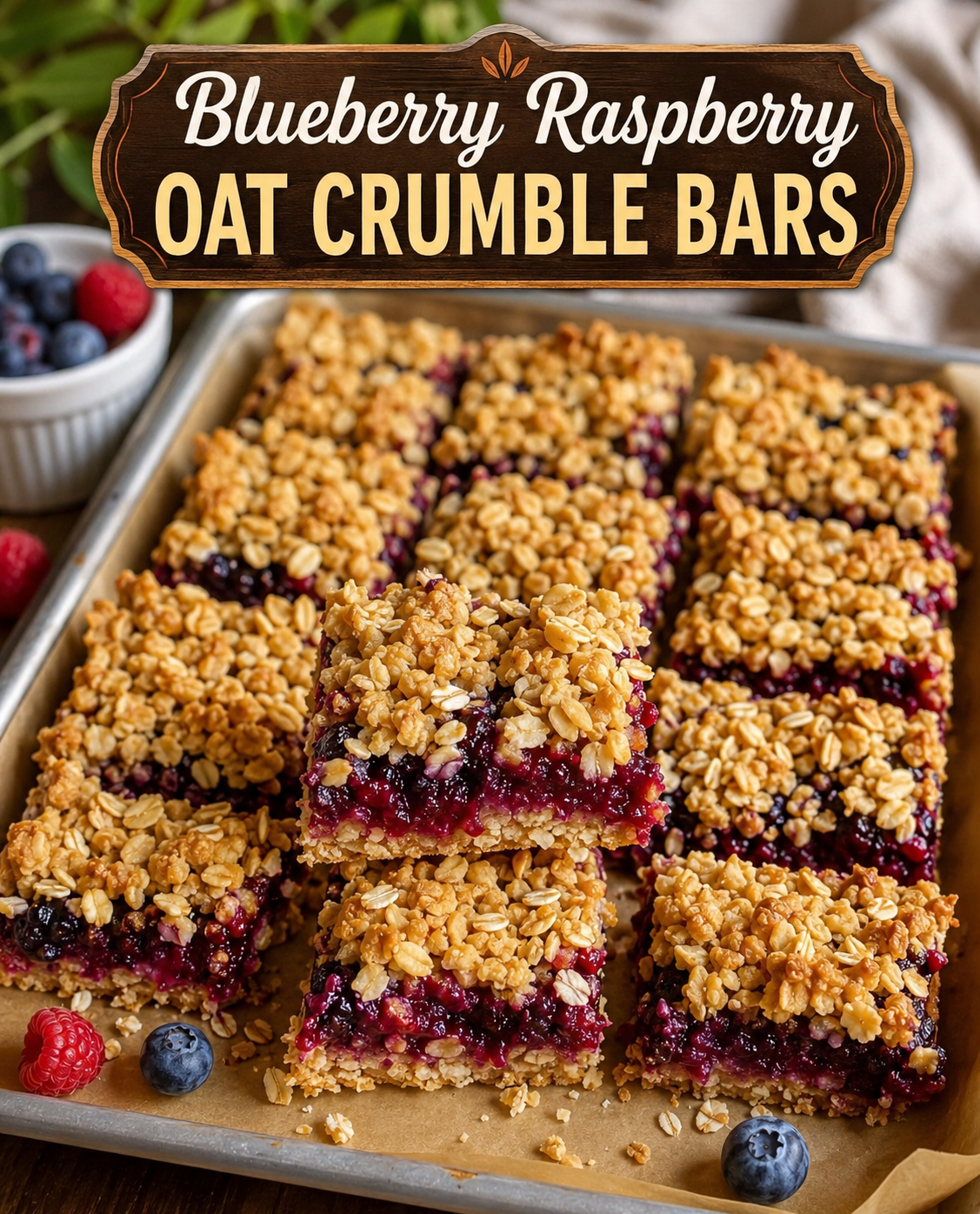
Blueberry Raspberry Oat Crumble Bars

Blueberry Raspberry Oat Crumble Bars


These Blueberry Raspberry Oat Crumble Bars are the perfect combination of buttery oat crumble, sweet-tart berries, and a soft, jammy fruit center. They’re simple enough for a weekday treat but beautiful enough to serve at brunch, afternoon tea, or a family gathering.


The bottom crust is made from a golden oat mixture that becomes tender and slightly crisp around the edges. A thick layer of blueberry and raspberry filling goes in the middle, followed by more buttery crumble on top. As the bars bake, the berries become rich and jammy while the oat topping turns beautifully golden and crunchy.


They’re delicious warm, but they become even easier to slice once completely cooled.


Ingredients

For the oat crumble

  • 1½ cups old-fashioned rolled oats
  • 1½ cups all-purpose flour
  • ¾ cup packed light brown sugar
  • ½ cup granulated sugar
  • ½ teaspoon baking powder
  • ½ teaspoon salt
  • 1 teaspoon ground cinnamon
  • ¾ cup unsalted butter, melted
  • 1 teaspoon vanilla extract

For the berry filling

  • 1½ cups fresh or frozen blueberries
  • 1½ cups fresh or frozen raspberries
  • ½ cup granulated sugar
  • 2 tablespoons cornstarch
  • 1 tablespoon fresh lemon juice
  • 1 teaspoon lemon zest
  • 1 teaspoon vanilla extract
  • Pinch of salt

Optional finishing

  • Powdered sugar, for dusting
  • Fresh blueberries and raspberries
  • A little extra rolled oats
  • Vanilla ice cream or whipped cream for serving

Instructions

1. Prepare the baking pan

Preheat your oven to 350°F (175°C).

Line an 8×8-inch or 9×9-inch baking pan with parchment paper, leaving some parchment hanging over the sides. This makes it much easier to lift the finished bars from the pan.


Lightly grease the parchment and the exposed sides of the pan.

2. Make the crumble mixture

In a large mixing bowl, combine the rolled oats, flour, brown sugar, granulated sugar, baking powder, salt, and cinnamon.

Stir everything together until evenly distributed.

Pour in the melted butter and vanilla extract. Mix with a fork or spatula until the ingredients are thoroughly combined. The mixture should look crumbly but hold together when pressed between your fingers.

Set aside about 1 cup of the crumble mixture for the topping.

3. Make the berry filling

Place the blueberries and raspberries in a medium saucepan.

Add the granulated sugar, cornstarch, lemon juice, lemon zest, vanilla extract, and a small pinch of salt.

Stir gently so the berries become coated.

Place the saucepan over medium heat and cook for approximately 5–8 minutes, stirring occasionally. The berries will begin releasing their juices and the mixture will gradually become thick and glossy.

If using frozen berries, you may need an additional couple of minutes.

You don’t want to completely break down all of the berries. A few whole or partially whole berries will give the finished bars a wonderful texture.

Once thickened, remove the filling from the heat and allow it to cool for a few minutes.

4. Form the bottom crust


Take the larger portion of the oat crumble mixture and press it firmly into the bottom of the prepared pan.


Use the back of a measuring cup or the bottom of a glass to create an even layer.


Pressing the crust firmly is important because it gives the bars a sturdy base that won’t fall apart when sliced.


Bake the crust for 10–12 minutes, just until it begins to look lightly golden around the edges.

Remove the pan from the oven.

5. Add the berry layer

Carefully spoon the warm berry mixture over the partially baked oat crust.

Spread it gently with a spatula so the berries cover the entire surface.

Try not to press too hard, as you don’t want to disturb the crust underneath.


The berry layer should be thick, glossy, and evenly distributed.

6. Add the crumble topping

Take the reserved crumble mixture and sprinkle it evenly over the berry filling.

You can leave some larger pieces of crumble intact. These create those delicious golden, crunchy pieces visible on top of the bars.

For an extra oat-filled texture, sprinkle a tablespoon or two of additional rolled oats over the top.

7. Bake

Return the pan to the oven and bake for approximately 30–38 minutes.

The bars are ready when the crumble topping is golden brown and the berry filling is bubbling around the edges.

Don’t worry if the center still looks slightly soft. The filling will continue to set as the bars cool.

If the top begins browning too quickly, loosely cover the pan with aluminum foil during the final few minutes of

Salted Caramel Pecan Cracker Bites

🍯 Salted Caramel Pecan Cracker Bites


These Salted Caramel Pecan Cracker Bites are buttery, crunchy, sweet, salty, and incredibly addictive. Buttery crackers are coated in a homemade brown-sugar caramel, topped with crunchy pecans, and finished with flaky sea salt.

Ingredients

For the bites:

  • 2 cups buttery round crackers, such as Ritz-style crackers
  • 1 cup pecans, roughly chopped
  • 1 cup unsalted butter
  • 1 cup packed light brown sugar
  • ½ cup granulated sugar
  • ¼ cup heavy cream
  • 1 teaspoon vanilla extract
  • ½ teaspoon salt
  • ½ teaspoon ground cinnamon, optional
  • ½ teaspoon baking soda
  • Flaky sea salt, for topping

Instructions

1. Prepare the oven:

Preheat your oven to 350°F (175°C). Line a large baking sheet with parchment paper or a silicone baking mat.

2. Arrange the crackers:

Place the crackers in a single layer on the prepared baking sheet. Try to keep them close together so the caramel coats them evenly.

3. Make the caramel:

Add the butter, brown sugar, granulated sugar, heavy cream, and salt to a saucepan over medium heat.

4. Boil:

Stir until the butter melts and the mixture becomes smooth. Bring it to a gentle boil and cook for 3–4 minutes, stirring frequently.

5. Finish the caramel:

Remove the saucepan from the heat. Stir in the vanilla, cinnamon if using, and baking soda. The mixture will become light and foamy.

6. Coat the crackers:

Immediately pour the hot caramel over the crackers. Use a spatula to spread it as evenly as possible.

7. Add pecans:

Sprinkle the chopped pecans generously over the caramel-coated crackers. Gently press them into the caramel.

8. Bake:

Bake for 8–10 minutes, until the caramel is bubbling and golden brown. Watch carefully toward the end so it doesn’t burn.


9. Add sea salt:

Remove from the oven and immediately sprinkle with flaky sea salt.

10. Cool completely:

Let the cracker bites cool on the baking sheet for at least 30–45 minutes, or until the caramel has completely hardened.

11. Break apart:

Once cool, break or cut the pieces apart into bite-sized clusters.

⭐ Tips for Perfect Cracker Bites

Use real butter for the best caramel flavor.

Don’t boil the caramel for too long or it can become hard and bitter.

Spread the caramel quickly because it thickens as it cools.

Toasted pecans give an especially delicious flavor.

For extra caramel flavor, add ½ teaspoon caramel extract along with the vanilla.


Storage

Store the cooled cracker bites in an airtight container at room temperature for up to 1 week. Place parchment paper between layers to prevent them from sticking together.

Yield: About 8–10 servings

Prep Time: 10 minutes

Bake Time: 8–10 minutes

Total Time: About 45 minutes

Air Fryer Cheesy Corn Casserole

Air Fryer Cheesy Corn Casserole

Creamy, cheesy, golden, and incredibly easy to make, this Air Fryer Cheesy Corn Casserole is the perfect comfort-food side dish for busy weeknights, family dinners, potlucks, and holiday tables. It combines sweet corn with a rich, creamy mixture and plenty of melted cheese, then cooks in the air fryer until bubbling and beautifully golden on top.Unlike a traditional oven-baked casserole, the air fryer heats quickly and gives this dish a deliciously browned cheese topping without requiring a long preheating time. The center stays soft and creamy while the edges become lightly crisp and golden.Whether you’re serving roasted chicken, grilled meat, turkey, or a simple salad, this cheesy corn casserole is an easy side dish everyone will want seconds of.

Prep Time: 10 minutes

Cook Time: 18–22 minutes

Total Time: 30–32 minutes

Servings: 6

Difficulty: Easy

Why You’ll Love This Recipe

There are so many reasons to keep this recipe in your regular dinner rotation.

Quick and easy: The ingredients are mixed in one bowl, transferred to a baking dish, and cooked in the air fryer.

Cheesy and creamy: Melted cheese creates a rich topping while the corn keeps every bite naturally sweet.

Perfect for gatherings: This casserole is easy to prepare and makes a comforting side dish for family dinners and celebrations.

Air-fryer friendly: You don’t need to heat up the entire oven to make a small casserole.

Customizable: Add jalapeños, herbs, bacon, or different cheeses to create your own version.

Ingredients For Cheesy Corn Casserole 

4 cups corn kernels, fresh, frozen, or canned

1 cup shredded cheddar cheese

½ cup sour cream

mayonnaise ½ cup

2 large eggs

milk ½ cup

½ cup all-purpose flour

2 tablespoons melted butter

1 teaspoon garlic powder

½ teaspoon onion powder

½ teaspoon smoked paprika

salt ½ teaspoon

black pepper ¼ teaspoon

½ cup shredded mozzarella cheese

2 tablespoons chopped fresh parsley, optional

Optional Add-Ins

For extra flavor, try adding:

1 finely chopped jalapeño

¼ cup diced green onions

½ teaspoon chili flakes

½ cup cooked and crumbled bacon

2 tablespoons chopped fresh cilantro

A pinch of cayenne pepper

Instructions For Cheesy Corn Casserole 

Prepare the Corn

If you’re using frozen corn, thaw it first and drain away any excess water.

If using canned corn, drain it thoroughly and pat it dry with paper towels.

Fresh corn can be used directly after removing the kernels from the cob.

Excess moisture can make the casserole too watery, so draining the corn well is important.

Make the Creamy Mixture

In a large mixing bowl, whisk together the eggs, sour cream, mayonnaise, milk, and melted butter until smooth.

Add the flour, garlic powder, onion powder, smoked paprika, salt, and black pepper.

Whisk again until everything is evenly combined.

Add the Corn

Fold the corn kernels into the creamy mixture.

Add ½ cup shredded cheddar cheese and gently stir.

Make sure the corn is evenly coated with the mixture.

Prepare the Baking Dish

Lightly grease a small air-fryer-safe baking dish that fits comfortably inside your air fryer basket.

A 7- or 8-inch round or square baking dish works well, depending on the size of your air fryer.

Pour the corn mixture into the dish and spread it into an even layer.

Add the Cheese

Sprinkle the remaining cheddar cheese and mozzarella evenly over the top.

The combination of cheddar and mozzarella gives the casserole a flavorful, stretchy, golden topping.

Air Fry

Preheat your air fryer to 350°F (175°C) for about 3 minutes if your model recommends preheating.

Place the baking dish carefully into the air fryer basket.

Air fry at 350°F (175°C) for 18–22 minutes, or until the center is set and the cheese is melted and golden.

Air fryers vary, so begin checking around the 16-minute mark.

Rest and Garnish

Carefully remove the hot baking dish using oven mitts.

Allow the casserole to rest for 5–10 minutes before serving. This gives the creamy center time to firm up slightly.

Sprinkle with fresh parsley or green onions if desired.

Serve warm.

Tips for the Best Air Fryer Cheesy Corn Casserole

Drain the corn well: Too much liquid can make the casserole watery.

Don’t overcrowd the air fryer: Leave enough space around the baking dish for hot air to circulate.

Check early: Air fryer temperatures vary considerably. Your casserole may finish a few minutes earlier or later than the suggested cooking time.

Use freshly shredded cheese: Freshly shredded cheese generally melts more smoothly than some pre-shredded varieties.

Don’t overcook: Once the center is set and the cheese is bubbling and golden, remove it. Overcooking can make the casserole dry.

Let it rest: A short resting period helps the casserole set and makes serving easier.

Want a crispier top? Increase the temperature to 375°F (190°C) for the final 1–2 minutes, watching carefully to prevent the cheese from burning.

Benefits For Cheesy Corn Casserole 

This casserole is primarily a comfort-food side dish, but it does provide useful nutrients.

Corn contributes carbohydrates for energy along with fiber and several vitamins and minerals. Eggs and dairy ingredients provide protein, while cheese contributes calcium and protein.

Because the recipe also contains mayonnaise, sour cream, butter, and cheese, it is relatively rich. For a lighter version, you can reduce the mayonnaise, use light sour cream, or replace some of the cheese with a lower-fat variety.

The biggest benefit of this recipe is its convenience: it turns simple ingredients into a satisfying homemade side dish in about 30 minutes.

Serving Suggestions For Cheesy Corn Casserole 

This cheesy corn casserole pairs beautifully with many main dishes.

Serve it alongside:

Air fryer chicken

Roast turkey

Grilled chicken

Baked salmon

BBQ chicken

Grilled steak

Roasted vegetables

Green salad

Mashed potatoes

For a holiday meal, serve it alongside turkey, stuffing, cranberry sauce, and roasted vegetables.

For a casual dinner, pair it with grilled chicken and a fresh green salad.

Nutrition Facts For Cheesy Corn Casserole 

Approximate nutrition per serving (1/6 of recipe):

Calories: 350–380

Protein: 12–14 g

Carbohydrates: 31–35 g

Fat: 20–23 g

Saturated Fat: 8–10 g

Fiber: 2–3 g

Sugar: 5–7 g

Sodium: 550–700 mg

Calcium: Approximately 200–250 mg

Nutrition information is an estimate and will vary depending on the brands and exact ingredients used.

Frequently Asked Questions

Can I use frozen corn?

Yes. Frozen corn works very well. Thaw it completely and drain any excess moisture before adding it to the casserole mixture.

Can I use canned corn?

Absolutely. Drain and rinse the corn if desired, then pat it dry before using.

Can I make this casserole without eggs?

Eggs help the casserole set, so removing them changes the texture. You can experiment with an egg substitute, but the final consistency may be softer.

What cheese works best?

Cheddar gives the casserole a classic sharp, cheesy flavor. Mozzarella adds extra meltiness. Monterey Jack, Colby, or a cheddar-Jack blend are also excellent choices.

Can I prepare it ahead of time?

Yes. You can mix the casserole ingredients several hours ahead and refrigerate them. Keep the mixture covered and refrigerated, then cook it when ready. If the mixture is very cold, it may require a few additional minutes in the air fryer.

Can I make it spicy?

Definitely. Add diced jalapeños, cayenne pepper, chili flakes, or diced green chiles for extra heat.

How do I store leftovers?

Allow the casserole to cool, then cover and refrigerate leftovers promptly. Store them in an airtight container and enjoy within a few days.

Can I reheat it in the air fryer?

Yes. Reheat individual portions at around 325°F (165°C) until warmed through. Keep an eye on the cheese so it doesn’t become overly browned.

Why is my casserole watery?

The most common reasons are excess moisture from the corn or undercooking. Drain frozen or canned corn thoroughly and cook until the center is properly set.

Final Thoughts For Cheesy Corn Casserole 

This Air Fryer Cheesy Corn Casserole is the kind of side dish that feels special without requiring complicated preparation. Sweet corn, creamy ingredients, eggs, and two kinds of cheese come together to create a warm, satisfying casserole with a beautifully golden top.The air fryer makes the process even easier, giving you a bubbling, cheesy casserole without having to heat the entire kitchen with a full-size oven.Serve it alongside chicken, turkey, steak, fish, or your favorite vegetables, and don’t be surprised if everyone goes back for another scoop.For the best results, remember the three simple rules: drain your corn well, don’t overcook the casserole, and let it rest before serving.

Take Honey With Turmeric Every Morning

Take Honey With Turmeric Every Morning

If you are looking for a simple morning ritual that takes just a few minutes to prepare, this Honey With Turmeric recipe is a wonderful option. Made with just a handful of pantry ingredients, this golden mixture combines the natural sweetness of honey with earthy turmeric, a little lemon, and a pinch of black pepper.Many people enjoy turmeric as part of their daily diet because it contains curcumin, a naturally occurring plant compound that has been widely studied. Honey adds sweetness and makes the earthy flavor of turmeric much easier to enjoy.This isn’t a complicated recipe or a substitute for medical treatment. Instead, think of it as a small, comforting addition to a balanced morning routine.

Why You’ll Love This Recipe

There are plenty of reasons to add this simple turmeric and honey mixture to your morning routine.

First, it requires no cooking and only a few ingredients. You can prepare a small batch in minutes and keep it ready in the refrigerator.

The combination of honey, turmeric, lemon, and black pepper creates a pleasant balance of sweet, tangy, earthy, and slightly spicy flavors.

It is also incredibly versatile. You can take a small spoonful on its own, mix it into warm water, or use it as a flavorful addition to tea.

Most importantly, this recipe encourages a simple habit: starting your day with something homemade and mindful.

Ingredients For Take Honey With Turmeric

For One Serving

1 teaspoon raw or regular honey

¼ teaspoon ground turmeric

1 small pinch of freshly ground black pepper

½ teaspoon fresh lemon juice

1–2 teaspoons warm water, optional

A tiny pinch of ground cinnamon, optional

A small pinch of freshly grated ginger, optional

For a Small Batch

¼ cup honey

2 teaspoons ground turmeric

¼ teaspoon freshly ground black pepper

1 tablespoon fresh lemon juice

½ teaspoon ground cinnamon, optional

1 teaspoon finely grated fresh ginger, optional

Instructions For Take Honey With Turmeric

Prepare the Ingredients

Measure the honey and place it in a small clean bowl. Add the ground turmeric and freshly ground black pepper.

If you are using fresh ginger or cinnamon, add them now.

Add Lemon Juice

Add the fresh lemon juice and stir everything together.

The lemon adds a bright, refreshing flavor that helps balance the sweetness of the honey and the earthy taste of turmeric.

Mix Thoroughly

Stir with a small spoon until the turmeric is evenly distributed throughout the honey.

Turmeric can settle at the bottom, so make sure the mixture is well combined.

Adjust the Consistency

For a thicker spoonable mixture, leave it as it is.

If you prefer a lighter drink, add 1–2 teaspoons of warm water and stir until smooth.

Avoid very hot water, especially if you simply want to preserve the pleasant flavor and texture of the honey.

Enjoy

Take a small spoonful as part of your breakfast or morning routine, or stir it into warm water or tea.

If making a larger batch, transfer it to a clean airtight container and refrigerate.

Tips for the Best Honey With Turmeric

Use good-quality turmeric: Fresh, fragrant ground turmeric will provide the best flavor and color.

Don’t overdo the turmeric: A little goes a long way. Too much can make the mixture bitter and unpleasant.

Use freshly ground black pepper: Black pepper provides a sharper flavor than pre-ground pepper.

Choose the honey you enjoy: Raw honey, wildflower honey, or regular honey can all work. The most important thing is choosing a honey you enjoy eating.

Use fresh lemon: Freshly squeezed lemon generally gives the mixture a brighter flavor than bottled lemon juice.

Start small: If you have never tried turmeric and honey together, begin with a small amount to see how you like the flavor.

Stir before serving: Turmeric naturally settles, particularly in a larger batch, so give the mixture a good stir before each serving.

Potential Benefits For Take Honey With Turmeric

Honey and turmeric can both be part of a nutritious, balanced diet.

Contains Plant Compounds

Turmeric contains curcumin and other naturally occurring compounds. Curcumin has been studied for its antioxidant and anti-inflammatory properties, although the amount obtained from a small kitchen serving is not equivalent to doses used in research.

Easy Way to Add Turmeric to Your Diet

If you rarely use turmeric, this recipe provides an easy way to incorporate a small amount into your daily meals.

Naturally Sweet

Honey provides sweetness without requiring refined table sugar in the recipe. However, honey is still an added sugar and should be enjoyed in moderation.

Refreshing Morning Option

Adding lemon and warm water creates a light, refreshing drink that many people find enjoyable first thing in the morning.

Simple Homemade Routine

One of the biggest advantages is convenience. Preparing this recipe takes only a few minutes, making it easy to fit into a busy schedule.

Serving Suggestions For Take Honey With Turmeric

There are several delicious ways to enjoy this recipe.

Warm Turmeric Honey Drink

Mix one serving with a cup of warm water. Stir well and enjoy slowly.

Morning Tea

Add a small amount to warm herbal tea for a naturally sweet, golden drink.

Yogurt Topping

Swirl a small amount into plain Greek yogurt and top with berries, walnuts, or chia seeds.

Oatmeal

Add a little turmeric honey to oatmeal along with banana, cinnamon, and nuts.

Smoothie

Blend a small amount into a fruit or yogurt smoothie for extra flavor.

Nutrition Facts For Take Honey With Turmeric

Approximate nutrition per 1-teaspoon serving:

Calories: 22–25

Carbohydrates: 6 g

Total Sugar: 5–6 g

Protein: 0 g

Fat: 0 g

Fiber: Less than 1 g

Sodium: 0–1 mg

Frequently Asked Questions

Can I take honey with turmeric every morning?

For most healthy adults, small culinary amounts of honey and turmeric can generally be included as part of a balanced diet. However, there is no need to consume it daily to obtain the benefits of a healthy diet.

Should I take it on an empty stomach?

You don’t have to. Some people enjoy it before breakfast, while others prefer taking it with breakfast or adding it to a warm drink. Choose whichever feels most comfortable for you.

Why is black pepper added?

Black pepper contains piperine, a compound that can increase the absorption of curcumin. A small pinch is enough for this recipe.

Can I make it ahead?

Yes. Prepare a small batch, place it in a clean airtight container, and refrigerate it. Stir before using. For best quality, make small batches rather than storing it for a long time.

Can I use fresh turmeric?

Absolutely. Fresh turmeric can be finely grated and used instead of ground turmeric. Start with a small amount because fresh turmeric can have a strong flavor.

Can children have this recipe?

Honey should never be given to babies under 12 months because of the risk of infant botulism. For older children, ask their pediatrician if you have questions about introducing honey or turmeric.

Can I use this instead of medicine?

No. Honey with turmeric is a food, not a medication. It should not replace prescribed medicines or professional medical care.

Are there any precautions?

Large amounts of turmeric or concentrated turmeric supplements may not be appropriate for everyone. People who take certain medications, have gallbladder problems, bleeding disorders, or other medical conditions should consult a healthcare professional before regularly using concentrated turmeric products.

Final Thoughts For Take Honey With Turmeric

This Honey With Turmeric recipe is proof that a simple morning habit doesn’t need to involve complicated ingredients or lengthy preparation. Honey brings natural sweetness, turmeric adds its distinctive golden color and earthy flavor, while lemon and black pepper give the mixture a fresh and balanced finish.Enjoy it as a small part of a healthy breakfast, mix it into warm water, or add it to yogurt and oatmeal. The key is moderation and variety: no single food or drink can provide everything your body needs.If you enjoy simple homemade wellness recipes, this golden honey-turmeric mixture is an easy one to keep in your morning rotation.