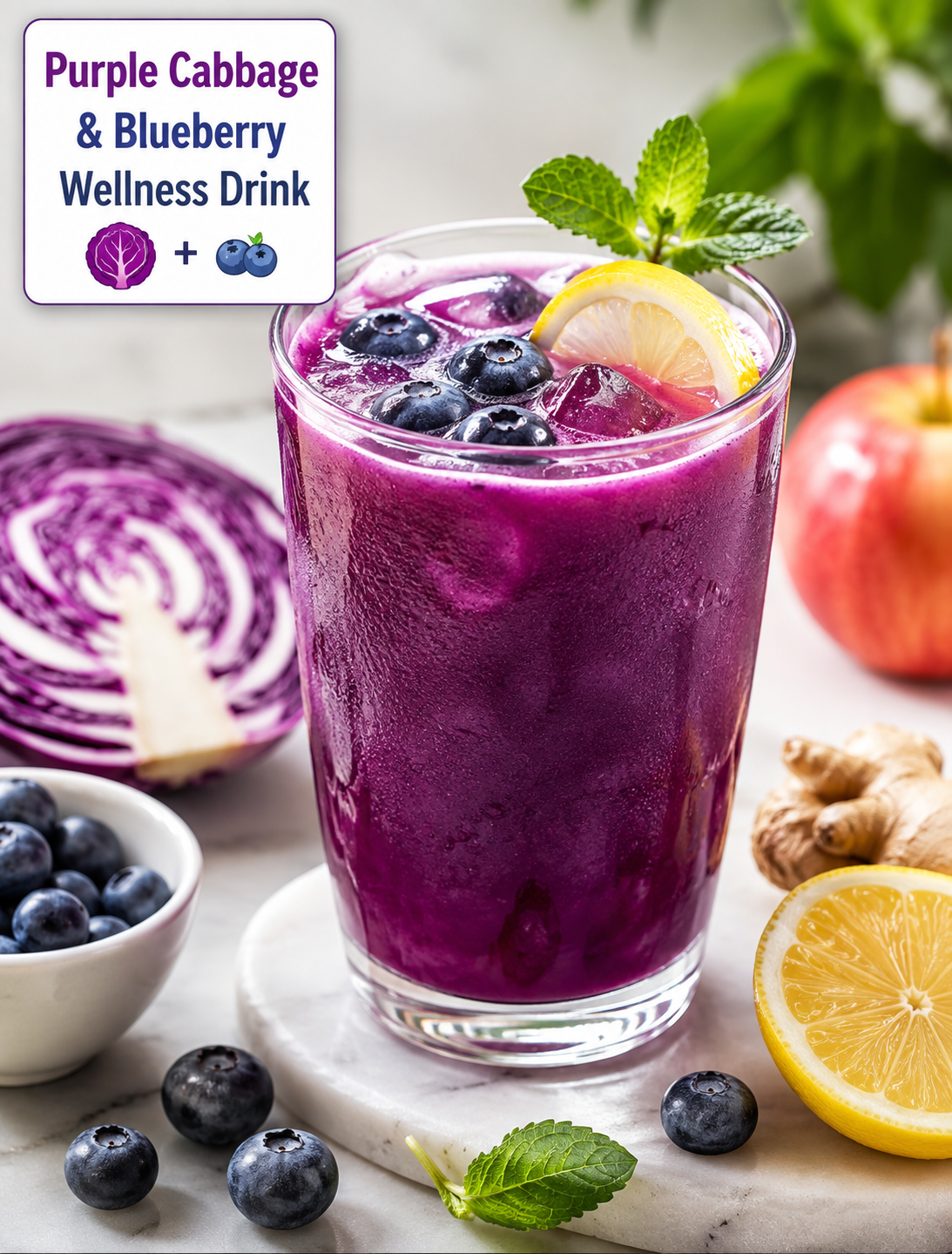
Purple Cabbage & Blueberry Wellness Drink

Purple cabbage and blueberry wellness drink with lemon, blueberries, apple, and mint served over ice

Purple Cabbage & Blueberry Wellness Drink

If you want a refreshing drink made with real fruits and vegetables, this Purple Cabbage & Blueberry Wellness Drink is worth trying. It combines purple cabbage, blueberries, apple, lemon, ginger, and a touch of honey for a naturally vibrant drink with a fresh, fruity flavor.

The deep purple color comes from anthocyanins, natural plant pigments found in purple cabbage and blueberries. The drink has a mild vegetable note from cabbage, balanced by sweet blueberries and apple. Lemon adds brightness, while fresh ginger gives the drink a light, warming finish.

This homemade beverage takes about 10 minutes to prepare and requires no cooking. It is a simple way to add more produce to your day without relying on bottled drinks with artificial colors or preservatives.

Why You’ll Love This Purple Cabbage & Blueberry Wellness Drink

This colorful beverage is easy to make and uses everyday ingredients that are simple to blend together. Fresh blueberries bring natural sweetness and a pleasant berry flavor, while apple helps soften the earthy taste of cabbage.

Lemon juice gives the mixture a crisp, tangy finish and helps balance the sweetness. Fresh ginger adds a gentle spicy note without overpowering the fruit.

You can also control the sweetness, texture, and thickness at home. Leave the mixture unstrained for more fiber and a thicker texture, or strain it for a smoother drink.

The recipe also works well as a starting point for different variations. Cucumber can make it lighter and more refreshing, while Greek yogurt or banana can turn it into a creamy smoothie.

Ingredients You’ll Need

For four servings, gather:

  • 2 cups chopped purple cabbage
  • 1½ cups fresh or frozen blueberries
  • 1 small apple, cored and chopped
  • 1 tablespoon fresh ginger, peeled
  • Juice of 1 lemon
  • 1 tablespoon honey or maple syrup
  • 2½ cups cold water
  • 1 cup ice cubes

For extra flavor or texture, you can add cucumber, fresh mint, chia seeds, ground flaxseed, banana, Greek yogurt, or coconut water.

Fresh blueberries give the best juicy flavor, but frozen berries are convenient and help keep the drink cold. Use a ripe apple if you want additional natural sweetness.

How to Make the Drink

Start by washing the cabbage, blueberries, apple, lemon, and any optional produce thoroughly. Chop the purple cabbage into smaller pieces so it blends more easily.

Core the apple and cut it into chunks. Peel the fresh ginger and measure one tablespoon. Add the cabbage, blueberries, apple, ginger, lemon juice, honey, and cold water to a high-speed blender.

Blend everything on high for one to two minutes, or until the mixture looks smooth. A powerful blender helps break down the cabbage and fruit into a more even consistency.

Taste the drink before serving. If you prefer a sweeter flavor, add a small amount of additional honey or maple syrup and blend again.

For a thicker, fiber-rich beverage, serve it without straining. If you prefer a smoother texture, pour it through a fine-mesh sieve or cheesecloth.

Fill four glasses with ice and pour the chilled drink over the top. Finish with fresh blueberries, a lemon slice, or a few mint leaves.

Serve immediately for the freshest flavor and texture.

Easy Ways to Customize It

This fruit and vegetable drink is flexible enough to suit different tastes. Add half a cucumber for a crisp, cooling flavor that works especially well on warm days.

Fresh mint gives the drink a clean finish, while coconut water adds mild sweetness and a tropical touch. If you enjoy a thicker beverage, blend in half a banana or some Greek yogurt.

Chia seeds and ground flaxseed can add texture, but they also make the drink thicker as they absorb liquid. Add them just before serving if you prefer some texture.

For a more tart flavor, increase the lemon juice slightly. If you prefer a sweeter drink, use a sweeter apple or add a little more natural sweetener.

You can also use strawberries, raspberries, blackberries, pineapple, grapes, or orange as additional fruit options.

Purple Cabbage and Blueberry Nutrition

Purple cabbage provides vitamin C, vitamin K, fiber, and naturally occurring anthocyanins. Its vibrant color makes it an easy way to add variety to a fruit and vegetable drink.

Blueberries provide vitamin C, manganese, fiber, and naturally occurring plant compounds. Apples contribute fiber and natural sweetness, while lemon provides additional vitamin C and a bright citrus flavor.

Ginger is included mainly for its distinctive warm, aromatic taste. Honey or maple syrup provides sweetness, so you can adjust the amount based on your preference.

Keeping the blended pulp in the drink provides more fiber than straining it. Exact nutrition will vary depending on the size and type of fruit, the amount of sweetener, and whether optional ingredients are added.

This beverage is best viewed as part of a varied eating pattern rather than a replacement for meals or a treatment for any health condition.

Tips for the Best Flavor

Use cold ingredients whenever possible to make the drink more refreshing without depending on a large amount of ice.

Frozen blueberries are especially useful when you want a colder, thicker texture. If using fresh berries, refrigerate them before blending.

Cut cabbage and apple into smaller pieces before adding them to the blender. This helps the ingredients break down more evenly.

Start with the recommended amount of ginger because its flavor can become strong quickly. You can always add more after tasting.

If the drink separates while sitting, simply stir or shake it before serving. For the best taste and texture, enjoy it soon after blending.

If you need to store leftovers, place the drink in a sealed container and refrigerate it for up to 24 hours. Shake or stir well before drinking.

What to Serve With This Drink

This colorful beverage works well with a balanced breakfast or light meal. Serve it alongside oatmeal, whole-grain toast, avocado toast, yogurt parfaits, granola, egg muffins, cottage cheese, or fresh fruit.

Its fruity flavor also makes it a refreshing afternoon drink when you want something homemade instead of a sugary bottled beverage.

Because the drink contains whole-food ingredients, you can adjust the recipe to match the rest of your meal. For example, pair the basic version with a protein-rich breakfast, or add Greek yogurt to make a thicker smoothie.

Frequently Asked Questions

Can I use frozen blueberries?

Yes. Frozen blueberries work well and make the drink colder and slightly thicker without adding extra ice.

Do I need to strain the drink?

No. Straining is optional; leaving the pulp provides a thicker texture and retains more of the ingredients’ natural fiber.

Can I prepare it ahead of time?

Yes. Refrigerate it in a sealed container for up to 24 hours, then shake or stir well before serving.

What can I use instead of honey?

Maple syrup, agave, or a pitted Medjool date can replace honey, depending on your preferred flavor and sweetness.

Can I use red cabbage?

Yes. Red cabbage and purple cabbage commonly refer to the same vegetable, so either can be used in this recipe.

Can I make this drink without apple?

Yes. Replace the apple with pear, cucumber, banana, or another fruit based on the flavor and texture you want.

Can children drink this beverage?

Yes, but reduce the ginger if needed because its warm, spicy flavor may be too strong for some children.

Can I turn it into a smoothie?

Yes. Add Greek yogurt or banana and blend until creamy, adjusting the water to reach your preferred consistency.

Why Do I Wake Up Tired Even After 7–8 Hours of Sleep?

Person waking up tired in bed after 7–8 hours of sleep, highlighting morning fatigue and healthy sleep habits.

Why Do I Wake Up Tired Even After 7–8 Hours of Sleep?

Waking up tired after 7–8 hours of sleep can be frustrating. You may expect to feel refreshed, but instead you wake up with low energy, brain fog, or a strong desire to stay in bed.

The problem may not be the number of hours you sleep. Sleep quality matters too. You can spend enough time in bed but still have interrupted or unrefreshing sleep. In the United States, 30.5% of adults reported getting less than seven hours of sleep on average in 2024, while only 54.8% said they woke feeling well-rested most or every day.

Several everyday habits and health conditions can affect how rested you feel in the morning. Understanding the possible causes can help you identify changes worth making.

Poor Sleep Quality Can Leave You Tired

Getting 7–8 hours of sleep does not always mean you are getting restorative sleep. Your sleep can be interrupted by noise, stress, an uncomfortable bedroom, an inconsistent schedule, or repeated nighttime awakenings.

Sleep deficiency can also occur when you sleep at the wrong time, do not get enough of the different stages of sleep, or have a sleep disorder that disrupts your rest.

If you regularly wake up feeling unrefreshed, look beyond your bedtime and consider what happens throughout the entire night.

An Inconsistent Sleep Schedule May Affect Morning Energy

Going to bed and waking up at very different times can make it harder for your body to maintain a steady sleep-wake rhythm.

For example, sleeping late on weekends and waking early on weekdays can create a large difference between your daily schedules. NHLBI notes that sleeping more on days off may be a sign that you are not getting enough sleep and that changing your schedule can affect your body’s sleep-wake rhythm.

Try keeping your bedtime and wake-up time reasonably consistent throughout the week.

Stress and an Overactive Mind Can Disrupt Sleep

Stress does not always disappear when you turn off the lights. Work concerns, family responsibilities, financial worries, and constant mental activity can make it harder to relax.

Even when you fall asleep quickly, stress may contribute to poor sleep quality or nighttime awakenings. The result can be tiredness, difficulty concentrating, and low morning energy.

A simple wind-down routine can help. Dim the lights, put away stimulating activities, and give yourself quiet time before bed.

Your Evening Habits May Be Affecting Your Sleep

What you do before bedtime can influence how well you sleep.

Late-night screen use, heavy meals, alcohol, caffeine later in the day, and an irregular bedtime may make quality sleep harder for some people. Your bedroom environment also matters.

Keep your sleeping space comfortable, quiet, and dark when possible. Give yourself enough time for sleep instead of treating bedtime as the last item on a busy schedule.

Sleep Apnea Can Cause Morning Tiredness

One important reason for waking up tired is sleep apnea. This condition causes breathing to stop and restart during sleep, which can interfere with normal rest.

Common signs include loud snoring, gasping for air during sleep, repeated breathing pauses, morning headaches, dry mouth, and excessive daytime tiredness.

You may not notice breathing interruptions yourself. A partner or family member may be the first person to mention loud snoring or gasping.

If these symptoms occur regularly, talk with a healthcare professional. A sleep evaluation may be needed to determine whether sleep apnea is affecting your rest.

Your Health Can Also Affect Your Energy

Morning fatigue is not always caused by sleep habits. Some health conditions can cause persistent tiredness even when you spend enough time in bed.

Anemia, thyroid problems, diabetes, depression, anxiety, infections, and certain medications can contribute to fatigue.

Iron-deficiency anemia, for example, can cause tiredness and weakness because the body has less healthy hemoglobin available to carry oxygen.

This does not mean that waking up tired automatically indicates a medical problem. Persistent or unexplained fatigue deserves attention, especially when it affects your daily activities.

Simple Ways to Feel More Alert in the Morning

A few healthy habits can make your morning routine more supportive of good sleep and daytime energy.

Keep a regular sleep schedule. Aim to go to bed and wake up at similar times each day.

Get enough sleep. Adults ages 18–60 generally need at least seven hours of sleep per night. Adults ages 61–64 generally need 7–9 hours, while adults 65 and older generally need 7–8 hours.

Get morning light. Natural light early in the day can be part of a consistent daily routine and help reinforce your sleep-wake schedule.

Move your body. A short walk or gentle stretching can help you transition from sleep to your daytime routine.

Drink water. Starting your day with water can support normal hydration, especially if you wake up thirsty or have a dry mouth.

Do not depend only on caffeine. Coffee may make you feel more alert, but it does not replace adequate, quality sleep.

Create a calming bedtime routine. Give your body and mind time to slow down before you try to sleep.

When Should You Talk to a Doctor?

Occasional morning tiredness is common, especially after a stressful day or a poor night’s sleep. Regular exhaustion is different.

Talk with a healthcare professional if you consistently sleep enough but still wake up exhausted, experience significant daytime sleepiness, snore loudly, gasp during sleep, or frequently wake during the night.

NHLBI recommends discussing the issue with a doctor if you sleep more than eight hours but still do not feel rested because a sleep disorder or another health problem may be involved.

Persistent fatigue can have many possible causes, so an appropriate evaluation is more useful than simply adding another cup of coffee to your morning routine.

The Bottom Line

If you wake up tired after 7–8 hours of sleep, the answer may be more complicated than simply needing more sleep. Sleep quality, your daily schedule, stress, evening habits, sleep disorders, and certain health conditions can all affect how rested you feel.

Start by looking at your sleep routine and making consistent changes. If morning fatigue continues despite getting enough sleep, talk with a healthcare professional to identify the underlying cause.

Frequently Asked Questions

Why do I wake up tired after 8 hours of sleep?

Eight hours in bed does not guarantee quality sleep; interruptions, stress, an irregular schedule, or a sleep disorder may leave you unrefreshed.

Is 7 hours of sleep enough for adults?

For most adults ages 18–60, at least 7 hours per night is recommended, although individual sleep needs can vary.

Can dehydration make me feel tired in the morning?

Being dehydrated can contribute to feeling unwell or low in energy, so drinking water can support normal hydration after waking.

Why do I wake up with no energy?

Poor sleep quality, inconsistent sleep timing, stress, medications, and certain health conditions can contribute to low morning energy.

Can sleep apnea make you tired after sleeping?

Yes. Sleep apnea can repeatedly interrupt breathing during sleep and may cause daytime sleepiness, fatigue, headaches, or difficulty focusing.

Should I be worried if I always wake up tired?

Regular unexplained fatigue deserves attention, particularly when it continues despite adequate sleep or interferes with your daily activities.

Does drinking coffee fix morning fatigue?

Coffee can temporarily increase alertness, but caffeine cannot replace sufficient, good-quality sleep.

When should I see a doctor about morning fatigue?

Consider speaking with a healthcare professional if you regularly wake unrefreshed despite enough sleep or have symptoms such as loud snoring, gasping, or excessive daytime sleepiness.

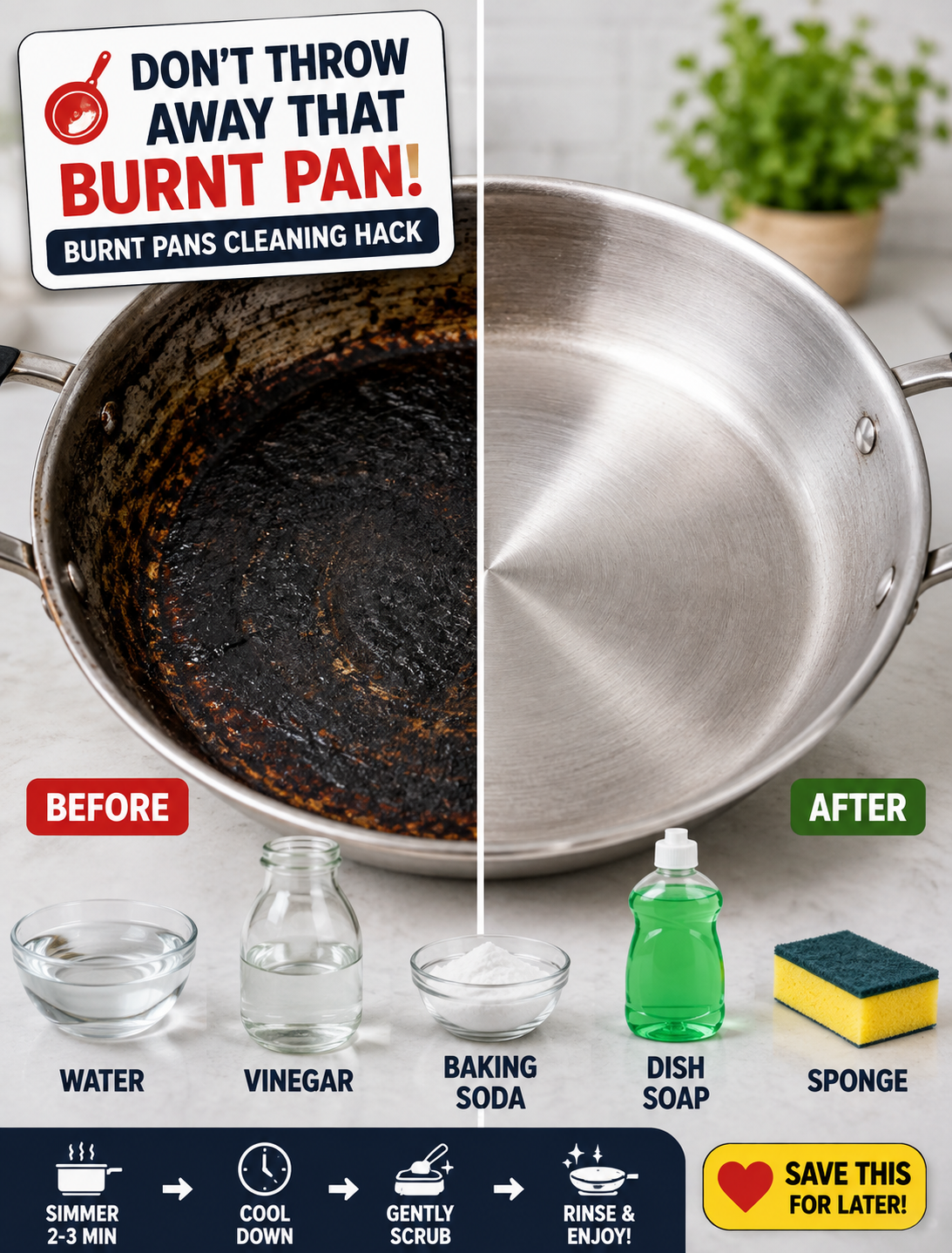
DON’T THROW AWAY THAT BURNT PAN

burnt pan cleaning hack

DON’T THROW AWAY THAT BURNT PAN

A burnt pan can look like it is ready for the trash, especially when thick black residue covers the bottom. Before you spend money on a replacement, try a simple cleaning method with common household supplies. With the right approach, you can loosen stubborn burnt-on food and make cleanup much easier.

This burnt pans cleaning hack works best when you give the stuck-on residue time to soften before scrubbing. The goal is not to scrape the pan aggressively. Gentle heat, soaking, and a non-scratch scrubber can do much of the work for you.

Why Burnt Pans Are So Difficult to Clean

Burnt food becomes difficult to remove because high heat dries and hardens food residue onto the cooking surface. Sugars, sauces, oils, and starchy foods can form a tough layer that does not come away with regular dish soap.

Scrubbing a dry burnt pan can also damage the surface, especially when the cookware has a nonstick coating. Softening the residue first is usually a better option.

The type of pan matters, too. Stainless steel, enamel, cast iron, and nonstick cookware require different cleaning techniques. Always check the manufacturer’s care instructions before using a new cleaning method.

What You Need for This Burnt Pan Cleaning Hack

You only need a few basic kitchen supplies:

  • 1 cup water
  • ½ cup white vinegar
  • 1 to 2 tablespoons baking soda
  • A small amount of dish soap
  • A non-scratch sponge or soft scrub brush
  • A clean kitchen towel

These supplies are inexpensive and commonly found in U.S. kitchens. You can also use a wooden or silicone spatula to lift softened food from the pan without scratching the surface.

How to Clean a Burnt Pan Step by Step

Start by removing any loose pieces of food from the pan. Do not scrape hard at the blackened layer because aggressive scraping can scratch some cookware.

Add 1 cup of water and ½ cup of white vinegar to the pan. Place the pan on the stove and bring the liquid to a gentle simmer for several minutes.

The heat helps loosen the hardened residue from the cooking surface. Keep the pan under supervision while it heats, and avoid letting the liquid boil away completely.

Turn off the heat and allow the pan to cool until it is safe to handle. Carefully pour out the liquid if needed.

Add a small amount of baking soda and a little dish soap to the remaining residue. Use a damp, non-scratch sponge to gently work across the affected areas.

For thick buildup, let the baking soda and soap sit on the surface for several minutes before scrubbing again. Use a wooden or silicone spatula to lift softened spots when necessary.

Rinse the pan thoroughly with warm water. If some residue remains, repeat the soaking and gentle scrubbing process instead of applying excessive pressure.

Finally, wash the pan with regular dish soap and dry it completely with a clean towel.

Important: Never seal vinegar and baking soda together in a closed bottle or container. Their reaction produces gas and can create pressure.

The Best Way to Handle Stubborn Burnt-On Food

Some burnt pans need more than one cleaning session. Trying to remove everything in one aggressive scrub can damage the cookware.

For stubborn areas, repeat the warm-water soaking process and allow additional time for the residue to soften. A soft sponge is usually safer than steel wool or a rough abrasive pad.

If the pan has a nonstick coating, avoid metal utensils, abrasive cleaners, and harsh scrubbing. Once the coating becomes scratched or damaged, the cookware may no longer perform as intended.

For stainless steel cookware, a little more gentle scrubbing may be appropriate, but you should still avoid unnecessary scratching.

Common Mistakes to Avoid When Cleaning Burnt Pans

One common mistake is scrubbing a completely dry pan. Hardened residue is much harder to remove when it has not been softened.

Another mistake is using too much force. Strong scrubbing may remove residue faster, but it can also leave scratches.

Do not pour cold water into a very hot pan. A sudden temperature change can stress some cookware and may cause warping.

Avoid mixing household cleaning products unless the product label specifically says they can be combined. In particular, never mix bleach with vinegar, ammonia, or other incompatible cleaners.

Do not use abrasive methods on cookware unless the manufacturer recommends them. The safest cleaning method depends on the material and finish of your pan.

How to Keep Your Pans From Getting Burnt

Preventing heavy buildup is easier than removing it later. Keep cooking temperatures under control and avoid leaving an empty pan over high heat.

When cooking sauces, sugar-based foods, or starchy dishes, stir regularly and monitor the pan closely. Food that sits on a hot surface for too long can quickly become difficult to remove.

Clean the cookware soon after cooking rather than allowing food residue to dry completely. A short warm-water soak can make routine cleanup much easier.

Using the correct burner size can also help prevent food from burning around the sides of the pan.

When You Should Replace a Burnt Pan

A burnt appearance does not automatically mean the pan needs to be replaced. If the cooking surface is intact and the residue can be safely removed, cleaning may be enough.

However, cookware should be replaced when the surface is badly damaged, deeply scratched, cracked, warped, or otherwise compromised. For nonstick pans, peeling or flaking coating is a clear reason to stop using the cookware.

Always follow the care and replacement recommendations provided by the manufacturer.

Frequently Asked Questions

Can I use vinegar and baking soda to clean a burnt pan?

Yes, they can be used during the cleaning process, but do not seal or store them mixed together because the reaction releases gas.

How long should I simmer a burnt pan?

A few minutes is usually a reasonable starting point, followed by cooling and gentle scrubbing; repeat the process if residue remains.

Can this method clean a stainless steel pan?

Yes, the method can help loosen burnt food on stainless steel, but avoid excessive scrubbing that could scratch the finish.

Is vinegar safe for nonstick pans?

Vinegar may be acceptable for some nonstick cookware, but always check the manufacturer’s cleaning instructions before using it.

Can I use steel wool on a burnt pan?

Steel wool can scratch many cookware surfaces, so a non-scratch sponge or soft scrubber is a safer first choice.

What should I do if the burnt residue will not come off?

Repeat the soaking and gentle cleaning process rather than using more force, and check the cookware manufacturer’s recommended cleaning method.

Can a burnt pan still be used after cleaning?

A pan can generally continue to be used if its cooking surface remains intact and undamaged after cleaning.

How can I prevent food from burning onto my pans?

Use appropriate heat, monitor cooking closely, stir foods that tend to stick, and clean the pan soon after use.

Final Thoughts

A badly burnt pan does not always belong in the trash. Taking time to soften the residue can make the cleaning process much easier while reducing the need for harsh scrubbing.

For the best results, use gentle heat, a short soak, dish soap, baking soda, and a non-scratch cleaning tool. Most importantly, match the cleaning method to the cookware material and follow the manufacturer’s care instructions.

The next time you see a blackened pan sitting in the sink, don’t throw it away just yet. Give this simple cleaning approach a try and see whether your cookware can be restored to a usable condition.

Creamy Corn & Vegetable Chowder

🌽 Creamy Corn & Vegetable Chowder


A cozy, creamy and hearty soup packed with sweet corn, potatoes, carrots, zucchini and aromatic herbs. It’s easy to make, comforting, and perfect for a quick family dinner.


🥣 Ingredients

  • 2 tablespoons butter or olive oil
  • 1 medium onion, finely chopped
  • 2 cloves garlic, minced
  • 2 medium carrots, diced
  • 2 medium potatoes, peeled and diced
  • 1 medium zucchini, diced
  • 2 cups sweet corn (fresh or frozen)
  • 4 cups chicken or vegetable broth
  • 1 cup milk
  • ½ cup heavy cream
  • 2 tablespoons all-purpose flour
  • 1 teaspoon dried thyme
  • ½ teaspoon dried oregano
  • ½ teaspoon black pepper
  • ½ teaspoon salt, or to taste
  • ½ teaspoon paprika
  • ½ cup shredded cheddar cheese (optional)
  • 2 tablespoons fresh parsley, chopped

👩‍🍳 Instructions

1. Sauté the aromatics:

Heat butter in a large pot over medium heat. Add the chopped onion and carrots and cook for 4–5 minutes, until the onion becomes soft.

2. Add garlic:

Stir in the minced garlic and cook for about 30 seconds, just until fragrant.

3. Add flour:

Sprinkle the flour over the vegetables and stir continuously for about 1 minute. This helps create a creamy, slightly thick soup.

4. Add broth:

Slowly pour in the chicken or vegetable broth while stirring to prevent lumps.

5. Cook the potatoes:

Add diced potatoes, zucchini, corn, thyme, oregano, paprika, salt and black pepper. Bring the soup to a gentle boil.

6. Simmer:

Reduce the heat, cover partially and simmer for 15–20 minutes, or until the potatoes and carrots are tender.

7. Make it creamy:

Stir in the milk and heavy cream. Cook on low heat for another 5–7 minutes. Avoid boiling vigorously after adding the dairy.

8. Optional cheese:

For extra richness, stir in shredded cheddar cheese until completely melted.

9. Adjust the texture:

For a thicker chowder, mash a small portion of the potatoes and corn directly in the pot with a potato masher. Leave the rest chunky.

10. Finish:

Taste and adjust the salt and pepper. Stir in fresh parsley just before serving.

🌽 Serving

Serve hot with extra fresh parsley, a sprinkle of black pepper and a little shredded cheddar on top. It pairs wonderfully with crusty bread, garlic bread or homemade dinner rolls.

⭐ Tips

For a thicker chowder, mash more of the potatoes into the soup.

For a lighter version, replace heavy cream with extra milk.

You can add cooked chicken for a creamy chicken-corn chowder.

A pinch of chili flakes adds a lovely kick.

Fresh corn gives the best flavor in summer, but frozen corn works perfectly year-round.


Prep Time: 15 minutes

Cook Time: 30 minutes

Total Time: 45 minutes

Servings: 5–6

Invisible Apple Cake (Gâteau Invisible aux Pommes

🍎 Invisible Apple Cake (Gâteau Invisible aux Pommes)


A beautiful French-style apple cake made with very thinly sliced apples and a light vanilla batter. The apples create delicate layers that almost disappear into the cake, giving it a soft, custardy texture with a golden top.

Ingredients

For the cake:

  • 5–6 medium apples
  • 2 large eggs
  • ½ cup (100 g) granulated sugar
  • 1 teaspoon vanilla extract
  • ½ cup (120 ml) whole milk
  • 2 tablespoons melted butter
  • ¾ cup (95 g) all-purpose flour
  • 1½ teaspoons baking powder
  • ¼ teaspoon salt
  • ½ teaspoon ground cinnamon
  • 1 tablespoon lemon juice
  • 1 teaspoon lemon zest

For the top:

  • 1 tablespoon melted butter
  • 1 tablespoon brown sugar
  • Powdered sugar, for dusting (optional)

Instructions

1. Prepare the apples:

Peel and core the apples. Slice them very thinly, preferably with a mandoline. Thin slices are important because they create the signature layered texture.

2. Add lemon:

Place the apple slices in a large bowl and toss gently with lemon juice to prevent browning. Set aside.

3. Prepare the batter:

Preheat your oven to 350°F (175°C). Grease and line a 9 × 5-inch loaf pan with parchment paper.

4. In a bowl, whisk the eggs and sugar for 1–2 minutes until slightly pale and smooth.

5. Add vanilla, milk, melted butter, lemon zest, cinnamon, and salt. Whisk until combined.

6. Sift in the flour and baking powder. Mix just until you have a smooth, fairly thin batter. Do not overmix.

7. Combine with apples:

Add the sliced apples to the batter. Gently toss so that every slice is lightly coated.

8. Layer the cake:

Arrange the apple slices in the prepared loaf pan, pressing them down gently as you go. Pour any remaining batter over the top.

9. Smooth the surface and brush with the remaining melted butter. Sprinkle with brown sugar.

10. Bake:

Bake for approximately 55–70 minutes, or until the top is deeply golden and a knife inserted into the center comes out mostly clean.

11. Cool completely:

Allow the cake to cool in the pan for about 20–30 minutes, then carefully remove it using the parchment paper. For the cleanest slices, let it cool completely before cutting.

12. Serve:

Dust with powdered sugar if desired. It is delicious slightly chilled, at room temperature, or gently warmed.

✨ Tips for Perfect Layers


Use firm apples such as Granny Smith, Honeycrisp, Pink Lady, or Fuji.

Slice the apples as thinly and evenly as possible.

Don’t add too much batter—the apples should remain the star of the cake.

Press the apples down gently while filling the pan to eliminate large air pockets.

Let the cake cool fully before slicing so the beautiful layers hold together.

For an extra-rich finish, serve with a spoonful of whipped cream or vanilla ice cream.

Recipe name: 🍎 Invisible Apple Cake (French Gâteau Invisible aux Pommes)

Purslane Plant Helps Protect Brain and Heart

Purslane Plant Helps Protect Brain and Heart

Purslane Plant Helps Protect Brain and Heart

Purslane is a small leafy plant that is often treated as a common garden weed. Its scientific name is Portulaca oleracea, and it has been eaten as a vegetable in many parts of the world for generations. What makes purslane interesting is its mix of omega-3 fatty acids, antioxidants, vitamins, and minerals.

Adding nutrient-rich greens to your diet can support overall health, and purslane offers several nutrients linked with cardiovascular and brain function. It contains alpha-linolenic acid (ALA), a plant-based omega-3 fat, along with vitamin C, vitamin E, carotenoids, magnesium, potassium, and other beneficial compounds. (PubMed)

Research does not show that eating purslane can prevent heart disease, stroke, dementia, or other medical conditions by itself. However, its nutritional profile makes it a useful addition to a balanced eating pattern focused on vegetables, fruits, whole grains, beans, nuts, and healthy fats.

What Is Purslane?

Purslane is a succulent green plant with small, rounded leaves and reddish stems. It can grow in gardens, lawns, fields, and cracks in sidewalks, but wild plants should not automatically be considered safe to eat.

Edible purslane has a slightly lemony, salty, or tangy flavor and can be eaten raw or cooked. Young leaves and tender stems are commonly added to salads, soups, sandwiches, stir-fries, and vegetable dishes.

The plant is especially notable for its ALA content. ALA is an essential omega-3 fatty acid, meaning the body needs it but cannot make enough of it on its own. Purslane also supplies antioxidant compounds that help protect cells from oxidative stress. (PubMed)

How Purslane Supports Heart Health

It Provides Plant-Based Omega-3 Fatty Acids

One of the most interesting features of purslane is its ALA omega-3 content. ALA is different from the EPA and DHA omega-3 fats found mainly in fatty fish, but it still plays an important role in a healthy diet.

Research on dietary ALA has found associations between higher intake and better cardiovascular outcomes, although the evidence does not mean that one food can prevent heart disease. (PubMed)

Purslane can therefore contribute a plant-based source of omega-3 fat to meals, especially for people who regularly include plant foods in their diet.

It May Support Healthy Blood Pressure

Potassium and magnesium are important minerals involved in normal muscle and nerve function, including the cardiovascular system. Purslane provides both minerals, although the exact nutrient content can vary depending on growing conditions and plant variety. (PubMed)

A 2025 systematic review of randomized trials found that purslane consumption was associated with a modest reduction in systolic blood pressure, while the evidence for diastolic blood pressure was less certain. The researchers also noted that more high-quality studies are needed. (PubMed)

This makes purslane an interesting food for a heart-conscious diet, but it should not replace prescribed blood-pressure treatment.

It Contains Antioxidant Compounds

Oxidative stress occurs when reactive molecules can damage cells faster than the body can control them. Diets rich in plant foods provide antioxidants and other compounds that help support the body’s natural defense systems.

Purslane contains vitamin C, vitamin E, carotenoids, phenolic compounds, flavonoids, and glutathione. Studies have measured antioxidant activity in purslane leaves, although laboratory antioxidant activity does not automatically translate into a specific health effect in people. (PubMed)

Eating purslane as part of a varied diet can increase exposure to these plant compounds without relying on supplements.

How Purslane May Support Brain Health

ALA Plays a Role in Brain Function

The brain contains a large amount of fat, and dietary fatty acids are important for normal brain structure and function. ALA is one of the essential fatty acids used by the body, although its conversion into the longer-chain omega-3 fats EPA and DHA is limited.

Research examining ALA and cognition has produced promising but still developing findings. A 2022 review reported potential cardiovascular benefits of ALA and described the evidence related to cognition as encouraging but not yet strong enough for firm conclusions. (PubMed)

For this reason, purslane is better viewed as one nutritious source of ALA rather than a treatment for memory loss or cognitive decline.

Antioxidants Help Defend Cells

Brain cells are particularly active and require a steady supply of oxygen and nutrients. Antioxidant-rich foods may help the body manage oxidative stress as part of normal cellular defense.

Purslane provides several antioxidant compounds, including vitamin C, vitamin E, carotenoids, and polyphenols. Research has identified antioxidant activity in purslane extracts and leaves, but human clinical evidence on brain protection remains limited. (PubMed)

A diet containing many colorful vegetables, fruits, legumes, nuts, and whole grains provides a broader range of protective plant compounds than relying on one food.

It Adds Important Minerals to the Diet

Purslane contains minerals such as magnesium, potassium, and calcium. These nutrients contribute to normal nerve, muscle, and cellular function.

Magnesium is involved in hundreds of biochemical reactions in the body, while potassium helps maintain normal fluid balance, nerve signaling, and muscle function. A varied diet can help provide these nutrients consistently. (PubMed)

How to Add Purslane to Your Diet

Fresh purslane can be used much like other leafy greens. Wash it thoroughly under running water and remove damaged portions before eating.

Try adding young leaves to salads for a slightly crisp texture and tangy flavor. You can also mix chopped purslane into soups, omelets, grain bowls, vegetable sautés, or bean dishes.

Another simple option is to combine purslane with tomatoes, cucumbers, onions, olive oil, and lemon juice. This creates a vegetable-rich side dish with healthy fats and several plant nutrients.

Cooking may change the levels of certain nutrients and plant compounds, so using both raw and cooked preparations can add variety to your meals.

Important Safety Considerations

Purslane contains oxalates, which can be important for people who have been advised by a healthcare professional to limit dietary oxalate. A published review reported substantial oxalate levels in fresh purslane leaves. (PubMed)

People taking medications that affect blood pressure, potassium, or fluid balance should speak with a healthcare professional before making large dietary changes involving purslane.

Do not eat a wild plant simply because it looks like purslane. Plants growing near roads, lawns treated with chemicals, or areas contaminated by animals may carry unwanted substances. When possible, use purslane that has been properly identified and grown for food.

Purslane should also be considered a food rather than a substitute for medication. A heart- and brain-supportive lifestyle includes regular physical activity, adequate sleep, healthy blood pressure and cholesterol management, not smoking, and an overall balanced diet.

The Bottom Line

Purslane is a nutrient-dense leafy green with a unique nutritional profile. Its ALA omega-3 fatty acids, antioxidants, vitamin C, vitamin E, potassium, magnesium, and other plant compounds make it a useful addition to a varied diet. (PubMed)

The strongest reason to eat purslane is not that it acts like a medicine. Its value comes from adding another whole plant food to meals while providing nutrients associated with normal cardiovascular and cellular function.

Current research suggests that purslane may support factors related to heart health, including blood pressure, while its possible role in brain health remains an area of ongoing research. (PubMed)

For better long-term health, enjoy purslane alongside other vegetables, fruits, beans, whole grains, nuts, seeds, and healthy sources of fat rather than depending on a single food.

Frequently Asked Questions

Is purslane good for the heart?

Purslane provides ALA omega-3 fats, potassium, magnesium, and antioxidants that can fit into a heart-healthy diet. (PubMed)

Can purslane help protect the brain?

Purslane supplies ALA and antioxidant compounds, but direct evidence that it prevents brain disease or cognitive decline is still limited. (PubMed)

Does purslane contain omega-3 fatty acids?

Yes. Purslane is notable for its alpha-linolenic acid (ALA), a plant-based essential omega-3 fatty acid. (PubMed)

Can purslane lower blood pressure?

Research suggests purslane may modestly reduce systolic blood pressure, but more high-quality studies are needed to confirm its long-term effects. (PubMed)

Is it safe to eat purslane every day?

Purslane can be part of a varied diet, but people who need to limit oxalates or manage certain medical conditions should ask a healthcare professional first.

What nutrients are found in purslane?

Purslane contains ALA, vitamins C and E, carotenoids, potassium, magnesium, calcium, and several antioxidant plant compounds. (PubMed)

Can purslane replace heart or brain medication?

No. Purslane is a nutritious food and should not replace prescribed medicines or professional treatment for cardiovascular or neurological conditions.

🌿 Looking for more natural wellness tips? Follow These 👇👇👇

Rosemary Tea on an Empty Stomach – Natural Morning Boost

Benefits of Eating Dates

Doctors Reveal That Eating Beets Causes…

Lemon and Clove Natural Home Remedy

Beetroot, Cucumber & Ginger Detox Juice