The Natural Soothing Rinse & Care Guide
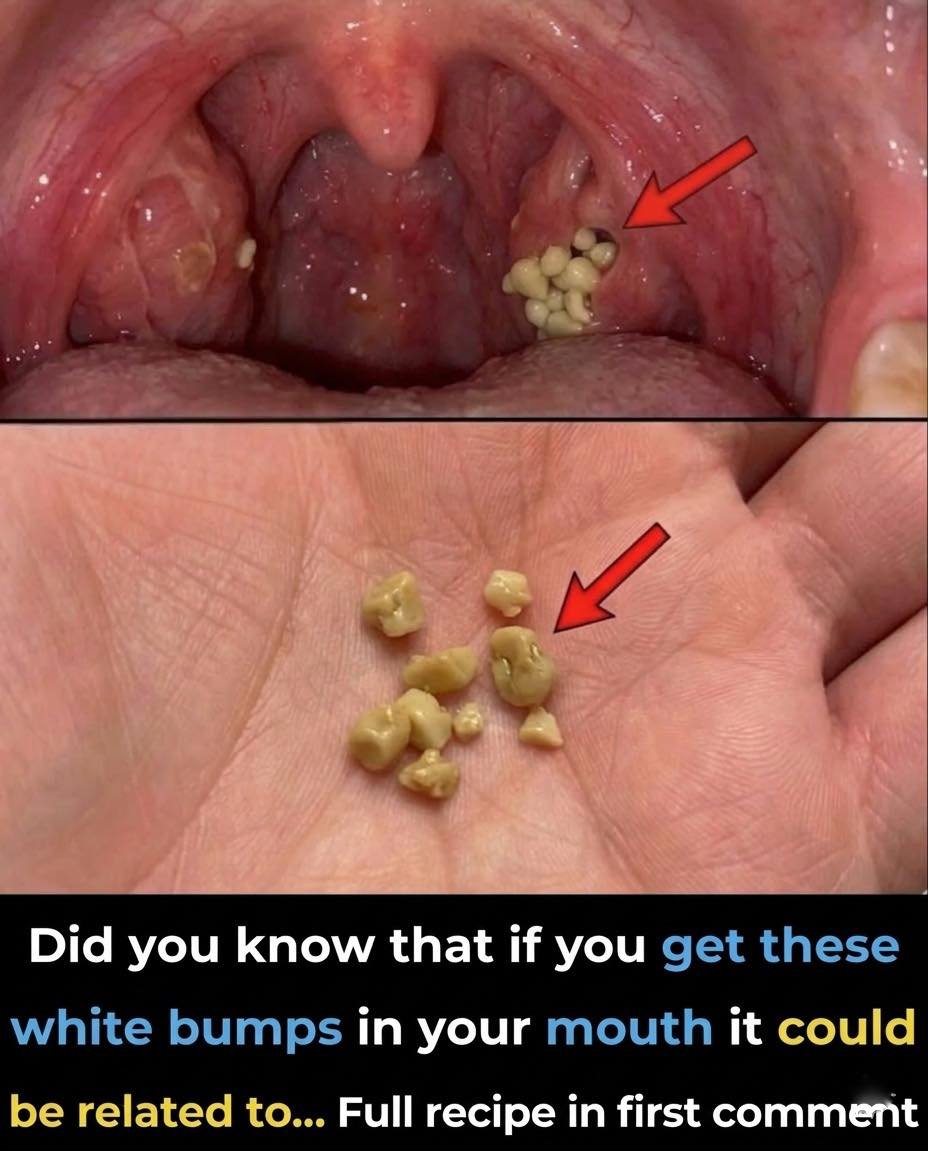
If you feel these bumps, the goal is to gently encourage them to dislodge while soothing the throat area.
Ingredients
-
1 cup Warm Water: (Not hot, just comfortable to the touch).
-
1/2 tsp Salt: Helps reduce inflammation and acts as a natural antiseptic.
-
1/4 tsp Baking Soda: Helps neutralize acids and odors caused by the stones.
-
Optional: 1 drop of Peppermint oil for extra freshness.
Detailed Step-by-Step Instructions
-
Prepare the Rinse: Mix the salt and baking soda into the warm water until completely dissolved.
-
Gargle Deeply: Take a sip of the solution and gargle deeply at the back of your throat for 30 seconds. The vibration of the gargling can help loosen smaller stones naturally.
-
Stay Hydrated: Drink plenty of water throughout the day. A dry mouth makes it easier for debris to build up in the tonsil crypts.
-
Gentle Oral Hygiene: Use an alcohol-free mouthwash and brush your tongue regularly. This reduces the amount of bacteria available to form new stones.
-
Manual Removal (Caution): If a stone is very visible and causing discomfort, some people use a clean, dampened cotton swab to very gently nudge the area. Never use sharp objects or apply heavy pressure, as tonsil tissue is delicate and bleeds easily.
Frequently Asked Questions (Q&A)
Q: Are tonsil stones a sign of an infection? A: Not necessarily. While they can appear after a bout of tonsillitis, they are often just a result of the shape of your tonsils. If you have deep “crypts” (holes) in your tonsils, you are more likely to get them even if your throat is healthy.
Q: Why do they smell so bad? A: Because they are made of trapped organic matter and bacteria, they undergo a process of decay. This releases sulfur compounds, which is why they often have a very strong, unpleasant odor.
Q: When should I see a doctor? A: You should consult a healthcare professional if you experience:
-
Severe throat pain or difficulty swallowing.
-
Tonsils that are very red, swollen, or bleeding.
-
Stones that are too large to come out on their own and cause constant discomfort.
Q: Can I prevent them from coming back? A: Good oral hygiene is the best defense. Using a water flosser on a low-pressure setting to gently rinse the tonsil area can also prevent debris from building up into stones.
Q: Are they contagious? A: No. Tonsil stones are not an infection or a virus; they are simply a physical buildup of material in your own throat.