Creamy Chicken & Mushroom Puff Pie

Creamy Chicken & Mushroom Puff Pie


*Serves: 4-6*

*Ingredients:*

*For the filling:*

– 500g boneless chicken, boiled and shredded

– 200g mushrooms, sliced – button or any

– 1 medium onion, finely chopped

– 2 cloves garlic, minced

– 2 tbsp butter

– 1 tbsp oil

– 2 tbsp flour / maida

– 1 cup milk

– 1/2 cup chicken stock – or 1/2 cup water + 1/2 chicken cube

– 1/2 cup fresh cream / cooking cream – optional but makes it creamy

– 1/2 tsp black pepper

– 1/2 tsp white pepper

– 1/2 tsp dried thyme / oregano

– Salt to taste


*For the top:*

– 1 sheet puff pastry, thawed

– 1 egg yolk + 1 tbsp milk for egg wash


*Method:*


*1. Make filling:* Heat butter + oil. Add onion, garlic, saute until soft. Add mushrooms, cook on high heat 3-4 mins until golden brown .


*2. Add flour:* Sprinkle flour, stir for 1 minute. This will thicken it.


*3. Make it creamy:* Slowly add milk and chicken stock while stirring so no lumps form. It will become thick creamy sauce.


*4. Add chicken:* Add shredded chicken, black pepper, thyme, salt. Add cream if using. Mix. Cook 2-3 mins until thick – not runny. Let it cool completely. This is very important or pastry will get soggy.


*5. Assemble:* Pour cooled filling into a baking dish. Roll out puff pastry slightly. Cover the dish with pastry. Press edges. Cut off extra. Make small cuts / score lines on top  for steam to escape.


*6. Egg wash:* Mix egg yolk + milk, brush generously on top. That’s what gives that shiny golden brown color .


*7. Bake:* Bake at 200°C / 400°F for 20-25 mins until puffed up and deep golden and crispy.


Let it sit 10 mins before serving – filling will set and won’t run everywhere when you slice.


Tastes exactly like a restaurant chicken pot pie – crispy flaky top, creamy chicken mushroom inside.

*1. Cool the filling 100%:* This is the #1 rule. Hot filling = soggy pastry that won’t puff. Make filling first, put it in fridge for 30 mins.


*2. Thick filling:* Your filling  is thick and creamy, not watery. If it looks thin, add 1 more tbsp flour. It should not be soupy.


*3. High heat for mushrooms:* Don’t overcrowd mushrooms or they will become watery. Cook them on high flame until dark golden  – that adds so much flavor.


*4. Egg wash trick:* 1 egg yolk + 1 tbsp milk, not whole egg. Yolk gives that deep shiny golden brown color you see. Brush twice for extra shine.


*5. Those lines on top:* Use a sharp knife to lightly score the top (don’t cut all the way through). It lets steam out so the pastry stays crispy and doesn’t get wet from inside.


*6. Don’t roll puff too thin:* If it’s too thin, it won’t flake. Just roll slightly to fit your dish.


*7. Bake hot and high:* 200°C is needed. Low temp = pastry absorbs cream and becomes oily. High temp = instant puff.


*8. Bottom rack last 5 mins:* If top is golden but you want extra crispy bottom, move dish to lowest rack for last 5 mins.


This pie reheats beautifully in air fryer for 4 mins – stays crispy.

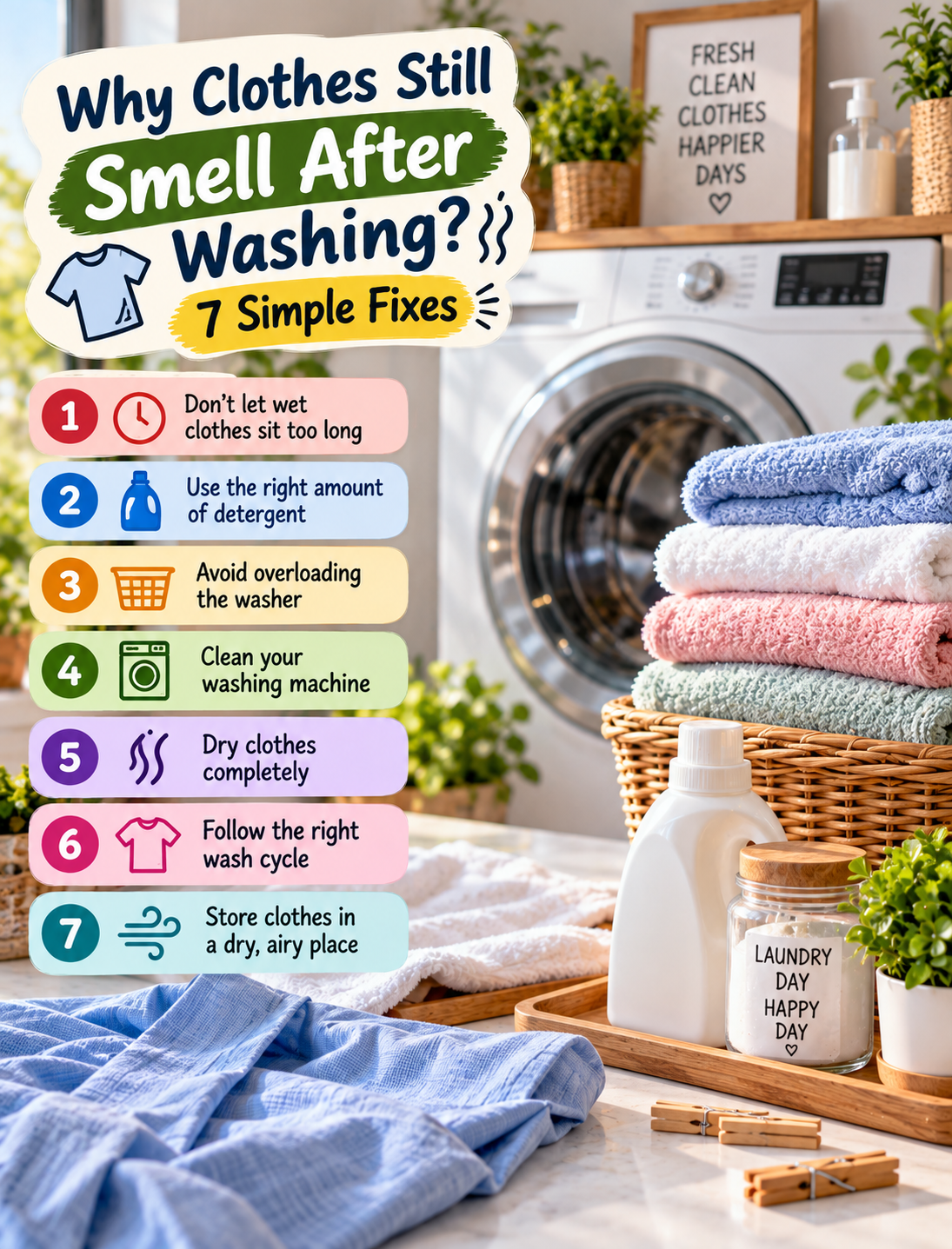
Why Clothes Still Smell After Washing: 7 Simple Fixes

Freshly washed clothes and towels beside a washing machine with tips for removing musty laundry odors

Why Do Your Clothes Still Smell After Washing? 7 Simple Fixes

Clean clothes should smell fresh after washing. But sometimes a shirt, towel, workout top, or pair of jeans comes out of the washer with the same musty or sour smell it had before the cycle.

The problem does not always mean your detergent is bad.

Lingering laundry odors can come from trapped sweat and body oils, too much detergent, an overloaded washer, damp clothes sitting too long, incomplete drying, or buildup inside the washing machine.

The good news is that you can usually narrow down the cause with a few simple checks.

Why Do Clothes Still Smell After Washing?

Several small laundry habits can contribute to persistent odors.

Common causes include:

  • Wet clothes sitting in the washer after the cycle
  • Using more detergent than recommended
  • Overloading the washing machine
  • Clothes not drying completely
  • A washer that needs cleaning
  • Sweat and body oils trapped in fabric
  • A dirty detergent dispenser or door gasket
  • Using a wash cycle that does not match the load

A strong smell can also become harder to remove when an item has been repeatedly washed without addressing the original cause.

Before changing several things at once, start with the easiest checks.

Step 1: Remove Wet Clothes Promptly

One of the simplest fixes is also one of the easiest to overlook.

When wet laundry stays inside the washer for too long, the damp environment can contribute to mildew-related odors. Whirlpool and Maytag both recommend removing laundry as soon as possible after the cycle ends.

Make This a Habit

As soon as the wash cycle finishes:

  1. Open the washer.
  2. Remove the clothes.
  3. Shake out heavier items.
  4. Transfer them to the dryer or drying area.
  5. Start drying promptly.

If clothes already smell musty because they sat wet for too long, consider rewashing them before drying.

Do not simply dry a noticeably musty load and hope the smell disappears.

Step 2: Stop Using More Detergent Than Needed

More detergent does not automatically mean cleaner clothes.

Too much detergent can leave residue behind, while too little may not clean heavily soiled laundry properly. The American Cleaning Institute recommends following the detergent label and fabric-care instructions.

Check Your Detergent Amount

Look at:

  • Load size
  • Soil level
  • Detergent concentration
  • Washer type
  • Manufacturer instructions

If you have a high-efficiency washer, use detergent designed for HE machines when required by your appliance.

Avoid guessing the amount by filling the measuring cap to the top unless the label specifically tells you to do so.

A properly measured dose can help reduce residue and improve rinsing.

Step 3: Avoid Overloading the Washer

A packed washer may look efficient, but clothes need enough space to move during the wash.

When the drum is overloaded, water and detergent may not circulate through the fabrics as effectively. Whirlpool specifically recommends leaving enough room for clothes to move during the wash action.

Try This Instead

Before starting a load:

  • Avoid tightly packing the drum.
  • Separate very bulky items when needed.
  • Follow your washer’s load-size guidance.
  • Give towels and heavy fabrics enough room to move.
  • Do not force one more shirt into an already full load.

If your clothes regularly come out unusually wet, check the load size and spin settings as well.

Step 4: Make Sure Clothes Dry Completely

Laundry can smell clean when it comes out of the washer and develop a musty odor later if it stays damp for too long.

Thick towels, hoodies, jeans, and heavy cotton items often need extra drying time.

Check the Thickest Parts

Before folding laundry, check:

  • Waistbands
  • Pockets
  • Cuffs
  • Seams
  • Towel centers
  • Thick collars

If any area still feels damp, continue drying according to the garment’s care instructions.

For air-dried clothes, leave enough space between garments for air to circulate.

Good airflow is especially important in humid laundry rooms.

Step 5: Clean the Washing Machine

Sometimes the clothes are not the main problem.

Residue from detergent, fabric softener, moisture, and other buildup can contribute to unpleasant washer odors. Whirlpool recommends regular washer-cleaning maintenance and checking the owner’s manual for the correct cleaning method.

Check These Areas

Depending on your washer model, inspect:

  • Drum
  • Door gasket
  • Detergent dispenser
  • Fabric-softener compartment
  • Door area
  • Other areas identified in your owner’s manual

Front-load washers deserve particular attention around the rubber door gasket because moisture and residue can collect there.

Use the Washer’s Cleaning Cycle

If your machine has a Clean Washer cycle, follow the manufacturer’s instructions.

Do not automatically use bleach, vinegar, or another cleaning product unless your appliance instructions allow it. Different washers have different cleaning requirements.

Step 6: Match the Wash Cycle to the Clothes

A heavily sweaty workout load may need different treatment from lightly worn everyday clothing.

Check the garment care label before changing the water temperature or cycle.

For washable fabrics that can safely tolerate warmer water, a suitable warm or hot cycle may help with stubborn odors. Whirlpool notes that higher-temperature cycles can help with odor removal when the fabric’s care instructions permit them.

For Workout Clothes

Synthetic athletic fabrics can hold onto sweat and body oils.

Try:

  1. Turn garments inside out if appropriate.
  2. Do not leave sweaty clothes sitting in a closed laundry basket for days.
  3. Use the correct detergent amount.
  4. Avoid overloading the washer.
  5. Follow the garment’s care label.
  6. Dry completely after washing.

Avoid using high heat on fabrics that the care label says should be air-dried or dried at low temperatures.

Step 7: Check Where the Clothes Wait Before and After Washing

Laundry odors can begin before the washing cycle even starts.

A damp towel thrown into a closed hamper can develop a stronger odor than a towel allowed to dry before going into the laundry.

Improve Your Laundry Routine

Before washing:

  • Let damp towels dry before putting them in a hamper.
  • Do not leave wet workout clothes in a closed bag.
  • Wash heavily sweaty items according to their care instructions.
  • Avoid letting damp laundry sit for days.

After washing:

  • Remove the load promptly.
  • Dry clothes thoroughly.
  • Do not leave damp laundry in a basket.
  • Make sure the drying area has reasonable airflow.

These small changes can prevent odors from becoming harder to remove.

What If Your Clothes Still Smell After These Fixes?

If the smell keeps returning, work through the problem systematically.

Check the Clothes

Does the odor affect only certain items?

If yes, the fabric may be holding onto sweat, body oils, or product residue.

Check the Washer

Does the washer itself smell when it is empty?

If yes, inspect the areas your manufacturer’s cleaning instructions identify.

Check Your Laundry Habits

Ask yourself:

  • Am I leaving clothes wet overnight?
  • Am I overloading the washer?
  • Am I using the recommended detergent amount?
  • Are clothes fully dry before storage?
  • Do I clean my washer regularly?

Changing one or two habits at a time makes it easier to identify what is actually helping.

A Simple Laundry Reset

If a load has developed a musty smell, try this basic reset:

1. Remove the Clothes

Take the laundry out of the washer instead of leaving it damp.

2. Check the Washer

Look for obvious moisture, residue, or buildup in areas that your owner’s manual says to clean.

3. Rewash When Needed

Follow the garment care label and choose an appropriate cycle.

4. Use the Correct Detergent Amount

Measure according to the detergent and washer instructions.

5. Dry Completely

Do not fold or store clothing while it is still damp.

6. Review the Cause

If the smell returns, investigate the washer, load size, detergent amount, and drying routine rather than simply adding more detergent.

Best Practices for Fresh-Smelling Laundry

You do not need a complicated laundry routine.

Keep these habits simple:

  • Remove laundry promptly after washing.
  • Measure detergent instead of guessing.
  • Avoid overloading the washer.
  • Clean the washer according to its manual.
  • Keep damp clothes from sitting in closed spaces.
  • Dry laundry completely before folding.
  • Follow clothing care labels.
  • Give heavily worn clothing appropriate washing attention.
  • Clean detergent dispensers as recommended.
  • Keep the washer interior ventilated according to the appliance instructions.

A consistent routine is usually easier to maintain than repeatedly trying to rescue badly scented laundry.

Quick Laundry Checklist

Save this checklist for your next wash:

Before Washing

  • Check clothing care labels
  • Separate heavily soiled items when appropriate
  • Do not overload the washer
  • Measure detergent correctly
  • Check that damp laundry has not been sitting too long

During Washing

  • Use the correct cycle
  • Use the appropriate water temperature
  • Use HE detergent if your washer requires it
  • Consider an extra rinse if your machine offers it and the load needs it

After Washing

  • Remove clothes promptly
  • Check thick areas for remaining moisture
  • Dry completely
  • Avoid leaving damp clothes in a basket
  • Store only when fully dry

Frequently Asked Questions

Why do my clothes smell musty right after washing?

Wet clothes left too long in the washer, detergent residue, an overloaded load, incomplete drying, or washer buildup can contribute to musty odors.

Does using more detergent make clothes smell fresher?

Not necessarily; excessive detergent can leave residue, so use the amount recommended for your detergent, load, and washer.

How quickly should I remove clothes from the washer?

Remove them as soon as practical after the cycle finishes to reduce the chance of damp odors developing.

Why do towels smell even after washing?

Towels can retain moisture and body oils, and their thick fabric may take longer to clean and dry completely.

Should I clean my washing machine?

Yes, follow your washer manufacturer’s recommended cleaning routine, especially if the machine itself develops an odor.

Can overloading cause smelly laundry?

Yes, an overloaded washer can limit movement and reduce how effectively water and detergent reach the fabrics.

Why do workout clothes still smell after washing?

Sweat and body oils can remain trapped in some fabrics, especially synthetic athletic clothing, if the load is not cleaned and dried properly.

Should I dry clothes longer if they smell musty?

First identify the cause; if clothing is still damp, dry it completely according to its care label, but persistent odor may require rewashing or washer maintenance.

Final Thoughts

When clothes still smell after washing, the answer is not always more detergent.

Start with the basics: remove wet laundry promptly, use the correct detergent amount, avoid overloading, clean your washer, and dry clothes completely.

If the odor keeps returning, look at the entire laundry process instead of focusing only on the clothing.

Your washer, detergent, load size, drying method, and storage habits all play a role in keeping laundry fresh.

A few small changes can make laundry day easier and help prevent that frustrating moment when freshly washed clothes still do not smell fresh.

Note: Always follow the care label on your clothing and the manufacturer’s instructions for your specific washer before changing water temperature, using cleaning products, or performing maintenance.

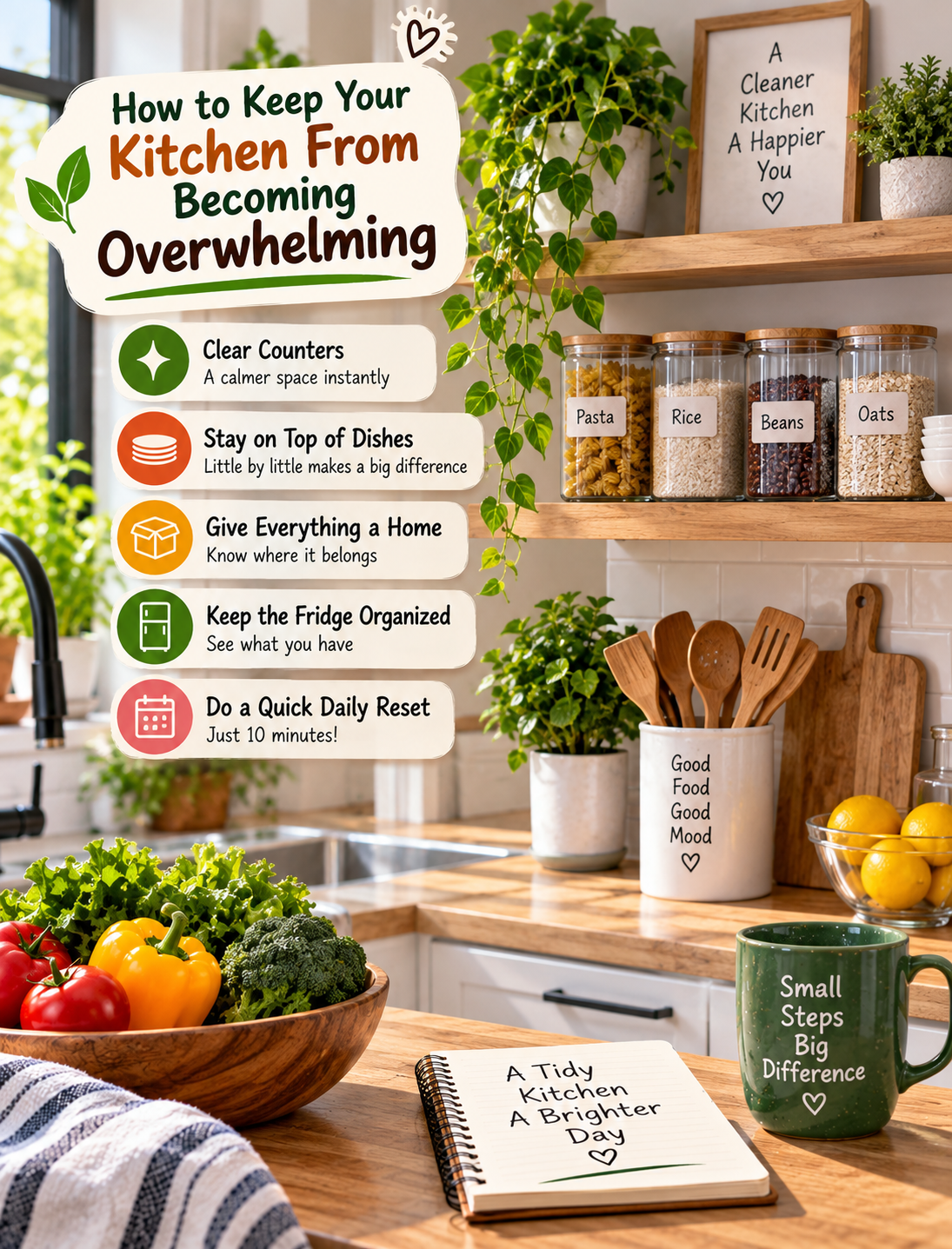
How to Keep Your Kitchen From Becoming Overwhelming

Organized kitchen with clear countertops, labeled storage, clean dishes, and simple home organization system

How to Keep Your Kitchen From Becoming Overwhelming

A kitchen can become messy faster than almost any other room in the house.

A few dirty dishes, an overflowing counter, an open package, and groceries that have not been put away can quickly make the whole space feel difficult to manage.

The solution is not to clean everything at once.

A better approach is to create a simple kitchen routine that prevents small messes from becoming large ones. When every item has a place and the most-used areas stay clear, daily cleanup becomes much easier.

This guide explains how to keep your kitchen organized, manageable, and easier to clean without spending hours on it.

Why Kitchens Become Overwhelming

Most kitchen clutter comes from small tasks being delayed.

A plate stays in the sink because you are busy. A grocery bag remains on the counter because there is no clear place for one item. Spices collect beside the stove because putting them away feels like another task.

Over several days, these small problems add up.

Common causes include:

  • Too many items on the countertops
  • Dishes left in the sink
  • Food packages without a storage place
  • Crowded cabinets
  • An overflowing refrigerator
  • Appliances rarely used but always left out
  • Grocery items that never get put away
  • No simple daily reset
  • Cleaning tasks saved until the kitchen becomes difficult to manage

The goal is not to create a picture-perfect kitchen.

The goal is to make the room easy to use and easy to reset.

Step 1: Clear the Kitchen Countertops

Start with the most visible area.

A crowded countertop can make the entire kitchen feel messy, even when the cabinets and drawers are organized.

Remove Everything That Does Not Belong

Pick up items such as:

  • Mail
  • Empty packages
  • Dirty dishes
  • Grocery bags
  • Random containers
  • Unused appliances
  • Food that belongs in the pantry or refrigerator

Put each item where it belongs instead of creating another temporary pile.

Keep Only Frequently Used Items Out

If you use your coffee maker every morning, keeping it on the counter may make sense.

If you use a small appliance once every few months, consider storing it in a cabinet.

A simple rule is:

The more often you use something, the easier it should be to access.

This keeps your kitchen practical instead of simply making it look organized.

Step 2: Give Every Frequently Used Item a Home

A kitchen becomes difficult to manage when items constantly move from one place to another.

Choose a permanent location for the things you use most.

For example:

  • Cooking utensils near the stove
  • Plates near the dishwasher or serving area
  • Coffee supplies together
  • Cutting boards near your food-preparation area
  • Spices near the cooking zone
  • Food-storage containers together

You do not need expensive organizers.

A consistent location is often more useful than a complicated storage system.

Use the “One Home” Rule

Choose one main storage area for each category.

Instead of keeping food containers in three different cabinets, keep them together.

Instead of spreading baking supplies throughout the pantry, create one baking section.

This makes putting things away faster because you always know where they belong.

Step 3: Deal With the Sink Before Bed

A full sink can make the kitchen feel unfinished.

You do not need to deep-clean the entire room every night, but try to avoid leaving a large pile of dishes behind.

Use a Simple Evening Reset

Before going to bed:

  1. Load the dishwasher or wash the dishes.
  2. Clear food from the counter.
  3. Wipe the main work surface.
  4. Put ingredients away.
  5. Take out trash if necessary.
  6. Leave the sink ready for the next morning.

This routine can take only a few minutes when the kitchen is already under control.

The benefit is that you start the next day with a usable workspace instead of yesterday’s mess.

Step 4: Stop Letting the Refrigerator Become a Storage Problem

An overloaded refrigerator makes food harder to find.

When containers are pushed toward the back, leftovers can easily be forgotten.

Create a “Use First” Area

Choose one visible section for foods that should be used soon.

Place items such as:

  • Open leftovers
  • Cut vegetables
  • Ripe fruit
  • Open dairy products
  • Partially used ingredients

When you can see these foods, you are more likely to use them.

This approach can also help you build meals around ingredients you already have before buying more groceries.

Step 5: Organize Your Pantry by Category

You do not need a perfectly styled pantry.

You need to know where things are.

Group similar foods together.

Try These Simple Categories

Breakfast:
Oats, cereal, pancake mix, coffee, tea.

Baking:
Flour, sugar, baking powder, spices, chocolate chips.

Dry staples:
Rice, pasta, beans, grains.

Snacks:
Crackers, nuts, popcorn, dried fruit.

Cooking ingredients:
Broth, canned tomatoes, sauces, oils.

Grouping similar items makes grocery shopping easier because you can quickly see what you already have.

Step 6: Use a 10-Minute Kitchen Reset

When the kitchen starts feeling overwhelming, do not try to clean everything at once.

Set a timer for 10 minutes.

Minute 1–2: Collect Trash

Throw away obvious trash and empty packaging.

Minute 3–4: Clear the Counters

Return appliances, dishes, food, and miscellaneous items to their proper locations.

Minute 5–6: Handle the Dishes

Load the dishwasher or wash the most important dishes.

Minute 7–8: Wipe Main Surfaces

Focus on the countertop, cooking area, and dining surface.

Minute 9–10: Finish the Small Things

Put away remaining items and sweep obvious crumbs from the floor.

When the timer ends, stop if the important work is finished.

You do not need to turn every 10-minute reset into a full cleaning session.

Step 7: Make Cleanup Easier While You Cook

One of the easiest ways to prevent kitchen clutter is to clean as you go.

Instead of waiting until dinner is finished, handle small tasks during cooking.

Try This System

While water heats:

  • Put ingredients away.

While food cooks:

  • Wash a utensil.
  • Wipe a small surface.
  • Put empty packages in the trash.

After transferring food to a plate:

  • Rinse the pan before residue dries.

These small actions reduce the amount of work waiting for you after the meal.

Step 8: Reduce Duplicate Kitchen Items

Too many items can make even a clean kitchen feel crowded.

Open one drawer or cabinet at a time.

Look for:

  • Duplicate utensils
  • Chipped dishes
  • Containers without matching lids
  • Appliances you never use
  • Expired pantry items
  • Gadgets you forgot you owned

Do not remove something simply because you have not used it recently.

Instead, ask:

“Does this item have a useful purpose in my kitchen?”

If the answer is no and it is safe and appropriate to remove it, consider donating, recycling, or discarding it according to local guidelines.

Step 9: Create Simple Kitchen Zones

Kitchen organization becomes easier when different activities have their own areas.

Cooking Zone

Keep frequently used pans, utensils, oils, and seasonings close to the stove.

Food Preparation Zone

Keep cutting boards, knives, mixing bowls, and prep tools near the main counter space.

Cleaning Zone

Keep dish soap, sponges, brushes, and cleaning supplies together and safely stored.

Breakfast Zone

Keep coffee, tea, cereal, oats, and breakfast supplies together if that fits your kitchen layout.

Zones reduce unnecessary movement and make everyday tasks faster.

Step 10: Build a Weekly Kitchen Reset

A daily reset handles the small messes.

A weekly reset handles the areas that slowly become cluttered.

Choose one day each week for a quick check.

Weekly Checklist

  • Check the refrigerator
  • Review leftovers
  • Check produce
  • Wipe refrigerator spills
  • Review pantry items
  • Restock basic supplies
  • Clear one cluttered drawer
  • Clean frequently touched surfaces
  • Check the trash and recycling area
  • Create your grocery list

You do not need to complete a deep clean every week.

Focus on the areas that affect your daily routine.

Step 11: Make Your Kitchen Easier to Maintain

The best organization system is one you can actually maintain.

If putting something away requires opening three cabinets, you are less likely to do it consistently.

Keep frequently used items accessible.

Store rarely used items farther away.

Avoid creating complicated systems with too many labels, containers, and rules.

Follow the “Easy to Put Away” Test

For every major storage area, ask:

“Can I put this away in a few seconds?”

If the answer is no, the storage system may need to be simplified.

A kitchen should support your routine rather than create additional work.

A Simple Daily Kitchen Routine

You can keep the system very simple.

Morning

  • Put away clean dishes.
  • Clear the main counter.
  • Return breakfast items to storage.

During the Day

  • Clean small spills quickly.
  • Put ingredients away after using them.
  • Wash or load dishes as you go.

Evening

  • Clear the sink.
  • Wipe the main work surface.
  • Put food away.
  • Check the refrigerator for anything that needs attention.

This routine prevents small problems from building into a major cleanup.

What to Do When Your Kitchen Already Feels Overwhelming

If your kitchen is already messy, do not start by organizing every cabinet.

Use this order:

1. Trash
Remove obvious garbage.

2. Dishes
Wash them or load the dishwasher.

3. Food
Return food to the refrigerator or pantry.

4. Counters
Clear your main work surfaces.

5. Floors
Sweep visible crumbs and debris.

6. Storage
Only after the kitchen is usable should you organize drawers and cabinets.

This order gives you a usable kitchen quickly without creating more piles.

Frequently Asked Questions

How do I keep my kitchen from getting messy every day?

Use a short daily reset that focuses on dishes, countertops, food storage, and obvious trash.

How often should I organize my kitchen?

Do a small daily reset and a focused weekly check; save deeper organizing for areas that actually become difficult to use.

What should I remove from my kitchen counters?

Remove items you rarely use, food that belongs elsewhere, paperwork, empty packaging, and appliances that can be stored.

How can I organize a small kitchen?

Use vertical storage where practical, group similar items, and keep frequently used tools in the easiest-to-reach locations.

How long should a kitchen reset take?

A 10–15 minute reset is enough for basic daily maintenance when larger cleaning tasks are handled separately.

How can I make cleaning the kitchen easier?

Clean small messes while cooking, keep storage locations consistent, and avoid allowing dishes and food containers to accumulate.

What should I do first when my kitchen is extremely messy?

Start with trash, dishes, food, and countertops before attempting detailed organization.

How can I stop my kitchen from feeling cluttered?

Reduce unnecessary items, keep counters mostly clear, and give frequently used categories a consistent storage location.

Final Thoughts

A manageable kitchen does not require perfect organization.

It needs a simple system that makes everyday tasks easier.

Clear the counters, give frequently used items a home, stay on top of dishes, organize food by category, and use a short reset before small messes become large ones.

Most importantly, do not wait until the kitchen is overwhelming before doing something about it.

A few minutes each day can be much easier than one exhausting cleaning session at the end of the week.

Start with one area today.

Clear the main counter, handle the dishes, and put everything that does not belong there back in its place.

Then repeat the process tomorrow.

That Jar of Cloves in Your Cabinet Has More Uses Than You Think

Six everyday uses for cloves including tea, baking, savory cooking, citrus infusion, and home aroma

What Can You Actually Do With Cloves? 6 Easy Everyday Uses

A jar of whole cloves can do much more than sit in the spice cabinet until the holidays.

These small, strongly scented spice buds can add warm flavor to drinks, rice, baked goods, savory meals, and simple citrus infusions. Cloves are commonly used as a seasoning, and the FDA identifies cloves as a food ingredient used for flavoring.

If you already have cloves at home, you can use them in several simple ways without buying special ingredients.

Here are 6 practical everyday uses for cloves that fit easily into an American kitchen.

1. Make a Simple Clove Tea

One of the easiest ways to use whole cloves is to make a warm, lightly spiced drink.

How to Make Clove Tea/Steps:

1: Add 2–3 whole cloves to about 8 ounces of water.

2: Bring the water to a gentle simmer.

3: Let the cloves steep for several minutes.

4: Strain the drink before serving.

5: Add a small amount of lemon or honey if you enjoy the flavor.

Cloves have a strong, warm taste, so you usually do not need many.

For everyday use, think of clove tea as a flavorful beverage rather than a medical treatment. Research on concentrated herbal products can differ from normal culinary use, so avoid treating a homemade clove drink as a cure for a health condition.

2. Add Cloves to Warm Drinks

Whole cloves can also add a cozy flavor to other hot beverages.

Try combining one or two cloves with:

  • Black tea
  • Apple cider
  • Hot lemon water
  • Chai-style drinks
  • Warm milk-based drinks
  • Spiced herbal beverages

Easy Citrus-Spice Drink/ Steps:

1: Add a few slices of orange or lemon to a mug or small saucepan.

2: Add 1–2 whole cloves.

3: Pour in hot water.

4: Let the mixture steep for several minutes.

5: Remove the cloves before drinking.

The citrus provides brightness while the cloves add a deeper, warmer aroma.

You can also combine cloves with cinnamon or ginger when making a homemade spiced drink.

3. Use Cloves in Rice and Savory Dishes

Cloves are not limited to desserts.

A small amount can add depth to savory recipes, especially dishes that already use warm spices.

Try Cloves With:

  • Rice
  • Roasted vegetables
  • Slow-cooked meats
  • Stews
  • Lentil dishes
  • Curries
  • Homemade spice blends

For rice, add a small number of whole cloves while the rice cooks, then remove them before serving if you prefer not to bite into them.

Simple Spiced Rice Method/Steps:

1: Prepare your rice as usual.

2: Add 1–2 whole cloves with your other seasonings.

3: Cook according to your normal rice method.

4: Remove whole cloves before serving.

Cloves have a powerful flavor, so using a small amount is usually enough.

Their main role in cooking is seasoning and aroma, not providing a large amount of nutrition. The FDA defines spices primarily as aromatic plant substances used for seasoning food.

4. Add Cloves to Baking

Cloves are especially useful when you want a warm, aromatic flavor in baked foods.

You can use ground cloves or carefully measured whole cloves in recipes where they will later be removed.

Good Baking Pairings

Cloves work well with:

  • Apples
  • Pumpkin
  • Pears
  • Ginger
  • Cinnamon
  • Nutmeg
  • Orange
  • Molasses
  • Brown sugar

Try adding a small amount of ground clove to:

  • Apple bread
  • Pumpkin muffins
  • Spice cookies
  • Gingerbread
  • Apple crisp
  • Homemade granola

Baking Tip

Ground cloves are much easier to distribute evenly through a batter or dough.

Because the flavor is intense, start with the amount called for in the recipe rather than adding extra.

A little can add warmth, while too much can overpower the other flavors.

5. Make a Citrus-and-Clove Infusion

If you enjoy naturally fragrant kitchen aromas, combine cloves with citrus.

Orange and lemon pair particularly well with the warm scent of cloves.

Simple Citrus-Clove Method/Steps:

1: Slice an orange or lemon.

2: Place the slices in a small saucepan with water.

3: Add several whole cloves.

4: Warm the mixture gently.

5: Keep it at a gentle simmer and add water as needed.

This creates a warm, spicy citrus aroma for your kitchen.

You can also add a cinnamon stick for a stronger seasonal scent.

Important Tip

Never leave a simmering pot unattended.

Keep the heat low and check the water level regularly.

This is a simple way to enjoy cloves as part of a home fragrance routine without using concentrated essential oil.

6. Use Cloves for a Cozy Home Aroma

Whole cloves can also be used as part of simple homemade fragrance ideas.

One easy option is a stovetop simmer pot.

Simple Clove Simmer Pot

Add the following to a saucepan:

  • Orange slices
  • 3–5 whole cloves
  • A cinnamon stick
  • Water

Bring the mixture to a gentle simmer and keep an eye on the water level.

The combination creates a warm, spicy citrus scent that works especially well during colder months.

You can change the ingredients depending on what you have available.

Try:

  • Lemon + cloves
  • Orange + cloves
  • Apple + cloves
  • Cinnamon + cloves
  • Orange + cinnamon + cloves

This use is about fragrance and atmosphere rather than claiming that cloves clean or purify the air.

Whole Cloves vs. Ground Cloves: Which Should You Use?

The best form depends on what you are making.

Use Whole Cloves For:

  • Tea
  • Warm drinks
  • Rice dishes
  • Simmer pots
  • Citrus infusions
  • Recipes where you want to remove the spice afterward

Whole cloves are easy to spot and remove after cooking.

Use Ground Cloves For:

  • Cookies
  • Muffins
  • Cakes
  • Spice blends
  • Baked fruit
  • Recipes where the spice needs to mix evenly

Ground cloves distribute throughout a recipe, so you cannot easily remove them afterward.

For either form, store cloves in a tightly sealed container away from heat, moisture, and direct sunlight to help preserve their aroma.

Easy Ways to Start Using Cloves

You do not need to completely change your cooking routine.

Start with one simple idea.

If You Drink Tea

Add a couple of whole cloves while your tea steeps.

If You Make Rice

Try a small amount of clove alongside your usual savory seasonings.

If You Bake

Use ground cloves in a recipe that already contains cinnamon, ginger, apple, pumpkin, or other warm flavors.

If You Like Home Fragrance

Try orange slices, cloves, and cinnamon in a small simmer pot.

If You Have a Full Spice Cabinet

Move the jar of cloves somewhere visible so you remember to use it.

The easiest ingredient to waste is the one you forget you own.

Safety Tips Before Using Cloves

Cloves are commonly used as a culinary spice, but whole cloves, ground cloves, and concentrated clove oil are not interchangeable.

The FDA lists cloves and clove-derived oils among substances used for food flavoring under specified conditions.

Keep These Points in Mind

  • Use cloves in normal culinary amounts.
  • Do not substitute concentrated clove oil for whole or ground cloves.
  • Do not ingest undiluted essential oils.
  • Follow product directions when using any concentrated oil.
  • Keep clove oil away from children and pets.
  • If you take medications or have a medical condition, ask a healthcare professional before using concentrated herbal products.

Clove oil contains concentrated compounds such as eugenol, so it should not be treated like an ordinary kitchen spice.

For everyday cooking, sticking with the whole or ground spice is the simplest approach.

6 Everyday Clove Ideas at a Glance

Here is your quick reference:

1. Tea
Steep a few whole cloves in hot water for a warm, spiced drink.

2. Warm Drinks
Add cloves to tea, cider, citrus drinks, or other hot beverages.

3. Savory Cooking
Use a small amount in rice, stews, curries, and other seasoned dishes.

4. Baking
Use ground cloves with cinnamon, ginger, apples, pumpkin, or other warm flavors.

5. Citrus Infusions
Combine cloves with orange or lemon for a fragrant warm infusion.

6. Home Aroma
Use whole cloves in a simple stovetop citrus-and-spice simmer pot.

Frequently Asked Questions

What are cloves commonly used for?

Cloves are commonly used as a culinary spice in drinks, savory dishes, baked foods, spice blends, and fragrant simmer pots.

Can I use whole cloves to make tea?

Yes. A few whole cloves can be steeped in hot water to make a strongly flavored, aromatic drink.

Are ground and whole cloves interchangeable?

They can provide similar flavor, but whole cloves are easier to remove while ground cloves distribute throughout a recipe.

Can I put cloves in rice?

Yes. A small number of whole cloves can add warm spice and aroma to rice dishes; remove them before serving if preferred.

Can cloves be used in baking?

Yes. Ground cloves pair especially well with apples, pumpkin, ginger, cinnamon, nutmeg, and other warm baking spices.

Can I use cloves for a home fragrance?

Yes. Whole cloves can be simmered with citrus, cinnamon, or apples to create a warm kitchen aroma.

Is clove oil the same as using whole cloves?

No. Clove oil is highly concentrated and should not be used as though it were the culinary spice.

How should I store cloves?

Keep whole or ground cloves in a tightly sealed container in a cool, dry, dark place to help preserve their flavor and aroma.

Final Thoughts

You do not need a complicated recipe to get more use from a jar of cloves.

Start with something simple: add a few whole cloves to tea, use them in a rice dish, add ground cloves to your next batch of spiced baking, or make a citrus simmer pot.

The key is using cloves as a flavorful culinary spice rather than treating them as a cure or concentrated remedy.

If that forgotten jar has been sitting in your cabinet for months, this weekend is a good time to bring it back into your cooking routine.

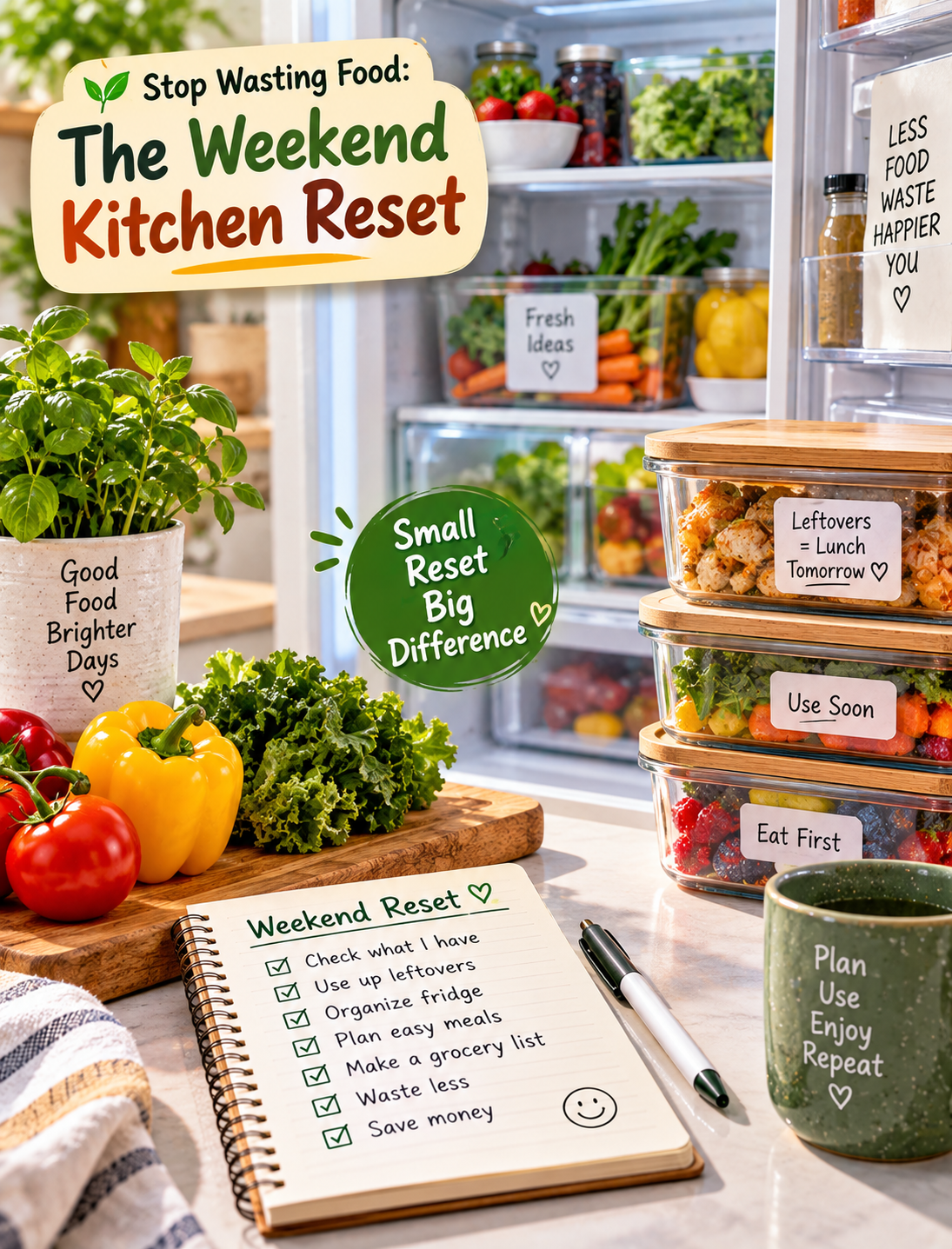
Stop Wasting Food: The Weekend Kitchen Reset

Weekend kitchen reset with organized refrigerator, fresh produce, leftovers, and food storage containers

Stop Wasting Food: The Weekend Kitchen Reset

Food waste often starts with small things.

A container of leftovers gets pushed behind the milk. A bag of spinach gets forgotten in the crisper drawer. Half an onion sits unused until it becomes soft. Then grocery day arrives, and you buy more food without checking what you already have.

A simple weekend kitchen reset can help prevent this cycle.

You do not need to deep-clean your entire kitchen every weekend. A focused 10–20 minute check of your refrigerator, leftovers, produce, and open packages can help you use food before it gets forgotten.

It can also make meal planning easier, reduce unnecessary grocery purchases, and save time during the week.

Here is a simple system you can repeat every weekend.

Why a Weekend Kitchen Reset Helps Reduce Food Waste

The main goal is simple: see what you have before buying more.

When food is hidden behind newer groceries, it becomes easy to forget about it. A quick refrigerator check brings older food back into view.

The FDA recommends checking your refrigerator often, keeping foods covered, using the freezer when appropriate, and eating or freezing foods before they need to be discarded.

A weekly reset can help you:

  • Find food that needs to be used soon
  • Notice leftovers before they are forgotten
  • Use produce while it is still in good condition
  • Organize opened packages
  • Build meals around food already in your kitchen
  • Create a more accurate grocery list
  • Reduce unnecessary duplicate purchases
  • Keep your refrigerator easier to manage

The idea is not to make your refrigerator look perfect.

The goal is to make your food visible, organized, and easier to use.

Step 1: Start With a Quick Refrigerator Check

Set a timer for 10 minutes.

Start with the refrigerator instead of trying to clean the entire kitchen.

Look at every shelf and drawer.

Check for Food That Needs to Be Used

Look for:

  • Open containers
  • Cooked leftovers
  • Cut fruit
  • Cut vegetables
  • Fresh herbs
  • Open dairy products
  • Deli items
  • Sauces and condiments
  • Produce that is starting to soften

Do not immediately throw everything away.

First, ask:

“Can I safely use this soon?”

If the answer is yes, move it toward the front where you can see it.

This simple change can prevent food from disappearing behind newer items.

Create a “Use First” Area

Choose one refrigerator shelf or section for food that should be used soon.

You can place:

  • Leftover chicken
  • Open vegetables
  • Half-used ingredients
  • Cooked grains
  • Open packages
  • Fruit that is getting ripe

You do not need a special container or expensive organizer.

The important part is making the food visible.

Step 2: Check Your Leftovers

Leftovers are convenient, but they are also easy to forget.

During your weekly reset, gather your cooked foods and check when they were prepared.

Most cooked leftovers should be refrigerated promptly and generally used within 3–4 days when properly stored. USDA guidance recommends keeping refrigerated foods at 40°F or below.

Make Leftovers Easy to See

Use clear containers when possible.

Labeling a container with the date can also help you remember when it was stored.

For example:

Chicken + rice — Tuesday

That small note can make the decision much easier later in the week.

If you are unsure whether a food has been stored safely, do not rely only on its smell or appearance. When food safety is uncertain, it is safer to discard it. FDA guidance also notes that appearance and odor are not reliable safety tests in some situations.

Step 3: Check Produce Before It Gets Forgotten

The refrigerator produce drawer can become a hiding place for food.

Pull everything forward and check it.

Use This Simple Three-Part System

USE NOW

Food that is ready to eat or cook.

Examples:

  • Very ripe berries
  • Soft vegetables
  • Fresh herbs
  • Ripe fruit

USE SOON

Food that still looks good but should not be forgotten.

Examples:

  • Leafy greens
  • Opened vegetables
  • Half-used fruit
  • Fresh mushrooms

STORE OR FREEZE

Food that you will not use soon but can be safely stored for later.

Freezing can be a useful way to extend the storage life of many foods. The FDA recommends using the freezer when appropriate and checking reliable storage guidance for individual foods.

Step 4: Turn Food Into a Simple Meal Plan

Now look at the food you need to use first.

Do not start by asking:

“What should I cook this week?”

Instead ask:

“What do I already have that needs to be used?”

That small change can make meal planning much easier.

Build 2–3 Meals Around Existing Food

For example:

Have leftover chicken?

Use it in:

  • Chicken wraps
  • A grain bowl
  • A salad

Have vegetables that need using?

Try:

  • Roasted vegetables
  • Vegetable omelets
  • Soup
  • Stir-fry

Have ripe fruit?

Use it in:

  • Oatmeal
  • Yogurt
  • Smoothies
  • Fruit bowls

You do not need a complicated meal plan.

Start with the food that has the shortest useful window.

Step 5: Check Open Packages

Open packages are another common source of forgotten food.

Look through:

  • Cheese
  • Nuts
  • Crackers
  • Grains
  • Pasta
  • Sauces
  • Canned foods that were opened and refrigerated
  • Baking ingredients
  • Snacks

Group similar items together so you can see what you already own.

For example, place all opened breakfast foods together instead of keeping several partially used packages in different cabinets.

This makes it easier to finish what you have before opening something new.

Step 6: Check Your Refrigerator Temperature

A clean and organized refrigerator still needs to be cold enough for safe food storage.

The FDA recommends keeping the refrigerator at 40°F or below and the freezer at 0°F. A refrigerator thermometer can help you check the actual temperature instead of relying only on the appliance setting.

Also avoid packing the refrigerator so tightly that cold air cannot circulate properly.

This is an important part of a kitchen reset because organization should never come at the expense of food safety.

Step 7: Clean Only What Needs Attention

You do not need to empty the entire refrigerator every weekend.

Instead, look for obvious problem areas.

Focus on These Spots

  • Sticky shelves
  • Food spills
  • Crumbs
  • Leaking containers
  • Dirty drawer edges
  • Refrigerator door shelves

Wipe spills as soon as possible.

For a deeper refrigerator cleaning, remove food and clean surfaces according to the manufacturer’s instructions.

The FDA recommends regular refrigerator cleaning and wiping spills promptly.

Step 8: Check Food Dates Without Automatically Throwing Everything Away

Food labels can be confusing.

Terms such as “Best By,” “Sell By,” and “Use By” do not always mean the same thing.

The FDA notes that many date labels are related to food quality rather than safety, and labeling practices are not completely uniform across the United States.

That means you should not treat every printed date as a simple instruction to throw food away.

Instead:

  1. Read the label carefully.
  2. Follow the manufacturer’s storage instructions.
  3. Consider how the food has been stored.
  4. Look for signs of spoilage.
  5. When safety is uncertain, discard the food.

For specific foods, use reliable storage guidance such as the USDA FoodKeeper information rather than guessing.

Step 9: Build Your Grocery List After the Reset

This is where the kitchen reset can save money.

Do not make your grocery list first.

Check your kitchen first.

Then write down only what you actually need.

For example:

Instead of buying more yogurt because you think you are out, check the refrigerator.

buying another bag of rice, look in the pantry.

Instead of buying vegetables for a meal you planned, see whether your existing produce can work.

Your grocery list should fill the gaps in your kitchen rather than duplicate what you already own.

Your 15-Minute Weekend Kitchen Reset Checklist

Use this quick checklist every weekend:

Refrigerator

  • Check leftovers
  • Move older food toward the front
  • Create a “use first” area
  • Check produce
  • Check open packages
  • Wipe obvious spills
  • Check refrigerator temperature

Pantry

  • Look for opened packages
  • Group similar foods
  • Move older items where you can see them
  • Check foods you rarely use

Freezer

  • Look for forgotten frozen food
  • Group similar items
  • Label homemade frozen meals
  • Check for freezer-burned or questionable items

Meal Planning

  • Choose 2–3 foods to use first
  • Plan simple meals around them
  • Freeze suitable food when appropriate
  • Make your grocery list last

Small Habits That Make the Reset Easier

You do not have to wait until the weekend to prevent food waste.

Try these simple habits during the week:

Keep leftovers visible.
Store them where you will see them.

Use clear containers.
You can quickly see what is inside.

Label homemade leftovers.
Write the preparation date on the container.

Freeze food before you forget about it.
>Freezing can help preserve many foods for later use.

Keep your refrigerator organized.
A simple layout makes older food easier to find.

Shop with a list.
>Check your kitchen before adding an item to the list.

Avoid overbuying fresh produce.
Buy quantities that match how much your household normally uses.

A Simple Weekend Routine You Can Repeat

You can make this a regular habit without turning it into a major cleaning project.

Every Weekend/Min

1–3: Check leftovers.

4–6: Check produce.

7–9: Check opened packages.

10–12: Move “use first” foods forward.

13–15: Build meals and make your grocery list.

That is enough to create a simple system.

The goal is not a perfectly organized refrigerator.

The goal is knowing what you have, what needs to be used, and what you actually need to buy.

Frequently Asked Questions

How often should I do a kitchen reset?

A quick refrigerator and pantry check once a week is a practical routine for most households.

What should I check first in my refrigerator?

Start with leftovers, produce, and opened packages because these foods are easy to forget.

How long can leftovers stay in the refrigerator?

Cooked leftovers should be used within 3–4 days when properly refrigerated at 40°F or below.

Does a “Best By” date mean food is unsafe?

Not necessarily; many U.S. date labels relate to quality, so follow the product’s storage guidance and assess safety before eating.

Can I freeze food to reduce waste?

Yes, freezing is a useful way to preserve many foods when they are stored properly and suitable for freezing.

What temperature should my refrigerator be?

Keep your refrigerator at 40°F or below and your freezer at 0°F.

Should I clean my refrigerator every weekend?

You can do a quick weekly check and spot-clean spills, while saving the deeper refrigerator cleaning for when it is needed.

What is the easiest way to stop wasting food?

Check what you already have before shopping, move foods that need using to the front, and plan a few meals around them.

Final Thoughts

A weekend kitchen reset does not need to take an hour.

A focused 15-minute check can help you find forgotten leftovers, use produce at the right time, organize open packages, and build a smarter grocery list.

The most important step is simple:

Check your kitchen before you shop.

When you know what is already there, it becomes easier to plan meals, avoid duplicate purchases, and get more use from the food you already paid for.

Start this weekend with your refrigerator.

Set a 15-minute timer, move the food that needs attention to the front, and build your next few meals around what you already have.

Small weekly habits can make a noticeable difference over time.

Cheesy Taco Biscuit Ring* 

*Cheesy Taco Biscuit Ring* 


*Makes: 1 large pie / 6 servings*


*Ingredients:*


*For the beef:*

– 400g ground beef / keema – use chicken keema for halal / lighter version

– 1 small onion, finely chopped

– 1 packet taco seasoning – OR 1 tsp cumin, 1 tsp paprika, 1/2 tsp chili powder, 1/2 tsp garlic powder, salt, pepper

– 2-3 tbsp water

– 1 tbsp oil


*For the ring:*

– 1 can (8 pieces) crescent roll dough / biscuit dough / pizza dough – if you don’t have this, use canned croissant dough or homemade paratha dough cut in triangles

– 1 1/2 cups shredded cheese – mozzarella + cheddar mix for that melted look in your photo

– 1 tbsp melted butter for brushing


*Method:*


*1. Cook meat:* Heat oil, add onion, saute 2 mins. Add keema, break it up. Cook until brown. Add taco seasoning + 3 tbsp water. Mix well. Cook until water dries. Let it cool slightly – this is important.


*2. Assemble:* Grease a round pie dish. Open crescent dough. Place triangles around the edge of the dish with the pointy side hanging OUT and thick side inside, overlapping a little to make a full ring like in your photo. It should look like a sun.


*3. Fill:* Spoon the cooked taco meat into the middle ring area. Sprinkle 1 cup cheese over the meat.


*4. Fold:* Fold the pointy ends of the dough OVER the meat towards the center, tucking slightly. It will make that golden biscuit ring border you see. The center stays open.


*5. Top:* Sprinkle remaining 1/2 cup cheese in the center on top of meat. Brush biscuit edges with melted butter.


*6. Bake:* Bake at 190°C / 375°F for 18-22 mins until biscuits are deep golden brown and puffed up.


*7. Serve:* Let it sit 5 mins, then slice. Serve with sour cream, salsa or ketchup.


It comes out exactly like your picture – crispy buttery ring outside, saucy cheesy taco meat inside.

Tips to get that perfect golden ring + cheesy center.


*1. Cool the meat first:* If you put hot keema directly, it will make the dough soggy and raw at the bottom. Let it cool 10 mins.


*2. Dough placement:* Overlap the thick parts of the triangles inside the dish. If you leave gaps, the cheese will leak out the bottom. The thin pointy ends should hang outside the dish, then you fold them back in.


*3. Don’t use too much liquid:* Cook keema until completely dry. Any water = soggy crust. The meat should be moist, not saucy.


*4. Cheese trick:* Use 2 cheeses – 1 cup INSIDE with meat, 1/2 cup on TOP in center at the end. This gives you that extra melted layer you see in the middle of your photo.


*5. Butter brush = golden color:* Brush the biscuit ring with melted butter + a pinch of garlic powder before baking. That’s how you get that deep golden brown shine.


*6. Bake bottom rack:* Place pie dish on lower rack for first 15 mins so bottom of biscuits cooks, then move to middle. No more raw dough underneath.


*7. Rest 5 mins before cutting:* If you cut immediately, it will fall apart. 5 mins rest helps cheese set slightly.


Use chicken keema for halal version – stays juicier!