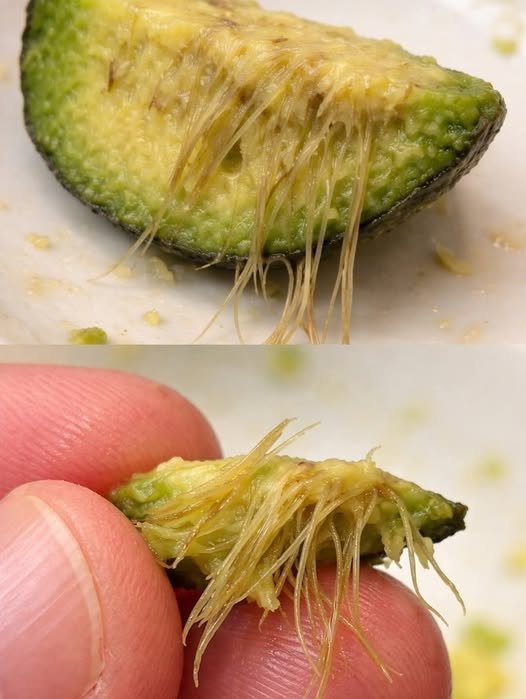
It’s definitely a bit of a “kitchen heartbreak” when you slice into a beautiful avocado only to find it looks like it’s full of dental floss! You’ve hit the nail on the head regarding the vascular bundles. Just like the “strings” in a celery stalk or the veins in a leaf, these are simply the highways for water and nutrients.
While they are technically edible, let’s be honest: nobody wants a “hairy” guacamole. Since you were about to list some tips, here is how to handle a stringy avocado and how to avoid them in the future:
How to Handle the Strings
-
The Mesh Sieve Trick: If you are making a smooth crema or baby food, push the scooped avocado through a fine-mesh sieve using the back of a spoon. The creamy flesh goes through, and the woody strings stay behind.
-
Blend on High: A high-speed blender can usually pulverize these fibers into oblivion, making them perfect for smoothies or chocolate avocado mousse.
-
The “Comb” Method: You can gently run the tines of a fork through the scooped flesh to “fish” out the largest, toughest strands before mashing.
How to Pick a Stringless Avocado
-
Check the Stem (The “Button”): Gently flick the small brown stem off the top. If it comes off easily and reveals bright green underneath, it’s likely at peak ripeness. If it’s stubborn or shows brown/fibrous holes, it might be overripe or stressed.
-
Feel the “Shoulders”: Gently squeeze the avocado near the stem end (the “neck”). If it feels hollow or squishy there, the vascular bundles have likely begun to harden and separate from the flesh.
-
Know Your Season: In the U.S., early-season Hass avocados (winter/early spring) are sometimes more prone to fibers because they haven’t reached full oil content yet. By mid-summer, they are usually much creamier.
Quick Comparison: Variety Matters
| Variety | Texture | String Probability |
| Hass | Creamy, high oil | Low |
| Reed | Very buttery, large | Very Low |
| Fuerte | Thinner skin, spreadable | Medium |
| Bacon/Zutano | Watery, lighter flavor | High |