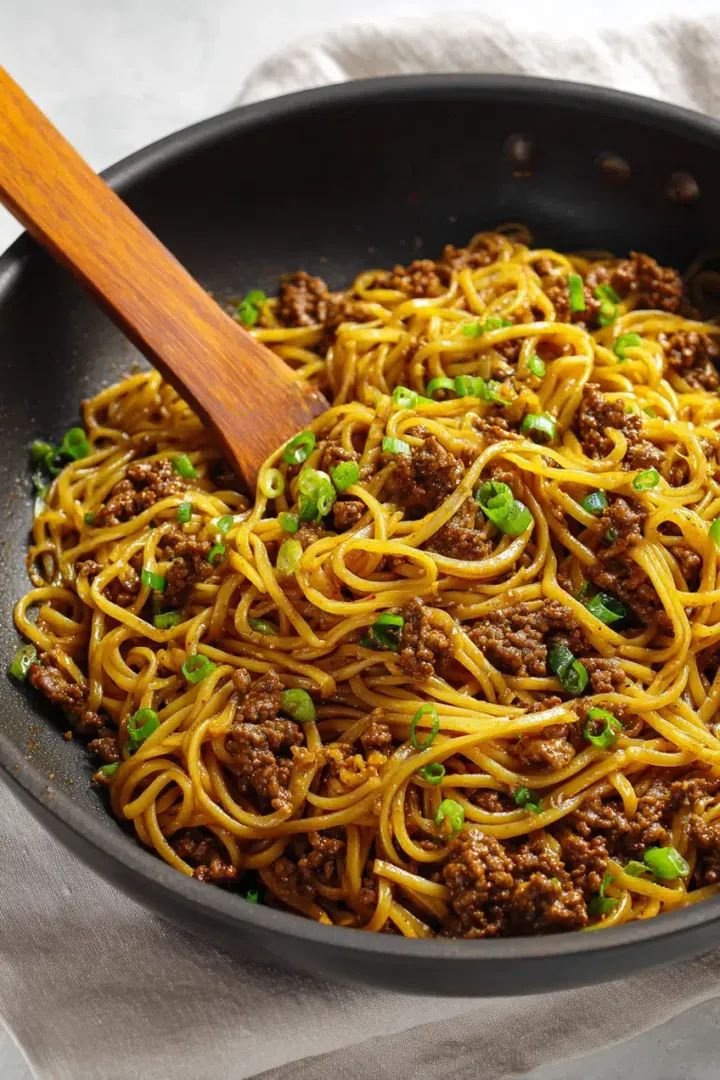
Mongolian Ground Beef Noodles
This dish always felt like a little celebration on a plate. The tender noodles tangled with rich, savory beef, and the sweet-savory sauce was the kind of flavor combination that made you pause mid-bite just to appreciate it. It wasn’t fancy; it didn’t need to be. It was food that brought people together, and I love that it’s so easy to recreate in your own kitchen.
Whether you’re cooking after a long day at work or making a quick weeknight dinner, Mongolian Ground Beef Noodles are perfect. They’re a one-pan wonder if you want, but still impressive enough for a casual dinner party. Plus, the recipe is flexible—perfect for adding in your favorite vegetables or making it a low-carb version by swapping noodles for zucchini noodles.
Today, I’m sharing my version of Mongolian Ground Beef Noodles, a recipe that’s become a staple in my kitchen. It’s quick, satisfying, and packed with flavor, making it a go-to comfort meal that everyone will love
Why You’ll Love It
Rich, savory flavor in every bite
The combination of soy sauce, brown sugar, and garlic creates a sweet-savory depth that pairs perfectly with the tender ground beef and noodles.
Quick weeknight dinner
From start to finish, you can have this dish ready in about 30 minutes. Perfect for when you want a homemade meal without the stress.
Versatile and adaptable
Add your favorite vegetables like bell peppers, carrots, or broccoli for extra color and nutrition. You can also swap noodles for a low-carb option.
Family-friendly comfort food
This recipe appeals to kids and adults alike. It’s a cozy dish that encourages second (and third!) helpings.
Minimal cleanup
Most of the cooking is done in a single skillet or wok, keeping cleanup easy and stress-free.
Perfect for meal prep
Leftovers reheat beautifully, making this recipe great for lunches or dinners later in the week.
Ingredient Notes & Details
Ground beef (preferably 85% lean)
Leaner beef reduces excess grease, but a little fat helps keep the noodles juicy. Can substitute with ground turkey for a lighter option.
Soy sauce
Use low-sodium if you prefer less salt. This is a key ingredient for authentic flavor.
Brown sugar
Balances the soy sauce with a hint of sweetness. Coconut sugar can be used as a substitute for a richer flavor.
Garlic
Freshly minced garlic gives the dish that irresistible aroma. Powdered garlic can work in a pinch, but fresh is best.
Ginger
Adds warmth and depth to the sauce. Fresh ginger is ideal, but ground ginger is an acceptable shortcut.
Green onions
For garnish and a mild onion flavor. Add more if you love a bright, fresh note.
Noodles (egg noodles or rice noodles)
Cooked al dente for the best texture. Can swap with zucchini noodles or shirataki noodles for a low-carb/keto version.
Vegetable oil
Neutral oil works best for stir-frying. Sesame oil can be drizzled at the end for a nutty flavor.
Storage Tips
Refrigeration
Store leftovers in airtight containers. They last 3–4 days in the fridge. Reheat in a skillet over medium heat for best texture.
Freezing
Not ideal for noodles as they may become mushy. If necessary, freeze cooked beef and sauce separately; add freshly cooked noodles when serving.
Reheating
Reheat in a skillet with a splash of water or soy sauce to restore moisture. Microwave works, but stir midway for even heating.
Variations
Spicy Mongolian Beef Noodles
Add chili garlic sauce or sriracha to the sauce for a fiery kick.
Vegetable-packed noodles
Include broccoli, carrots, and snap peas for a colorful, nutritious meal.
Low-carb / keto noodles
Use zucchini or shirataki noodles instead of traditional egg noodles.
Garlic sesame noodles
Add toasted sesame seeds and extra garlic for a fragrant twist.
Teriyaki-style beef noodles
Replace soy sauce with teriyaki sauce for a sweeter, richer flavor.
Ground turkey or chicken noodles
Use ground turkey or chicken for a leaner protein option while keeping all the flavor.
What to Serve with Mongolian Ground Beef Noodles
Fresh salads
A crisp cucumber salad or shredded cabbage salad complements the richness of the noodles.
Steamed vegetables
Simple steamed broccoli or bok choy balances the savory flavors of the beef.
Spring rolls or dumplings
A light appetizer like vegetable spring rolls adds crunch and variety.
Pickled vegetables
Pickled carrots or daikon radish provide a tangy contrast that brightens the meal.
Soup
A miso or clear broth soup is a comforting side that pairs beautifully with this hearty dish.
Rice
For extra comfort, serve with a small bowl of steamed white or brown rice to soak up any leftover sauce.
Ingredients
For the Noodles
8 oz 225 g wide egg noodles
1 tbsp vegetable oil
For the Beef & Sauce
1 lb 450 g ground beef
3 cloves garlic minced
1 tsp fresh ginger minced
¼ cup soy sauce
2 tbsp hoisin sauce
2 tbsp brown sugar
½ cup beef broth
1 tsp sesame oil
¼ tsp black pepper
Vegetables & Garnish
2 green onions sliced
1 cup shredded carrots optional
1 cup broccoli florets optional
Sesame seeds for garnish
Instructions
Cook the Noodles
Bring a large pot of salted water to a boil.
Cook egg noodles according to package instructions until al dente.
Drain and toss with 1 tbsp vegetable oil to prevent sticking. Set aside.
Cook the Ground Beef
Heat a large skillet or wok over medium-high heat.
Add ground beef and cook, breaking into small pieces, until browned (~5–6 minutes).
Remove excess fat if necessary.
Add Aromatics
Stir in garlic and ginger, cooking 1–2 minutes until fragrant.
Make the Sauce
In a small bowl, mix soy sauce, hoisin sauce, brown sugar, beef broth, sesame oil, and black pepper.
Pour the sauce over the beef. Stir to combine. Let it simmer 3–4 minutes until slightly thickened.
Combine with Noodles
Add the cooked noodles to the skillet. Toss thoroughly to coat evenly in the sauce.
Add Veggies & Garnish
Mix in carrots and broccoli (optional) and cook 2–3 minutes until tender-crisp.
Top with green onions and sesame seeds before serving.